个
Jump to navigation
Jump to search
| ||||||||
Translingual[edit]
| Stroke order | |||
|---|---|---|---|

| |||
Han character[edit]
个 (Kangxi radical 2, 丨+2, 3 strokes, cangjie input 人中 (OL), four-corner 80200, composition ⿱𠆢丨)
Derived characters[edit]
References[edit]
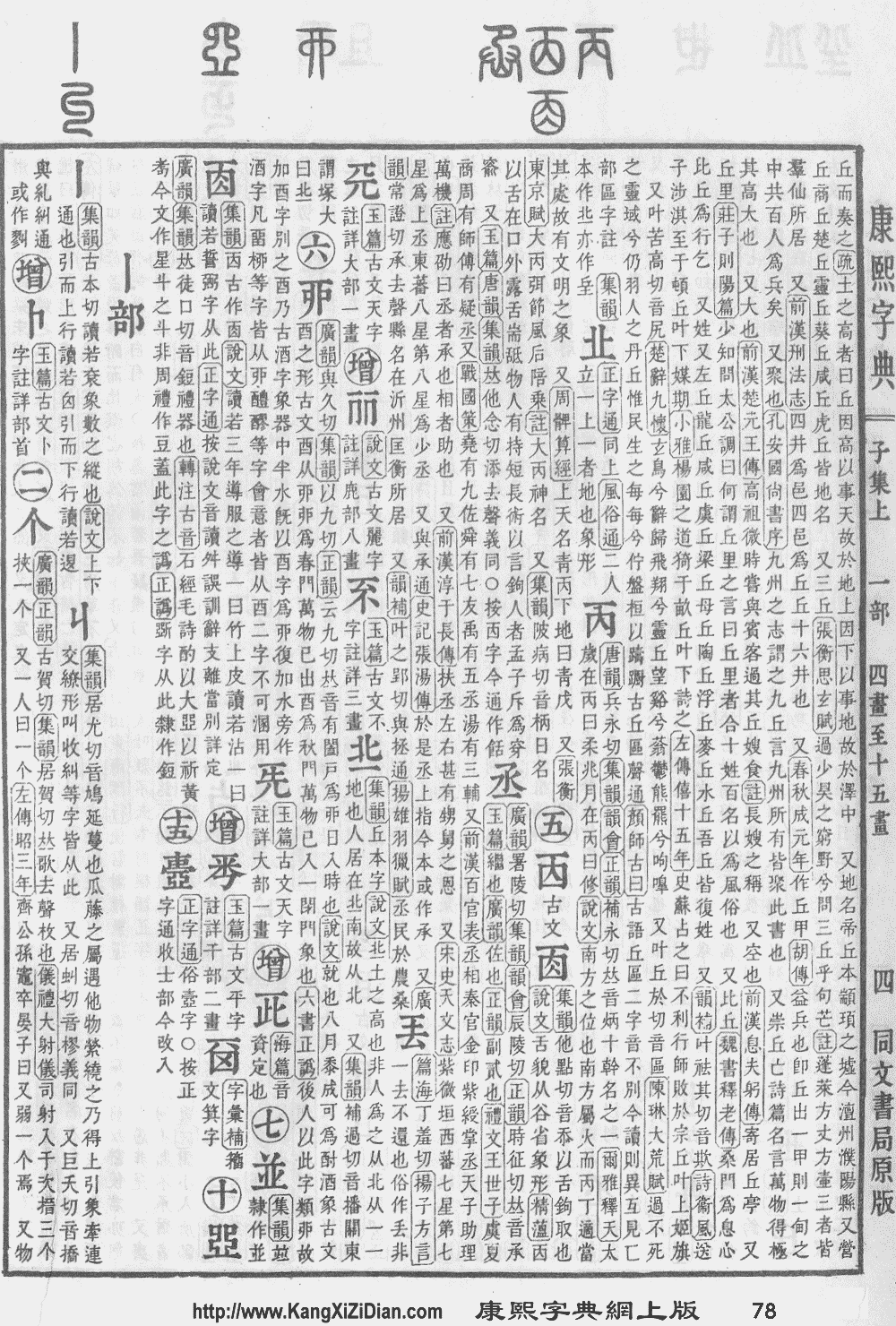
- Kangxi Dictionary: page 78, character 23
- Dai Kanwa Jiten: character 70
- Dae Jaweon: page 158, character 3
- Hanyu Da Zidian (first edition): volume 1, page 103, character 1
- Unihan data for U+4E2A
Chinese[edit]
Glyph origin[edit]
| Historical forms of the character 个 | ||
|---|---|---|
| Warring States | Shuowen Jiezi (compiled in Han) | Liushutong (compiled in Ming) |
| Bronze inscriptions | Small seal script | Transcribed ancient scripts |

|

|

|
Variant of 箇 (“bamboo stalk”). Half of 竹 (“bamboo”).
Definitions[edit]
| For pronunciation and definitions of 个 – see 個 (“single; alone; individual; height; build; stature; etc.”). (This character is the simplified and variant form of 個). |
Notes:
|
Japanese[edit]
Kanji[edit]
个
Readings[edit]
Korean[edit]
Hanja[edit]
- small piece
Usage notes[edit]
Pronunciation 개 came from a confusion with 介. 个 is a variant of 個, and its pronunciation would have been 고 as in 固, 凅, 痼 (固 , 凅 , 痼), etc.
Vietnamese[edit]
Han character[edit]
个: Hán Việt readings: cá, cán
个: Nôm readings: cá
- This term needs a translation to English. Please help out and add a translation, then remove the text
{{rfdef}}.
Categories:
- CJK Unified Ideographs block
- Han script characters
- Translingual lemmas
- Translingual symbols
- Beginning Mandarin
- Chinese lemmas
- Mandarin lemmas
- Sichuanese lemmas
- Dungan lemmas
- Cantonese lemmas
- Taishanese lemmas
- Gan lemmas
- Hakka lemmas
- Jin lemmas
- Northern Min lemmas
- Eastern Min lemmas
- Hokkien lemmas
- Teochew lemmas
- Wu lemmas
- Xiang lemmas
- Chinese nouns
- Mandarin nouns
- Sichuanese nouns
- Dungan nouns
- Cantonese nouns
- Taishanese nouns
- Gan nouns
- Hakka nouns
- Jin nouns
- Northern Min nouns
- Eastern Min nouns
- Hokkien nouns
- Teochew nouns
- Wu nouns
- Xiang nouns
- Chinese classifiers
- Mandarin classifiers
- Sichuanese classifiers
- Dungan classifiers
- Cantonese classifiers
- Taishanese classifiers
- Gan classifiers
- Hakka classifiers
- Jin classifiers
- Northern Min classifiers
- Eastern Min classifiers
- Hokkien classifiers
- Teochew classifiers
- Wu classifiers
- Xiang classifiers
- Chinese particles
- Mandarin particles
- Sichuanese particles
- Dungan particles
- Cantonese particles
- Taishanese particles
- Gan particles
- Hakka particles
- Jin particles
- Northern Min particles
- Eastern Min particles
- Hokkien particles
- Teochew particles
- Wu particles
- Xiang particles
- Chinese adjectives
- Mandarin adjectives
- Sichuanese adjectives
- Dungan adjectives
- Cantonese adjectives
- Taishanese adjectives
- Gan adjectives
- Hakka adjectives
- Jin adjectives
- Northern Min adjectives
- Eastern Min adjectives
- Hokkien adjectives
- Teochew adjectives
- Wu adjectives
- Xiang adjectives
- Chinese adverbs
- Mandarin adverbs
- Sichuanese adverbs
- Dungan adverbs
- Cantonese adverbs
- Taishanese adverbs
- Gan adverbs
- Hakka adverbs
- Jin adverbs
- Northern Min adverbs
- Eastern Min adverbs
- Hokkien adverbs
- Teochew adverbs
- Wu adverbs
- Xiang adverbs
- Chinese verbs
- Teochew verbs
- Chinese terms with IPA pronunciation
- Chinese Han characters
- Chinese simplified forms
- Chinese variant forms
- Japanese Han characters
- Uncommon kanji
- Japanese kanji with goon reading か
- Japanese kanji with kan'on reading か
- Japanese kanji with tōon reading こ
- Korean lemmas
- Korean Han characters
- Vietnamese Chữ Hán
- Vietnamese lemmas
- Vietnamese Han characters
- Vietnamese Nom