扲
Appearance
| ||||||||
Translingual
[edit]Han character
[edit]扲 (Kangxi radical 64, 手+4, 7 strokes, cangjie input 手人戈弓 (QOIN), four-corner 58027, composition ⿰扌今)
Derived characters
[edit]References
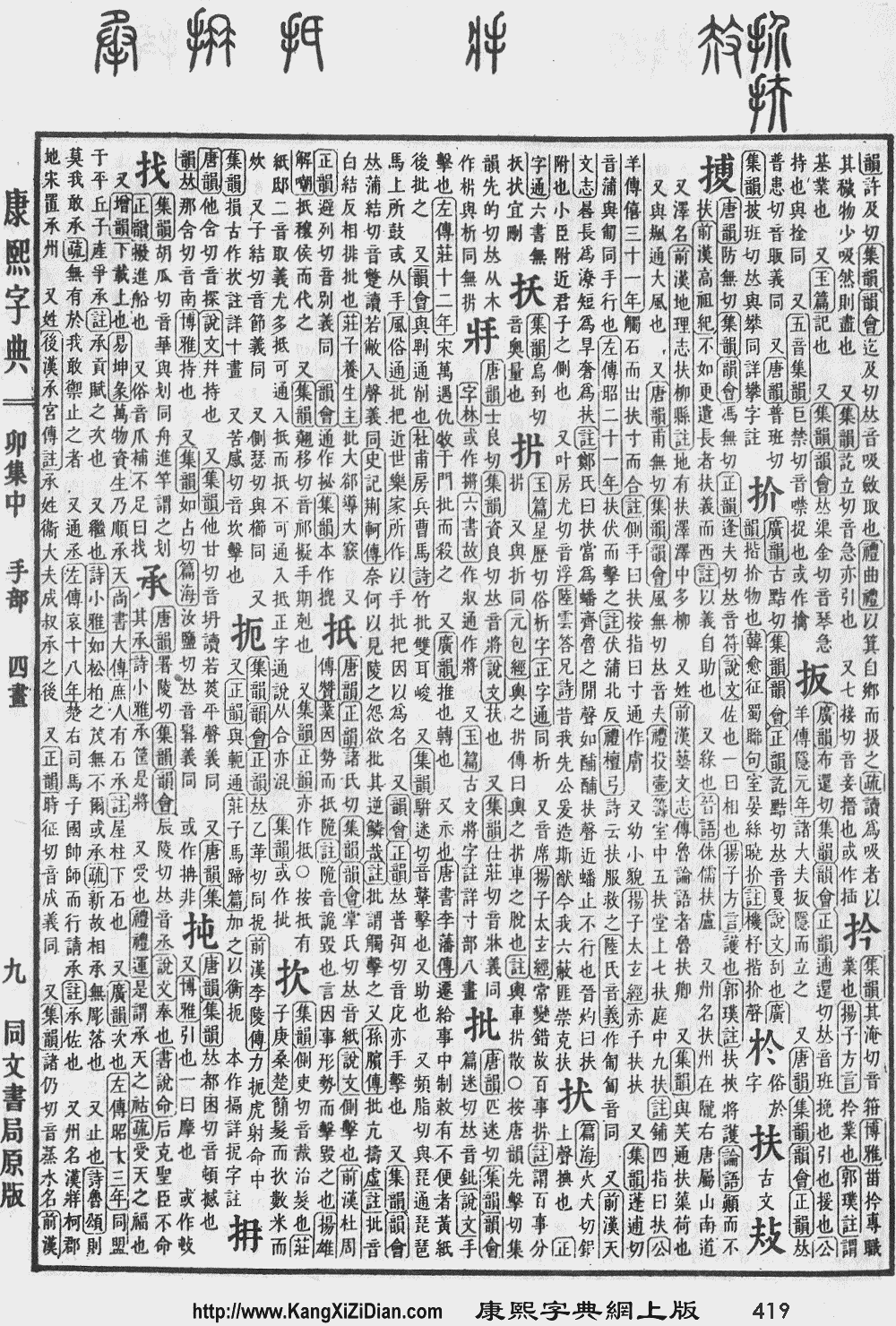
[edit]- Kangxi Dictionary: page 419, character 1
- Dai Kanwa Jiten: character 11836
- Dae Jaweon: page 765, character 23
- Hanyu Da Zidian (first edition): volume 3, page 1840, character 6
- Unihan data for U+6272
Chinese
[edit]Etymology 1
[edit]| trad. | 扲 | |
|---|---|---|
| simp. # | 扲 | |
| alternative forms | 揞 misspelling um nonstandard | |
Pronunciation
[edit]- Mandarin
- (Standard Chinese)+
- Hanyu Pinyin: qián
- Zhuyin: ㄑㄧㄢˊ
- Tongyong Pinyin: cián
- Wade–Giles: chʻien2
- Yale: chyán
- Gwoyeu Romatzyh: chyan
- Palladius: цянь (cjanʹ)
- Sinological IPA (key): /t͡ɕʰi̯ɛn³⁵/
- (Standard Chinese)+
- Cantonese
- (Standard Cantonese, Guangzhou–Hong Kong)
- Jyutping: ngam4
- Yale: ngàhm
- Cantonese Pinyin: ngam4
- Guangdong Romanization: ngem4
- Sinological IPA (key): /ŋɐm²¹/
- (Standard Cantonese, Guangzhou–Hong Kong)
Definitions
[edit]扲 (Cantonese)
- to pull out (to remove something from a container) (especially from pockets or bags)
Compounds
[edit]Etymology 2
[edit]| trad. | 扲 | |
|---|---|---|
| simp. # | 扲 | |
Pronunciation
[edit]- Southern Min (Hokkien, POJ): gīm / kīm
- Southern Min
Verb
[edit]扲
- (Zhangzhou, Taiwanese, Penang and Medan Hokkien) to hold; to grasp; to take in the hand
- (Taiwanese Hokkien) to hold as pledge; to pawn; to loan
Compounds
[edit]Vietnamese
[edit]Han character
[edit]扲: Hán Việt readings: cầm[1][2][3][4]
扲: Nôm readings: căm[1], cắm[1], cằm[1], cặm[1], gằm[1]
- Variant of 擒, see there for more details.
- 13th century, Trần Nhân Tông, Cư Trần lạc đạo phú 居塵樂道賦, Đệ nhị hội 第二會:
扲 戒 行 敵 無 常 𱜢 固 詫 求 名 半 角 - One keeps precepts and virtues, and defies impermanence, not at all caring to seek reputation in a venal manner (literally, “seek reputation to buy and sell”).
- chữ Nôm form of cắm (“to stick (something) into a surface”)
- chữ Nôm form of cằm (“chin”)
- chữ Nôm form of cặm (“used in cặm cụi (“completely busy; occupied”)”)
References
[edit]Categories:
- CJK Unified Ideographs block
- Han script characters
- Translingual lemmas
- Translingual symbols
- Cantonese Chinese
- Chinese lemmas
- Mandarin lemmas
- Cantonese lemmas
- Chinese hanzi
- Mandarin hanzi
- Cantonese hanzi
- Chinese verbs
- Mandarin verbs
- Cantonese verbs
- Chinese terms with IPA pronunciation
- Chinese terms spelled with 扲
- Cantonese terms with usage examples
- Hokkien lemmas
- Hokkien hanzi
- Hokkien verbs
- Zhangzhou Hokkien
- Taiwanese Hokkien
- Penang Hokkien
- Medan Hokkien
- Vietnamese Chữ Hán
- Vietnamese lemmas
- Vietnamese Han characters
- Vietnamese Nom
- Vietnamese terms with quotations
- Vietnamese variant characters