揈
Jump to navigation
Jump to search
See also: 㧦
| ||||||||
Translingual[edit]
Han character[edit]
揈 (Kangxi radical 64, 手+9, 12 strokes, cangjie input 手心卜口 (QPYR), four-corner 57020, composition ⿰扌訇)
Related characters[edit]
References[edit]
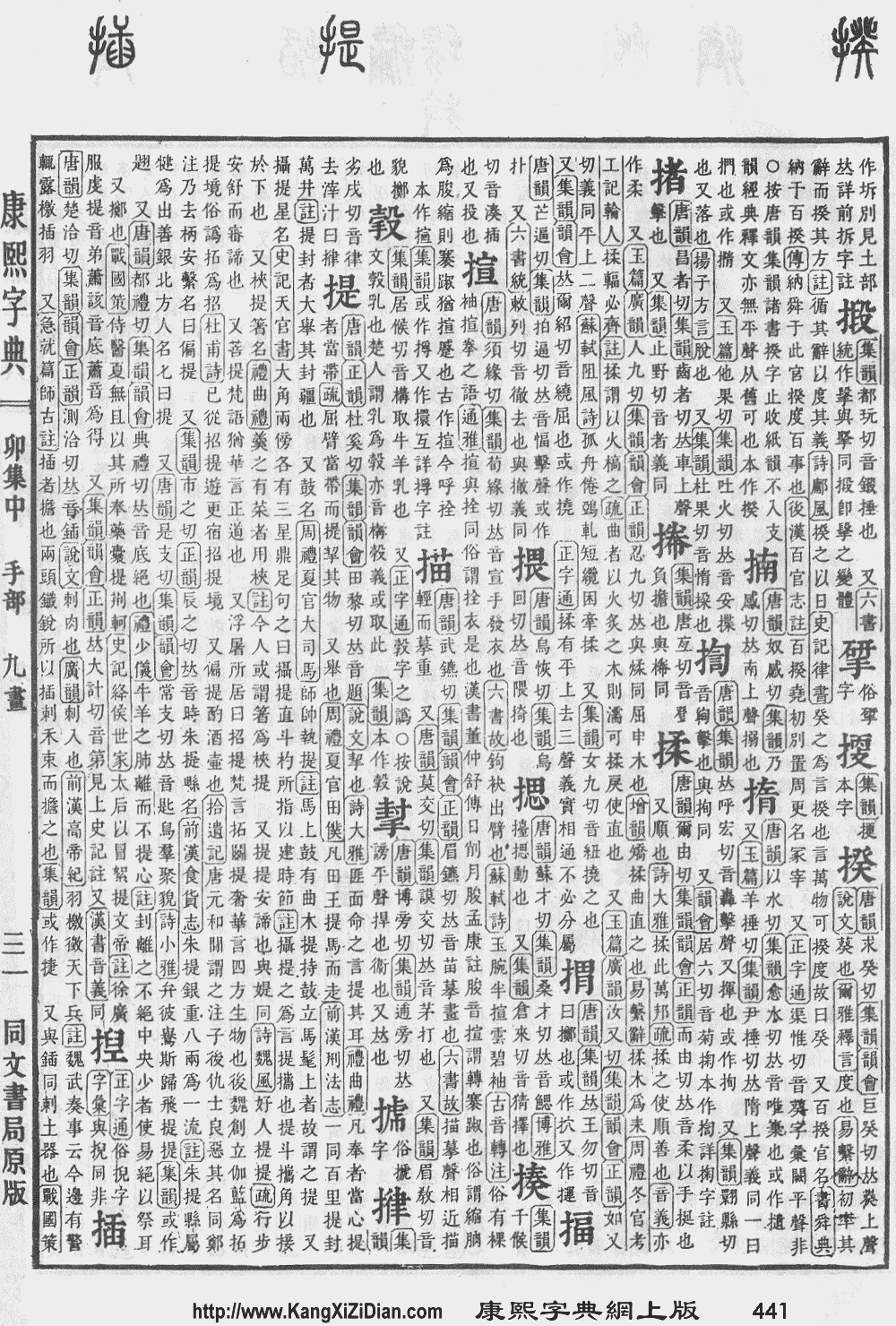
- Kangxi Dictionary: page 441, character 7
- Dai Kanwa Jiten: character 12329
- Dae Jaweon: page 792, character 3
- Hanyu Da Zidian (first edition): volume 3, page 1922, character 6
- Unihan data for U+63C8
Chinese[edit]
Glyph origin[edit]
| Old Chinese | |
|---|---|
| 枃 | *skins |
| 笉 | *skʰinʔ |
| 郇 | *ɡʷreːn, *sqʰʷin |
| 絢 | *qʰʷiːns |
| 眴 | *qʰʷiːns, *ɡʷiːns, *sqʰʷin, *qʰʷjins, *ŋʷjin |
| 盷 | *ɡʷiːn |
| 訇 | *ɡʷiːn, *qʰʷreːŋ |
| 迿 | *ɡʷiːns, *sqʰʷins |
| 姰 | *ɡʷiːns, *sqʰʷin |
| 畇 | *l'iːŋ, *sqʰʷin, *sɢʷin, *ɢʷin |
| 荀 | *sqʰʷin |
| 詢 | *sqʰʷin |
| 洵 | *sqʰʷin, *sɢʷin |
| 恂 | *sqʰʷin |
| 峋 | *sqʰʷin |
| 珣 | *sqʰʷin |
| 槆 | *sqʰʷin |
| 筍 | *sqʰʷinʔ |
| 箰 | *sqʰʷinʔ |
| 旬 | *sɢʷin |
| 殉 | *sɢʷins |
| 徇 | *sɢʷins |
| 侚 | *sɢʷins |
| 均 | *kʷin |
| 鈞 | *kʷin |
| 袀 | *kʷin |
| 汮 | *kʷin, *kʷrin |
| 呁 | *kʷins |
| 筠 | *ɡʷin |
| 荺 | *ɢʷin, *ɡʷinʔ |
| 匀 | *ɢʷin |
| 韵 | *ɢʷins |
| 輷 | *qʰʷreːŋ, *qʰʷreːŋs |
| 揈 | *qʰʷreːŋ |
| 鍧 | *qʰʷreːŋ |
| 渹 | *qʰʷreːŋ |
| 赹 | *ɡʷeŋ |
| 憌 | *ɡʷeŋ |
| 惸 | *ɡʷeŋ |
| 咰 | *sqʰʷrid |
Phono-semantic compound (形聲/形声, OC *qʰʷreːŋ) : semantic 扌 (“hand”) + phonetic 訇 (OC *ɡʷiːn, *qʰʷreːŋ).
Etymology 1[edit]
(This etymology is missing or incomplete. Please add to it, or discuss it at the Etymology scriptorium. Particularly: “all related? Hakka 拂 (fin) seems to be cognate with Cantonese fing6”)
Pronunciation 1[edit]
| simp. and trad. |
揈 | |
|---|---|---|
| alternative forms | 㧦 轟/轰 “to drive away” 封 Min Nan | |
Definitions[edit]
揈
- † (onomatopoeia) the sound of a strike.
- to drive away; to expel
- to sell
- (Southern Min) to slap (someone on their face)
Pronunciation 2[edit]
| simp. and trad. |
揈 | |
|---|---|---|
Definitions[edit]
揈
Etymology 2[edit]
| simp. and trad. |
揈 | |
|---|---|---|
| alternative forms | 捹 𢫕 fing | |
Compare Bouyei veengh (“to fling”) and Lingao feŋ² (“to toss”).
Pronunciation[edit]
Definitions[edit]
揈
- (Cantonese) to sway; to swing
- (Cantonese) to shake
- (Cantonese, figurative) to spend (money) lavishly
Derived terms[edit]
Related terms[edit]
References[edit]
- Dictionary of Chinese Character Variants (教育部異體字字典), C04322
- “揈”, in 漢語多功能字庫 (Multi-function Chinese Character Database)[1], 香港中文大學 (the Chinese University of Hong Kong), 2014–
Etymology 3[edit]
| For pronunciation and definitions of 揈 – see 掬 (“to grasp or hold with both hands; to recoil; to tighten; to draw back; etc.”). (This character is a variant form of 掬). |
References[edit]
Etymology 4[edit]
| For pronunciation and definitions of 揈 – see 㧦 (“to hit; to strike”). (This character is a variant form of 㧦). |
References[edit]
Japanese[edit]
Kanji[edit]
揈
- This term needs a translation to English. Please help out and add a translation, then remove the text
{{rfdef}}.
Readings[edit]
Categories:
- CJK Unified Ideographs block
- Han script characters
- Translingual lemmas
- Translingual symbols
- Han phono-semantic compounds
- Middle Chinese lemmas
- Old Chinese lemmas
- Chinese lemmas
- Mandarin lemmas
- Cantonese lemmas
- Hokkien lemmas
- Chinese verbs
- Mandarin verbs
- Cantonese verbs
- Hokkien verbs
- Chinese terms with IPA pronunciation
- Chinese Han characters
- Chinese terms with obsolete senses
- Chinese onomatopoeias
- Southern Min Chinese
- Chinese literary terms
- Cantonese Chinese
- Cantonese terms with usage examples
- Chinese variant forms
- Japanese Han characters
- Uncommon kanji
- Japanese kanji with on reading こう
- Japanese kanji with on reading けん
- Japanese kanji with on reading きく
- Japanese kanji with kun reading うつ