盃
Jump to navigation
Jump to search
| ||||||||
Translingual[edit]
Han character[edit]
盃 (Kangxi radical 108, 皿+4, 9 strokes, cangjie input 一火月廿 (MFBT), four-corner 10107, composition ⿱不皿)
References[edit]
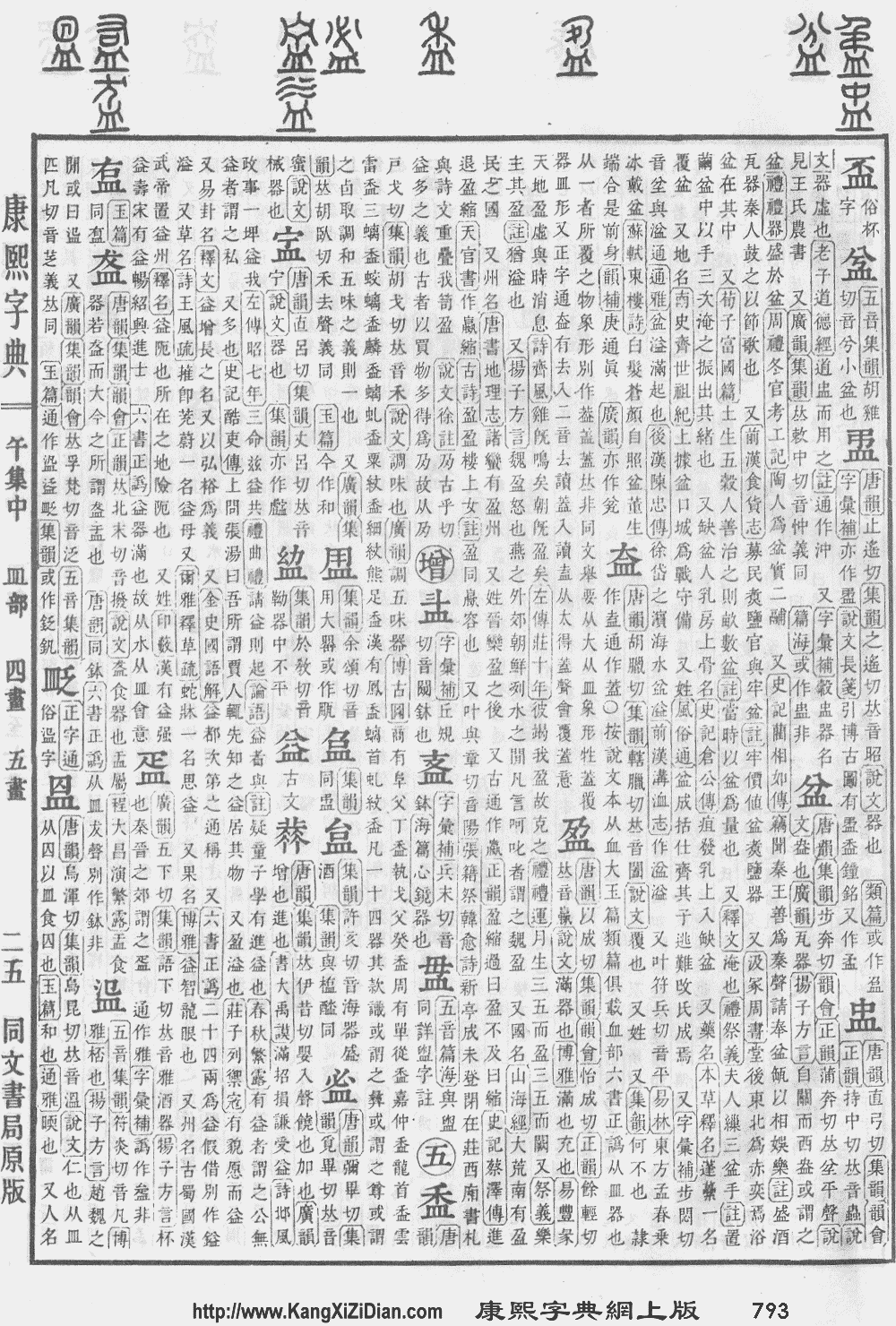
- Kangxi Dictionary: page 793, character 1
- Dai Kanwa Jiten: character 22955
- Dae Jaweon: page 1208, character 3
- Hanyu Da Zidian (first edition): volume 4, page 2558, character 2
- Unihan data for U+76C3
Chinese[edit]
Glyph origin[edit]
| Old Chinese | |
|---|---|
| 肧 | *pʰlɯː, *pʰɯ, *pʰlɯː |
| 俖 | *pʰɯːʔ |
| 娝 | *prɯʔ |
| 痞 | *prɯʔ, *brɯʔ, *pɯʔ |
| 丕 | *pʰrɯ |
| 伾 | *pʰrɯ |
| 秠 | *pʰrɯ, *pʰrɯʔ, *pʰɯ, *pʰɯʔ |
| 駓 | *pʰrɯ |
| 怌 | *pʰrɯ |
| 豾 | *pʰrɯ |
| 髬 | *pʰrɯ |
| 魾 | *pʰrɯ, *brɯ |
| 鉟 | *pʰrɯ, *brɯ |
| 嚭 | *pʰrɯʔ |
| 邳 | *brɯ |
| 岯 | *brɯ |
| 否 | *brɯʔ, *pɯʔ |
| 抔 | *bɯ, *pʰlɯː |
| 不 | *pɯ, *pɯʔ, *pɯ' |
| 紑 | *pɯ, *pʰɯ, *pʰɯʔ |
| 鴀 | *pɯ, *pɯʔ |
| 衃 | *pʰɯ, *pʰlɯː |
| 罘 | *bɯ |
| 芣 | *bɯ |
| 杯 | *plɯː |
| 盃 | *plɯː |
| 桮 | *pɯː |
| 坯 | *pʰɯː |
| 胚 | *pʰɯː |
Phono-semantic compound (形聲/形声, OC *plɯː) : phonetic 不 (OC *pɯ, *pɯʔ, *pɯ') + semantic 皿.
Definitions[edit]
| For pronunciation and definitions of 盃 – see 杯 (“drinkware; cup; glass; mug; cup; trophy; etc.”). (This character is a variant form of 杯). |
Japanese[edit]
Kanji[edit]
盃
(“Jinmeiyō” kanji used for names)
Readings[edit]
Etymology 1[edit]
| Kanji in this term |
|---|
| 盃 |
| さかずき Jinmeiyō |
| kun’yomi |
| For pronunciation and definitions of 盃 – see the following entry. | ||
| ||
| (This term, 盃, is an alternative spelling of the above term.) |
Etymology 2[edit]
| Kanji in this term |
|---|
| 盃 |
| はい Jinmeiyō |
| on’yomi |
| For pronunciation and definitions of 盃 – see the following entry. | ||
| ||
| (This term, 盃, is an alternative spelling of the above term.) |
Korean[edit]
Hanja[edit]
盃 • (bae) (hangeul 배, revised bae, McCune–Reischauer pae, Yale pay)
- This term needs a translation to English. Please help out and add a translation, then remove the text
{{rfdef}}.
Vietnamese[edit]
Han character[edit]
盃: Hán Việt readings: bôi[1][2][3][4][5]
盃: Nôm readings: bôi[1][2], bui[1], bùi[1], vôi[1], vội[1], vui[1], vùi[2]
References[edit]
Categories:
- CJK Unified Ideographs block
- Han script characters
- Translingual lemmas
- Translingual symbols
- Han phono-semantic compounds
- Beginning Mandarin
- Chinese lemmas
- Mandarin lemmas
- Sichuanese lemmas
- Cantonese lemmas
- Taishanese lemmas
- Gan lemmas
- Hakka lemmas
- Jin lemmas
- Northern Min lemmas
- Eastern Min lemmas
- Hokkien lemmas
- Teochew lemmas
- Wu lemmas
- Xiang lemmas
- Chinese nouns
- Mandarin nouns
- Sichuanese nouns
- Cantonese nouns
- Taishanese nouns
- Gan nouns
- Hakka nouns
- Jin nouns
- Northern Min nouns
- Eastern Min nouns
- Hokkien nouns
- Teochew nouns
- Wu nouns
- Xiang nouns
- Chinese classifiers
- Mandarin classifiers
- Sichuanese classifiers
- Cantonese classifiers
- Taishanese classifiers
- Gan classifiers
- Hakka classifiers
- Jin classifiers
- Northern Min classifiers
- Eastern Min classifiers
- Hokkien classifiers
- Teochew classifiers
- Wu classifiers
- Xiang classifiers
- Chinese terms with IPA pronunciation
- Chinese Han characters
- Chinese variant forms
- Japanese Han characters
- Kanji used for names
- Japanese kanji with on reading はい
- Japanese kanji with kun reading さかずき
- Japanese terms spelled with 盃
- Japanese terms read with kun'yomi
- Japanese nouns
- Japanese lemmas
- Japanese terms spelled with jinmeiyō kanji
- Japanese terms written with one Han script character
- Japanese single-kanji terms
- Japanese terms read with on'yomi
- Japanese counters
- Japanese suffixes
- Korean lemmas
- Korean Han characters
- Vietnamese Chữ Hán
- Vietnamese lemmas
- Vietnamese Han characters
- Vietnamese Nom