縕
Jump to navigation
Jump to search
| ||||||||
Translingual[edit]
| Traditional | 縕 |
|---|---|
| Shinjitai (extended) |
緼 |
| Simplified | 缊 |
Han character[edit]
縕 (Kangxi radical 120, 糸+10, 16 strokes, cangjie input 女火田人廿 (VFWOT), four-corner 26917, composition ⿰糹𥁕)
Derived characters[edit]
References[edit]
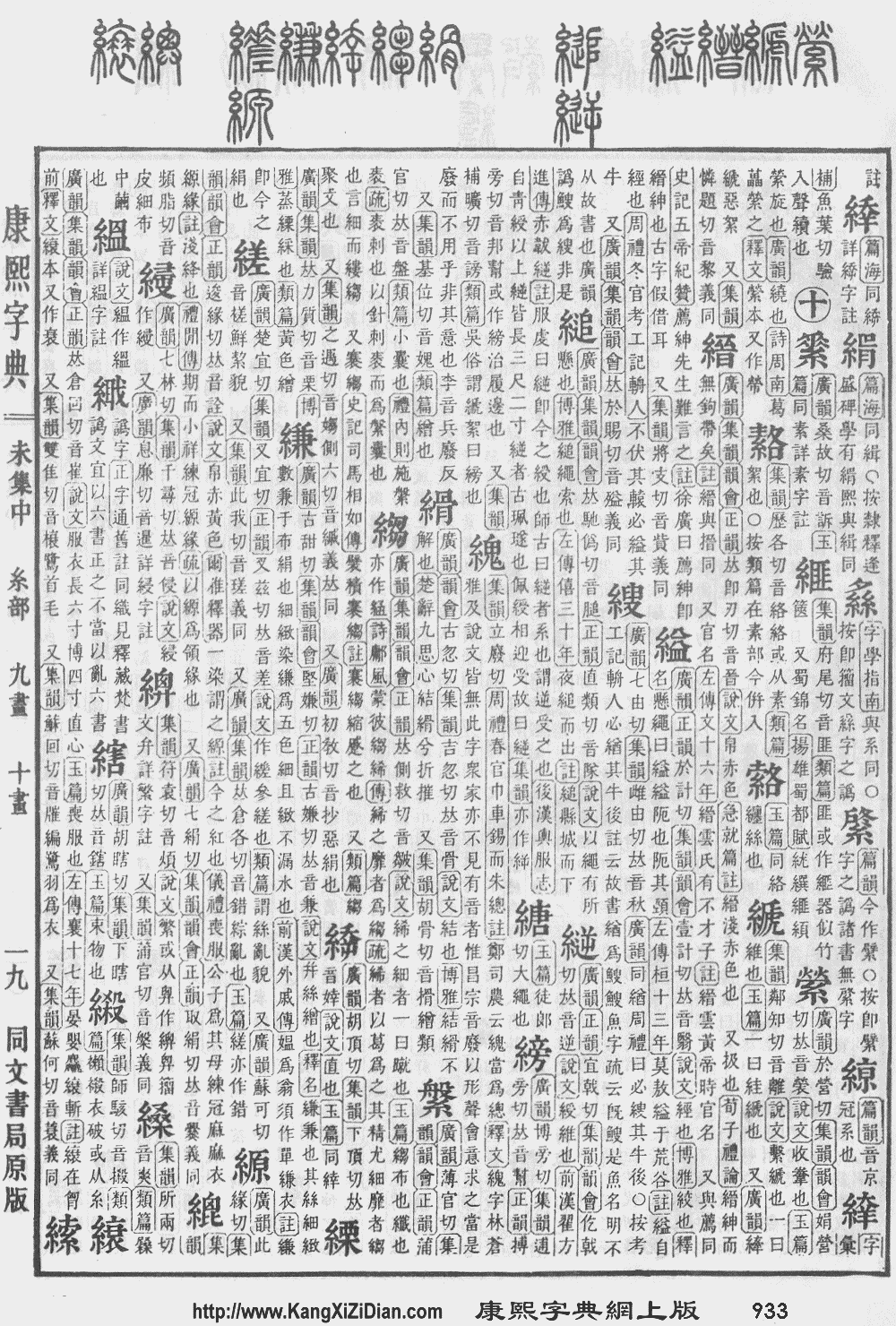
- Kangxi Dictionary: page 933, character 33
- Dai Kanwa Jiten: character 27757
- Dae Jaweon: page 1372, character 22
- Hanyu Da Zidian (first edition): volume 5, page 3437, character 2
- Unihan data for U+7E15
Chinese[edit]
| trad. | 縕/緼 | |
|---|---|---|
| simp. | 缊 | |
Pronunciation[edit]
Definitions[edit]
縕
- This term needs a translation to English. Please help out and add a translation, then remove the text
{{rfdef}}.
Compounds[edit]
References[edit]
- “縕”, in 漢語多功能字庫 (Multi-function Chinese Character Database)[1], 香港中文大學 (the Chinese University of Hong Kong), 2014–
Japanese[edit]
Kanji[edit]
縕
- old cotton
- tangled hemp
- raveled silk
- vague
- confused
Readings[edit]
From Middle Chinese 縕 (MC ʔjunH); compare Mandarin 縕/缊 (yùn):
From Middle Chinese 縕 (MC ʔjun); compare Mandarin 縕/缊 (yūn):
From Middle Chinese 縕 (MC ʔwon); compare Mandarin 縕/缊 (wēn):
From native Japanese roots:
Compounds[edit]
Korean[edit]
Hanja[edit]
縕 • (on) (hangeul 온, revised on, McCune–Reischauer on, Yale on)
- padded clothes
- hemp
- ramie fabric
Categories:
- CJK Unified Ideographs block
- Han script characters
- Translingual lemmas
- Translingual symbols
- Mandarin terms with multiple pronunciations
- Chinese lemmas
- Mandarin lemmas
- Cantonese lemmas
- Chinese terms with IPA pronunciation
- Chinese Han characters
- Japanese Han characters
- Uncommon kanji
- Japanese terms derived from Middle Chinese
- Japanese kanji with goon reading うん
- Japanese kanji with historical goon reading うん
- Japanese kanji with kan'on reading うん
- Japanese kanji with historical kan'on reading うん
- Japanese kanji with goon reading おん
- Japanese kanji with historical goon reading をん
- Japanese kanji with historical kan'on reading をん
- Japanese kanji with kun reading ふるい
- Korean lemmas
- Korean Han characters