蠬
Jump to navigation
Jump to search
| ||||||||
Translingual[edit]
Han character[edit]
蠬 (Kangxi radical 142, 虫+16, 22 strokes, cangjie input 中戈卜月心 (LIYBP), four-corner 51111, composition ⿰虫龍)
- dragon-like insects
References[edit]
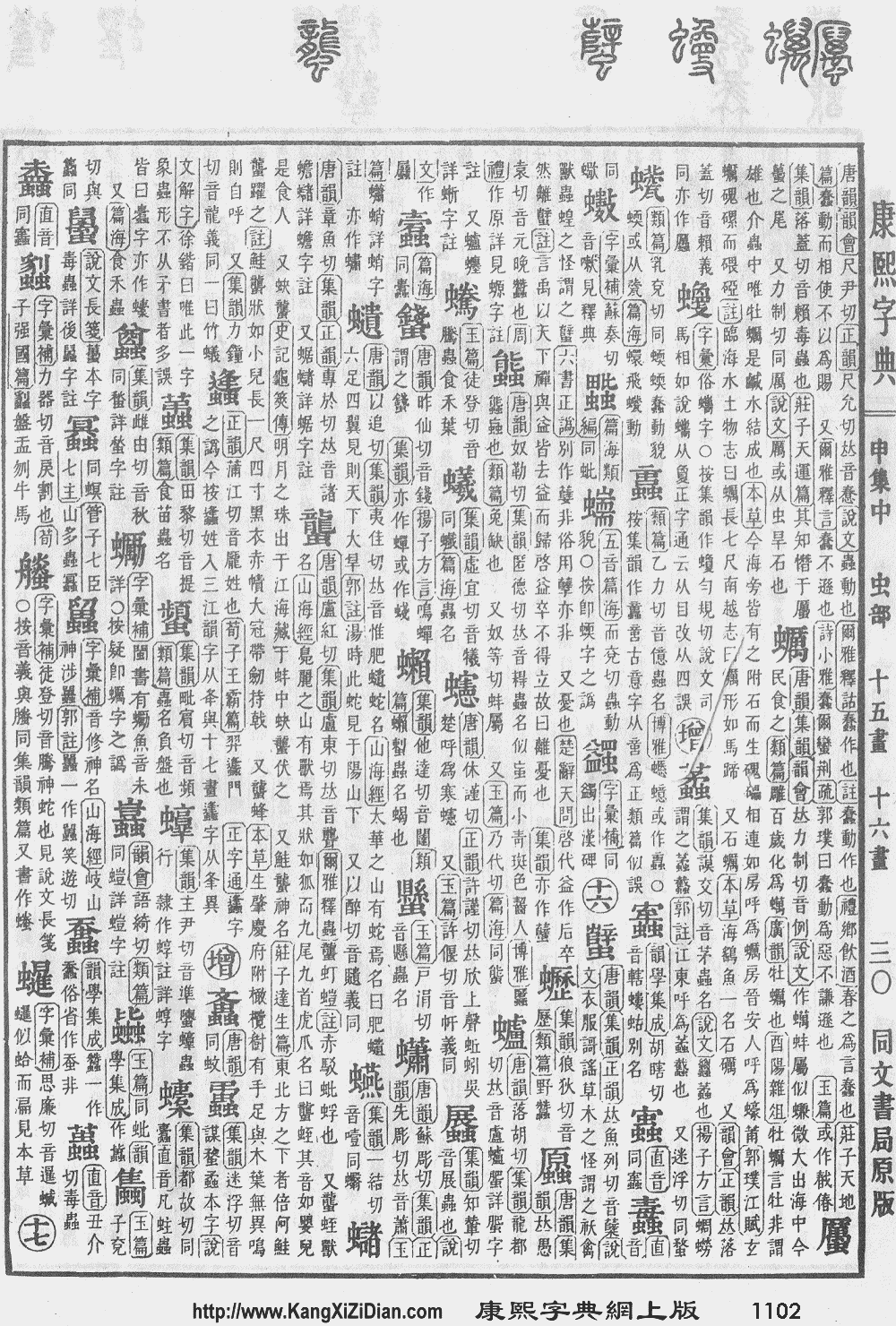
- Kangxi Dictionary: not present, would follow page 1102, character 52
- Dai Kanwa Jiten: character 33833
- Hanyu Da Zidian (first edition): volume 4, page 2905, character 6
- Unihan data for U+882C
Chinese[edit]
| simp. and trad. |
蠬 | |
|---|---|---|
Glyph origin[edit]
Pronunciation[edit]
Definitions[edit]
蠬
Middle Vietnamese[edit]
Etymology[edit]
From Proto-Vietic *-roːŋ, from Old Chinese 龍 (OC *b·roŋ, *mroːŋ, “dragon”).
Noun[edit]
蠬 (ròu᷄)
Descendants[edit]
References[edit]
Vietnamese[edit]
Han character[edit]
Noun[edit]
蠬
Categories:
- CJK Unified Ideographs block
- Han script characters
- Translingual lemmas
- Translingual symbols
- Chinese lemmas
- Mandarin lemmas
- Chinese terms with IPA pronunciation
- Chinese Han characters
- Middle Vietnamese terms inherited from Proto-Vietic
- Middle Vietnamese terms derived from Proto-Vietic
- Middle Vietnamese lemmas
- Middle Vietnamese nouns
- Vietnamese Nom
- Vietnamese lemmas
- Vietnamese Han characters
- Vietnamese nouns
- Vietnamese nouns in Han script
- vi:Dragons