


folia
English
[edit]Noun
[edit]folia
Derived terms
[edit]Anagrams
[edit]Kabuverdianu
[edit]Etymology
[edit]Derived from Portuguese folha.
Noun
[edit]folia
Latin
[edit]Pronunciation
[edit]- (Classical Latin) IPA(key): [ˈfɔ.li.a]
- (modern Italianate Ecclesiastical) IPA(key): [ˈfɔː.li.a]
Etymology 1
[edit]See the etymology of the corresponding lemma form.
Noun
[edit]folia n
Etymology 2
[edit]From the above form, reinterpreted as a feminine singular. See folium.
Noun
[edit]folia f (genitive foliae); first declension (Late Latin)
Declension
[edit]First-declension noun.
| singular | plural | |
|---|---|---|
| nominative | folia | foliae |
| genitive | foliae | foliārum |
| dative | foliae | foliīs |
| accusative | foliam | foliās |
| ablative | foliā | foliīs |
| vocative | folia | foliae |
Descendants
[edit]- Insular Romance:
- Balkano-Romance:
- Italo-Dalmatian:
- Rhaeto-Romance:
- Gallo-Italic:
- Northern Gallo-Romance:
- Southern Gallo-Romance:
- Ibero-Romance:
References
[edit]- "folia", in Charles du Fresne du Cange, Glossarium Mediæ et Infimæ Latinitatis (augmented edition with additions by D. P. Carpenterius, Adelungius and others, edited by Léopold Favre, 1883–1887)
Northern Sami
[edit]Etymology
[edit](This etymology is missing or incomplete. Please add to it, or discuss it at the Etymology scriptorium.)
Pronunciation
[edit]
Noun
[edit]folia
- foil (thin material)
Inflection
[edit]This noun needs an inflection-table template.
Further reading
[edit]- Eino Koponen, Klaas Ruppel, Kirsti Aapala, editors (2002–2008), Álgu database: Etymological database of the Saami languages[1], Helsinki: Research Institute for the Languages of Finland
Old Galician-Portuguese
[edit]Etymology
[edit]Borrowed from Old French folie. By surface analysis, fol (“foolish”) + -ia.
Pronunciation
[edit]Noun
[edit]folia f (plural folias)
- foolishness, madness
-
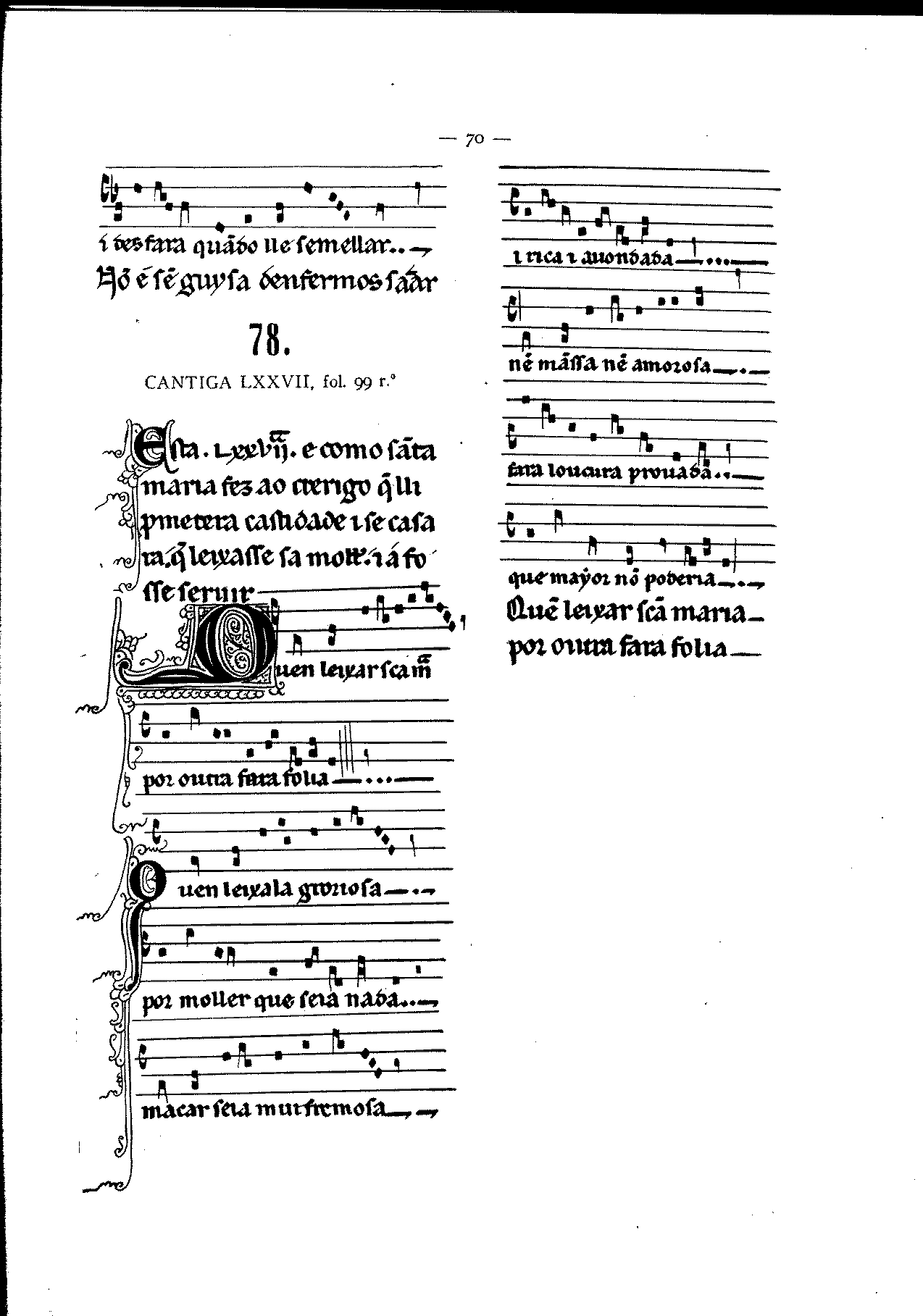
- Quen leixar ſ(ant)a m(aria) por outra fara folia.
- He who leaves Holy Mary for another (woman) acts foolishly.
- Quen leixar ſ(ant)a m(aria) por outra fara folia.
-
Descendants
[edit]Old Occitan
[edit]Etymology
[edit]Cognate with Old French folie, Old Galician-Portuguese folia.
Noun
[edit]folia f (oblique plural folias, nominative singular folia, nominative plural folias)
Polish
[edit]Alternative forms
[edit]Etymology
[edit]Pronunciation
[edit]Noun
[edit]folia f (diminutive folijka)
- plastic film, especially the kinds used to make plastic bags and food packaging
- foil
Declension
[edit]Derived terms
[edit]Descendants
[edit]- → Belarusian: фо́льга (fólʹha)
- → Russian: фольга (folʹga), фо́лья (fólʹja) — 19th century also
- → Ukrainian: фольга́ (folʹhá), фо́льга (fólʹha)
Further reading
[edit]- “folia”, in Wielki słownik języka polskiego[2] (in Polish), Instytut Języka Polskiego PAN
- “folia”, in Polish dictionaries at PWN[3] (in Polish)
Portuguese
[edit]
Etymology 1
[edit]From Old Galician-Portuguese folia, in turn from Old French folie. Cognate with Galician folía.
Pronunciation
[edit]
- Rhymes: -iɐ
- Hyphenation: fo‧li‧a
Noun
[edit]folia f (plural folias)
Derived terms
[edit]Further reading
[edit]- “folia”, in Dicionário Aulete Digital (in Portuguese), Rio de Janeiro: Lexikon Editora Digital, 2008–2026
- “folia”, in Dicionário Infopédia da Língua Portuguesa (in Portuguese), Porto: Porto Editora, 2003–2026
- “folia”, in Michaelis Dicionário Brasileiro da Língua Portuguesa (in Portuguese), São Paulo: Editora Melhoramentos, 2015–2026, →ISBN
- “folia”, in Dicionário Priberam da Língua Portuguesa (in Portuguese), Lisbon: Priberam, 2008–2026
Etymology 2
[edit]Verb
[edit]folia
- inflection of foliar:
Spanish
[edit]Verb
[edit]folia
- inflection of foliar:
- English non-lemma forms
- English noun forms
- English plurals in -a with singular in -um
- Kabuverdianu terms derived from Portuguese
- Kabuverdianu lemmas
- Kabuverdianu nouns
- Latin 3-syllable words
- Latin terms with IPA pronunciation
- Latin non-lemma forms
- Latin noun forms
- Latin terms derived from the Proto-Indo-European root *dʰelh₁-
- Latin terms derived from the Proto-Indo-European root *bʰleh₃-
- Latin terms inherited from Proto-Indo-European
- Latin terms derived from Classical Latin
- Latin terms derived from Proto-Indo-European
- Latin terms derived from Proto-Italic
- Latin terms inherited from Classical Latin
- Latin terms inherited from Proto-Italic
- Latin lemmas
- Latin nouns
- Latin first declension nouns
- Latin feminine nouns in the first declension
- Latin feminine nouns
- Late Latin
- Northern Sami lemmas
- Northern Sami nouns
- Old Galician-Portuguese terms derived from Old French
- Old Galician-Portuguese terms borrowed from Old French
- Old Galician-Portuguese terms suffixed with -ia
- Old Galician-Portuguese terms with IPA pronunciation
- Old Galician-Portuguese lemmas
- Old Galician-Portuguese nouns
- Old Galician-Portuguese feminine nouns
- Old Galician-Portuguese terms with quotations
- Old Occitan lemmas
- Old Occitan nouns
- Old Occitan feminine nouns
- Polish terms derived from Proto-Italic
- Polish terms derived from the Proto-Indo-European root *dʰelh₁-
- Polish terms derived from the Proto-Indo-European root *bʰleh₃-
- Polish terms borrowed from German
- Polish terms derived from Classical Latin
- Polish terms derived from Vulgar Latin
- Polish terms derived from German
- Polish terms derived from Proto-Indo-European
- Polish 2-syllable words
- Polish terms with IPA pronunciation
- Polish terms with audio pronunciation
- Rhymes:Polish/ɔlja
- Rhymes:Polish/ɔlja/2 syllables
- Polish lemmas
- Polish nouns
- Polish feminine nouns
- Portuguese terms inherited from Old Galician-Portuguese
- Portuguese terms derived from Old Galician-Portuguese
- Portuguese terms derived from Old French
- Portuguese 3-syllable words
- Portuguese terms with IPA pronunciation
- Rhymes:Portuguese/iɐ
- Rhymes:Portuguese/iɐ/3 syllables
- Portuguese lemmas
- Portuguese nouns
- Portuguese countable nouns
- Portuguese feminine nouns
- pt:Music
- pt:Dance
- Portuguese non-lemma forms
- Portuguese verb forms
- Spanish non-lemma forms
- Spanish verb forms