creer
Jump to navigation
Jump to search
Asturian
[edit]Verb
[edit]creer
- Alternative form of creyer
Latin
[edit]Verb
[edit]creer
Old Galician-Portuguese
[edit]Etymology
[edit]Inherited from Latin crēdere, from Proto-Italic *krezdō, from Proto-Indo-European *ḱred dʰeh₁- (“to place one's heart, i.e. to trust, believe”), compound phrase of oblique case form of *ḱḗr (“heart”) and *dʰeh₁- (“to put, place, set”).
Pronunciation
[edit]Verb
[edit]creer
- to believe
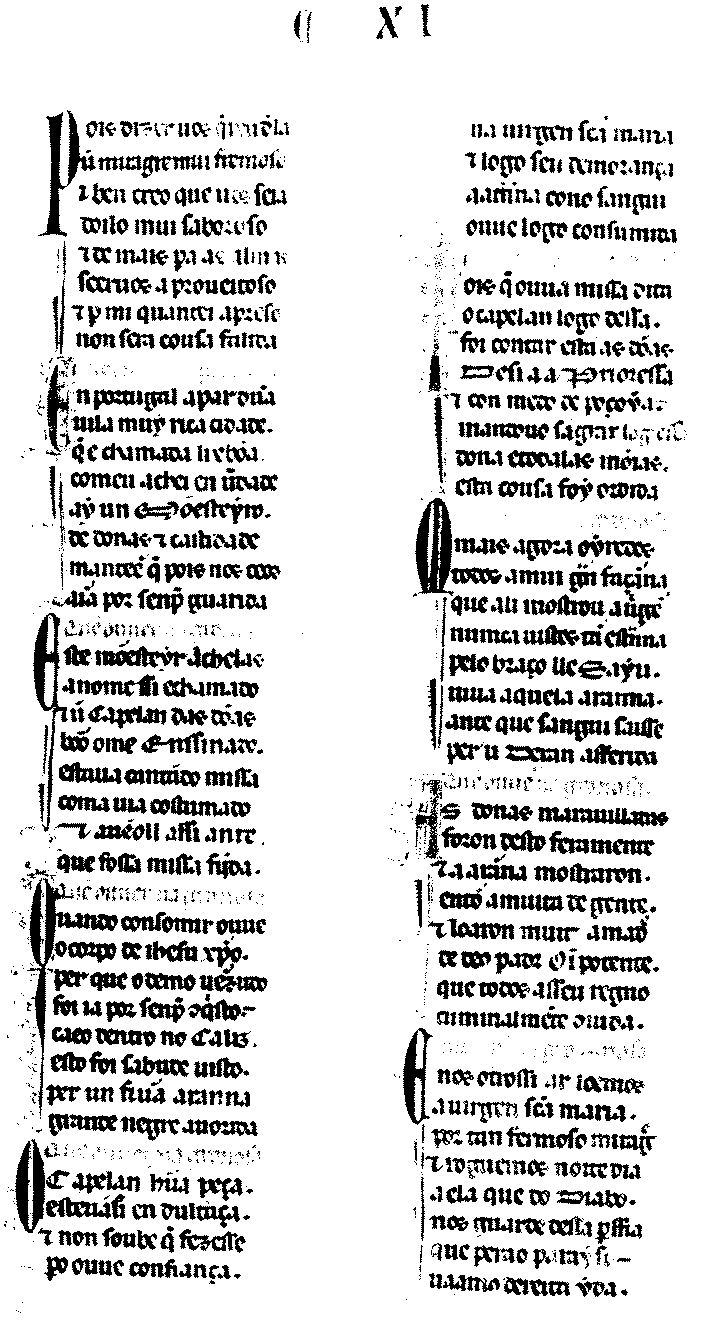
- 13th century CE, Alfonso X of Castile, Cantigas de Santa Maria, Códice de los músicos, cantiga 181 (facsimile):
- ⁊ el creeu ſeu conſello
- And he took their advice.
- ⁊ el creeu ſeu conſello
Descendants
[edit]Further reading
[edit]Romanian
[edit]Noun
[edit]creer m (plural creeri)
Declension
[edit]Declension of creer
References
[edit]- creer in Academia Română, Micul dicționar academic, ediția a II-a, Bucharest: Univers Enciclopedic, 2010. →ISBN
Spanish
[edit]Etymology
[edit]Inherited from Old Spanish creer,[1] from Latin crēdere, from Proto-Italic *krezðō, from Proto-Indo-European *ḱred dʰeh₁- (“to place one's heart, i.e. to trust, believe”), compound phrase of oblique case form of *ḱḗr (“heart”) and *dʰeh₁- (“to put, place, set”).
Pronunciation
[edit]Verb
[edit]creer (first-person singular present creo, first-person singular preterite creí, past participle creído)
- (transitive) to believe
- (transitive) to think, to believe, to reckon, to be of the opinion
- to give credence to
Conjugation
[edit] Conjugation of creer (See Appendix:Spanish verbs)
| infinitive | creer | ||||||
|---|---|---|---|---|---|---|---|
| gerund | creyendo | ||||||
| past participle | masculine | feminine | |||||
| singular | creído | creída | |||||
| plural | creídos | creídas | |||||
| singular | plural | ||||||
| 1st person | 2nd person | 3rd person | 1st person | 2nd person | 3rd person | ||
| indicative | yo | tú vos |
él/ella/ello usted |
nosotros nosotras |
vosotros vosotras |
ellos/ellas ustedes | |
| present | creo | creestú creésvos |
cree | creemos | creéis | creen | |
| imperfect | creía | creías | creía | creíamos | creíais | creían | |
| preterite | creí | creíste | creyó | creímos | creísteis | creyeron | |
| future | creeré | creerás | creerá | creeremos | creeréis | creerán | |
| conditional | creería | creerías | creería | creeríamos | creeríais | creerían | |
| subjunctive | yo | tú vos |
él/ella/ello usted |
nosotros nosotras |
vosotros vosotras |
ellos/ellas ustedes | |
| present | crea | creastú creásvos2 |
crea | creamos | creáis | crean | |
| imperfect (ra) |
creyera | creyeras | creyera | creyéramos | creyerais | creyeran | |
| imperfect (se) |
creyese | creyeses | creyese | creyésemos | creyeseis | creyesen | |
| future1 | creyere | creyeres | creyere | creyéremos | creyereis | creyeren | |
| imperative | — | tú vos |
usted | nosotros nosotras |
vosotros vosotras |
ustedes | |
| affirmative | creetú creévos |
crea | creamos | creed | crean | ||
| negative | no creas | no crea | no creamos | no creáis | no crean | ||
Selected combined forms of creer
These forms are generated automatically and may not actually be used. Pronoun usage varies by region.
Related terms
[edit]- acreer
- credibilidad
- crédito
- creedor
- creencia
- creíble
- creído
- creyente
- descreer
- no creas
- no te creas
- ya lo creo (“indeed, you bet, you better believe it, you can say that again”)
References
[edit]- ^ Concepción Company Company (1985) “Los futuros en el español medieval, sus orígenes y su evolución [The future tense in Medieval Spanish, its origin and its evolution]”, in Nueva Revista de Filología Hispánica (NRFH)[1] (in Spanish), volume 34, number 1 (PDF), Mexico City: Centro de Estudios Lingüísticos y Literarios (CELL), El Colegio de México, published 1985, , →ISSN, →OCLC, retrieved 2019-06-14, page 105
Further reading
[edit]- “creer”, in Diccionario de la lengua española, Vigésima tercera edición, Real Academia Española, 2014
Categories:
- Asturian lemmas
- Asturian verbs
- Latin non-lemma forms
- Latin verb forms
- Old Galician-Portuguese terms inherited from Latin
- Old Galician-Portuguese terms derived from Latin
- Old Galician-Portuguese terms inherited from Proto-Italic
- Old Galician-Portuguese terms derived from Proto-Italic
- Old Galician-Portuguese terms derived from Proto-Indo-European
- Old Galician-Portuguese terms with IPA pronunciation
- Rhymes:Old Galician-Portuguese/eɾ
- Rhymes:Old Galician-Portuguese/eɾ/2 syllables
- Old Galician-Portuguese lemmas
- Old Galician-Portuguese verbs
- Romanian lemmas
- Romanian nouns
- Romanian countable nouns
- Romanian masculine nouns
- Romanian obsolete forms
- Spanish terms inherited from Old Spanish
- Spanish terms derived from Old Spanish
- Spanish terms inherited from Latin
- Spanish terms derived from Latin
- Spanish terms inherited from Proto-Italic
- Spanish terms derived from Proto-Italic
- Spanish terms derived from Proto-Indo-European
- Spanish 2-syllable words
- Spanish terms with IPA pronunciation
- Spanish terms with audio links
- Rhymes:Spanish/eɾ
- Rhymes:Spanish/eɾ/2 syllables
- Spanish lemmas
- Spanish verbs
- Spanish verbs ending in -er
- Spanish transitive verbs
- Spanish terms with collocations
- Spanish terms with usage examples
- es:Thinking