amigo
English[edit]
Etymology[edit]
Borrowed from Spanish amigo (“friend”), from Latin amīcus (“friend”), derived from amāre (“to love”). Compare French ami, Italian amico, Portuguese amigo and Romanian amic. Doublet of amicus.
Pronunciation[edit]
Noun[edit]
amigo (plural amigos, feminine amiga)
- (informal) A friend.
- Synonyms: see Thesaurus:friend
- 1996, “No Time”, in Hard Core, performed by Lil' Kim ft. Diddy:
- Chillin' in a Benz with my amigos / Tryin' to stick a nigga for his pesos
- (informal, chiefly California) Mexican.
- (historical) A native of the Philippines who was friendly toward the Spanish.
Derived terms[edit]
Translations[edit]
Anagrams[edit]
Bikol Central[edit]
Etymology[edit]
Pronunciation[edit]
Noun[edit]
amígo (feminine amiga, Basahan spelling ᜀᜋᜒᜄᜓ)
Derived terms[edit]
Buhi'non Bikol[edit]
Etymology[edit]
Noun[edit]
amigo
Cebuano[edit]
Etymology[edit]
Borrowed from Spanish amigo (“male friend”), from Old Spanish amigo, amygo, from Latin amīcus.
Pronunciation[edit]
Noun[edit]
amigo (Badlit spelling ᜀᜋᜒᜄᜓ)
Eastern Huasteca Nahuatl[edit]
Etymology[edit]
Noun[edit]
amigo (possessive iamigo)
Galician[edit]
Etymology[edit]
From Old Galician-Portuguese amigo, from Latin amīcus.
Pronunciation[edit]
Noun[edit]
amigo m (plural amigos, feminine amiga, feminine plural amigas)
Related terms[edit]
Adjective[edit]
amigo (feminine amiga, masculine plural amigos, feminine plural amigas)
Iriga Bicolano[edit]
Etymology[edit]
Noun[edit]
amigo
Ladino[edit]
Etymology[edit]
From Old Spanish amigo, amygo, from Latin amīcus.
Noun[edit]
amigo m (Latin spelling, Hebrew spelling אמיגו)
- (male) friend
Coordinate terms[edit]
Libon Bikol[edit]
Etymology[edit]
Noun[edit]
amigo
Masbate Sorsogon[edit]
Etymology[edit]
Noun[edit]
amigo
Masbatenyo[edit]
Etymology[edit]
Noun[edit]
amigo
Miraya Bikol[edit]
Etymology[edit]
Noun[edit]
amigo
Old Galician-Portuguese[edit]
Alternative forms[edit]
Etymology[edit]
From Latin amīcus (“friend; friendly”), from amō (“I love”) + -icus.
Pronunciation[edit]
Noun[edit]
amigo m (plural amigos, feminine amiga, feminine plural amigas)
- friend
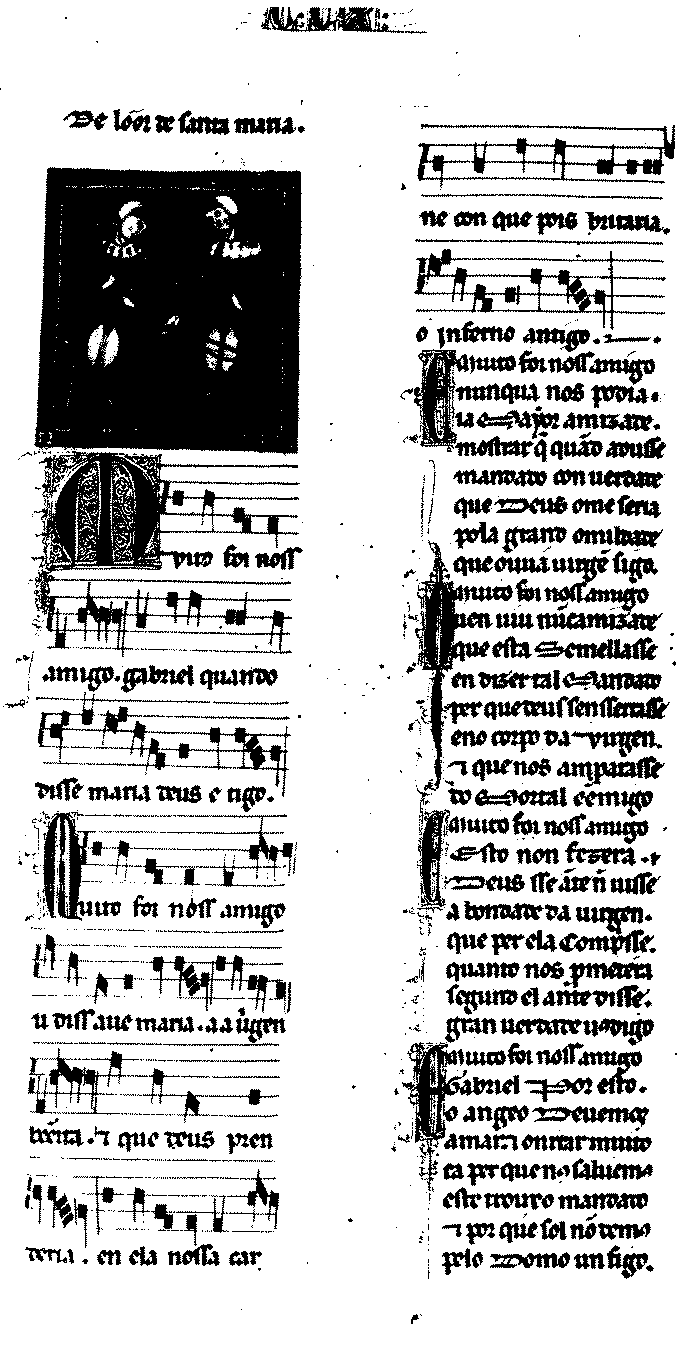
- 13th century CE, Alfonso X of Castile, Cantigas de Santa Maria, E codex, cantiga 210 (facsimile):
- Mvito foi noſſamigo / gabriel quando diſſe / maria deus e tigo.
- Gabriel was our true friend when he said: "Mary, God is with you".
- Mvito foi noſſamigo / gabriel quando diſſe / maria deus e tigo.
- lover
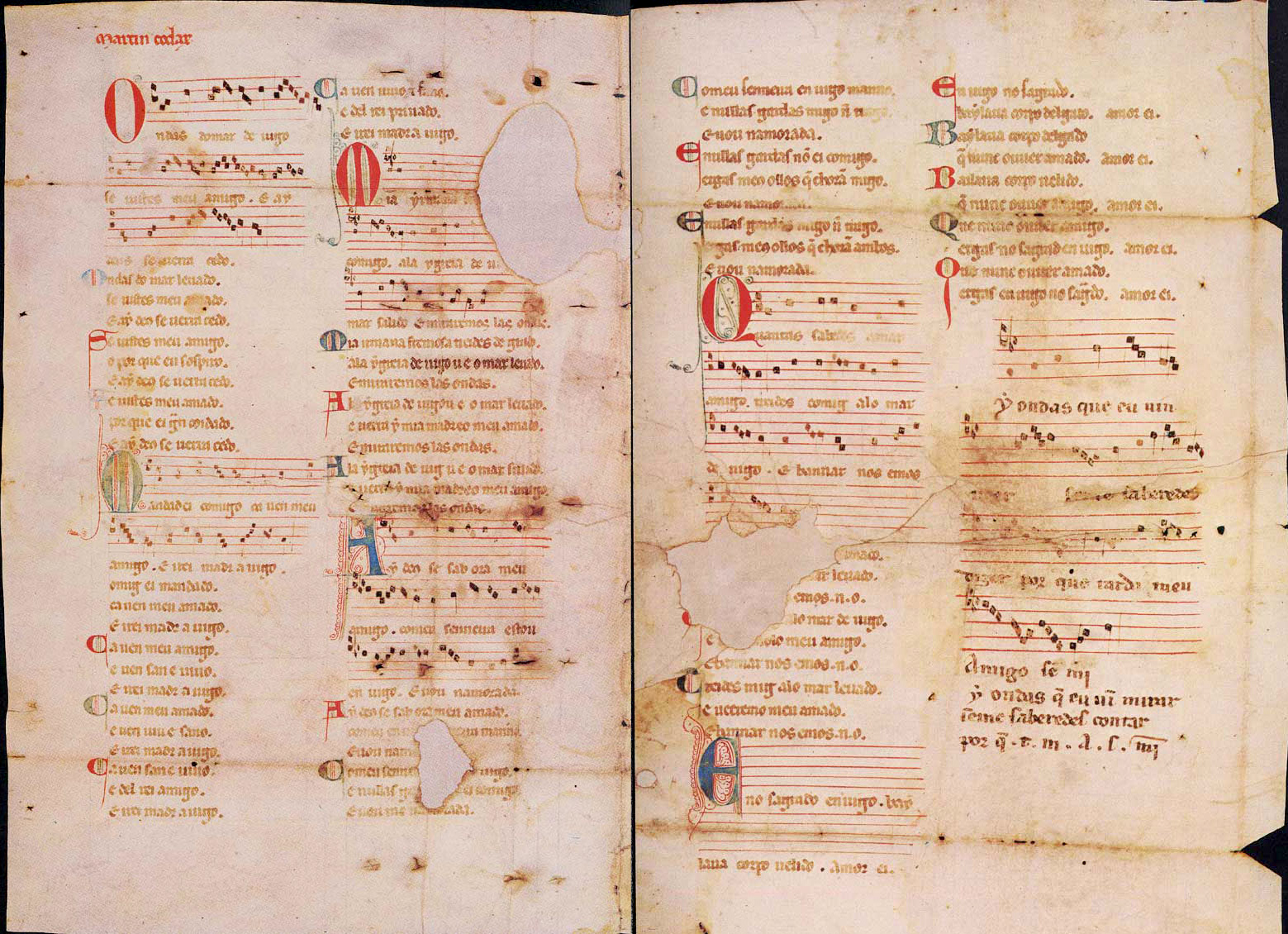
- 13th century, Vindel manuscript, Martín Codax, Ondas do mar de Vigo (facsimile)
- Ondas do mar de uigo / ſe uiſtes meu amigo. / E ay deꝯ ſe uerra cedo.
- Waves of the sea of Vigo / Have you seen my lover? / Oh God, will he return soon?
- 13th century, Vindel manuscript, Martín Codax, Ondas do mar de Vigo (facsimile)
Antonyms[edit]
- (antonym(s) of "friend"): ẽemigo
Descendants[edit]
Portuguese[edit]
Pronunciation[edit]
- (Rural Central Brazil) IPA(key): /ɐˈmi.ɡʷ/
Audio (Oporto, Portugal) (file) Audio (USA) (file) - Hyphenation: a‧mi‧go
Etymology 1[edit]
From Old Galician-Portuguese amigo, from Latin amīcus (“friend; friendly”), from amō (“to love”) + -icus. Compare Catalan amic, French ami, Italian amico, Romanian amic and Spanish amigo.
Noun[edit]
amigo m (plural amigos, feminine amiga, feminine plural amigas)
- friend (person whose company one enjoys)
- Synonyms: camarada, companheiro
- Antonym: inimigo
- João e Maria são meus amigos.
- John and Mary are my friends.
- friend (an associate or thing which provides assistance)
- Sou amigo da natureza.
- I’m a friend of nature.
- Perseverança é a melhor amiga do conhecimento.
- Perseverance is knowledge’s best friend.
- a state with good relations with another state
- O Canadá é amigo dos Estados Unidos.
- Canada is the United States’ friend.
- (Brazil, colloquial, used in the vocative) A term of address for someone
Quotations[edit]
For quotations using this term, see Citations:amigo.
Derived terms[edit]
- amigão (augmentative), amigaço (augmentative)
- amigar
- amigo da onça
- amigo do peito
- amigo oculto
- amigo secreto
- amiguinho (diminutive)
- falso amigo
Adjective[edit]
amigo (feminine amiga, masculine plural amigos, feminine plural amigas, comparable, comparative mais amigo, superlative o mais amigo or amiguíssimo or amicíssimo)
- friendly (characteristic of friendliness)
- Synonym: amigável
- Abraço amigo.
- Friendly hug.
- (military) friendly (of or relating to friendlies)
- Fogo amigo.
- Friendly fire.
- beneficial (helpful or good to something or someone)
Quotations[edit]
For quotations using this term, see Citations:amigo.
Related terms[edit]
Etymology 2[edit]
Verb[edit]
amigo
Southern Catanduanes Bicolano[edit]
Etymology[edit]
Noun[edit]
amigo
Spanish[edit]
Pronunciation[edit]
Etymology 1[edit]
Inherited from Old Spanish amigo, amygo, from Latin amīcus (compare Catalan amic, French ami, Italian amico, Portuguese amigo, Romanian amic), from amō (“to love”).
Noun[edit]
amigo m (plural amigos, feminine amiga, feminine plural amigas)
Derived terms[edit]
Related terms[edit]
Descendants[edit]
- Chamicuro: ameko
- → Cebuano: amigo
- → English: amigo
- → German: Amigo
- → Papiamentu: amigu
- → Turkish: amigo
- → Yucatec Maya: amigoo
Etymology 2[edit]
Verb[edit]
amigo
Further reading[edit]
- “amigo”, in Diccionario de la lengua española, Vigésima tercera edición, Real Academia Española, 2014
Venetian[edit]
Etymology[edit]
Noun[edit]
amigo m (plural amighi) (Alternative plural: amisi)
Waray Sorsogon[edit]
Etymology[edit]
Noun[edit]
amigo
West Albay Bikol[edit]
Etymology[edit]
Noun[edit]
amigo
- English terms borrowed from Spanish
- English terms derived from Spanish
- English terms derived from Latin
- English doublets
- English 3-syllable words
- English terms with IPA pronunciation
- English terms with audio links
- English lemmas
- English nouns
- English informal terms
- English terms with quotations
- California English
- English terms with historical senses
- English terms of address
- Bikol Central terms borrowed from Spanish
- Bikol Central terms derived from Spanish
- Bikol Central terms with IPA pronunciation
- Bikol Central lemmas
- Bikol Central nouns
- Bikol Central terms with Basahan script
- bcl:Bikol Central terms of address
- bcl:Male
- bcl:People
- Buhi'non Bikol terms borrowed from Spanish
- Buhi'non Bikol terms derived from Spanish
- Buhi'non Bikol lemmas
- Buhi'non Bikol nouns
- Cebuano terms borrowed from Spanish
- Cebuano terms derived from Spanish
- Cebuano terms derived from Old Spanish
- Cebuano terms derived from Latin
- Cebuano terms with IPA pronunciation
- Cebuano lemmas
- Cebuano nouns
- Cebuano terms with Badlit script
- Cebuano terms with obsolete senses
- Cebuano terms of address
- ceb:Male
- ceb:People
- Eastern Huasteca Nahuatl terms borrowed from Spanish
- Eastern Huasteca Nahuatl terms derived from Spanish
- Eastern Huasteca Nahuatl lemmas
- Eastern Huasteca Nahuatl nouns
- Galician terms inherited from Old Galician-Portuguese
- Galician terms derived from Old Galician-Portuguese
- Galician terms inherited from Latin
- Galician terms derived from Latin
- Galician terms with IPA pronunciation
- Galician lemmas
- Galician nouns
- Galician countable nouns
- Galician masculine nouns
- Galician adjectives
- Galician terms with usage examples
- gl:People
- Iriga Bicolano terms borrowed from Spanish
- Iriga Bicolano terms derived from Spanish
- Iriga Bicolano lemmas
- Iriga Bicolano nouns
- Ladino terms derived from Old Spanish
- Ladino terms derived from Latin
- Ladino lemmas
- Ladino nouns
- Ladino nouns in Latin script
- Ladino masculine nouns
- Libon Bikol terms borrowed from Spanish
- Libon Bikol terms derived from Spanish
- Libon Bikol lemmas
- Libon Bikol nouns
- Masbate Sorsogon terms borrowed from Spanish
- Masbate Sorsogon terms derived from Spanish
- Masbate Sorsogon lemmas
- Masbate Sorsogon nouns
- Masbatenyo terms borrowed from Spanish
- Masbatenyo terms derived from Spanish
- Masbatenyo lemmas
- Masbatenyo nouns
- Miraya Bikol terms borrowed from Spanish
- Miraya Bikol terms derived from Spanish
- Miraya Bikol lemmas
- Miraya Bikol nouns
- Old Galician-Portuguese terms inherited from Latin
- Old Galician-Portuguese terms derived from Latin
- Old Galician-Portuguese terms with IPA pronunciation
- Old Galician-Portuguese lemmas
- Old Galician-Portuguese nouns
- Old Galician-Portuguese masculine nouns
- Old Galician-Portuguese terms with quotations
- Portuguese 3-syllable words
- Portuguese terms with IPA pronunciation
- Portuguese 2-syllable words
- Portuguese terms with audio links
- Portuguese terms inherited from Old Galician-Portuguese
- Portuguese terms derived from Old Galician-Portuguese
- Portuguese terms inherited from Latin
- Portuguese terms derived from Latin
- Portuguese lemmas
- Portuguese nouns
- Portuguese countable nouns
- Portuguese masculine nouns
- Portuguese terms with usage examples
- Brazilian Portuguese
- Portuguese colloquialisms
- Portuguese adjectives
- Portuguese comparable adjectives
- pt:Military
- Portuguese non-lemma forms
- Portuguese verb forms
- Southern Catanduanes Bicolano terms borrowed from Spanish
- Southern Catanduanes Bicolano terms derived from Spanish
- Southern Catanduanes Bicolano lemmas
- Southern Catanduanes Bicolano nouns
- Spanish 3-syllable words
- Spanish terms with IPA pronunciation
- Spanish terms with audio links
- Rhymes:Spanish/iɡo
- Rhymes:Spanish/iɡo/3 syllables
- Spanish terms inherited from Old Spanish
- Spanish terms derived from Old Spanish
- Spanish terms inherited from Latin
- Spanish terms derived from Latin
- Spanish lemmas
- Spanish nouns
- Spanish countable nouns
- Spanish masculine nouns
- Spanish terms with usage examples
- Spanish slang
- Rioplatense Spanish
- Spanish non-lemma forms
- Spanish verb forms
- es:Love
- es:People
- Spanish terms of address
- Venetian terms inherited from Latin
- Venetian terms derived from Latin
- Venetian lemmas
- Venetian nouns
- Venetian masculine nouns
- Waray Sorsogon terms borrowed from Spanish
- Waray Sorsogon terms derived from Spanish
- Waray Sorsogon lemmas
- Waray Sorsogon nouns
- West Albay Bikol terms borrowed from Spanish
- West Albay Bikol terms derived from Spanish
- West Albay Bikol lemmas
- West Albay Bikol nouns