体
| ||||||||
Translingual[edit]
| Stroke order | |||
|---|---|---|---|

| |||
| Japanese | 体 |
|---|---|
| Simplified | 体 |
| Traditional | 體/体 |
Alternative forms[edit]
In the historical Chinese dictionary Longkan Shoujian (龍龕手鑑), this character is written in the form of ⿰亻夲.
Han character[edit]
体 (Kangxi radical 9, 人+5, 7 strokes, cangjie input 人木一 (ODM), four-corner 25230, composition ⿰亻本)
Derived characters[edit]
Related characters[edit]
- 體 (Orthodox traditional form of 体)
References[edit]
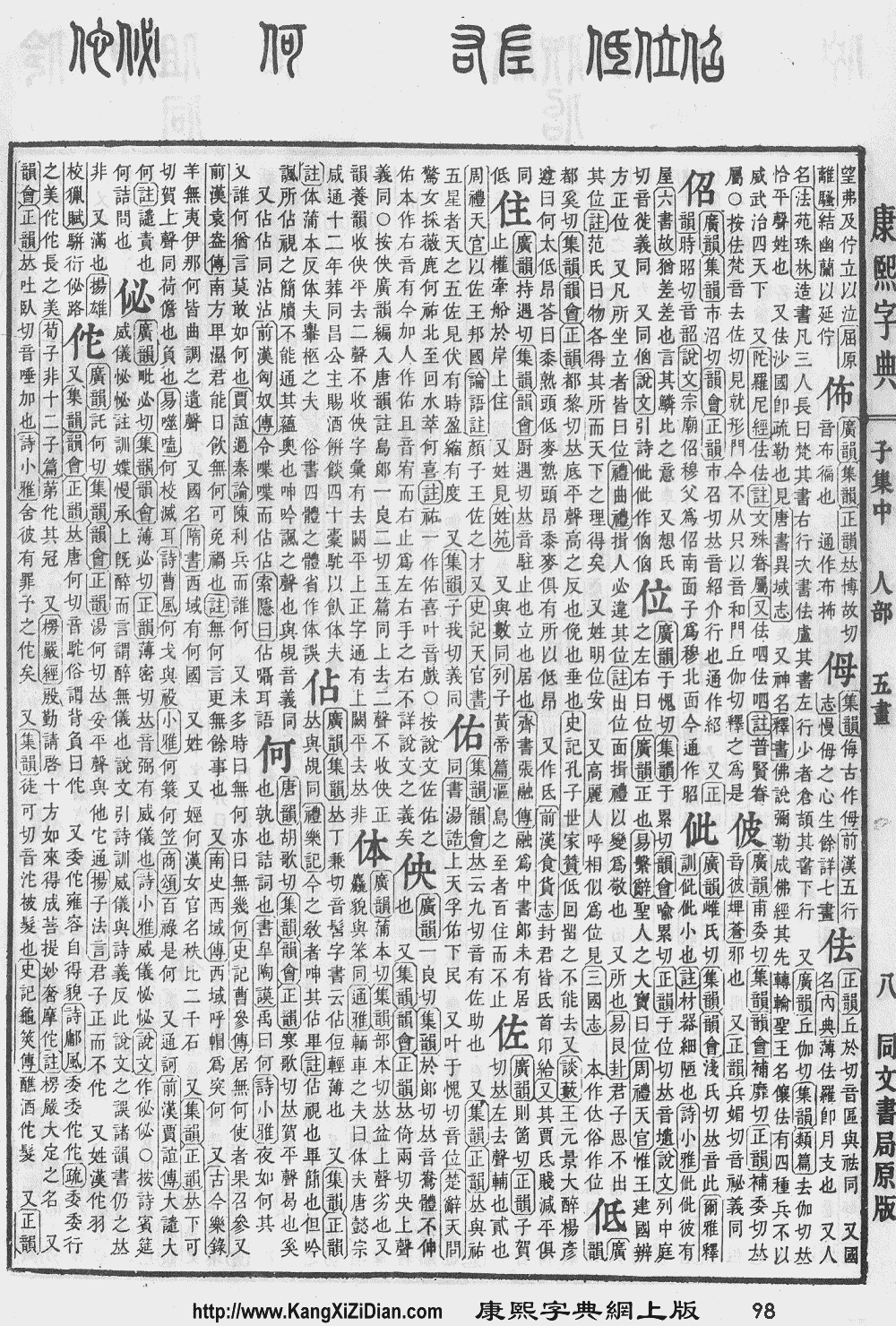
- Kangxi Dictionary: page 98, character 13
- Dai Kanwa Jiten: character 509
- Dae Jaweon: page 208, character 3
- Hanyu Da Zidian (first edition): volume 1, page 130, character 1
- Unihan data for U+4F53
Chinese[edit]
Etymology 1[edit]
Glyph origin[edit]
Ideogrammic compound (會意/会意) : 亻 (“person”) + 本 (“basis”).
Definitions[edit]
| For pronunciation and definitions of 体 – see 體 (“body; part of the body; etc.”). (This character is the simplified and variant form of 體). |
Notes:
|
Etymology 2[edit]
| simp. and trad. |
体 | |
|---|---|---|
Glyph origin[edit]
| Historical forms of the character 体 | ||
|---|---|---|
| Western Zhou | Shuowen Jiezi (compiled in Han) | Liushutong (compiled in Ming) |
| Bronze inscriptions | Small seal script | Transcribed ancient scripts |

|

|

|
Phono-semantic compound (形聲/形声, OC *bɯːnʔ) : semantic 亻 (“person”) + phonetic 本 (OC *pɯːnʔ).
Pronunciation[edit]
Definitions[edit]
体
- Alternative form of 笨 (bèn, “coarse appearance; inferior”)
- Used in 体夫 (“pallbearer”).
Compounds[edit]
Etymology 3[edit]
| simp. and trad. |
体 | |
|---|---|---|
Pronunciation[edit]
Definitions[edit]
体
- ‡ name of prison
Japanese[edit]
| 体 | |
| 體 |
Kanji[edit]
(grade 2 “Kyōiku” kanji, shinjitai kanji, kyūjitai form 體)
Readings[edit]
- Go-on: たい (tai, Jōyō)
- Kan-on: てい (tei, Jōyō)
- Kun: からだ (karada, 体, Jōyō)
- Nanori: なり (nari); み (mi); みる (miru); もと (moto)
Usage notes[edit]
This character was originally an alternative form of 笨 (bèn) as used in Chinese. This usage now appears to be obsolete, at least in Japanese, where 体 and 笨 are distinct characters and are not interchangeable. See the Chinese 体 and Japanese 笨 entries for further details.
Compounds[edit]
Etymology 1[edit]
| Kanji in this term |
|---|
| 体 |
| たい Grade: 2 |
| goon |
| Alternative spelling |
|---|
| 體 (kyūjitai) |
From Middle Chinese 體 (MC thejX).
The 呉音 (goon, literally “Wu sound”) reading, so likely the initial borrowing from Middle Chinese.
Pronunciation[edit]
Counter[edit]
- counter for humanoid objects
- 2017 March 25, “リンク・スパイダー [Link Spider]”, in STARTER DECK, Konami:
- 通常モンスター1体
①:1ターンに1度、自分メインフェイズに発動できる。手札からレベル4以下の通常モンスター1体をこのカードのリンク先に特殊召喚する。- Tsūjō Monsutā ittaī
Chi: Ittān ni ichi-do, jibun Mein Feizu ni hatsudō dekiru. tefuda kara Reberu yon ika no Tsūjō Monsutā ittai o kono kādo no rinku-saki ni Tokushu Shōkan suru. - 1 or more Normal Monsters
1: Once per turn, can be activated during your Main Phase. Special Summons 1 Normal Monster of Level 4 or lower from your hand to where this card is linked to.
- Tsūjō Monsutā ittaī
- 通常モンスター1体
Noun[edit]
- the body (e.g., of a human or animal)
- a substance, matter
- a form, shape
- (algebra) field (commutative ring with invertible nonzero elements)
Derived terms[edit]
- 体位 (taī)
- 体育 (taīku)
- 体液 (taieki)
- 体温 (taion)
- 体外 (taigai)
- 体格 (taikaku)
- 体感 (taikan)
- 体技 (taigi)
- 体協 (taikyō)
- 体躯 (taiku)
- 体腔 (taikū)
- 体刑 (taikei)
- 体型 (taikei)
- 体形 (taikei)
- 体系 (taikei)
- 体験 (taiken)
- 体現 (taigen)
- 体言 (taigen)
- 体質 (taishitsu)
- 体重 (taijū)
- 体臭 (taishutsu)
- 体術 (taijutsu)
- 体制 (taisei)
- 体勢 (taisei)
- 体積 (taiseki)
- 体操 (taisō)
- 体中 (taichū)
- 体調 (taichō)
- 体長 (taichō)
- 体得 (taitoku)
- 体内 (tainai)
- 体認 (tainin)
- 体熱 (tainetsu)
- 体罰 (taibatsu)
- 体貌 (taibotsu)
- 体面 (taimen)
- 体毛 (taimō)
- 体様 (taiyō)
- 体要 (taiyō)
- 体量 (tairyō)
- 体力 (tairyoku)
- ガラス体 (garasutai)
- 字体 (jitai)
- 硝子体 (shōshitai)
- 身体 (shintai)
- 肉体 (nikutai)
- 扁桃体 (hentōtai)
Etymology 2[edit]
| Kanji in this term |
|---|
| 体 |
| てい Grade: 2 |
| kan’on |
| Alternative spellings |
|---|
| 體 (kyūjitai) 態 |
From Middle Chinese 體 (MC thejX).
The 漢音 (kan'on, literally “Han sound”) reading, so likely a later borrowing from Middle Chinese.
Pronunciation[edit]
Noun[edit]
- an outward appearance, look, aspect
- そういうていで ― sō iu tei de ― assuming that it is so
Derived terms[edit]
Etymology 3[edit]
| Kanji in this term |
|---|
| 体 |
| からだ Grade: 2 |
| kun’yomi |
| Alternative spelling |
|---|
| 體 (kyūjitai) |
| For pronunciation and definitions of 体 – see the following entry. | ||
| ||
| (This term, 体, is an alternative spelling of the above term.) |
References[edit]
- ↑ 1.0 1.1 Matsumura, Akira, editor (2006), 大辞林 (in Japanese), Third edition, Tōkyō: Sanseidō, →ISBN
- ↑ 2.0 2.1 NHK Broadcasting Culture Research Institute, editor (1998), NHK日本語発音アクセント辞典 [NHK Japanese Pronunciation Accent Dictionary] (in Japanese), Tōkyō: NHK Publishing, →ISBN
Korean[edit]
Etymology 1[edit]
From Middle Chinese 體 (MC thejX).
Hanja[edit]
Etymology 2[edit]
From Middle Chinese 体 (MC bwonX).
Hanja[edit]
体 (eumhun 용렬할 분 (yongnyeolhal bun))
References[edit]
- 국제퇴계학회 대구경북지부 (國際退溪學會 大邱慶北支部) (2007). Digital Hanja Dictionary, 전자사전/電子字典. [2]
Okinawan[edit]
Kanji[edit]
Readings[edit]
Compounds[edit]
Etymology[edit]
| Kanji in this term |
|---|
| 体 |
| からた Grade: 2 |
| kun’yomi |
| Alternative spelling |
|---|
| 體 (kyūjitai) |
Cognate with Japanese 体 (karada).[1]
Pronunciation[edit]
Noun[edit]
体 (karata)
- body
- 体洗いん
- karata arain
- to wash [one’s] body / to wash oneself
- 体洗いん
See also[edit]
- 胴 (dū)
References[edit]
- ^ “からた【体・躰・躯・身体】” in JLect - Japonic Languages and Dialects Database Dictionary, 2019.
- ^ 沖縄語辞典 (Okinawago Jiten, “Okinawan Dictionary”)[1], 1963
Vietnamese[edit]
Etymology 1[edit]
Han character[edit]
Etymology 2[edit]
Han character[edit]
References[edit]
- CJK Unified Ideographs block
- Han script characters
- Translingual lemmas
- Translingual symbols
- Han ideogrammic compounds
- Chinese lemmas
- Mandarin lemmas
- Sichuanese lemmas
- Dungan lemmas
- Cantonese lemmas
- Taishanese lemmas
- Gan lemmas
- Hakka lemmas
- Jin lemmas
- Northern Min lemmas
- Eastern Min lemmas
- Hokkien lemmas
- Teochew lemmas
- Wu lemmas
- Xiang lemmas
- Chinese nouns
- Mandarin nouns
- Sichuanese nouns
- Dungan nouns
- Cantonese nouns
- Taishanese nouns
- Gan nouns
- Hakka nouns
- Jin nouns
- Northern Min nouns
- Eastern Min nouns
- Hokkien nouns
- Teochew nouns
- Wu nouns
- Xiang nouns
- Chinese verbs
- Mandarin verbs
- Sichuanese verbs
- Dungan verbs
- Cantonese verbs
- Taishanese verbs
- Gan verbs
- Hakka verbs
- Jin verbs
- Northern Min verbs
- Eastern Min verbs
- Hokkien verbs
- Teochew verbs
- Wu verbs
- Xiang verbs
- Chinese proper nouns
- Mandarin proper nouns
- Sichuanese proper nouns
- Dungan proper nouns
- Cantonese proper nouns
- Taishanese proper nouns
- Gan proper nouns
- Hakka proper nouns
- Jin proper nouns
- Northern Min proper nouns
- Eastern Min proper nouns
- Hokkien proper nouns
- Teochew proper nouns
- Wu proper nouns
- Xiang proper nouns
- Chinese terms with IPA pronunciation
- Chinese Han characters
- Chinese simplified forms
- Chinese variant forms
- Han phono-semantic compounds
- Middle Chinese lemmas
- Old Chinese lemmas
- Chinese adjectives
- Mandarin adjectives
- Cantonese adjectives
- Chinese terms with obsolete senses
- Japanese Han characters
- Grade 2 kanji
- Japanese kanji with goon reading たい
- Japanese kanji with kan'on reading てい
- Japanese kanji with kun reading からだ
- Japanese kanji with nanori reading なり
- Japanese kanji with nanori reading み
- Japanese kanji with nanori reading みる
- Japanese kanji with nanori reading もと
- Japanese terms spelled with 体 read as たい
- Japanese terms read with on'yomi
- Japanese terms derived from Middle Chinese
- Japanese terms with IPA pronunciation
- Japanese lemmas
- Japanese counters
- Japanese terms with multiple readings
- Japanese terms spelled with second grade kanji
- Japanese terms written with one Han script character
- Japanese terms spelled with 体
- Japanese single-kanji terms
- Japanese terms with usage examples
- Japanese nouns
- ja:Algebra
- Japanese terms spelled with 体 read as てい
- Japanese terms spelled with 体 read as からだ
- Japanese terms read with kun'yomi
- Korean terms derived from Middle Chinese
- Korean lemmas
- Korean Han characters
- Okinawan Han characters
- Okinawan kanji with on reading てー
- Okinawan kanji with kun reading からた
- Okinawan kanji with kun readings missing okurigana designation
- Okinawan terms spelled with 体 read as からた
- Okinawan terms read with kun'yomi
- Okinawan terms with IPA pronunciation
- Okinawan lemmas
- Okinawan nouns
- Okinawan terms spelled with second grade kanji
- Okinawan terms written with one Han script character
- Okinawan terms spelled with 体
- Okinawan single-kanji terms
- Okinawan terms with usage examples
- ryu:Anatomy
- ryu:Body parts
- Vietnamese lemmas
- Vietnamese Han characters
- CJKV simplified characters which already existed as traditional characters