vilão
Jump to navigation
Jump to search
Old Galician-Portuguese
[edit]Etymology
[edit]From Late Latin vīllānus (“farm worker”), from vīlla.
Pronunciation
[edit]Noun
[edit]vilão m (plural vilãos)
- villein, peasant
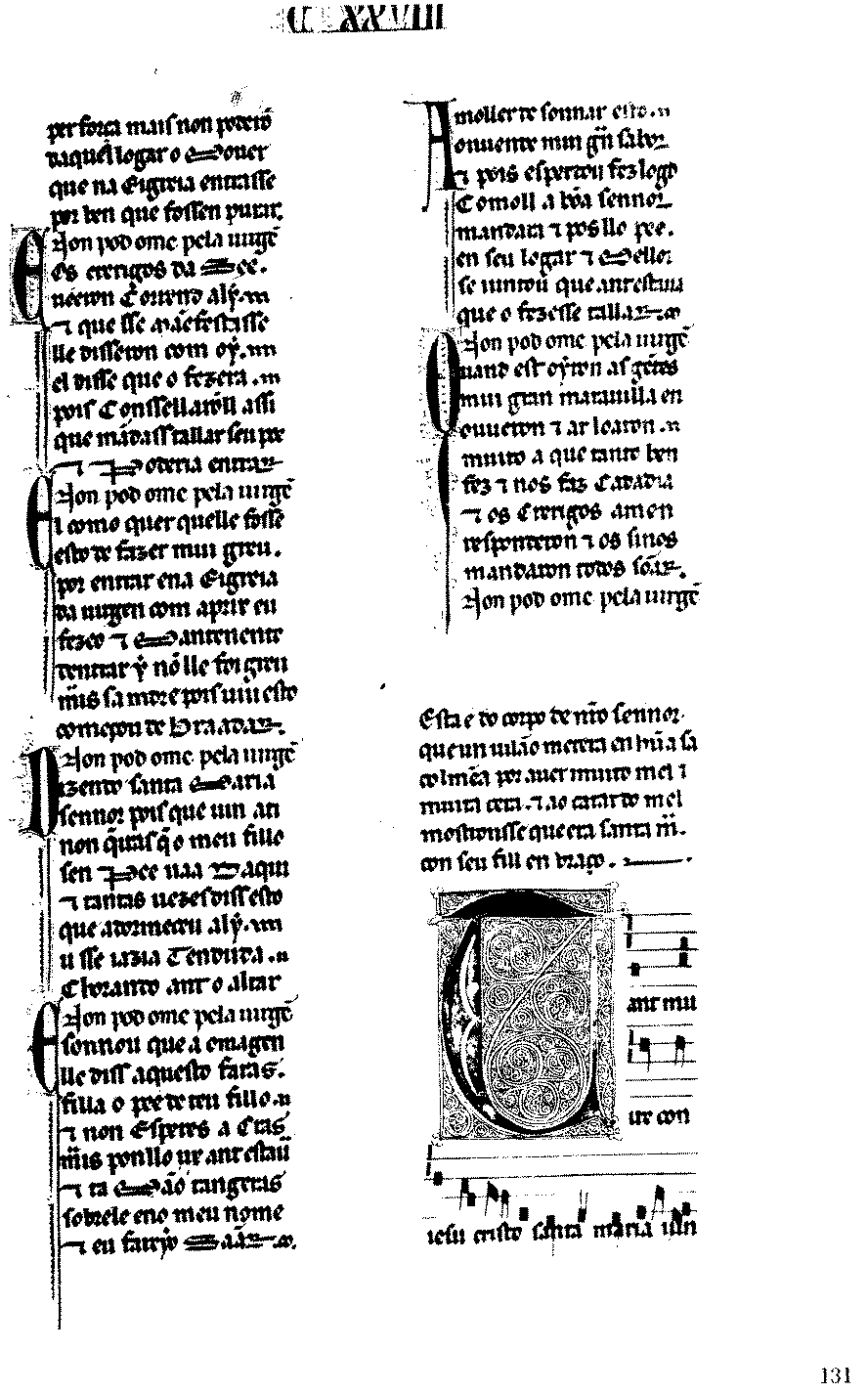
- 13th century CE, Alfonso X of Castile, Cantigas de Santa Maria, Códice de los músicos, cantiga 128 (facsimile):
- Eſta e do corpo de n[oſtr]o ſennor / que un vilão metera en hũa / ſa colmẽa por aver muito mel / i muita cera […]
- This one is (about) the body of our Lord, which a peasant placed in one of his beehives because there was a lot of honey and a lot of wax […]
Descendants
[edit]Portuguese
[edit]

Alternative forms
[edit]Etymology
[edit]From Old Galician-Portuguese vilão, from Late Latin vīllānus (“farm worker”), from vīlla. Cognate with Galician vilán and Spanish villano.
Pronunciation
[edit]
- Rhymes: -ɐ̃w̃
- Hyphenation: vi‧lão
Noun
[edit]vilão m (plural vilãos or vilães or vilões, feminine vilã or viloa, feminine plural vilãs or viloas)
- villain (a vile, wicked person)
- villain (bad person in a work of fiction)
- something which causes a problem
- (historical) villein (a feudal tenant)
- (obsolete) a non-noble who lives in a city or village
Derived terms
[edit]Adjective
[edit]vilão (feminine vilã or viloa, masculine plural vilãos or vilões or vilães, feminine plural vilãs or viloas)
- villainous (of, relating to, or appropriate to a villain)
- (uncommon) coarse (lacking refinement)
- Synonyms: see Thesaurus:grosseiro
- Antonyms: see Thesaurus:grosseiro
- vile; wicked
- (obsolete) village or city-dwelling
Related terms
[edit]Descendants
[edit]- Macanese: vilám
References
[edit]- “vilão” in Dicionário Aberto based on Novo Diccionário da Língua Portuguesa de Cândido de Figueiredo, 1913
- “vilão” in Michaelis Dicionário Brasileiro da Língua Portuguesa.
- “vilão” in Dicionário Priberam da Língua Portuguesa.
- “vilão” in Dicionário infopédia da Língua Portuguesa. Porto: Porto Editora, 2003–2024.
Categories:
- Old Galician-Portuguese terms inherited from Late Latin
- Old Galician-Portuguese terms derived from Late Latin
- Old Galician-Portuguese terms with IPA pronunciation
- Old Galician-Portuguese lemmas
- Old Galician-Portuguese nouns
- Old Galician-Portuguese masculine nouns
- Old Galician-Portuguese terms with quotations
- Portuguese terms inherited from Old Galician-Portuguese
- Portuguese terms derived from Old Galician-Portuguese
- Portuguese terms inherited from Late Latin
- Portuguese terms derived from Late Latin
- Portuguese 2-syllable words
- Portuguese terms with IPA pronunciation
- Rhymes:Portuguese/ɐ̃w̃
- Rhymes:Portuguese/ɐ̃w̃/2 syllables
- Portuguese lemmas
- Portuguese nouns
- Portuguese countable nouns
- Portuguese nouns with multiple plurals
- Portuguese masculine nouns
- Portuguese terms with historical senses
- Portuguese terms with obsolete senses
- Portuguese adjectives
- Portuguese terms with uncommon senses
- Portuguese terms suffixed with -ão