desire
Jump to navigation
Jump to search
English[edit]
Etymology[edit]
From Middle English desire (noun) and desiren (verb), from Old French desirer, desirrer, from Latin dēsīderō (“to long for, desire, feel the want of, miss, regret”), apparently from de- + sidus (in the phrase de sidere, "from the stars") in connection with astrological hopes. Compare consider and desiderate. Displaced native Old English wilnung (“desire”) and wilnian (“to desire”).
Pronunciation[edit]
- (Received Pronunciation) enPR: dĭ-zīrʹ, dĭ-zīʹər, IPA(key): /dɪˈzaɪə/
- (General American) enPR: dĭ-zīrʹ, dĭ-zīʹər, dē-zīrʹ, dē-zīʹər, IPA(key): /dɪˈzaɪɹ/, /dɪˈzaɪɚ/, /diˈzaɪɹ/, /diˈzaɪɚ/
Audio (US) (file) Audio (US) (file) - Rhymes: -aɪə(ɹ)
- Hyphenation: de‧sire
Verb[edit]
desire (third-person singular simple present desires, present participle desiring, simple past and past participle desired)
- To want; to wish for earnestly.
- I desire to speak with you.
- 1611, The Holy Bible, […] (King James Version), London: […] Robert Barker, […], →OCLC, Exodus 34:24:
- Neither shall any man desire thy land.
- 1874, Alfred Tennyson, “Lancelot and Elaine”, in Idylls of the King (The Works of Alfred Tennyson; VI), cabinet edition, London: Henry S. King & Co., […], →OCLC, page 88:
- [S]eeing you desire your child to live, / Thanks, but you work against your own desire; […]
- To put a request to (someone); to entreat.
- 1526, [William Tyndale, transl.], The Newe Testamẽt […] (Tyndale Bible), [Worms, Germany: Peter Schöffer], →OCLC, Acts:
- And when they founde no cause of deeth in hym, yet desired they Pilate to kyll him.
- 1918, W[illiam] B[abington] Maxwell, chapter III, in The Mirror and the Lamp, Indianapolis, Ind.: The Bobbs-Merrill Company, →OCLC, page 15:
- Mr. Barrett, however, by fawning and flattery, seemed to be able to make not only Mrs. Churchill but everyone else do what he desired.
- To want emotionally or sexually.
- She has desired him since they first met.
- To express a wish for; to entreat; to request.
- 1611, The Holy Bible, […] (King James Version), London: […] Robert Barker, […], →OCLC, 2 Kings 4:28:
- Then shee said, Did I desire a sonne of my Lord ? did I not say, Doe not deceiue me?
- c. 1603–1606, William Shakespeare, “The Tragedie of King Lear”, in Mr. William Shakespeares Comedies, Histories, & Tragedies […] (First Folio), London: […] Isaac Iaggard, and Ed[ward] Blount, published 1623, →OCLC, [Act IV, scene vii]:
- Desire him to go in; trouble him no more.
- To require; to demand; to claim.
- c. 1580, Edmund Spenser, The Teares of the Muses:
- A doleful case desires a doleful song.
- To miss; to regret.
- 1651–1653, Jer[emy] Taylor, ΕΝΙΑΥΤΟΣ [Eniautos]. A Course of Sermons for All the Sundays of the Year. […], 2nd edition, London: […] Richard Royston […], published 1655, →OCLC:
- She shall be pleasant while she lives, and desired when she dies.
Conjugation[edit]
Conjugation of desire
| infinitive | (to) desire | ||
|---|---|---|---|
| present tense | past tense | ||
| 1st-person singular | desire | desired | |
| 2nd-person singular | desire, desirest† | desired, desiredst† | |
| 3rd-person singular | desires, desireth† | desired | |
| plural | desire | ||
| subjunctive | desire | desired | |
| imperative | desire | — | |
| participles | desiring | desired | |
Derived terms[edit]
Related terms[edit]
Translations[edit]
desire — see want
wish for earnestly
|
want emotionally or sexually
|
Noun[edit]
desire (usually uncountable, plural desires)
- (uncountable) The feeling of desiring; an eager longing for something.
- Too much desire can seriously affect one’s judgment.
- 1905, E. M. Forster, Where Angels Fear to Tread , chapter 7:
- He stood...filled with the desire that his son should be like him, and should have sons like him, to people the earth. It is the strongest desire that can come to a man - if it comes to him at all - stronger even than love or the desire for personal immortality.
- (countable) Someone or something wished for.
- It is my desire to speak with you.
- You’re my heart’s desire.
- 2013 June 7, David Simpson, “Fantasy of navigation”, in The Guardian Weekly, volume 188, number 26, page 36:
- It is tempting to speculate about the incentives or compulsions that might explain why anyone would take to the skies in [the] basket [of a balloon]: perhaps out of a desire to escape the gravity of this world or to get a preview of the next; […].
- (uncountable) Strong attraction, particularly romantic or sexual.
- His desire for her kept him awake at night.
- (uncountable) Motivation. (Can we add an example for this sense?)
Synonyms[edit]
- (one or thing wished for): wanna, want-to; See also Thesaurus:desire
- (motivation): wanna, want-to
Derived terms[edit]
Related terms[edit]
Translations[edit]
something wished for
|
strong attraction
|
feeling of desire
|
- The translations below need to be checked and inserted above into the appropriate translation tables. See instructions at Wiktionary:Entry layout § Translations.
Translations to be checked
|
See also[edit]
Further reading[edit]
- “desire”, in Webster’s Revised Unabridged Dictionary, Springfield, Mass.: G. & C. Merriam, 1913, →OCLC.
- “desire”, in The Century Dictionary […], New York, N.Y.: The Century Co., 1911, →OCLC.
Anagrams[edit]
Italian[edit]
Alternative forms[edit]
Etymology[edit]
Borrowed from Old Occitan dezire.
Pronunciation[edit]
Noun[edit]
desire m (plural desiri)
Related terms[edit]
Further reading[edit]
- desire in Treccani.it – Vocabolario Treccani on line, Istituto dell'Enciclopedia Italiana
Anagrams[edit]
Middle English[edit]
Noun[edit]
desire
- desire
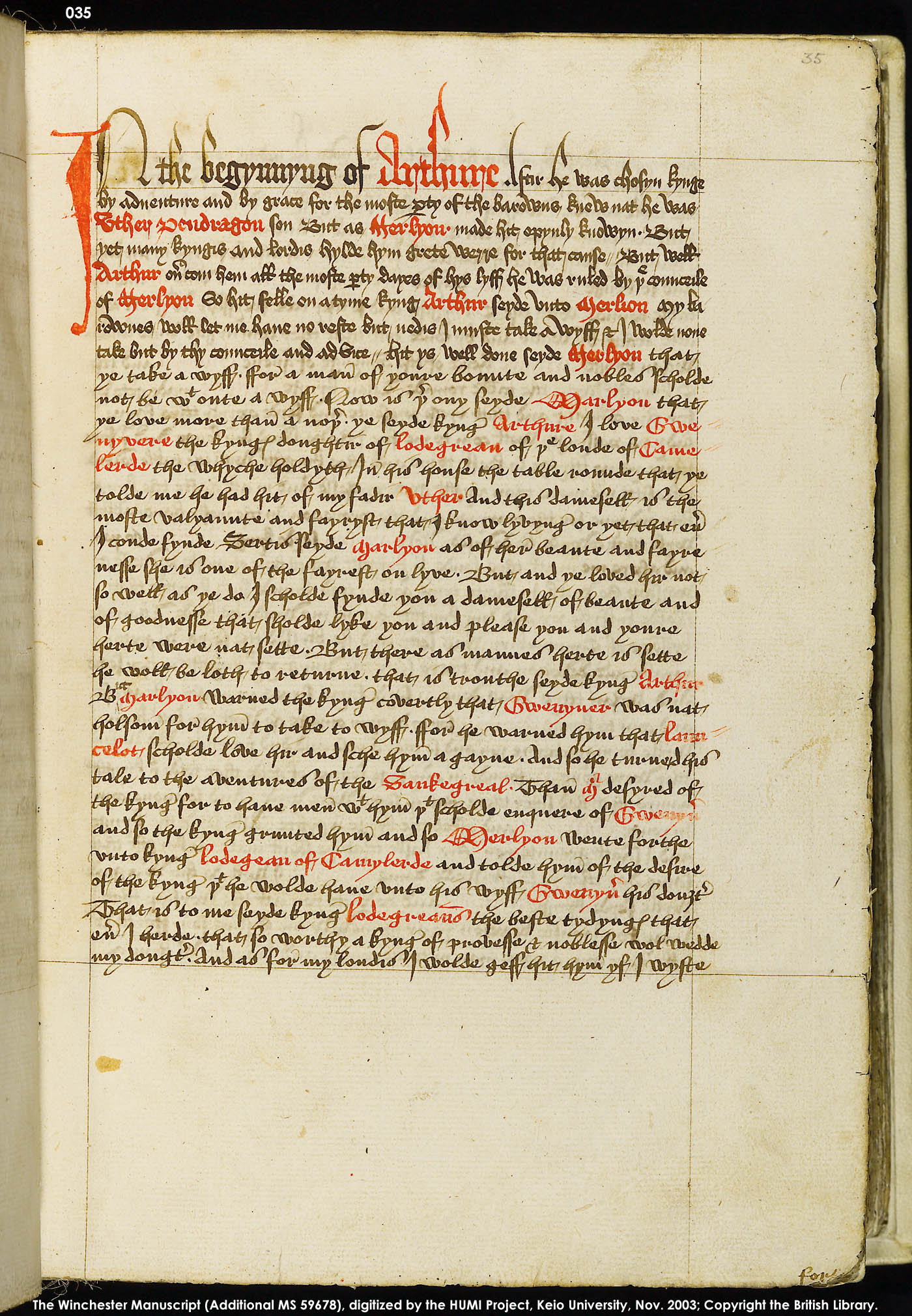
- 1470–1483 (date produced), Thom̃s Malleorre [i.e., Thomas Malory], “[The Tale of King Arthur]”, in Le Morte Darthur (British Library Additional Manuscript 59678), [England: s.n.], folio 35, recto, lines 27–29:
- and ſo Merlyon wente forthe vnto kyng lodegean of Camylerde and tolde hym of the deſire of the kyng that þt he wolde haue vnto his wyff Gwenyu[er] his douȝt[er]
- (please add an English translation of this quotation)
Descendants[edit]
- English: desire
Romanian[edit]
Etymology[edit]
Noun[edit]
desire f (plural desiri)
Declension[edit]
Declension of desire
References[edit]
Categories:
- English terms inherited from Middle English
- English terms derived from Middle English
- English terms derived from Old French
- English terms derived from Latin
- English 3-syllable words
- English terms with IPA pronunciation
- English 2-syllable words
- English terms with audio links
- Rhymes:English/aɪə(ɹ)
- Rhymes:English/aɪə(ɹ)/2 syllables
- English lemmas
- English verbs
- English terms with usage examples
- English terms with quotations
- English nouns
- English uncountable nouns
- English countable nouns
- English control verbs
- en:Directives
- en:Emotions
- Italian terms borrowed from Old Occitan
- Italian terms derived from Old Occitan
- Italian 3-syllable words
- Italian terms with IPA pronunciation
- Rhymes:Italian/ire
- Rhymes:Italian/ire/3 syllables
- Italian lemmas
- Italian nouns
- Italian countable nouns
- Italian masculine nouns
- Italian poetic terms
- Italian archaic terms
- Middle English lemmas
- Middle English nouns
- Middle English terms with quotations
- Romanian terms suffixed with -re
- Romanian lemmas
- Romanian nouns
- Romanian countable nouns
- Romanian feminine nouns