河馬
Jump to navigation
Jump to search
See also: 河马
Chinese
[edit]| river | horse; surname | ||
|---|---|---|---|
| trad. (河馬) | 河 | 馬 | |
| simp. (河马) | 河 | 马 | |
| anagram | 馬河/马河 | ||

Pronunciation
[edit]- Mandarin
- Cantonese
- (Guangzhou–Hong Kong, Jyutping): ho4 maa5
- (Taishan, Wiktionary): ho3 ma4
- Hakka (Sixian, PFS): hò-mâ
- Southern Min (Hokkien, POJ): hô-bé / hô-bée
- Wu (Shanghai, Wugniu): 6wu-mo
- Mandarin
- (Standard Chinese)
- Hanyu Pinyin:
- Zhuyin: ㄏㄜˊ ㄇㄚˇ
- Tongyong Pinyin: hémǎ
- Wade–Giles: ho2-ma3
- Yale: hé-mǎ
- Gwoyeu Romatzyh: hermaa
- Palladius: хэма (xɛma)
- Sinological IPA (key): /xɤ³⁵ mä²¹⁴⁻²¹⁽⁴⁾/
- Homophones:
[Show/Hide] 河馬/河马
荷馬/荷马
- (Standard Chinese)
- Cantonese
- (Standard Cantonese, Guangzhou–Hong Kong)
- Jyutping: ho4 maa5
- Yale: hòh máh
- Cantonese Pinyin: ho4 maa5
- Guangdong Romanization: ho4 ma5
- Sinological IPA (key): /hɔː²¹ maː¹³/
- Homophones:
河馬/河马
荷馬/荷马
- (Taishanese, Taicheng)
- Wiktionary: ho3 ma4
- Sinological IPA (key): /hᵘɔ²² ᵐba²¹/
- (Standard Cantonese, Guangzhou–Hong Kong)
- Hakka
- (Sixian, incl. Miaoli and Meinong)
- Pha̍k-fa-sṳ: hò-mâ
- Hakka Romanization System: hoˇ maˊ
- Hagfa Pinyim: ho2 ma1
- Sinological IPA: /ho¹¹ ma²⁴/
- (Sixian, incl. Miaoli and Meinong)
- Southern Min
- Wu
Noun
[edit]河馬
Derived terms
[edit]Descendants
[edit]Japanese
[edit]

| Kanji in this term | |
|---|---|
| 河 | 馬 |
| か Grade: 5 |
ば Grade: 2 |
| on'yomi | |
Etymology
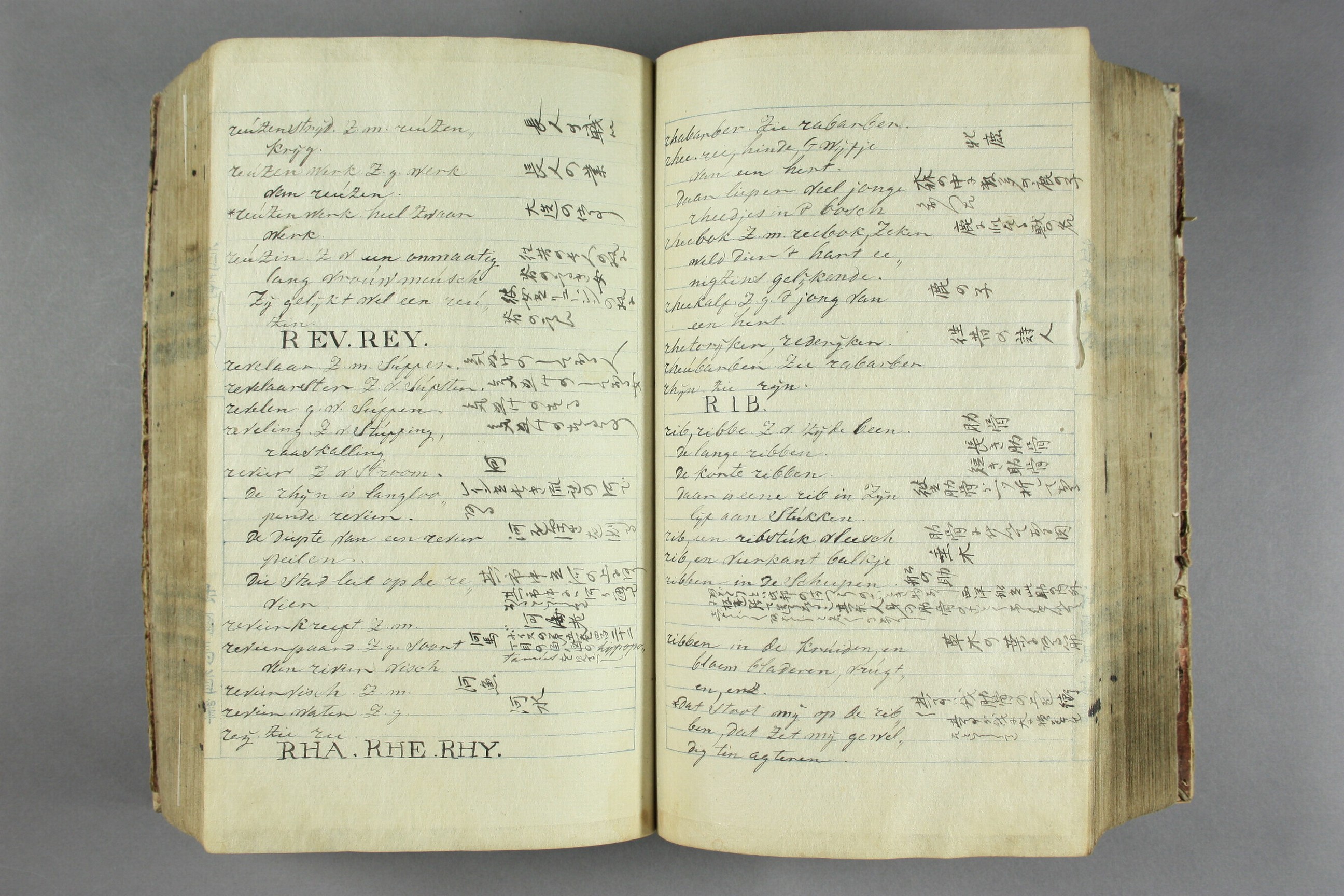
[edit]Calque of Dutch revierpaard, obsolete form of rivierpaard (literally “river horse”), attested in the Doeff-Halma Dictionary, mainly edited in 1816-1817 and published in 1833 (scan available here).
Pronunciation
[edit]Noun
[edit]Usage notes
[edit]- As with many terms that name organisms, this term is often spelled in katakana, especially in biological contexts (where katakana is customary), as カバ.
Derived terms
[edit]- コビトカバ (kobitokaba, “pygmy hippopotamus (Choeropsis liberiensis)”)
References
[edit]- ^ NHK Broadcasting Culture Research Institute, editor (1998), NHK日本語発音アクセント辞典 [NHK Japanese Pronunciation Accent Dictionary] (in Japanese), Tokyo: NHK Publishing, Inc., →ISBN
- ^ Matsumura, Akira, editor (2006), 大辞林 [Daijirin] (in Japanese), Third edition, Tokyo: Sanseidō, →ISBN
Korean
[edit]| Hanja in this term | |
|---|---|
| 河 | 馬 |
Noun
[edit]Vietnamese
[edit]| chữ Hán Nôm in this term | |
|---|---|
| 河 | 馬 |
Noun
[edit]河馬
- chữ Hán form of hà mã (“hippopotamus”).
Categories:
- Mandarin terms with homophones
- Cantonese terms with homophones
- Chinese lemmas
- Mandarin lemmas
- Cantonese lemmas
- Taishanese lemmas
- Hakka lemmas
- Hokkien lemmas
- Wu lemmas
- Chinese nouns
- Mandarin nouns
- Cantonese nouns
- Taishanese nouns
- Hakka nouns
- Hokkien nouns
- Wu nouns
- Chinese terms with IPA pronunciation
- Chinese terms spelled with 河
- Chinese terms spelled with 馬
- zh:Even-toed ungulates
- Japanese terms spelled with 河 read as か
- Japanese terms spelled with 馬 read as ば
- Japanese terms read with on'yomi
- Japanese terms calqued from Dutch
- Japanese terms derived from Dutch
- Japanese terms with IPA pronunciation
- Japanese lemmas
- Japanese nouns
- Japanese terms with multiple readings
- Japanese terms spelled with fifth grade kanji
- Japanese terms spelled with second grade kanji
- Japanese terms with 2 kanji
- ja:Even-toed ungulates
- Korean lemmas
- Korean nouns
- Korean nouns in Han script
- Korean hanja forms
- Vietnamese lemmas
- Vietnamese nouns
- Vietnamese nouns in Han script
- Vietnamese Chữ Hán