炭素
Jump to navigation
Jump to search
Chinese[edit]
| charcoal | plain; element | ||
|---|---|---|---|
| trad. (炭素) | 炭 | 素 | |
| simp. #(炭素) | 炭 | 素 | |
Etymology[edit]
Orthographic borrowing from Japanese 炭素 (tanso).
Pronunciation[edit]
Noun[edit]
炭素
- (Taiwanese Hokkien) carbon
- 卵白質,伊ê成分是炭素,水素,酸素,窒素,伊ê路用是會hō͘人ê身軀得著勢力,也是hō͘細胞加添新ê。 [Taiwanese Hokkien, trad.]
- From: 1926, 張基全 (Tiuⁿ Ki-chôan), 酒佮健康 (Chiú kap Kiān-khong)
- Nn̄g-pe̍h-chit, i ê sêng-hun sī Thàn-sò͘, Chúi-sò͘, Sng-sò͘, Chek-sò͘, i ê lō͘-ēng sī ōe hō͘ lâng ê seng-khu tit-tio̍h sè-le̍k, iā sī hō͘ sè-pau ke-thiⁿ sin--ê. [Pe̍h-ōe-jī]
- Protein: its composition is carbon, hydrogen, oxygen and nitrogen; it is used to give energy to the human body and to regenerate cells.
卵白质,伊ê成分是炭素,水素,酸素,窒素,伊ê路用是会hō͘人ê身躯得着势力,也是hō͘细胞加添新ê。 [Taiwanese Hokkien, simp.]
Synonyms[edit]
- 碳 (tàn)
References[edit]
- 小川尚義 (OGAWA Naoyoshi), editor (1931–1932), “炭素”, in 臺日大辭典 [Taiwanese-Japanese Dictionary][1], volume 2 (overall work in Hokkien and Japanese), Taihoku: Government-General of Taiwan, →OCLC, page 428
Japanese[edit]

| Kanji in this term | |
|---|---|
| 炭 | 素 |
| たん Grade: 3 |
そ Grade: 5 |
| on’yomi | kan’on |
Etymology[edit]
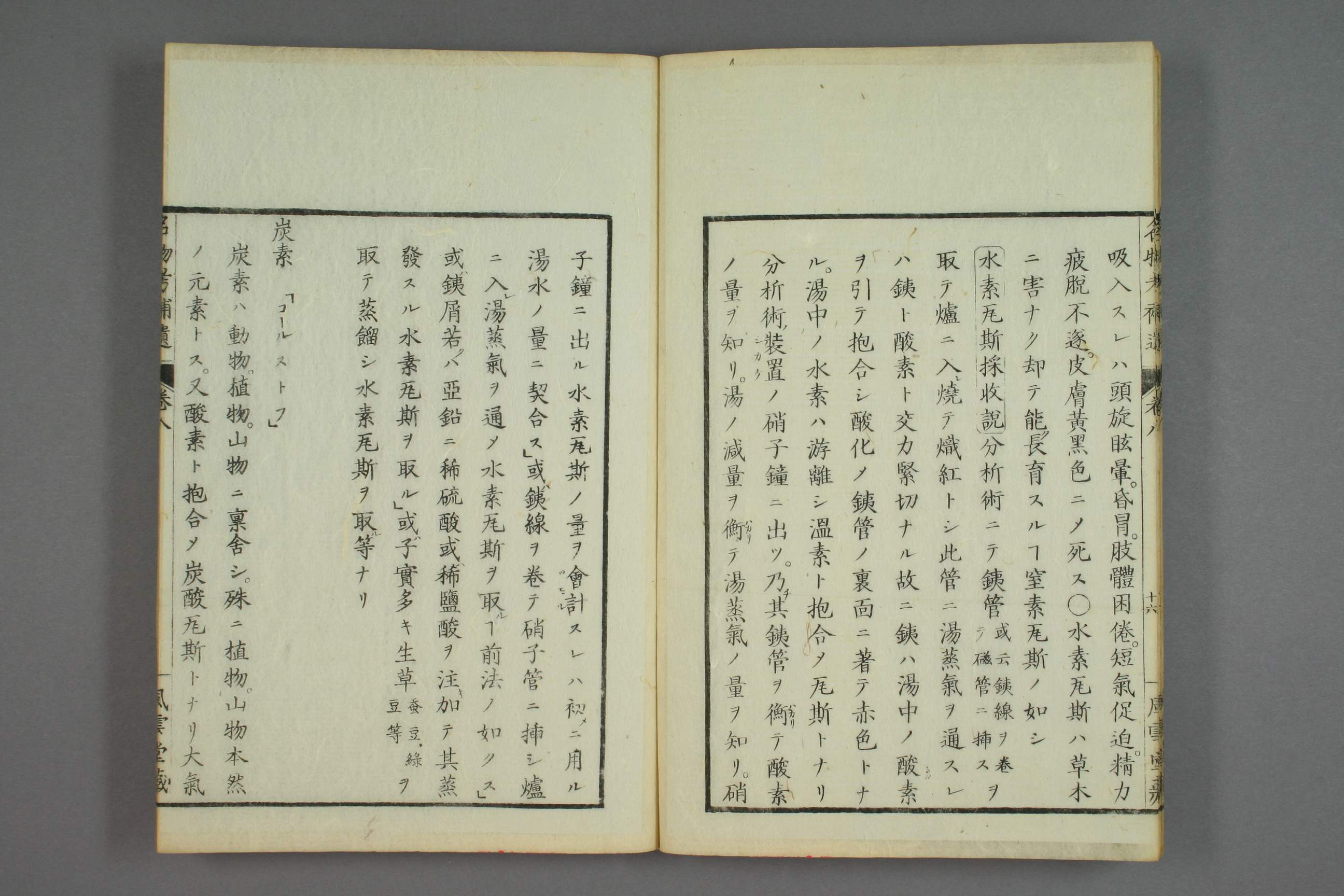
Compound of 炭 (tan, “coal”) + 素 (so, “element”), calque of Dutch koolstof (literally “coal stuff”), from German Kohlenstoff. Compare also Luxembourgish Kuelestoff, Danish kulstof. Coined by Japanese scientist Udagawa Yōan in 1834 in his book 遠西医方名物考補遺 (“炭素”).
Pronunciation[edit]
Noun[edit]
Derived terms[edit]
- 一酸化炭素 (issanka tanso, “carbon monoxide”)
- 一酸化炭素中毒 (issanka tanso chūdoku, “carbon monoxide poisoning”)
- 二硫化炭素 (niryūka tanso, “carbon disulfide”)
- 二酸化炭素 (nisanka tanso, “carbon dioxide”)
- 二酸化炭素削減目標 (nisanka tanso sakugen mokuhyō, “CO2 reduction goal”)
- 二酸化炭素削減義務 (nisanka tanso sakugen zamu, “carbon dioxide reduction obligation”)
- 二酸化炭素排出権 (nisanka tanso haishutsuken, “right to emit carbon dioxide”)
- 含水炭素 (gansui tanso, “carbohydrate”)
- 四塩化炭素 (shienka tanso, “carbon tetrachloride”)
- 放射性炭素 (hōshasei tanso, “radiocarbon”)
- 放射性炭素年代測定 (hōshasei tanso nendai sokutei, “radiocarbon dating”)
- 次酸化炭素 (jisanka tanso, “carbon suboxide”)
- 炭素14 (tanso jūshi, “carbon-14”)
- 炭素14法 (tanso jūshi hō, “carbon-14 dating”)
- 炭素クレジット (tanso kurejitto, “carbon credit”)
- 炭素中立 (tanso chūritsu, “carbon-neutral”)
- 炭素化合物 (tanso kagōbutsu, “carbon compounds”)
- 炭素税 (tansozei, “carbon tax”)
- 炭素繊維 (tanso sen'i, “carbon fiber”)
- 炭素鋼 (tansokō, “carbon steel”)
- 無定形炭素 (muteikei tanso, “amorphous carbon”)
- 酸化炭素 (sanka tanso, “oxide of carbon”)
- 高炭素鋼 (kōtansokō, “high-carbon steel”)
Descendants[edit]
References[edit]
- ^ Matsumura, Akira, editor (2006), 大辞林 [Daijirin] (in Japanese), Third edition, Tōkyō: Sanseidō, →ISBN
- ^ NHK Broadcasting Culture Research Institute, editor (1998), NHK日本語発音アクセント辞典 [NHK Japanese Pronunciation Accent Dictionary] (in Japanese), Tōkyō: NHK Publishing, →ISBN
- ^ Kindaichi, Kyōsuke et al., editors (1997), 新明解国語辞典 [Shin Meikai Kokugo Jiten] (in Japanese), Fifth edition, Tōkyō: Sanseidō, →ISBN
- 2002, Ineko Kondō; Fumi Takano; Mary E Althaus; et. al., Shogakukan Progressive Japanese-English Dictionary, Third Edition, Tokyo: Shōgakukan, →ISBN.
Korean[edit]
| Hanja in this term | |
|---|---|
| 炭 | 素 |
Noun[edit]
Categories:
- Chinese terms borrowed from Japanese
- Chinese orthographic borrowings from Japanese
- Chinese terms derived from Japanese
- Chinese lemmas
- Hokkien lemmas
- Chinese nouns
- Hokkien nouns
- Chinese terms with IPA pronunciation
- Taiwanese Hokkien
- Hokkien terms with quotations
- zh:Chemical elements
- ja:Chemical elements
- Japanese terms spelled with 炭 read as たん
- Japanese terms spelled with 素 read as そ
- Japanese terms read with on'yomi
- Japanese compound terms
- Japanese terms calqued from Dutch
- Japanese terms derived from Dutch
- Japanese terms derived from German
- Japanese terms coined by Udagawa Yōan
- Japanese coinages
- Japanese terms with IPA pronunciation
- Japanese lemmas
- Japanese nouns
- Japanese terms spelled with third grade kanji
- Japanese terms spelled with fifth grade kanji
- Japanese terms written with two Han script characters
- Korean lemmas
- Korean nouns
- Korean nouns in Han script