与
Jump to navigation
Jump to search
See also: 與
| ||||||||
Translingual[edit]
| Stroke order | |||
|---|---|---|---|

| |||
| Japanese | 与 |
|---|---|
| Simplified | 与 |
| Traditional | 與 |
Alternative forms[edit]
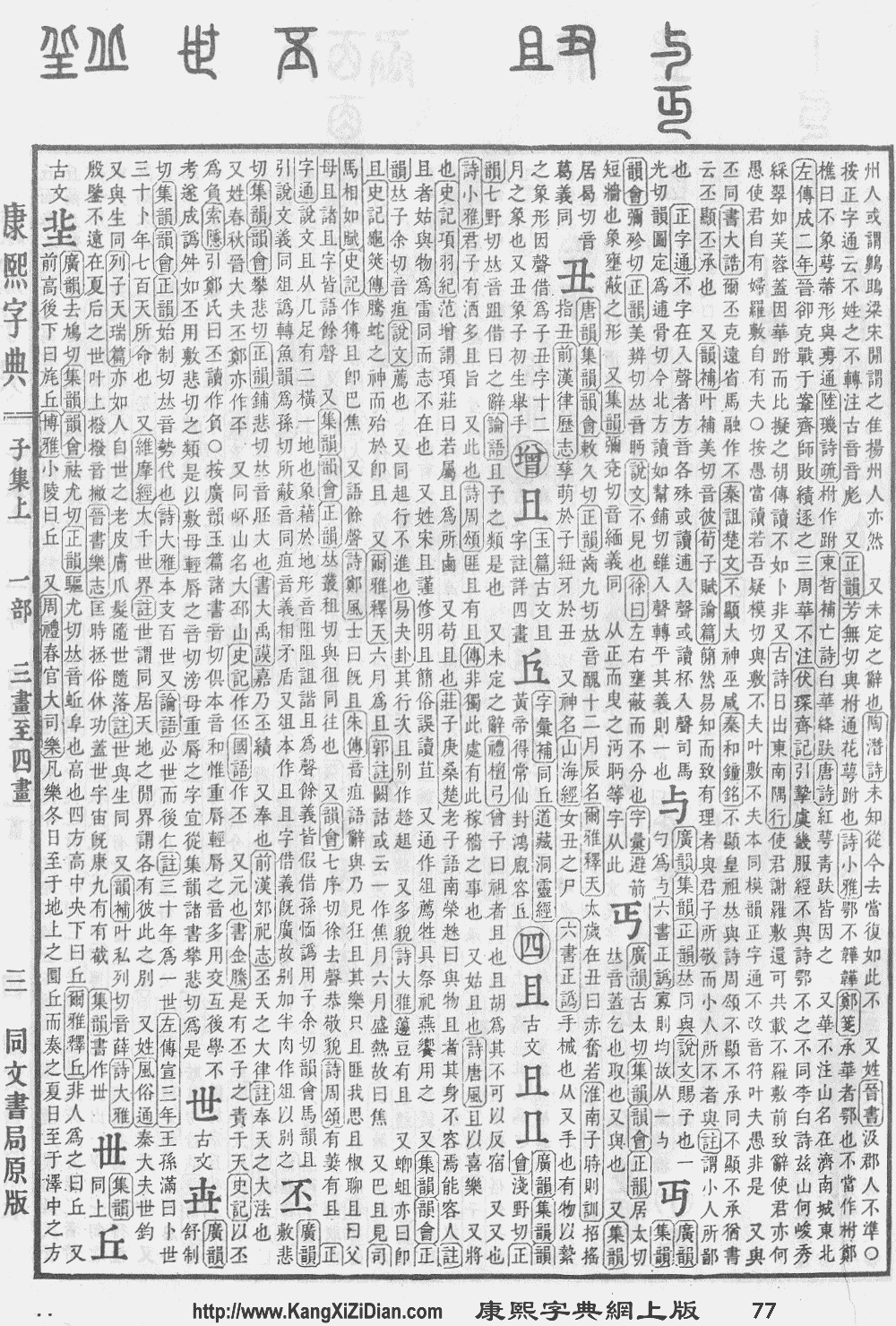
- In the historical Kangxi dictionary, this character is written with four strokes: ⿱⺊⿹𠃌一
- In modern Japanese, the character is written slightly differently, with the final 一 stroke extending across ㇉.
Han character[edit]
与 (Kangxi radical 1, 一+2 in Chinese, 一+3 in Korean, 3 strokes in Chinese, 4 strokes in Korean, cangjie input 卜尸一 (YSM), four-corner 21407 or 21127, composition ⿹⿺㇉一一(GHKTV) or ⿻⿺㇉一一(J))
Derived characters[edit]
- 𠇐, 屿, 𫹮, 𭤰, 玙, 𪾟, 𨊮, 𮡤, 𫚈, 欤, 写, 㝍, 𥫣, 𡴃, 𢌱, 𢗓, 𢪓, 𢮠
- 𠚻 (Exception: Only for Taiwan character form which contains ⿰与刂. Mainland China character form contains ⿰⿱𠂉刁刂 instead)
Related characters[edit]
- 與 (Orthodox traditional form)
Descendants[edit]
- よ (Hiragana character derived from Man'yōgana)
References[edit]
- Kangxi Dictionary: page 77, character 1
- Dai Kanwa Jiten: character 20
- Dae Jaweon: page 154, character 1
- Hanyu Da Zidian (first edition): volume 1, page 5, character 3
- Unihan data for U+4E0E
Chinese[edit]
Glyph origin[edit]
| Historical forms of the character 与 | |||
|---|---|---|---|
| Western Zhou | Warring States | Shuowen Jiezi (compiled in Han) | Liushutong (compiled in Ming) |
| Bronze inscriptions | Chu slip and silk script | Small seal script | Transcribed ancient scripts |

|

|

|

|
Definitions[edit]
| For pronunciation and definitions of 与 – see 與 (“to give; to offer”). (This character is the simplified and variant form of 與). |
Notes:
|
Japanese[edit]
| 与 | |
| 與 |
Kanji[edit]
与
(common “Jōyō” kanji, shinjitai kanji, kyūjitai form 與)
Readings[edit]
- Go-on: よ (yo, Jōyō)
- Kan-on: よ (yo, Jōyō)
- Kun: あたう (atau, 与う)←あたふ (atafu, 与ふ, historical); あたえ (atae, 与え)←あたへ (atafe, 与へ, historical); あたえる (ataeru, 与える, Jōyō)←あたへる (ataferu, 与へる, historical); あたゆ (atayu, 与ゆ); あずかる (azukaru, 与かる)←あづかる (adukaru, 与かる, historical); あずかる (azukaru, 与る)←あづかる (adukaru, 与る, historical); くみす (kumisu, 与す); くみする (kumisuru, 与する)
- Nanori: とも (tomo); ゆ (yu)
Compounds[edit]
Compounds
- 関与 (kan'yo): participation
- 給与 (kyūyo): salary, wage, allowance
- 供与 (kyōyo): provision
- 授与 (juyo): award, conferment
- 寄与 (kiyo): contribution, service
- 賞与 (shōyo): reward
- 参与 (san'yo): participation (verb) consultant/advisor (noun)
- 贈与 (zōyo): donation
- 天与 (ten'yo): innate ability
- 付与 (fuyo): grant, bestow, assign
- 投与 (tōyo): prescribe
- 貸与 (taiyo): loan
- 与党 (yotō): government/ruling party
- 与格 (yokaku): the dative case
- 与力 (yoriki): Yoriki
- 与件 (yoken): postulate
- 与太 (yota): gossip, nonsense
- 与太郎 (yotarō): liar
- 与奪 (yodatsu): plunder, give and take
- 与那国 (Yonaguni): Yonaguni
- 与論 (Yoron): Yoron town
- 与那原 (Yonabaru, “Yonabaru”)
- 財産分与 (zaisanbun'yo): distribution of property
- 生殺与奪 (seisatsuyodatsu): power of life and death
Korean[edit]
Hanja[edit]
References[edit]
- 국제퇴계학회 대구경북지부 (國際退溪學會 大邱慶北支部) (2007). Digital Hanja Dictionary, 전자사전/電子字典. [1]
Vietnamese[edit]
Han character[edit]
与: Hán Nôm readings: dữ, dự, đử
- This term needs a translation to English. Please help out and add a translation, then remove the text
{{rfdef}}.
References[edit]
Categories:
- CJK Unified Ideographs block
- Han script characters
- Translingual lemmas
- Translingual symbols
- Elementary Mandarin
- Chinese lemmas
- Mandarin lemmas
- Cantonese lemmas
- Hakka lemmas
- Eastern Min lemmas
- Hokkien lemmas
- Teochew lemmas
- Wu lemmas
- Chinese verbs
- Mandarin verbs
- Cantonese verbs
- Hakka verbs
- Eastern Min verbs
- Hokkien verbs
- Teochew verbs
- Wu verbs
- Chinese nouns
- Mandarin nouns
- Cantonese nouns
- Hakka nouns
- Eastern Min nouns
- Hokkien nouns
- Teochew nouns
- Wu nouns
- Chinese prepositions
- Mandarin prepositions
- Cantonese prepositions
- Hakka prepositions
- Eastern Min prepositions
- Hokkien prepositions
- Teochew prepositions
- Wu prepositions
- Chinese conjunctions
- Mandarin conjunctions
- Cantonese conjunctions
- Hakka conjunctions
- Eastern Min conjunctions
- Hokkien conjunctions
- Teochew conjunctions
- Wu conjunctions
- Chinese proper nouns
- Mandarin proper nouns
- Cantonese proper nouns
- Hakka proper nouns
- Eastern Min proper nouns
- Hokkien proper nouns
- Teochew proper nouns
- Wu proper nouns
- Chinese terms with IPA pronunciation
- Chinese Han characters
- Chinese simplified forms
- Chinese variant forms
- Japanese Han characters
- Common kanji
- Japanese kanji with goon reading よ
- Japanese kanji with kan'on reading よ
- Japanese kanji with kun reading あた-う
- Japanese kanji with historical kun reading あた-ふ
- Japanese kanji with kun reading あた-え
- Japanese kanji with historical kun reading あた-へ
- Japanese kanji with kun reading あた-える
- Japanese kanji with historical kun reading あた-へる
- Japanese kanji with kun reading あた-ゆ
- Japanese kanji with kun reading あず-かる
- Japanese kanji with historical kun reading あづ-かる
- Japanese kanji with kun reading あずか-る
- Japanese kanji with historical kun reading あづか-る
- Japanese kanji with kun reading くみ-す
- Japanese kanji with kun reading くみ-する
- Japanese kanji with nanori reading とも
- Japanese kanji with nanori reading ゆ
- Korean lemmas
- Korean Han characters
- Vietnamese lemmas
- Vietnamese Han characters