plant
English[edit]
| Picture dictionary | |||||
|---|---|---|---|---|---|
| |||||
|


Etymology[edit]
From Middle English plante, from Old English plante (“young tree or shrub, herb newly planted”), from Latin planta (“sprout, shoot, cutting”). Broader sense of "any vegetable life, vegetation generally" is from Old French plante. Doublet of clan, borrowed through Celtic languages.
The verb is from Middle English planten, from Old English plantian (“to plant”), from Latin plantāre, later influenced by Old French planter. Compare also Dutch planten (“to plant”), German pflanzen (“to plant”), Swedish plantera (“to plant”), Icelandic planta (“to plant”).
(This etymology is missing or incomplete. Please add to it, or discuss it at the Etymology scriptorium. Particularly: “What is the etymology of the factory (noun 5) and machinery (noun 11) senses?”)
Pronunciation[edit]
- (New Zealand, Received Pronunciation) enPR: plänt, IPA(key): /plɑːnt/, [pʰl̥ɑːnt]
- (General Australian, US, Canada, Northern England) enPR: plănt, IPA(key): /plænt/, [pʰl̥ænt]
- (æ-tensing) IPA(key): [pʰl̥eənt]
Audio (US) (file) Audio (UK) (file) - Hyphenation: plant
- Rhymes: -ɑːnt, -ænt
Noun[edit]
plant (plural plants)
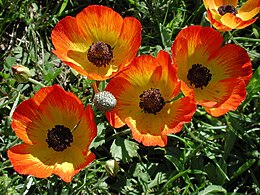
- (botany) An organism that is not an animal, especially an organism capable of photosynthesis. Typically a small or herbaceous organism of this kind, rather than a tree.
- The garden had a couple of trees, and a cluster of colourful plants around the border.
- 2013 May-June, Katrina G. Claw, “Rapid Evolution in Eggs and Sperm”, in American Scientist, volume 101, number 3, page 217:
- In plants, the ability to recognize self from nonself plays an important role in fertilization, because self-fertilization will result in less diverse offspring than fertilization with pollen from another individual. Many genes with reproductive roles also have antibacterial and immune functions, which indicate that the threat of microbial attack on the sperm or egg may be a major influence on rapid evolution during reproduction.
- (botany) An organism of the kingdom Plantae; now specifically, a living organism of the Embryophyta (land plants) or of the Chlorophyta (green algae), a eukaryote that includes double-membraned chloroplasts in its cells containing chlorophyll a and b, or any organism closely related to such an organism.
- (ecology) Now specifically, a multicellular eukaryote that includes chloroplasts in its cells, which have a cell wall.
- (proscribed as biologically inaccurate) Any creature that grows on soil or similar surfaces, including plants and fungi.
- A factory or other industrial or institutional building or facility.
- An object placed surreptitiously in order to cause suspicion to fall upon a person.
- That gun's not mine! It's a plant! I've never seen it before!
- (slang, obsolete) A stash or cache of hidden goods.
- Anyone assigned to behave as a member of the public during a covert operation (as in a police investigation).
- A person, placed amongst an audience, whose role is to cause confusion, laughter etc.
- (snooker) A play in which the cue ball knocks one (usually red) ball onto another, in order to pot the second; a set.
- 2008 April 28, Phil Yates, The Times:
- O’Sullivan risked a plant that went badly astray, splitting the reds.
- (uncountable) Machinery, such as the kind used in earthmoving or construction.
- (obsolete) A young tree; a sapling; hence, a stick or staff.
- 1694, “The Third Book of Virgil's Georgicks”, in John Dryden, transl., The Annual Miscellany, for the Year 1694, 2nd edition, London: Jacob Tonson, published 1708, page 185:
- Take, Shepherd, take a Plant of ſtubborn Oak; / And labour him with many a ſturdy ſtroke: / Or with hard Stones, demoliſh from afar / His haughty Creſt, the feat of all the War.
- (obsolete) The sole of the foot.
- 1611, Ben Jonson, “Oberon, the Faery Prince”, in The Works of Ben Jonson, volume V, London: D. Midwinter et al., published 1756, page 384:
- Knotty legs, and plants of clay, / Seek for eaſe, or love delay.
- (dated, slang) A plan; a swindle; a trick.
- 1850 March 30, Charles Dickens, “A Detective Police Party”, in Household Words, volume 1, page 413:
- It wasn’t a bad plant that of mine, on Fikey, the man accused of forging the Sou’ Westeru Railway debentures—it was only t’ other day—because the reason why? I’ll tell you.
- An oyster which has been bedded, in distinction from one of natural growth.
- (US, dialect) A young oyster suitable for transplanting.
- (control theory) The combination of process and actuator.
Usage notes[edit]
The scientific definition of what organisms should be considered plants changed dramatically during the 20th century. Bacteria, algae, and fungi are no longer considered plants by those who study them. Many textbooks do not reflect the most current thinking on classification.
Hypernyms[edit]
- (biology): Archaeplastida
Hyponyms[edit]
Derived terms[edit]
- air plant
- Albany pitcher plant
- artillery plant
- assembly plant
- Australian pitcher plant
- balloon plant
- basket plant
- button plant
- California pitcher plant
- canoe plant
- cast-iron plant
- castor oil plant
- century plant
- chameleon plant
- chandelier plant
- chemical plant
- chenille plant
- coal plant
- combined cycle power plant
- compass plant
- control-plant
- cooling plant
- coral plant
- corpse plant
- cup plant
- curry plant
- cushion plant
- dinosaur plant
- dove plant
- egg-plant
- elbow plant
- face-plant
- fiber plant
- fire plant
- flowering plant
- food plant
- fried-egg plant
- friendship plant
- gas plant
- ghost plant
- goldfish plant
- Good Friday plant
- gout plant
- grapple plant
- hand plant
- hedgehog plant
- honey plant
- honey-plant
- host plant
- house plant
- houseplant
- humble plant
- hypocrite plant
- ice-plant
- ice plant
- icicle plant
- indoor plant
- industry plant
- jelly plant
- joypowder plant
- jumping plant louse
- larval food plant
- Mexican hat plant
- Mickey Mouse plant
- money plant
- monument plant
- mosquito plant
- mother plant
- non-vascular plant
- nosebleed plant
- nuclear power plant
- nuke plant
- obedient plant
- oyster plant
- packing plant
- peaker plant
- pebble plant
- physical plant
- phys plant
- pickle plant
- pie plant
- piggyback plant
- pilot plant
- pitcher plant
- plant-animal
- plantar
- plant a seed
- plant-based
- plant bug
- plant-cane
- plant community
- plant-eater
- plant eater
- plant-eating
- planter
- plant food
- plant hormone
- plant kingdom
- plantlet
- plant louse
- plant-louse
- plantly
- plant milk
- plant one's feet
- plant point
- plant-sit
- plant sit
- plant teacher
- poker plant
- polka-dot plant
- pot-plant
- potted plant
- prayer plant
- purple velvet plant
- radiator plant
- rainbow plant
- regasification plant
- resurrection plant
- roast-beef plant
- root plant
- rouge-plant
- rubber plant
- sailor plant
- scorpion plant
- seed plant
- semaphore plant
- sensitive plant
- sewage plant
- shrimp plant
- snake plant
- snow plant
- soap plant
- spider plant
- Swiss cheese plant
- tarnished plant bug
- tea oil plant
- tea plant
- telegraph plant
- toot plant
- trigger plant
- unicorn plant
- vascular plant
- vinegar plant
- waterwheel plant
- wax plant
- West Australian pitcher plant
- Western Australian pitcher plant
- wind power plant
- World's Fair plant
- zebra plant
- ZZ plant
Related terms[edit]
Descendants[edit]
- → Punjabi: ਪਲਾਂਟ (palāṇṭ)
Translations[edit]
Verb[edit]
plant (third-person singular simple present plants, present participle planting, simple past and past participle planted)

- (transitive, intransitive) To place (a seed or plant) in soil or other substrate in order that it may live and grow.
- (transitive) To furnish or supply with plants.
- to plant a garden, an orchard, or a forest
- 1848, Jacob Abbott, “Story I. Labour Lost.—Elky.”, in Rollo at Work: Or, The Way for a Boy to Learn to be Industrious[1], London: James S. Hodson, page 5:
- His father had given him a little square bed in a corner of the garden, which he had planted with corn two days before.
- 1991 November 26, Don Trivette, “How Does Your Garden Grow? With Silver Bells And Mouse Button Clicks”, in PC Mag[2], volume 10, number 20, Ziff Davis, Inc., →ISSN, page 604:
- With your mouse, you plant a garden by selecting plants from a database of 450 of the most common flowers, shrubs, and trees.
- (transitive) To place (an object, or sometimes a person), often with the implication of intending deceit.
- That gun's not mine! It was planted there by the real murderer!
- 1999, Terry Prone, The Skywriter, page 182:
- Not only that, I thought, but cynics would now theorise that the interview piece was a PR exercise, a planted story designed as damage-limitation in the event that some probing journalist revealed all about the love nest.
- (transitive) To place or set something firmly or with conviction.
- Plant your feet firmly and give the rope a good tug.
- to plant cannon against a fort; to plant a flag; to plant one's feet on solid ground
- 2011 January 15, Sam Sheringham, “Chelsea 2 - 0 Blackburn Rovers”, in BBC[3]:
- First Anelka curled a shot wide from just outside the box, then Lampard planted a header over the bar from Bosingwa's cross.
- (transitive) To place in the ground.
- 1780, William Cowper, “Light Shining out of Darkneſs”, in Twenty-ſix Letters on Religious Subjects […] To which are added Hymns […] [4], 4th edition, page 252:
- God moves in a myſterious way, / His wonders to perform; / He plants his footſteps in the ſea, / And rides upon the ſtorm.
- 2007, Richard Laymon, Savage, page 118:
- Sarah, she kissed each of her grandparents on the forehead. They were planted in a graveyard behind the church.
- (transitive) To engender; to generate; to set the germ of.
- c. 1590–1592 (date written), William Shakespeare, “The Taming of the Shrew”, in Mr. William Shakespeares Comedies, Histories, & Tragedies […] (First Folio), London: […] Isaac Iaggard, and Ed[ward] Blount, published 1623, →OCLC, [Act IV, scene i]:
- It engenders choler, planteth anger.
- (transitive) To furnish with a fixed and organized population; to settle; to establish.
- to plant a colony
- 1625, Francis [Bacon], “Of Plantations”, in The Essayes […], 3rd edition, London: […] Iohn Haviland for Hanna Barret, →OCLC:
- planting of countries like planting of woods
- (transitive) To introduce and establish the principles or seeds of.
- to plant Christianity among the heathen
- (transitive) To set up; to install; to instate.
- c. 1593 (date written), William Shakespeare, “The Tragedy of Richard the Third: […]”, in Mr. William Shakespeares Comedies, Histories, & Tragedies […] (First Folio), London: […] Isaac Iaggard, and Ed[ward] Blount, published 1623, →OCLC, [Act III, scene vii]:
- We will plant some other in the throne.
Derived terms[edit]
Related terms[edit]
Translations[edit]
See also[edit]

Further reading[edit]
- “plant”, in OneLook Dictionary Search.
- plant in Britannica Dictionary
- plant in Macmillan Collocations Dictionary
- plant in Sentence collocations by Cambridge Dictionary
- plant in Ozdic collocation dictionary
- plant in WordReference English Collocations
Danish[edit]
Verb[edit]
plant
- imperative of plante
Dutch[edit]

Etymology 1[edit]
From Middle Dutch plante, from Latin planta.[1] Doublet of clan.
Pronunciation[edit]
Noun[edit]
plant f (plural planten, diminutive plantje n)
- plant, any member of the kingdom Plantae
- (potentially offensive) cabbage, vegetable (person with severe brain damage)
Hyponyms[edit]
Derived terms[edit]
- aardbeienplant
- bananenplant
- hangplant
- kamerplant
- kasplant
- kiemplant
- klimplant
- landplant
- plantenbak
- plantencel
- planteneter
- plantengemeenschap
- plantengoed
- plantenmateriaal
- plantenrest
- plantenrijk
- plantensoort
- plantensterol
- plantenvoeding
- plantenwortel
- Pothoofdplant
- potplant
- sierplant
- slingerplant
- sporenplant
- theeplant
- tomatenplant
- tuinplant
- vetplant
- waardplant
- waterplant
- wietplant
- woekerplant
- zaadplant
Descendants[edit]
Etymology 2[edit]
See the etymology of the corresponding lemma form.
Pronunciation[edit]
Verb[edit]
plant
- inflection of planten:
Etymology 3[edit]
See the etymology of the corresponding lemma form.
Pronunciation[edit]
Verb[edit]
plant
- inflection of plannen:
References[edit]
- ^ Philippa, Marlies, Debrabandere, Frans, Quak, Arend, Schoonheim, Tanneke, van der Sijs, Nicoline (2003–2009) Etymologisch woordenboek van het Nederlands (in Dutch), Amsterdam: Amsterdam University Press
French[edit]
Etymology[edit]
Deverbal from planter. Doublet of plan (“plan, map”).
Pronunciation[edit]
Noun[edit]
plant m (plural plants)
Derived terms[edit]
Further reading[edit]
- “plant”, in Trésor de la langue française informatisé [Digitized Treasury of the French Language], 2012.
German[edit]
Verb[edit]
plant
- inflection of planen:
Haitian Creole[edit]
Etymology[edit]
Pronunciation[edit]
Noun[edit]
plant
- plant (organism)
Mauritian Creole[edit]
Etymology[edit]
Pronunciation[edit]
Noun[edit]
plant
- a plant
Verb[edit]
plant
Middle English[edit]
Noun[edit]
plant
- Alternative form of planete (“planet”)
Norwegian Bokmål[edit]
Verb[edit]
plant
- imperative of plante
Norwegian Nynorsk[edit]
Etymology 1[edit]
Pronunciation[edit]
Verb[edit]
plant
- imperative of planta
Etymology 2[edit]
Pronunciation[edit]
Adjective[edit]
plant
Old Welsh[edit]
Etymology[edit]
Noun[edit]
plant pl
Descendants[edit]
Swedish[edit]
Adjective[edit]
plant
Welsh[edit]
Etymology[edit]
From Old Welsh plant, from Latin planta.
Pronunciation[edit]
Noun[edit]
plant m (collective, singulative plentyn)
- children, young people
- children (of parents), offspring (sometimes of animals), progeny, issue; descendants
- 1620, Revised version of William Morgan’s translation of the Bible, Joel 1:3:
- Mynegwch hyn i’ch plant, a’ch plant i’w plant hwythau, a’u plant hwythau i genhedlaeth arall.
- Tell ye your children of it, and let your children tell their children, and their children another generation. (KJV)
- 1620, Revised version of William Morgan’s translation of the Bible, Joel 1:3:
- followers, disciples, servants
- people regarded as product of a particular place, time, event, circumstances, etc.
Mutation[edit]
| Welsh mutation | |||
|---|---|---|---|
| radical | soft | nasal | aspirate |
| plant | blant | mhlant | phlant |
| Note: Some of these forms may be hypothetical. Not every possible mutated form of every word actually occurs. | |||
Further reading[edit]
- R. J. Thomas, G. A. Bevan, P. J. Donovan, A. Hawke et al., editors (1950–present), “plant”, in Geiriadur Prifysgol Cymru Online (in Welsh), University of Wales Centre for Advanced Welsh & Celtic Studies
West Frisian[edit]
Etymology[edit]
Ultimately from Latin planta. This etymology is incomplete. You can help Wiktionary by elaborating on the origins of this term.
Noun[edit]
plant c (plural planten, diminutive plantsje)
Further reading[edit]
- “plant (I)”, in Wurdboek fan de Fryske taal (in Dutch), 2011
- Visual dictionary
- English terms inherited from Middle English
- English terms derived from Middle English
- English terms inherited from Old English
- English terms derived from Old English
- English terms derived from Latin
- English doublets
- English 1-syllable words
- English terms with IPA pronunciation
- English terms with audio links
- Rhymes:English/ɑːnt
- Rhymes:English/ɑːnt/1 syllable
- Rhymes:English/ænt
- Rhymes:English/ænt/1 syllable
- English lemmas
- English nouns
- English countable nouns
- en:Botany
- English terms with usage examples
- English terms with quotations
- en:Ecology
- English proscribed terms
- English slang
- English terms with obsolete senses
- en:Snooker
- English uncountable nouns
- English dated terms
- American English
- English dialectal terms
- English verbs
- English transitive verbs
- English intransitive verbs
- Danish non-lemma forms
- Danish verb forms
- Dutch terms inherited from Middle Dutch
- Dutch terms derived from Middle Dutch
- Dutch terms derived from Latin
- Dutch doublets
- Dutch terms with IPA pronunciation
- Dutch terms with audio links
- Rhymes:Dutch/ɑnt
- Dutch lemmas
- Dutch nouns
- Dutch nouns with plural in -en
- Dutch feminine nouns
- nl:Lifeforms
- Dutch offensive terms
- Dutch non-lemma forms
- Dutch verb forms
- Dutch heteronyms
- French deverbals
- French doublets
- French 1-syllable words
- French terms with IPA pronunciation
- French terms with audio links
- French terms with homophones
- French lemmas
- French nouns
- French countable nouns
- French masculine nouns
- German non-lemma forms
- German verb forms
- Haitian Creole terms derived from French
- Haitian Creole terms with IPA pronunciation
- Haitian Creole lemmas
- Haitian Creole nouns
- Mauritian Creole terms derived from French
- Mauritian Creole terms with IPA pronunciation
- Mauritian Creole lemmas
- Mauritian Creole nouns
- Mauritian Creole non-lemma forms
- Mauritian Creole verb forms
- Middle English lemmas
- Middle English nouns
- Norwegian Bokmål non-lemma forms
- Norwegian Bokmål verb forms
- Norwegian Nynorsk terms with IPA pronunciation
- Norwegian Nynorsk non-lemma forms
- Norwegian Nynorsk verb forms
- Norwegian terms with IPA pronunciation
- Norwegian Nynorsk adjective forms
- Old Welsh terms borrowed from Latin
- Old Welsh terms derived from Latin
- Old Welsh lemmas
- Old Welsh nouns
- Old Welsh pluralia tantum
- Swedish non-lemma forms
- Swedish adjective forms
- Welsh terms inherited from Old Welsh
- Welsh terms derived from Old Welsh
- Welsh terms derived from Latin
- Welsh terms with IPA pronunciation
- Welsh terms with audio links
- Rhymes:Welsh/ant
- Rhymes:Welsh/ant/1 syllable
- Welsh lemmas
- Welsh nouns
- Welsh collective nouns
- Welsh masculine nouns
- Welsh terms with quotations
- cy:Children
- cy:People
- West Frisian terms derived from Latin
- West Frisian lemmas
- West Frisian nouns
- West Frisian common-gender nouns
- fy:Lifeforms