囯
Jump to navigation
Jump to search
| ||||||||
Translingual[edit]
Han character[edit]
囯 (Kangxi radical 31, 囗+4, 7 strokes, cangjie input 田一土 (WMG), four-corner 60104, composition ⿴囗王)
Derived characters[edit]
Related characters[edit]
- 國 (Orthodox traditional form)
References[edit]
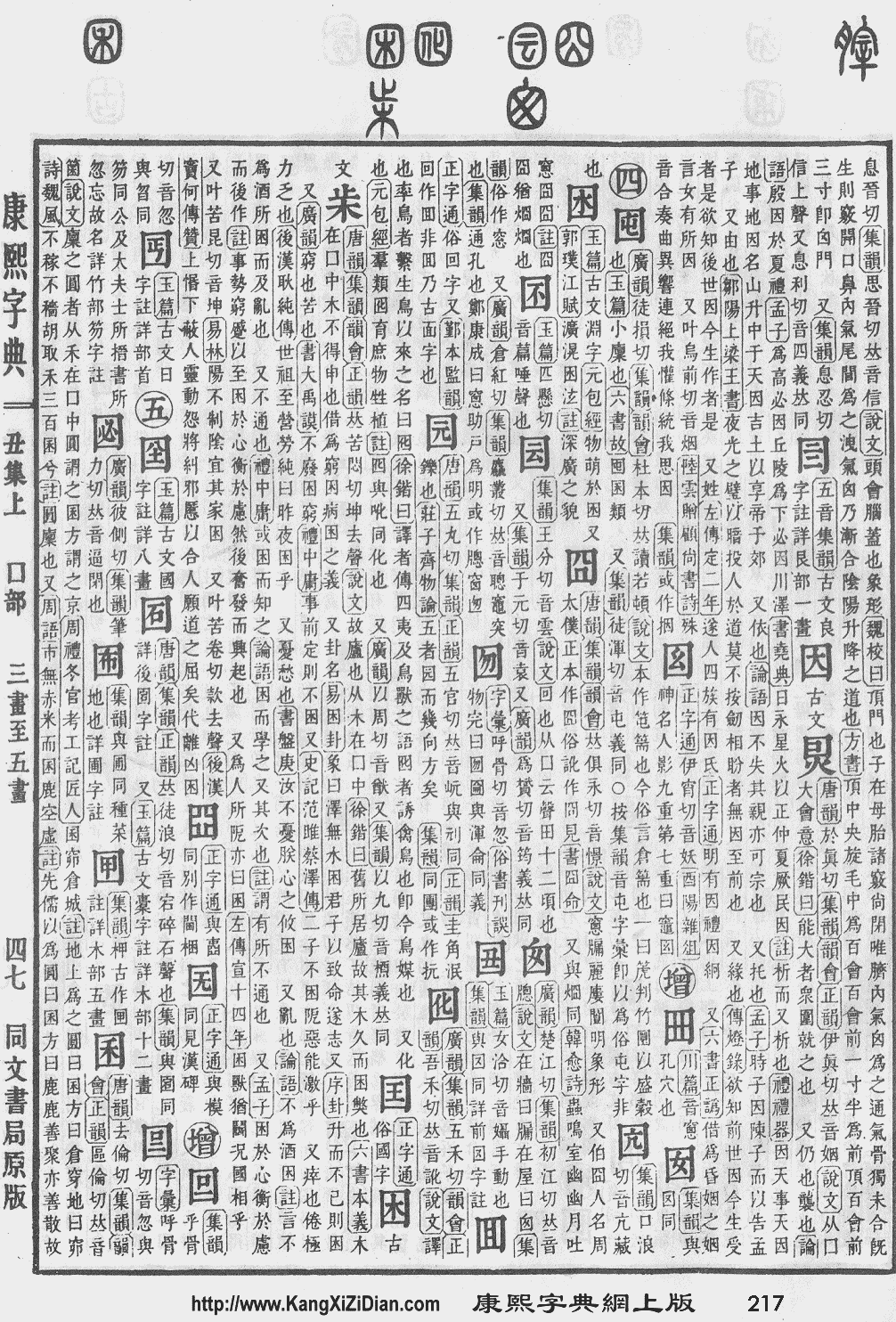
- Kangxi Dictionary: page 217, character 19
- Dai Kanwa Jiten: character 4716
- Dae Jaweon: page 445, character 2
- Hanyu Da Zidian (first edition): volume 1, page 713, character 10
- Unihan data for U+56EF
Chinese[edit]
Glyph origin[edit]
Ideogrammic compound (會意/会意) : 囗 (“to surround”) + 王 (“king”). Earliest attested form in regular script found in 《宋敬業造象記》 (507 AD).
Definitions[edit]
| For pronunciation and definitions of 囯 – see 國 (“country; nation; nation-state; kingdom; capital; etc.”). (This character is the former (1935–1936) ROC simplified, former (1969–1976) Singaporean simplified, and variant form of 國). |
Notes:
|
References[edit]
Khitan[edit]
Glyph origin[edit]
Found on the Memorial for Lord Dorlipun 《多羅里本郎君墓誌碑》, an epitaph written in Khitan large script around 1081 AD.
Etymology[edit]
Orthographic borrowing from Middle Chinese 囯, a variant of 國 (MC kwok).
Noun[edit]
囯 (transliteration needed)
- country; kingdom
- 1081, 《多羅里本郎君墓誌碑》 [Memorial for Lord Dorlipun]:
- 皇帝[⿱火日][⿰𤣩⿱⿻𠃊丨又]弃[⿻一⿵冂仌]囯[⿱火日][⿱干艹][⿻⿻二丨从]
- 皇帝之時於丹國之宰相
- (please add an English translation of this quotation)
References[edit]
- Cong, Yanshuang; Liu, Fengzhu; Chi, Jianxue (叢艷雙,劉鳳翥,池建學) (2005). 契丹大字《多羅里本郎君墓志銘》考釋 (A Textual Research and Explanation on the Inscription for Duoluoliben in Big Qidan Script). 《民族語文》 (Minority Languages of China), issue 4, page 54.
Korean[edit]
Hanja[edit]
Vietnamese[edit]
Han character[edit]
囯: Hán Việt readings: quốc[1]
囯: Nôm readings: quốc[1]
References[edit]
Categories:
- CJK Unified Ideographs block
- Han script characters
- Translingual lemmas
- Translingual symbols
- Han ideogrammic compounds
- Beginning Mandarin
- Chinese lemmas
- Mandarin lemmas
- Sichuanese lemmas
- Dungan lemmas
- Cantonese lemmas
- Taishanese lemmas
- Gan lemmas
- Hakka lemmas
- Jin lemmas
- Northern Min lemmas
- Eastern Min lemmas
- Hokkien lemmas
- Teochew lemmas
- Wu lemmas
- Xiang lemmas
- Chinese nouns
- Mandarin nouns
- Sichuanese nouns
- Dungan nouns
- Cantonese nouns
- Taishanese nouns
- Gan nouns
- Hakka nouns
- Jin nouns
- Northern Min nouns
- Eastern Min nouns
- Hokkien nouns
- Teochew nouns
- Wu nouns
- Xiang nouns
- Chinese proper nouns
- Mandarin proper nouns
- Sichuanese proper nouns
- Dungan proper nouns
- Cantonese proper nouns
- Taishanese proper nouns
- Gan proper nouns
- Hakka proper nouns
- Jin proper nouns
- Northern Min proper nouns
- Eastern Min proper nouns
- Hokkien proper nouns
- Teochew proper nouns
- Wu proper nouns
- Xiang proper nouns
- Chinese terms with IPA pronunciation
- Chinese Han characters
- Chinese simplified forms
- Chinese variant forms
- Khitan terms borrowed from Middle Chinese
- Khitan orthographic borrowings from Middle Chinese
- Khitan terms derived from Middle Chinese
- Khitan lemmas
- Khitan nouns
- Khitan terms with quotations
- Korean lemmas
- Korean Han characters
- Vietnamese Chữ Hán
- Vietnamese lemmas
- Vietnamese Han characters
- Vietnamese Nom