霪
Jump to navigation
Jump to search
| ||||||||
Translingual[edit]
Han character[edit]
霪 (Kangxi radical 173, 雨+11, 19 strokes, cangjie input 一月水月土 (MBEBG), four-corner 10114, composition ⿱雨淫)
Derived characters[edit]
References[edit]
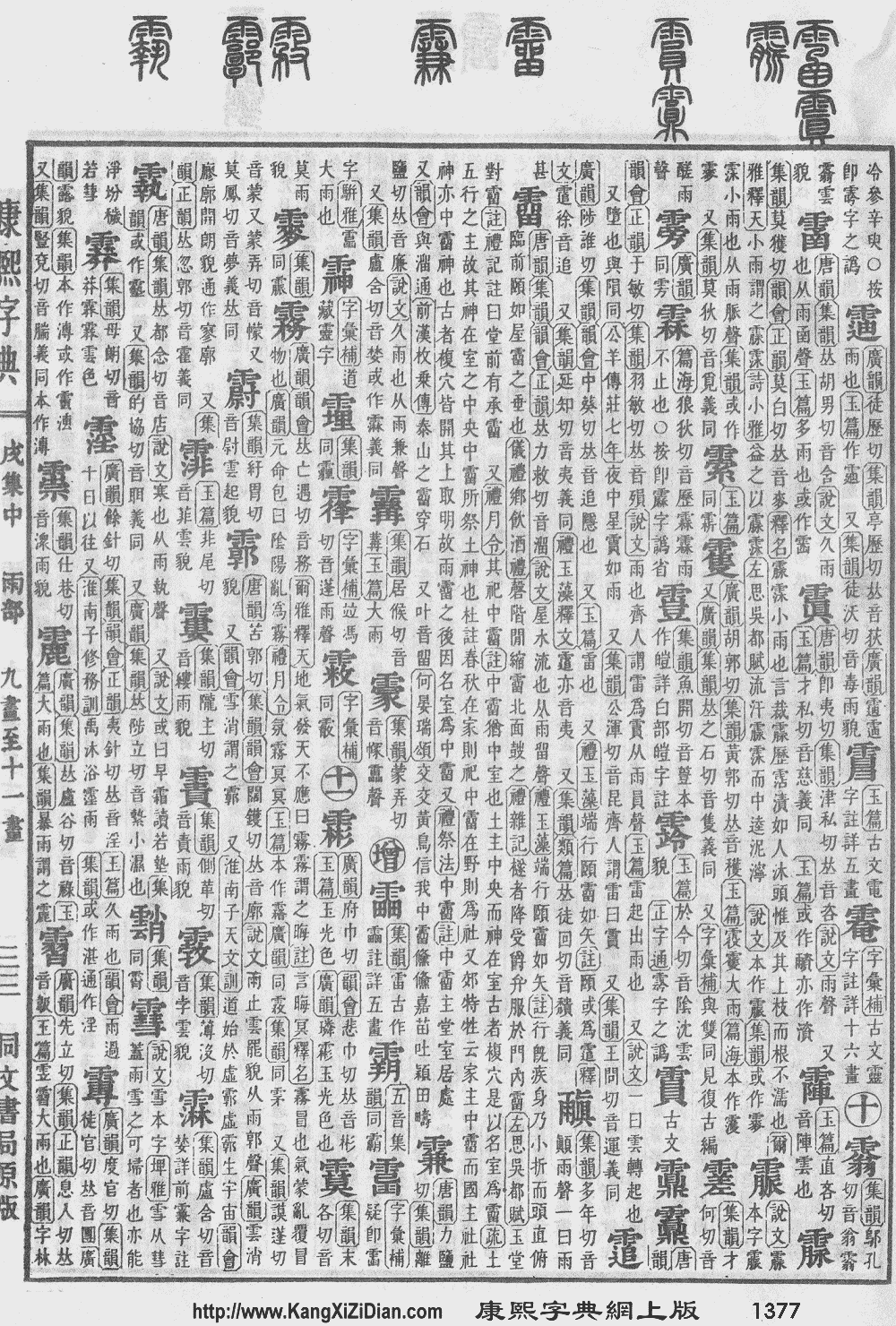
- Kangxi Dictionary: page 1377, character 48
- Dai Kanwa Jiten: character 42430
- Dae Jaweon: page 1887, character 9
- Hanyu Da Zidian (first edition): volume 6, page 4075, character 25
- Unihan data for U+972A
Chinese[edit]
| trad. | 霪 | |
|---|---|---|
| simp. # | 霪 | |
| alternative forms | 䨙 淫 | |
Glyph origin[edit]
Pronunciation[edit]
Definitions[edit]
霪
- (literary) long and persistent rain
Compounds[edit]
Japanese[edit]
Kanji[edit]
霪
- rain lasting at least ten days
Readings[edit]
- Go-on: いん (in)←いん (in, historical)←いむ (imu, ancient)
- Kan-on: いん (in)←いん (in, historical)←いむ (imu, ancient)
Korean[edit]
Hanja[edit]
霪 • (eum) (hangeul 음, revised eum, McCune–Reischauer ŭm, Yale um)
- This term needs a translation to English. Please help out and add a translation, then remove the text
{{rfdef}}.
Categories:
- CJK Unified Ideographs block
- Han script characters
- Translingual lemmas
- Translingual symbols
- Middle Chinese lemmas
- Old Chinese lemmas
- Chinese lemmas
- Mandarin lemmas
- Cantonese lemmas
- Chinese nouns
- Mandarin nouns
- Cantonese nouns
- Chinese terms with IPA pronunciation
- Chinese Han characters
- Chinese literary terms
- Japanese Han characters
- Uncommon kanji
- Japanese kanji with goon reading いん
- Japanese kanji with historical goon reading いん
- Japanese kanji with ancient goon reading いむ
- Japanese kanji with kan'on reading いん
- Japanese kanji with historical kan'on reading いん
- Japanese kanji with ancient kan'on reading いむ
- Korean lemmas
- Korean Han characters