Roma
English[edit]

Etymology 1[edit]
Related to Rom, from Romani rom, probably from Sanskrit डोम (ḍoma, “member of a low caste of travelling musicians and dancers”) or डोम्ब (ḍomba),[1] probably ultimately from the same root as Sanskrit डमरु (ḍamaru, “drum”).[2] Kuiper (1948), Turner (1962-6) and Beníšek (2006) suggest that the word डोम्ब (ḍomba) is of Munda origin. The names of the Lom and Dom are related. Related దొమ్మర (dommara) and डोंबारी (ḍombārī) (community of wandering artists). Folk etymology pointed to a legend that the ethnic group were an exiled people from Imperial times.
The other major categories of words for the Roma are cognates of Gypsy (words related to Egypt) and cognates of tzigane (words derived from Greek); see those entries for more information.
Alternative forms[edit]
Proper noun[edit]
Roma
- A nomadic people with origins in India, the Romani.
- A subgroup of the Romani people found primarily in Eastern Europe.
- A variety of the Romani language (or occasionally) the Romani macrolanguage.
Translations[edit]
- For translations which are exonyms (not cognates of the Romani term for themselves), see Gypsy.
|
Noun[edit]
Roma (plural Romas)
Translations[edit]
Adjective[edit]
Roma (not comparable)
- Romani: of or pertaining to the Roma people.
Translations[edit]
See also[edit]
References[edit]

Etymology 2[edit]
From Latin and Italian Roma (“Rome”). Doublet of Rome.
Proper noun[edit]
Roma
- Any of a number of places, including a city in Texas and a city in Queensland.
- A female given name from Latin of English-speakers.
- Alternative form of Rome
Noun[edit]
Roma (plural Romas)
Etymology 3[edit]
Compare Indonesian Bahasa Romang (“Roma language”). This etymology is incomplete. You can help Wiktionary by elaborating on the origins of this term.
Proper noun[edit]
Roma
- An Austronesian language of Indonesia.
Further reading[edit]
- Ethnologue entry for Roma, rmm

 Romang language on Wikipedia.Wikipedia
 - Bahasa Romang on the Indonesian Wikipedia.Wikipedia id

Anagrams[edit]
Azerbaijani[edit]
Proper noun[edit]
Roma
- Rome (the capital city of Italy)
Catalan[edit]

Etymology[edit]
Pronunciation[edit]
Proper noun[edit]
Roma f
- Rome (the capital city of Italy)
Related terms[edit]
Central Nahuatl[edit]
Proper noun[edit]
Roma
- Rome (the capital city of Italy)
Franco-Provençal[edit]
Proper noun[edit]
Roma
- Rome (the capital city of Italy)
Galician[edit]
Proper noun[edit]
Roma f
- Rome (the capital city of Italy)
Related terms[edit]
German[edit]
Pronunciation[edit]
Noun[edit]
Roma m pl
- plural of Rom
- 2016 April 11, Caroline Kraft, quoting Gilda-Nancy Horvat, “Beleidigt, bespuckt”, in Zeit Online[1]:
- "Viele Roma positionieren sich zu Antiziganismus gar nicht, weil sie Angst haben. Sie outen sich nicht, egal, ob sie Manager, Anwälte oder Politiker sind. Der Gedanke, stolz darauf sein zu können, dass man Roma ist, erscheint immer noch absurd", meint Gilda-Nancy Horvath, selbst Romni und ORF-Journalistin.
- “Many a Rom does not take position in respect to antiziganism, by reason of fear. They don’t come out, no matter, whether they are managers, advocates or politicians. The thought of being proud about being a Rom, still appears absurd.”, opines Gilda-Nancy Horvath, herself Romni and ORF journalist.
Hawaiian[edit]
Proper noun[edit]
Roma
- Romans (book of the Bible)
Indonesian[edit]
Etymology[edit]
From Italian Roma, from Latin Rōma.
Pronunciation[edit]
Proper noun[edit]
Roma
- Rome:
- the capital city of Italy.
- a former province of Lazio, Italy.
Alternative forms[edit]
- Rom (Standard Malay)
Related terms[edit]
Further reading[edit]
- “Roma” in Kamus Besar Bahasa Indonesia, Jakarta: Agency for Language Development and Cultivation — Ministry of Education, Culture, Research, and Technology of the Republic Indonesia, 2016.
Italian[edit]
Etymology[edit]
Pronunciation[edit]
Proper noun[edit]
Roma f
- Rome (the capital city of Italy)
- Rome (a former province of Lazio, Italy)
- the letter R in the Italian spelling alphabet
Related terms[edit]
Descendants[edit]
Anagrams[edit]
Latin[edit]
Alternative forms[edit]
- R (numismatic abbreviation)
Etymology[edit]
Uncertain.
- Roman mythology derived the name from Rōmulus, name of the legendary founder and first king. This is almost certainly a folk etymology, and the name of the mythical figure is more likely derived from the city name.
- The word may derive from *Roumon- or *Roumen-, an archaic name for the Tiber river that would be derived from the Proto-Indo-European root *srew- (“to flow”) (for which compare Ancient Greek ῥεῦμα (rheûma, “river”) and Στρῡμών (Strūmṓn, “Strymon, Struma”), Albanian rrymë (“stream”), Proto-Slavic *strumy (“stream”), Lithuanian stràuma (“stream”), and perhaps also Latin rūmen). If so, the intermediate source may have been an Indo-European substrate.
- The word may be of Etruscan origin, as 𐌓𐌖𐌌𐌀 (ruma) was one of the Etruscan gentes, from 𐌓𐌖𐌌 (rum, “teat”). Given the lack of a secure Indo-European etymology for Rōma, this possibility is most appealing.
Pronunciation[edit]
- (Classical) IPA(key): /ˈroː.ma/, [ˈroːmä]
- (modern Italianate Ecclesiastical) IPA(key): /ˈro.ma/, [ˈrɔːmä]
Proper noun[edit]
Rōma f sg (genitive Rōmae); first declension
- Rome (the ancient capital of the Roman Empire; capital city of modern-day Italy)
- Ut Roma iugum omnibus terris imponeret.
- That Rome might overcome all countries.
- Venit Roma.
- He came from Rome.
- The Roman Empire per se (as a synecdoche).
- (Late Latin) Rome and/or Constantinople (the latter as "Nova Roma").
- (Ecclesiastical Latin, poetic) The Roman Catholic Church in general.
Declension[edit]
First-declension noun, with locative, singular only.
| Case | Singular |
|---|---|
| Nominative | Rōma |
| Genitive | Rōmae |
| Dative | Rōmae |
| Accusative | Rōmam |
| Ablative | Rōmā |
| Vocative | Rōma |
| Locative | Rōmae |
Derived terms[edit]
Related terms[edit]
Descendants[edit]
- Borrowings
- → Ancient Greek: Ῥώμη (Rhṓmē) (see there for further descendants)
- → Arabic: روما (rūmā)
- → Proto-Celtic: *Rūmā (see there for further descendants)
- → Proto-Germanic: *Rūmō (see there for further descendants)
- Southern Common Slavic: → *Rymъ
- Proto-Eastern South Slavic: *Rimъ
- Proto-Western South Slavic: *Rimъ
- → Mishnaic Hebrew: רומא
- Israeli Hebrew: רומא (róma)
- → Middle Persian: [Term?] (/Hrōmāyīg/, “Roman, Greek”)
- → Old Irish: Róm (see there for further descendants)
- → Romanian: Roma
References[edit]
- “Roma”, in Charlton T. Lewis and Charles Short (1879) A Latin Dictionary, Oxford: Clarendon Press
- “Roma”, in Charlton T. Lewis (1891) An Elementary Latin Dictionary, New York: Harper & Brothers
Anagrams[edit]
Latvian[edit]
Etymology[edit]
Proper noun[edit]
Roma
- Rome (the capital city of Italy)
Lithuanian[edit]
Etymology[edit]
Proper noun[edit]
Roma f
- Rome (the capital city of Italy)
Declension[edit]
Maranao[edit]
Proper noun[edit]
Roma
References[edit]
- A Maranao Dictionary, by Howard P. McKaughan and Batua A. Macaraya
Norwegian Bokmål[edit]
Alternative forms[edit]
Etymology[edit]
Proper noun[edit]
Roma
- Rome (the capital city of Italy)
Norwegian Nynorsk[edit]
Etymology[edit]
Proper noun[edit]
Roma
- Rome (the capital city of Italy)
Occitan[edit]
Proper noun[edit]
Roma f
- Rome (the capital city of Italy)
Related terms[edit]
Old Galician-Portuguese[edit]
Etymology[edit]
Pronunciation[edit]
Proper noun[edit]
Roma
- Rome (the ancient capital of the Roman Empire; capital city of the Papal States, in modern-day Italy)
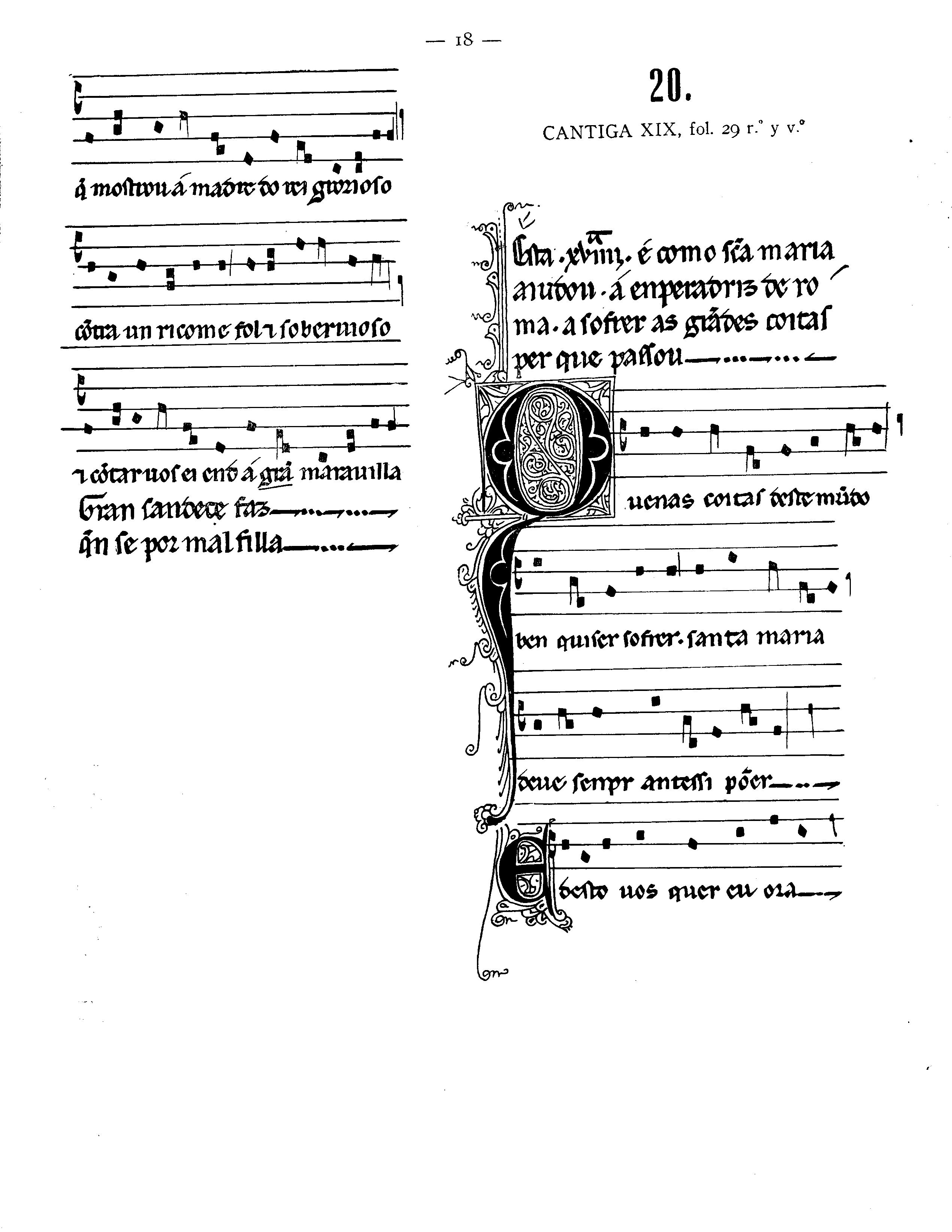
- 13th century CE, Alfonso X of Castile, Cantigas de Santa Maria, To codex, cantiga 5 (facsimile):
- Eſta ·xviiii· é como ſṫa maria aiudou · á emperadriz de roma · a ſofrer as grãdes coitaſ per que paſſou.
- This 19th is how Holy Mary helped the empress of Rome suffer the great pains she underwent.
- Eſta ·xviiii· é como ſṫa maria aiudou · á emperadriz de roma · a ſofrer as grãdes coitaſ per que paſſou.
Related terms[edit]
Descendants[edit]
Old Spanish[edit]
Etymology[edit]
From Latin Rōma. Compare Old Galician-Portuguese Roma.
Pronunciation[edit]
Proper noun[edit]
Roma f
- Rome
- c. 1200, Almerich, Fazienda de Ultramar, f. 79r:
- Sant peẏdro fo p̃dicar en roma. e por occaſiõ de ſimõ magus el encantador. nero el enꝑador fizolo meter en .+. dela cabeça aẏuſo e delos pies aſuſo.
- Saint Peter went to Rome to preach, and because of Simon Magus the sorcerer Nero the emperor had him put on a cross with his head down and his feet up.
Related terms[edit]
Descendants[edit]
- Spanish: Roma
Portuguese[edit]
Etymology[edit]
Inherited from Old Galician-Portuguese Roma, from Latin Rōma (“Rome”).
Pronunciation[edit]
- Hyphenation: Ro‧ma
Proper noun[edit]
Roma f
- Rome (the capital city of Italy)
- Rome, Ancient Rome (an ancient civilisation centred in Rome)
- Synonym: Roma Antiga
- the Catholic Church (Christian church centred in the Vatican)
- Synonyms: Santa Sé, Vaticano, Igreja Católica
Related terms[edit]
Anagrams[edit]
Romagnol[edit]
Alternative forms[edit]
Proper noun[edit]
Roma f (Faenza)
Romanian[edit]
Etymology[edit]
Pronunciation[edit]
Audio (file)
Proper noun[edit]
Roma
- Rome (the capital city of Italy)
Related terms[edit]
Sardinian[edit]
Proper noun[edit]
Roma f
- Rome (the capital city of Italy)
Sicilian[edit]
Proper noun[edit]
Roma f
- Rome (the capital city of Italy)
Spanish[edit]
Etymology[edit]
Inherited from Old Spanish Roma, from Latin Rōma.
Pronunciation[edit]
Proper noun[edit]
Roma f
- Rome (the capital city of Italy)
Derived terms[edit]
Related terms[edit]
Further reading[edit]
- “Roma”, in Diccionario de la lengua española, Vigésima tercera edición, Real Academia Española, 2014
Anagrams[edit]
Swahili[edit]
Proper noun[edit]
Roma
- Rome (the capital city of Italy)
Turkish[edit]
Etymology[edit]
From Ottoman Turkish روما (Roma), from Italian and Latin Roma. Doublet of Rum.
Proper noun[edit]
Roma
- Rome (the capital city of Italy)
- the Roman Empire
Declension[edit]
See also[edit]
References[edit]
- Kélékian, Diran (1911) “روما”, in Dictionnaire turc-français[2], Constantinople: Mihran, page 632
- English terms derived from Romani
- English terms derived from Sanskrit
- English lemmas
- English proper nouns
- English uncountable nouns
- English nouns
- English countable nouns
- English adjectives
- English uncomparable adjectives
- English terms borrowed from Latin
- English terms derived from Latin
- English terms borrowed from Italian
- English terms derived from Italian
- English doublets
- English given names
- English female given names
- English female given names from Latin
- en:Languages
- en:Rome
- en:Tomatoes
- Azerbaijani lemmas
- Azerbaijani proper nouns
- az:Rome
- az:Cities in Italy
- az:National capitals
- az:Places in Italy
- Catalan terms inherited from Latin
- Catalan terms derived from Latin
- Catalan terms with IPA pronunciation
- Catalan lemmas
- Catalan proper nouns
- Catalan feminine nouns
- ca:Rome
- ca:Cities in Italy
- ca:National capitals
- ca:Places in Italy
- Central Nahuatl lemmas
- Central Nahuatl proper nouns
- nhn:Rome
- nhn:Cities in Italy
- nhn:National capitals
- nhn:Places in Italy
- Franco-Provençal lemmas
- Franco-Provençal proper nouns
- frp:Rome
- frp:Cities in Italy
- frp:National capitals
- frp:Places in Italy
- Galician lemmas
- Galician proper nouns
- Galician feminine nouns
- gl:Rome
- gl:Cities in Italy
- gl:National capitals
- gl:Places in Italy
- German 2-syllable words
- German terms with IPA pronunciation
- German terms with audio links
- German non-lemma forms
- German noun forms
- German terms with quotations
- Hawaiian lemmas
- Hawaiian proper nouns
- Hawaiian terms spelled with R
- haw:Bible
- haw:Books of the Bible
- Indonesian terms borrowed from Italian
- Indonesian terms derived from Italian
- Indonesian terms derived from Latin
- Indonesian 2-syllable words
- Indonesian terms with IPA pronunciation
- Rhymes:Indonesian/ma
- Rhymes:Indonesian/ma/2 syllables
- Rhymes:Indonesian/a
- Rhymes:Indonesian/a/2 syllables
- Indonesian lemmas
- Indonesian proper nouns
- Italian terms inherited from Latin
- Italian terms derived from Latin
- Italian 2-syllable words
- Italian terms with IPA pronunciation
- Italian terms with audio links
- Rhymes:Italian/oma
- Rhymes:Italian/oma/2 syllables
- Italian lemmas
- Italian proper nouns
- Italian feminine nouns
- it:Rome
- it:Cities in Italy
- it:National capitals
- it:Places in Italy
- it:Historical political subdivisions
- it:Places in Lazio
- Latin terms with unknown etymologies
- Latin terms derived from Proto-Indo-European
- Latin terms derived from Indo-European languages
- Latin terms derived from substrate languages
- Latin terms borrowed from Etruscan
- Latin terms derived from Etruscan
- Latin 2-syllable words
- Latin terms with IPA pronunciation
- Latin lemmas
- Latin proper nouns
- Latin first declension nouns
- Latin feminine nouns in the first declension
- Latin feminine nouns
- la:Rome
- la:Ancient settlements
- la:Historical capitals
- la:Places in the Roman Empire
- la:Cities in Italy
- la:National capitals
- la:Places in Italy
- Latin terms with usage examples
- Late Latin
- Ecclesiastical Latin
- Latin poetic terms
- la:Cities
- la:Historical polities
- Latvian terms borrowed from Latin
- Latvian terms derived from Latin
- Latvian lemmas
- Latvian proper nouns
- lv:Rome
- lv:Cities in Italy
- lv:National capitals
- lv:Places in Italy
- Lithuanian terms borrowed from Latin
- Lithuanian terms derived from Latin
- Lithuanian lemmas
- Lithuanian proper nouns
- Lithuanian feminine nouns
- lt:Rome
- lt:Cities in Italy
- lt:National capitals
- lt:Places in Italy
- Maranao lemmas
- Maranao proper nouns
- Norwegian Bokmål terms borrowed from Italian
- Norwegian Bokmål terms derived from Italian
- Norwegian Bokmål terms borrowed from Latin
- Norwegian Bokmål terms derived from Latin
- Norwegian Bokmål lemmas
- Norwegian Bokmål proper nouns
- nb:Rome
- nb:Cities in Italy
- nb:National capitals
- nb:Places in Italy
- Norwegian Nynorsk terms borrowed from Italian
- Norwegian Nynorsk terms derived from Italian
- Norwegian Nynorsk terms borrowed from Latin
- Norwegian Nynorsk terms derived from Latin
- Norwegian Nynorsk lemmas
- Norwegian Nynorsk proper nouns
- nn:Rome
- nn:Cities in Italy
- nn:National capitals
- nn:Places in Italy
- Occitan lemmas
- Occitan proper nouns
- Occitan feminine nouns
- oc:Rome
- oc:Cities in Italy
- oc:National capitals
- oc:Places in Italy
- Old Galician-Portuguese terms inherited from Latin
- Old Galician-Portuguese terms derived from Latin
- Old Galician-Portuguese terms with IPA pronunciation
- Old Galician-Portuguese lemmas
- Old Galician-Portuguese proper nouns
- roa-opt:Rome
- roa-opt:Ancient settlements
- roa-opt:Historical capitals
- roa-opt:Places in the Roman Empire
- roa-opt:Cities in Italy
- roa-opt:Capital cities
- roa-opt:Places in Italy
- Old Spanish terms inherited from Latin
- Old Spanish terms derived from Latin
- Old Spanish terms with IPA pronunciation
- Old Spanish lemmas
- Old Spanish proper nouns
- Old Spanish feminine nouns
- Old Spanish terms with quotations
- osp:Ancient settlements
- osp:Cities
- osp:Historical capitals
- osp:Places in Italy
- osp:Places in the Roman Empire
- osp:Rome
- Portuguese terms inherited from Old Galician-Portuguese
- Portuguese terms derived from Old Galician-Portuguese
- Portuguese terms derived from Latin
- Portuguese 2-syllable words
- Portuguese terms with IPA pronunciation
- Portuguese lemmas
- Portuguese proper nouns
- Portuguese feminine nouns
- pt:Rome
- pt:Cities in Italy
- pt:National capitals
- pt:Places in Italy
- pt:Historical polities
- pt:Ancient Rome
- pt:Christianity
- Romagnol lemmas
- Romagnol proper nouns
- Romagnol feminine nouns
- Faentino Romagnol
- Romanian terms borrowed from Latin
- Romanian terms derived from Latin
- Romanian terms with audio links
- Romanian lemmas
- Romanian proper nouns
- ro:Rome
- ro:Cities in Italy
- ro:National capitals
- ro:Places in Italy
- Sardinian lemmas
- Sardinian proper nouns
- Sardinian feminine nouns
- sc:Rome
- sc:Cities in Italy
- sc:National capitals
- sc:Places in Italy
- Sicilian lemmas
- Sicilian proper nouns
- Sicilian feminine nouns
- scn:Rome
- scn:Cities in Italy
- scn:National capitals
- scn:Places in Italy
- scn:Cities in Lazio
- scn:Places in Lazio
- Spanish terms inherited from Old Spanish
- Spanish terms derived from Old Spanish
- Spanish terms inherited from Latin
- Spanish terms derived from Latin
- Spanish 2-syllable words
- Spanish terms with IPA pronunciation
- Rhymes:Spanish/oma
- Rhymes:Spanish/oma/2 syllables
- Spanish lemmas
- Spanish proper nouns
- Spanish feminine nouns
- es:Rome
- es:Cities in Italy
- es:National capitals
- es:Places in Italy
- Swahili lemmas
- Swahili proper nouns
- sw:Rome
- sw:Cities in Italy
- sw:National capitals
- sw:Places in Italy
- Turkish terms inherited from Ottoman Turkish
- Turkish terms derived from Ottoman Turkish
- Turkish terms derived from Italian
- Turkish terms derived from Latin
- Turkish doublets
- Turkish lemmas
- Turkish proper nouns
- tr:Rome
- tr:Cities in Italy
- tr:National capitals
- tr:Places in Italy