sone
English
[edit]
Pronunciation
[edit]- (General American) IPA(key): /soʊn/
- (Received Pronunciation) IPA(key): /səʊn/
- Rhymes: -əʊn
- Homophones: Saône, sewn, sown
Noun
[edit]sone (plural sones)
- (acoustics) a subjective unit of loudness for an average listener equal to the loudness of a 1000-hertz sound that has an intensity 40 decibels above the listener's own threshold of hearing
- Obsolete spelling of son.
- 1651, William Bradford, The names of those which came over first, in the year 1620, and were (by the blessing of God) the first beginners, and (in a sort) the foundation, of all the plantations, and Colonies, in New England (And their families).:
- Francis Eaton, and Sarah his wife, and Samuel their sone, a yong child.
Anagrams
[edit]German
[edit]Alternative forms
[edit]Etymology
[edit]The usage of this term for plurals stems from the similarity or identity of female singular and (gender unspecific) plural declensions in German grammar.
Pronunciation
[edit]Pronoun
[edit]sone
- (colloquial) contraction of so eine (so, ein); nominative/accusative feminine singular of son, which is an alternative form of so'n
- Ungrammatical alternative form of solch in plural.
Ladin
[edit]Noun
[edit]sone m (plural soni)
- (Badiot) potato
- ciamp de soni ― potato field
Alternative forms
[edit]- patat (Gherdëina)
- pom de tera, patat (Fascian)
Latin
[edit]Noun
[edit]sone
Middle Dutch
[edit]Etymology
[edit]From Old Dutch *sunu, suno, from Proto-West Germanic *sunu, from Proto-Germanic *sunuz, from Proto-Indo-European *suHnús.
Noun
[edit]sōne m
Inflection
[edit]This noun needs an inflection-table template.
Alternative forms
[edit]Derived terms
[edit]Descendants
[edit]Further reading
[edit]- “sone (I)”, in Vroegmiddelnederlands Woordenboek, 2000
- Verwijs, E., Verdam, J. (1885–1929) “sone (I)”, in Middelnederlandsch Woordenboek, The Hague: Martinus Nijhoff, →ISBN, page I
Middle English
[edit]Etymology 1
[edit]From Old English sunu, from Proto-West Germanic *sunu, from Proto-Germanic *sunuz, from Proto-Indo-European *suHnús.
Alternative forms
[edit]Pronunciation
[edit]Noun
[edit]sone (plural sones)
- son
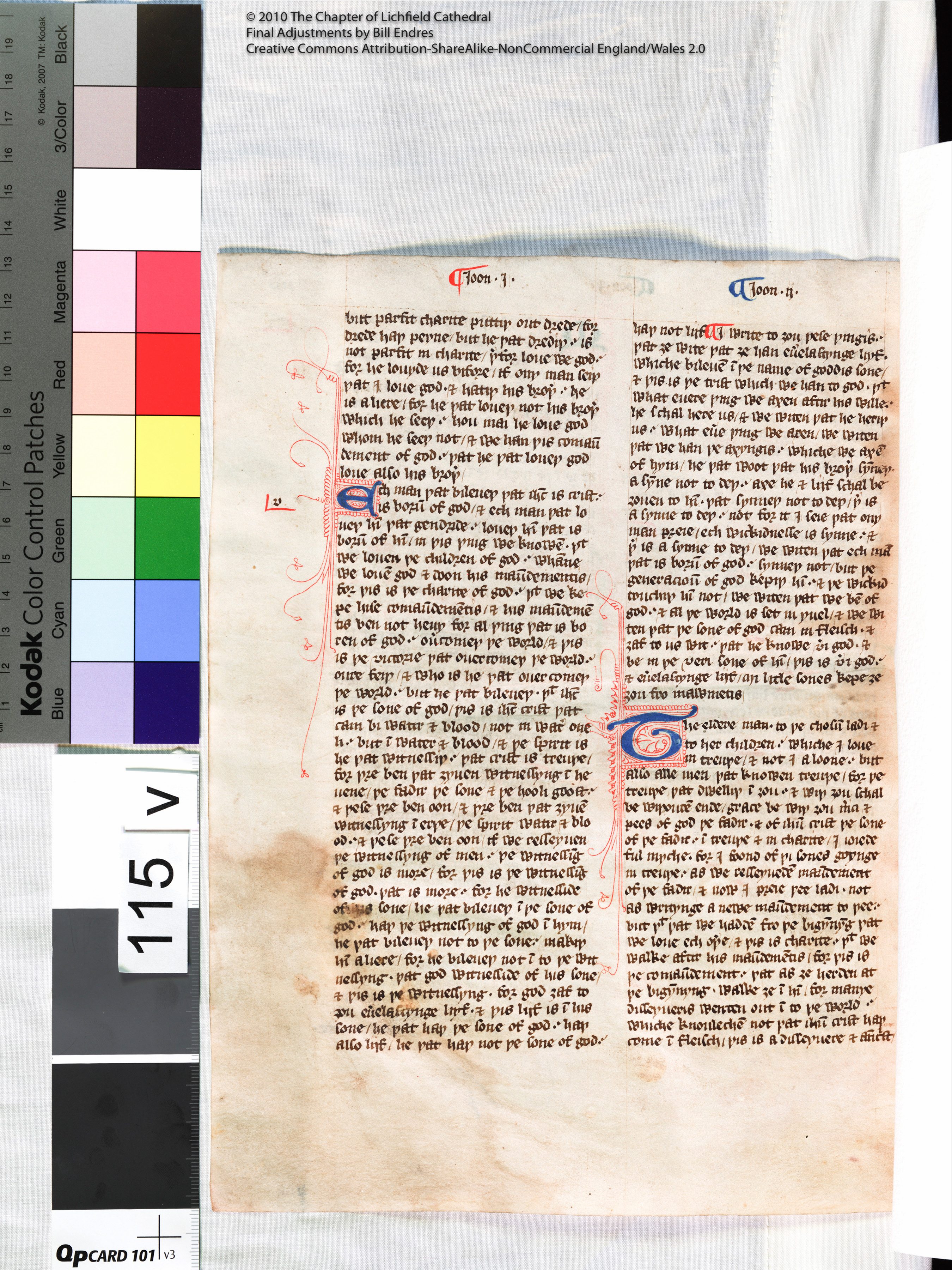
- c. 1395, John Wycliffe, John Purvey [et al.], transl., Bible (Wycliffite Bible (later version), MS Lich 10.)[1], published c. 1410, Joon ·i· 5:21, page 115v, column 2; republished as Wycliffe's translation of the New Testament, Lichfield: Bill Endres, 2010:
- mi litle ſones kepe ȝe ȝou fro mawmetis
- My little children, keep yourselves from idols.
Related terms
[edit]Descendants
[edit]References
[edit]- “sǒne, n.”, in MED Online, Ann Arbor, Mich.: University of Michigan, 2007.
Etymology 2
[edit]From Old English sōna, in turn from Proto-West Germanic *sān(ō).
Alternative forms
[edit]Pronunciation
[edit]Adverb
[edit]sone
Descendants
[edit]References
[edit]- “sọ̄ne, adv.”, in MED Online, Ann Arbor, Mich.: University of Michigan, 2007.
Etymology 3
[edit]Noun
[edit]sone
- Alternative form of sonne (“sun”)
Northern Kurdish
[edit]Etymology
[edit]Compare Turkish suna (“drake”).
Pronunciation
[edit]Noun
[edit]sone m or f
References
[edit]- Chyet, Michael L. (2003) “sone”, in Kurdish–English Dictionary[2], with selected etymologies by Martin Schwartz, New Haven and London: Yale University Press, page 558
Norwegian Bokmål
[edit]Etymology
[edit]From Ancient Greek ζώνη (zṓnē, “girdle, belt”).
Noun
[edit]sone f or m (definite singular sona or sonen, indefinite plural soner, definite plural sonene)
Derived terms
[edit]References
[edit]- “sone” in The Bokmål Dictionary.
Norwegian Nynorsk
[edit]Etymology
[edit]From Ancient Greek ζώνη (zṓnē, “girdle, belt”).
Noun
[edit]sone f (definite singular sona, indefinite plural soner, definite plural sonene)
Derived terms
[edit]References
[edit]- “sone” in The Nynorsk Dictionary.
Ternate
[edit]Etymology
[edit]From Proto-North Halmahera *soneŋ (“to die”).
Pronunciation
[edit]Verb
[edit]sone
- (stative) to be dead
- (intransitive) to die
Conjugation
[edit]| Conjugation of sone | ||||
|---|---|---|---|---|
| Singular | Plural | |||
| Inclusive | Exclusive | |||
| 1st | tosone | fosone | misone | |
| 2nd | nosone | nisone | ||
| 3rd | Masculine | osone | isone, yosone† | |
| Feminine | mosone | |||
| Neuter | isone | |||
| † - archaic | ||||
References
[edit]- Rika Hayami-Allen (2001) A descriptive study of the language of Ternate, the northern Moluccas, Indonesia, University of Pittsburgh
Turkish
[edit]Etymology
[edit]Noun
[edit]sone (definite accusative soneyi, plural soneler)
Declension
[edit]| Inflection | ||
|---|---|---|
| Nominative | sone | |
| Definite accusative | soneyi | |
| Singular | Plural | |
| Nominative | sone | soneler |
| Definite accusative | soneyi | soneleri |
| Dative | soneye | sonelere |
| Locative | sonede | sonelerde |
| Ablative | soneden | sonelerden |
| Genitive | sonenin | sonelerin |
Volapük
[edit]Noun
[edit]sone
- English 1-syllable words
- English terms with IPA pronunciation
- Rhymes:English/əʊn
- Rhymes:English/əʊn/1 syllable
- English terms with homophones
- English lemmas
- English nouns
- English countable nouns
- en:Acoustics
- English obsolete forms
- English terms with quotations
- German 2-syllable words
- German terms with IPA pronunciation
- German terms with audio links
- German terms with homophones
- German lemmas
- German pronouns
- German indefinite pronouns
- German colloquialisms
- German contractions
- Ladin lemmas
- Ladin nouns
- Ladin masculine nouns
- Ladin terms with usage examples
- Latin non-lemma forms
- Latin noun forms
- Middle Dutch terms inherited from Old Dutch
- Middle Dutch terms derived from Old Dutch
- Middle Dutch terms inherited from Proto-West Germanic
- Middle Dutch terms derived from Proto-West Germanic
- Middle Dutch terms inherited from Proto-Germanic
- Middle Dutch terms derived from Proto-Germanic
- Middle Dutch terms inherited from Proto-Indo-European
- Middle Dutch terms derived from Proto-Indo-European
- Middle Dutch lemmas
- Middle Dutch nouns
- Middle Dutch masculine nouns
- dum:Family
- Middle English terms inherited from Old English
- Middle English terms derived from Old English
- Middle English terms inherited from Proto-West Germanic
- Middle English terms derived from Proto-West Germanic
- Middle English terms inherited from Proto-Germanic
- Middle English terms derived from Proto-Germanic
- Middle English terms inherited from Proto-Indo-European
- Middle English terms derived from Proto-Indo-European
- Middle English terms with IPA pronunciation
- Middle English lemmas
- Middle English nouns
- Middle English terms with quotations
- Rhymes:Middle English/oːn(ə)
- Rhymes:Middle English/oːn(ə)/1 syllable
- Middle English adverbs
- enm:Male family members
- Northern Kurdish 2-syllable words
- Northern Kurdish terms with IPA pronunciation
- Northern Kurdish lemmas
- Northern Kurdish nouns
- Northern Kurdish masculine nouns
- Northern Kurdish feminine nouns
- Northern Kurdish nouns with multiple genders
- kmr:Birds
- Norwegian Bokmål terms derived from Ancient Greek
- Norwegian Bokmål lemmas
- Norwegian Bokmål nouns
- Norwegian Bokmål feminine nouns
- Norwegian Bokmål masculine nouns
- Norwegian Bokmål nouns with multiple genders
- Norwegian Nynorsk terms derived from Ancient Greek
- Norwegian Nynorsk lemmas
- Norwegian Nynorsk nouns
- Norwegian Nynorsk feminine nouns
- Ternate terms inherited from Proto-North Halmahera
- Ternate terms derived from Proto-North Halmahera
- Ternate terms with IPA pronunciation
- Ternate lemmas
- Ternate verbs
- Ternate stative verbs
- Ternate intransitive verbs
- Turkish terms borrowed from French
- Turkish terms derived from French
- Turkish lemmas
- Turkish nouns
- Volapük non-lemma forms
- Volapük noun forms