Translingual[edit]
Han character[edit]
飻 (Kangxi radical 184, 食+5, 14 strokes, cangjie input 人戈人竹竹 (OIOHH), composition ⿰飠㐱)
References[edit]
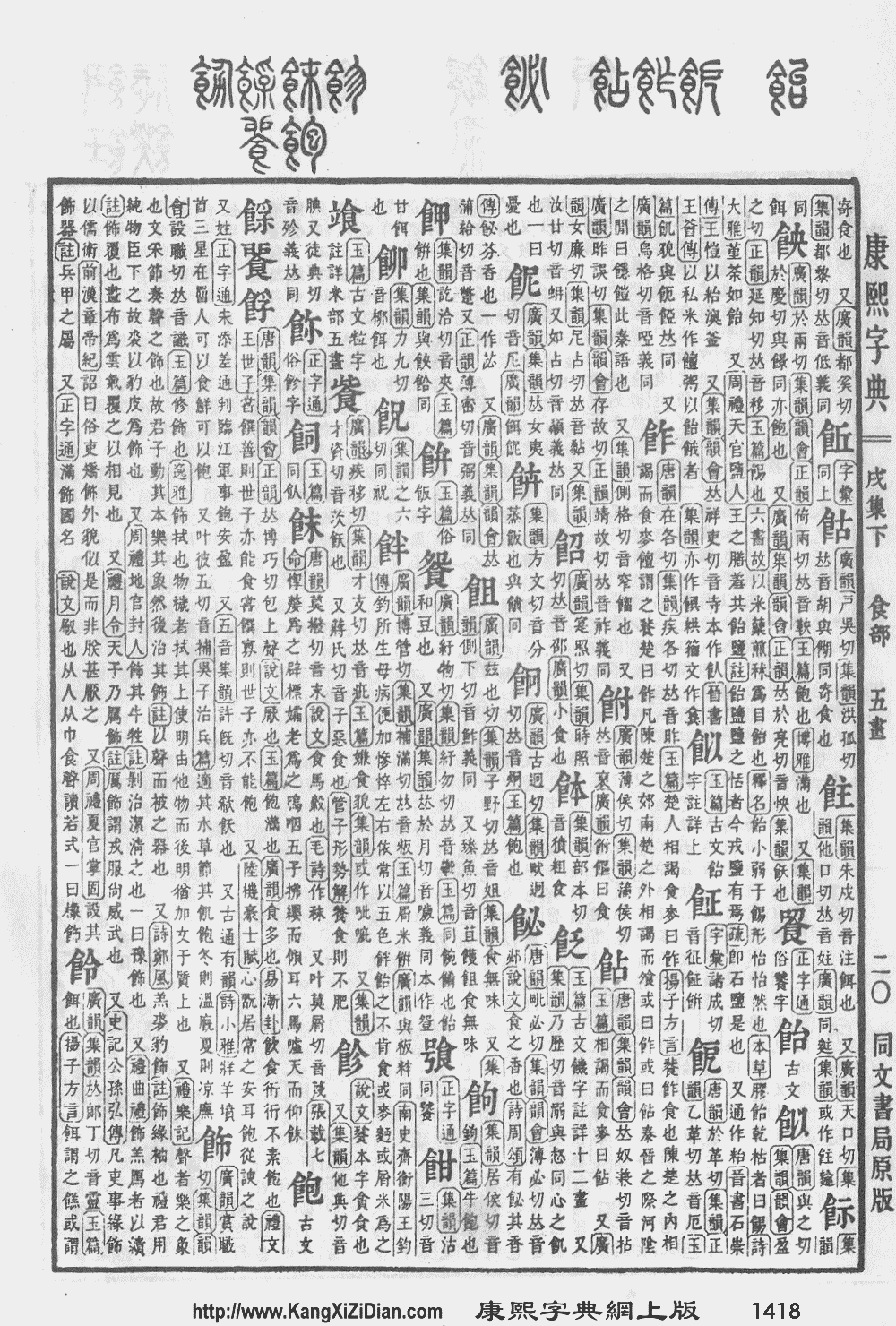
- Kangxi Dictionary: page 1418, character 34
- Dai Kanwa Jiten: character 44105
- Dae Jaweon: page 1942, character 37
- Hanyu Da Zidian (first edition): volume 7, page 4448, character 2
- Unihan data for U+98FB
Chinese[edit]
Glyph origin[edit]
|
|
Old Chinese
|
| 沴
|
*rɯːls
|
| 趁
|
*nlanʔ, *l̥ʰɯns, *l'ɯn
|
| 紾
|
*ʔl'anʔ, *kljɯnʔ
|
| 跈
|
*nlɯːnʔ, *l'ɯːnʔ
|
| 殄
|
*l'ɯːnʔ
|
| 抮
|
*hlɯːnʔ
|
| 駗
|
*rɯn, *kljɯnʔ
|
| 珍
|
*ʔl'ɯn
|
| 診
|
*l'ɯns, *kljɯnʔ
|
| 畛
|
*kljɯn, *kljɯnʔ
|
| 疹
|
*kljɯnʔ
|
| 軫
|
*kljɯnʔ
|
| 胗
|
*kljɯnʔ, *klɯnʔ
|
| 袗
|
*kljɯnʔ, *kljɯns
|
| 眕
|
*kljɯnʔ
|
| 飻
|
*l̥ʰɯːd
|
| 餮
|
*r̥ʰɯːd
|
Pronunciation[edit]
| Zhengzhang system (2003)
|
| Character
|
飻
|
| Reading #
|
1/1
|
| No.
|
17107
|
Phonetic
component
|
疹
|
Rime
group
|
物
|
Rime
subdivision
|
1
|
Corresponding
MC rime
|
鐵
|
Old
Chinese
|
/*l̥ʰɯːd/
|
| Notes
|
說文餮字
|
Definitions[edit]
飻
- Alternative form of 餮 (tiè)
Compounds[edit]
飻 • (cheol) (hangeul 철)
- This term needs a translation to English. Please help out and add a translation, then remove the text
{{rfdef}}.