縝
Jump to navigation
Jump to search
See also: 缜
| ||||||||
Translingual[edit]
Han character[edit]
縝 (Kangxi radical 120, 糸+10, 16 strokes, cangjie input 女火十月金 (VFJBC), four-corner 24981, composition ⿰糹真 or ⿰糹眞)
Derived characters[edit]
References[edit]
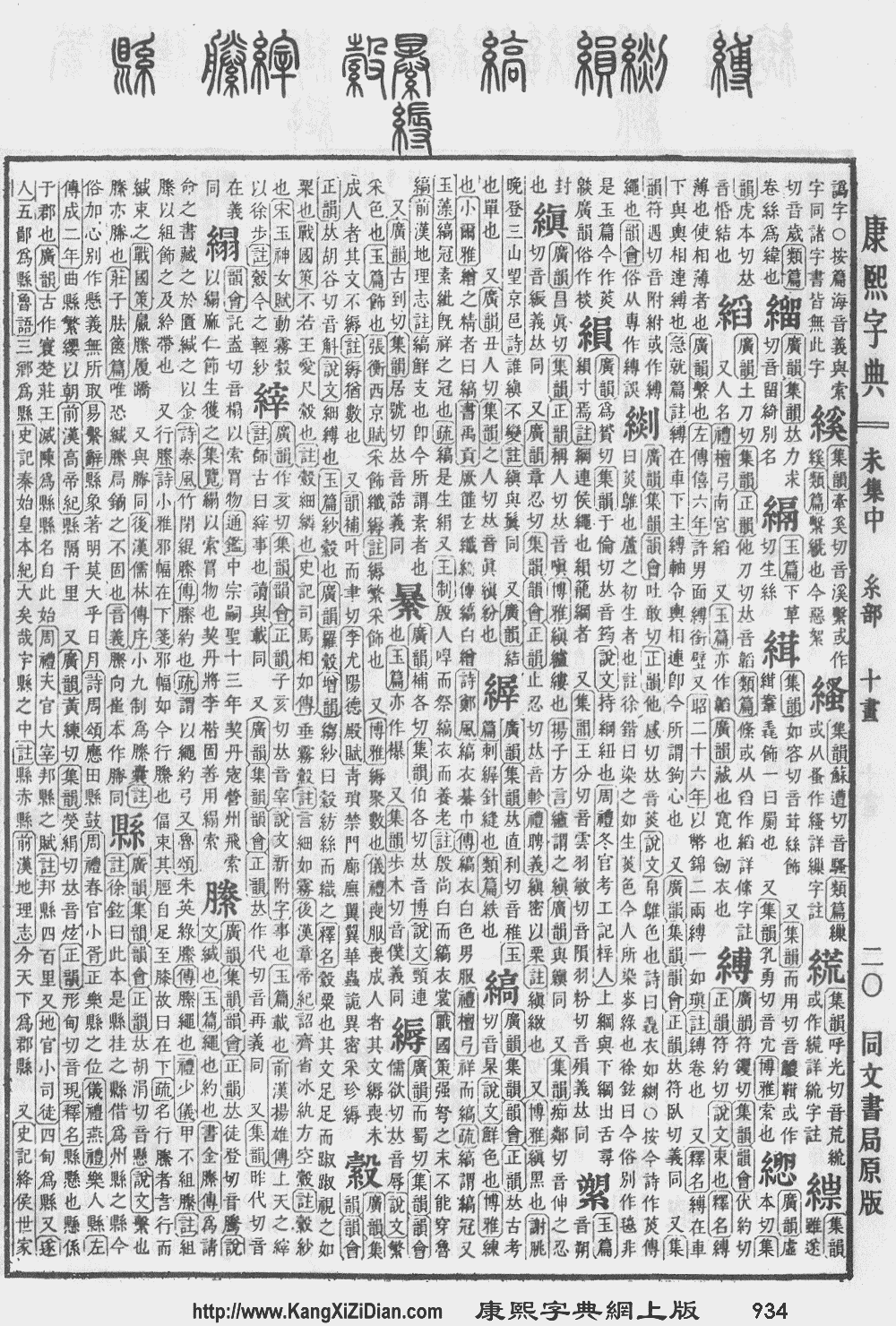
- Kangxi Dictionary: page 934, character 14
- Dai Kanwa Jiten: character 27775
- Dae Jaweon: page 1372, character 38
- Hanyu Da Zidian (first edition): volume 5, page 3435, character 3
- Unihan data for U+7E1D
Chinese[edit]
| trad. | 縝 | |
|---|---|---|
| simp. | 缜 | |
Glyph origin[edit]
| Old Chinese | |
|---|---|
| 寘 | *tjels |
| 䡩 | *kʰriːn |
| 黰 | *ʔriːn, *ʔljinʔ |
| 顛 | *tiːn, *tʰiːns |
| 滇 | *tiːn, *tʰiːns, *diːn |
| 齻 | *tiːn |
| 槙 | *tiːn, *tjinʔ |
| 瘨 | *tiːn |
| 傎 | *tiːn |
| 蹎 | *tiːn |
| 厧 | *tiːn |
| 巔 | *tiːn |
| 癲 | *tiːn |
| 瑱 | *tʰiːns, *tins |
| 填 | *diːn, *diːns, *tin, *tins |
| 窴 | *diːn, *diːns |
| 闐 | *diːn, *diːns |
| 磌 | *diːn, *tjin |
| 鷏 | *diːn |
| 嗔 | *diːn, *tʰjin |
| 搷 | *diːn |
| 鎮 | *tin, *tins |
| 縝 | *tʰin, *ʔljinʔ, *tʰjin |
| 真 | *ʔljin |
| 禛 | *tjin |
| 稹 | *ʔljin, *ʔljinʔ |
| 蒖 | *tjin |
| 鬒 | *ʔljinʔ |
| 瞋 | *tʰjin |
| 謓 | *tʰjin |
| 慎 | *djins |
Phono-semantic compound (形聲/形声, OC *tʰin, *ʔljinʔ, *tʰjin) : semantic 糸 + phonetic 真 (OC *ʔljin).
Pronunciation[edit]
Definitions[edit]
縝
- This term needs a translation to English. Please help out and add a translation, then remove the text
{{rfdef}}.
Compounds[edit]
References[edit]
- “縝”, in 漢語多功能字庫 (Multi-function Chinese Character Database)[1], 香港中文大學 (the Chinese University of Hong Kong), 2014–
Japanese[edit]
Kanji[edit]
縝
- This term needs a translation to English. Please help out and add a translation, then remove the text
{{rfdef}}.
Readings[edit]
Korean[edit]
Hanja[edit]
縝 • (jin) (hangeul 진, revised jin, McCune–Reischauer chin, Yale cin) 1. multiply 2. Be caring ( 仔詳 -), praise (being meticulous and caring about quality, skill, and behavior) 3. It is compact 4. It is dense 5. conclude 6. 홑 clothes (clothes built in one layer) 7. Many Castle ( 盛 ) shape 8. Samsil (besil, thread extracted from hemp shell) 9. Black hair
Categories:
- CJK Unified Ideographs block
- Han script characters
- Translingual lemmas
- Translingual symbols
- Han phono-semantic compounds
- Middle Chinese lemmas
- Old Chinese lemmas
- Chinese lemmas
- Mandarin lemmas
- Cantonese lemmas
- Hakka lemmas
- Eastern Min lemmas
- Hokkien lemmas
- Teochew lemmas
- Chinese terms with IPA pronunciation
- Chinese Han characters
- Japanese Han characters
- Uncommon kanji
- Japanese kanji with on reading しん
- Japanese kanji with on reading ちん
- Japanese kanji with kun reading あさいと
- Korean lemmas
- Korean Han characters