薛
Appearance
See also: 辥
| ||||||||
Translingual
[edit]Han character
[edit]薛 (Kangxi radical 140, 艸+13, 17 strokes in traditional Chinese and Korean, 16 strokes in mainland China and Japanese, Cangjie input 廿竹口十 (THRJ), four-corner 44741, composition ⿱艹⿰𠂤辛)
Derived characters
[edit]References
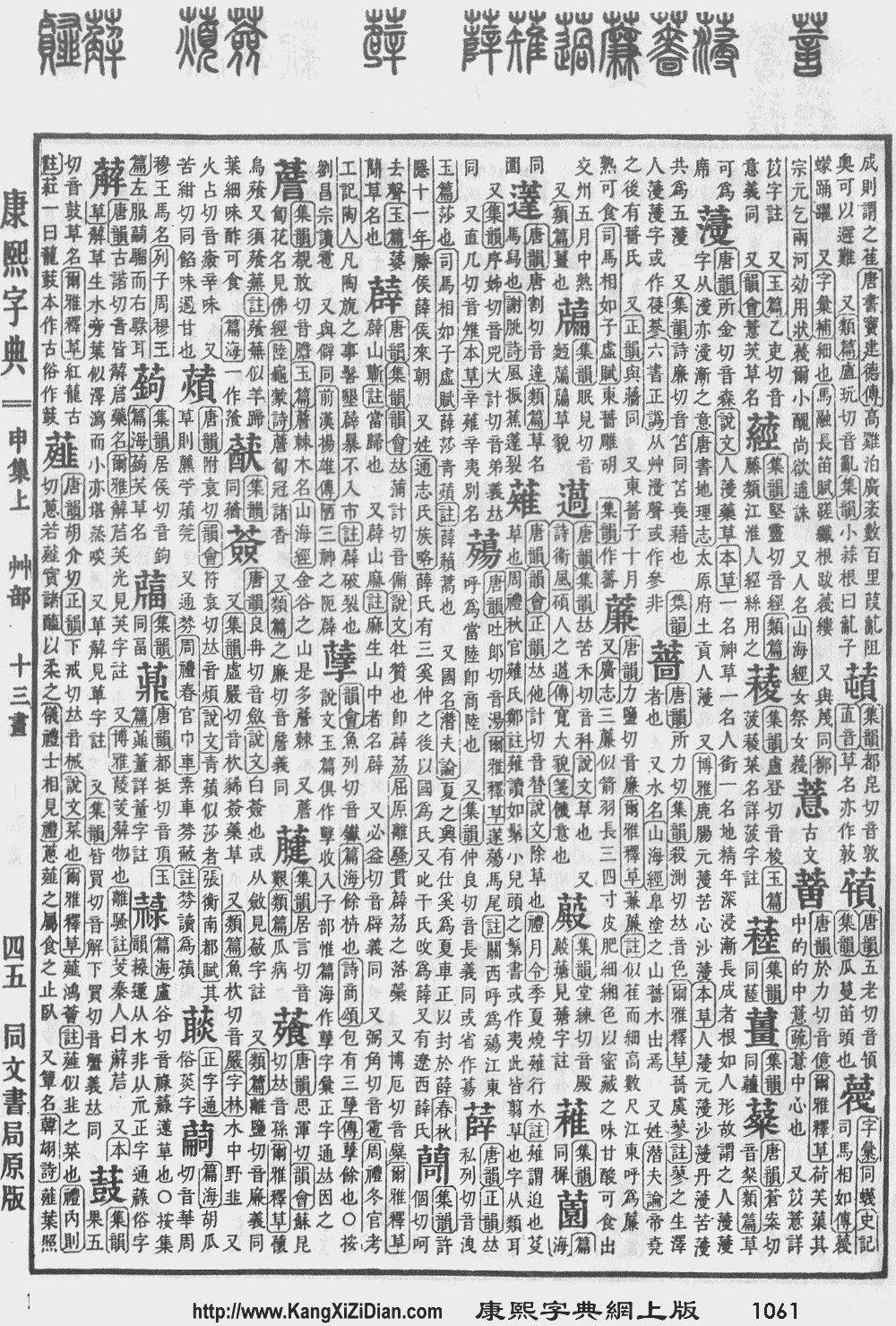
[edit]- Kangxi Dictionary: page 1061, character 22
- Dai Kanwa Jiten: character 32123
- Dae Jaweon: page 1525, character 17
- Hanyu Da Zidian (first edition): volume 5, page 3303, character 8
- Unihan data for U+859B
Chinese
[edit]| trad. | 薛 | |
|---|---|---|
| simp. # | 薛 | |
| 2nd round simp. | | |
| alternative forms | 辥 𦵮 𧀼 | |
Glyph origin
[edit]In oracle bone script, Phono-semantic compound (形聲 / 形声, OC *sŋed) and ideogrammic compound (會意 / 会意): 䇂 (“sickle”) + phonetic 月 (OC *ŋod, “moon”). The original meaning was likely "to work (with a sickle) under the moonlight".
In bronze inscriptions the character corrupted into the modern form Phono-semantic compound (形聲 / 形声, OC *sŋed): semantic 艹 (“grass”) + phonetic 辥 (OC *sŋed).
Pronunciation
[edit]- Mandarin
- (Standard)
- (Chengdu, Sichuanese Pinyin): xüe2
- (Xi'an, Guanzhong Pinyin): xiě
- (Nanjing, Nanjing Pinyin): süe̊q
- Cantonese
- Gan (Wiktionary): syot6
- Hakka
- Northern Min (KCR): siĕ
- Eastern Min (BUC): siék
- Puxian Min (Pouseng Ping'ing): si6 / seh6
- Southern Min
- Southern Pinghua (Nanning, Jyutping++): slyut5
- Wu (Shanghai, Wugniu): 7shiq
- Xiang (Changsha, Wiktionary): sie6
- Mandarin
- (Standard Chinese)+
- Hanyu Pinyin: xuē
- Zhuyin: ㄒㄩㄝ
- Tongyong Pinyin: syue
- Wade–Giles: hsüeh1
- Yale: sywē
- Gwoyeu Romatzyh: shiue
- Palladius: сюэ (sjue)
- Sinological IPA (key): /ɕy̯ɛ⁵⁵/
- (Chengdu)
- Sichuanese Pinyin: xüe2
- Scuanxua Ladinxua Xin Wenz: xye
- Sinological IPA (key): /ɕye²¹/
- (Xi'an)
- Guanzhong Pinyin: xiě
- Sinological IPA (key): /ɕiɛ²¹/
- (Nanjing)
- Nanjing Pinyin: süe̊q
- Nanjing Pinyin (numbered): süeq5
- Sinological IPA (key): /syeʔ⁵/
- (Standard Chinese)+
- Cantonese
- (Standard Cantonese, Guangzhou–Hong Kong)
- Jyutping: sit3
- Yale: sit
- Cantonese Pinyin: sit8
- Guangdong Romanization: xid3
- Sinological IPA (key): /siːt̚³/
- (Dongguan, Guancheng)
- Jyutping++: sit8
- Sinological IPA (key): /sit̚²²/
- (Standard Cantonese, Guangzhou–Hong Kong)
- Gan
- (Nanchang)
- Wiktionary: syot6
- Sinological IPA (key): /syɵt̚⁵/
- (Nanchang)
- Hakka
- (Sixian, incl. Miaoli and Neipu)
- Pha̍k-fa-sṳ: siet
- Hakka Romanization System: xiedˋ
- Hagfa Pinyim: xiad5
- Sinological IPA: /si̯et̚²/
- (Hailu, incl. Zhudong)
- Hakka Romanization System: sied
- Sinological IPA: /siet⁵/
- (Meixian)
- (Changting)
- Changting Pinyin: se2
- Sinological IPA: /se²⁴/
- (Sixian, incl. Miaoli and Neipu)
- Northern Min
- (Jian'ou)
- Kienning Colloquial Romanized: siĕ
- Sinological IPA (key): /siɛ²⁴/
- (Jian'ou)
- Eastern Min
- (Fuzhou)
- Bàng-uâ-cê: siék
- Sinological IPA (key): /siɛʔ²⁴/
- (Fuzhou)
- Puxian Min
- (Putian, Jiangkou, Nanri)
- Pouseng Ping'ing: si6
- Báⁿ-uā-ci̍: sī
- Sinological IPA (key): /ɬi¹¹/
- (Xianyou, Fengting)
- Pouseng Ping'ing: si6
- Sinological IPA (key): /ɬi²¹/
- (Youyang)
- Pouseng Ping'ing: si6
- Sinological IPA (key): /θi²¹/
- (Putian)
- Pouseng Ping'ing: seh6
- Báⁿ-uā-ci̍: seh
- Sinological IPA (key): /ɬɛʔ²¹/
- (Xianyou)
- Pouseng Ping'ing: seh6
- Sinological IPA (key): /ɬɛʔ²/
- (Putian, Jiangkou, Nanri)
Note:
- si6 - vernacular (incl. surname);
- seh6 - literary.
- Southern Min
Note:
- sih - vernacular (incl. surname);
- siat - literary.
- (Teochew)
- Peng'im: sih4
- Pe̍h-ōe-jī-like: sih
- Sinological IPA (key): /siʔ²/
- (Leizhou)
- Leizhou Pinyin: soi7
- Sinological IPA: /sɔi⁵⁵/
- Southern Pinghua
- (Nanning Pinghua, Tingzi)
- Jyutping++: slyut5
- Sinological IPA (key): /ɬyt̚²⁴/
- (Nanning Pinghua, Tingzi)
- Wu
- Xiang
- Dialectal data
- Middle Chinese: sjet
- Old Chinese
- (Baxter–Sagart): /*s.ŋat/
- (Zhengzhang): /*sŋed/
Definitions
[edit]薛
Compounds
[edit]Descendants
[edit]Others:
References
[edit]- “薛”, in 漢語多功能字庫 (Multi-function Chinese Character Database)[1], 香港中文大學 (the Chinese University of Hong Kong), 2014–
- 李如龙 [Li, Ru-long]; 刘福铸 [Liu, Fu-zhu]; 吴华英 [Wu, Hua-ying]; 黄国城 [Huang, Guo-cheng] (2019), “薛”, in 莆仙方言调查报告 [Investigation Report on Puxian Dialect] (overall work in Mandarin and Puxian Min), Xiamen University Press, →ISBN, page 214.
Japanese
[edit]Kanji
[edit]薛
- This term needs a translation to English. Please help out and add a translation, then remove the text
{{rfdef}}.
Readings
[edit]Korean
[edit]Hanja
[edit]薛 • (seol) (hangeul 설, revised seol, McCune–Reischauer sŏl, Yale sel)
- This term needs a translation to English. Please help out and add a translation, then remove the text
{{rfdef}}.
Vietnamese
[edit]Han character
[edit]薛: Hán Việt readings: tiết[1], tuyết[2]
薛: Nôm readings: tiết[1]
- This term needs a translation to English. Please help out and add a translation, then remove the text
{{rfdef}}.
References
[edit]Categories:
- CJK Unified Ideographs block
- Han script characters
- Translingual lemmas
- Translingual symbols
- Han phono-semantic compounds
- Han ideogrammic compounds
- Chinese lemmas
- Mandarin lemmas
- Sichuanese lemmas
- Cantonese lemmas
- Gan lemmas
- Hakka lemmas
- Northern Min lemmas
- Eastern Min lemmas
- Hokkien lemmas
- Teochew lemmas
- Leizhou Min lemmas
- Puxian Min lemmas
- Southern Pinghua lemmas
- Wu lemmas
- Xiang lemmas
- Middle Chinese lemmas
- Old Chinese lemmas
- Chinese hanzi
- Mandarin hanzi
- Sichuanese hanzi
- Cantonese hanzi
- Gan hanzi
- Hakka hanzi
- Northern Min hanzi
- Eastern Min hanzi
- Hokkien hanzi
- Teochew hanzi
- Leizhou Min hanzi
- Puxian Min hanzi
- Southern Pinghua hanzi
- Wu hanzi
- Xiang hanzi
- Middle Chinese hanzi
- Old Chinese hanzi
- Chinese nouns
- Mandarin nouns
- Sichuanese nouns
- Cantonese nouns
- Gan nouns
- Hakka nouns
- Northern Min nouns
- Eastern Min nouns
- Hokkien nouns
- Teochew nouns
- Leizhou Min nouns
- Puxian Min nouns
- Southern Pinghua nouns
- Wu nouns
- Xiang nouns
- Middle Chinese nouns
- Old Chinese nouns
- Chinese proper nouns
- Mandarin proper nouns
- Sichuanese proper nouns
- Cantonese proper nouns
- Gan proper nouns
- Hakka proper nouns
- Northern Min proper nouns
- Eastern Min proper nouns
- Hokkien proper nouns
- Teochew proper nouns
- Leizhou Min proper nouns
- Puxian Min proper nouns
- Southern Pinghua proper nouns
- Wu proper nouns
- Xiang proper nouns
- Middle Chinese proper nouns
- Old Chinese proper nouns
- Chinese terms with IPA pronunciation
- Chinese terms spelled with 薛
- Chinese terms with obsolete senses
- Chinese surnames
- Mandarin terms with collocations
- Cantonese terms with collocations
- Japanese kanji
- Japanese hyōgai kanji
- Japanese kanji with goon reading せち
- Japanese kanji with kan'on reading せつ
- Japanese kanji with kun reading かわらよもぎ
- Japanese kanji with kun reading はますげ
- Korean lemmas
- Korean hanja
- Vietnamese Chữ Hán
- Vietnamese lemmas
- Vietnamese Han characters
- Vietnamese Nom