bánh
Jump to navigation
Jump to search
Vietnamese[edit]

Pronunciation[edit]
- (Hà Nội) IPA(key): [ʔɓajŋ̟˧˦]
- (Huế) IPA(key): [ʔɓɛɲ˦˧˥]
- (Hồ Chí Minh City) IPA(key): [ʔɓan˦˥]
Audio (Hà Nội) (file)
Etymology 1[edit]
Non-Sino-Vietnamese reading of Chinese 餅 (“flour-based food”, SV: bính). Cognate with Muong pẻng, Thai แป้ง (bpɛ̂ɛng), Lao ແປ້ງ (pǣng).
A folk etymology claims that bánh is a corruption of French pain. [1] However, this is clearly false as the word is attested in early Vietnamese texts such as Cư trần lạc đạo phú (居塵樂道賦, 13th century) and Phật thuyết đại báo phụ mẫu ân trọng kinh (佛說大報父母恩重經, 12th century), which were published long before French contact with Vietnam.
Noun[edit]
(classifier chiếc, tấm, ổ) bánh • (𩛄, 餅)
- a broad, vaguely defined term, mostly used by collocation or intuition, for foods that come in a specific shape or solid (a flat piece, a block, a ball, a loaf, etc.) and that are often made from grain or legume flour or plain rice, by size often larger than and contrasted with what is known as kẹo (“candy”)
- bánh kẹo ― sweets (literally, “bánh and candy”)
- Hôm nay ăn bánh thay cơm.
- Today let's eat dumplings/pastries/bread instead of rice.
- bà hàng bán bánh ― the lady selling dumplings/pastries
- bánh bao ― baozi
- nhân bánh ― dumpling/pastry filling
- bánh sinh nhật ― birthday cake
- bánh mì Pháp ― French bread (literally, "French wheat cake")
- bánh mì kẹp kem ― ice cream in Vietnamese baguette (literally, "ice cream sandwich")
- For quotations using this term, see Citations:bánh.
- (cooking) certain types of noodles in their raw forms
- bánh phở ― pho noodle(s)
- a cake (a block of any of various dense materials)
- bánh xà phòng (bánh xà bông) ― a cake of soap
- For quotations using this term, see Citations:bánh.
Usage notes[edit]
- Not all noodles are called bánh: depending on the composition and production method, some noodles are considered bún, mì, miến, etc.
- Not all cakes are called bánh: those made of meat are considered chả (“patty”), e.g. chả cá (“fishcake”), chả lụa (“pork roll”), and chả trứng (“egg roll”).
- Bánh is used with various classifiers, depending on the general shape of the item. A loaf of bánh is classified as chiếc in northern Vietnam but ổ in southern Vietnam. [2] Tấm is used for wafers and the like.
- Bánh is usually used as a generic word to refer to certain solid foods shaped round, flat, or puffy (e.g.: Cái loại bánh đó gọi là gì nhỉ? À, pi-da.)
Derived terms[edit]
sweet, salty, or savory food made from flour or pressed grains
- bánh ba vua (“king cake”)
- bánh bá trạng
- bánh bác
- bánh bàng
- bánh bao
- bánh bao chi (“mochi”)
- bánh bao chỉ
- bánh bao ngọt (“mantou”)
- bánh bèo
- bánh bí đỏ (“pumpkin pie”)
- bánh bí ngô (“pumpkin pie”)
- bánh bía (Saigonese)
- bánh bích quy, bánh bích qui (“cookie”)
- bánh bò
- bánh bó
- bánh bỏng
- bánh bông lan (“sponge cake”)
- bánh bột lọc
- bánh cam (southern Vietnam)
- bánh canh
- bánh caramen, bánh ca-ra-men (“crème caramel”) (northern Vietnam)
- bánh cáy
- bánh cây (“Baumkuchen”)
- bánh cà rốt (“carrot cake”)
- bánh cá (“fish pie”)
- bánh căn
- bánh cấu
- bánh chả
- bánh chay
- bánh chập
- bánh chè
- bánh chẻo (“jiaozi”)
- bánh chuối
- bánh chưng
- bánh cốm
- bánh cống
- bánh cuốn
- bánh cưới (“wedding cake”)
- bánh da heo (southern Vietnam)
- bánh da lợn (northern Vietnam)
- bánh dẻo
- bánh dẻo lạnh (“snow skin mooncake”)
- bánh dẻo tuyết (“snow skin mooncake”)
- bánh dừa
- bánh đa
- bánh đa đỏ
- bánh đa cua
- bánh đa nem
- bánh đập
- bánh đậu
- bánh đậu xanh
- bánh đòn (dialectal)
- bánh đúc
- bánh flan (“crème caramel”) (southern Vietnam)
- bánh ga-tô (“cake, gateau”) (northern Vietnam)
- bánh gai
- bánh gạo (“rice cake”)
- bánh giá
- bánh giầy, bánh dầy, bánh dày
- bánh giấy
- bánh gio
- bánh giò
- bánh gối
- bánh hành tây (“onion cake”)
- bánh hoa hồng
- bánh hỏi
- bánh hòn tai
- bánh hơi
- bánh in
- bánh ít
- bánh ít lá gai
- bánh ít trần
- bánh kem
- bánh kẹo
- bánh kẹp (“waffle”)
- bánh kếp (“crêpe”)
- bánh khảo
- bánh khoai
- bánh khoai mì, bánh khoai mỳ
- bánh khoai môn
- bánh khoái
- bánh khọt
- bánh khô
- bánh khô mè
- bánh không men (“unleavened bread”)
- bánh khúc
- bánh khúc cây (“yule log”)
- bánh kiến
- bánh lá (dialectal)
- bánh lá dừa
- bánh lá mơ
- bánh lễ (“sacramental bread”)
- bánh lọt (“cendol”)
- bánh lột da
- bánh lương khô
- bánh màn thầu (“mantou”)
- bánh mảnh cộng
- bánh may mắn (“fortune cookie”)
- bánh mật
- bánh mì, bánh mỳ (“bread, baguette, sandwich”)
- bánh nẳng
- bánh nậm
- bánh nếp
- bánh ngọt (“sweet cake, gateau”)
- bánh nhãn
- bánh nướng
- bánh nướng chảo (“pancake”)
- bánh pho mát (“cheesecake”)
- bánh pho sĩ (“pandan cake”)
- bánh phồng
- bánh phồng tôm (“prawn cracker”)
- bánh phở (“pho rice noodles”)
- bánh phu thê
- bánh phục linh
- bánh pía
- bánh quai vạc
- bánh quẩy (“youtiao”)
- bánh quế (“waffle”)
- bánh quy (“cookie”)
- bánh quy giòn, bánh qui giòn (“cracker”)
- bánh rán (northern Vietnam)
- bánh răng bừa (dialectal)
- bánh rế
- bánh sâm panh (“ladyfinger”)
- bánh sinh nhật (“birthday cake”)
- bánh su kem (“profiterole, cream puff”)
- bánh sữa
- bánh sừng bò (“croissant”)
- bánh tai
- bánh tai heo
- bánh tai voi
- bánh táo Tatin (“tarte Tatin”)
- bánh tằm bì
- bánh tằm khoai mì, bánh tằm khoai mỳ
- bánh tày
- bánh tây
- bánh tẻ
- bánh tét
- bánh Thánh (“Communion wafer”)
- bánh thuẫn
- bánh tiêu
- bánh tổ
- bánh tôm
- bánh trái
- bánh tráng (“rice paper”)
- bánh tráng mè
- bánh tro
- bánh trôi
- bánh trôi nước
- bánh trung thu (“mooncake”)
- bánh trứng kiến
- bánh ú
- bánh ú tro
- bánh ướt
- bánh vạc
- bánh vẽ
- bánh vòng (“doughnut”)
- bánh vua (“king cake”)
- bánh xèo
- bánh xì liền cấu
- bánh xì lồng cấu
- bánh xốp
- bánh xuân
- bánh xuân thái
- da bánh mật
- lá bánh
- lò nướng bánh
- ổ bánh (dialectal)
- tiệm bánh (“bakery”)
block of any of various dense materials
- bánh muối (“block salt”)
- bánh pháo (“individual firecracker”)
- thuốc bánh
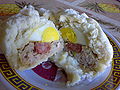
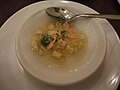
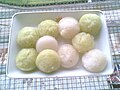
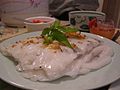
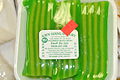
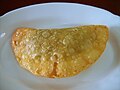
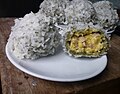
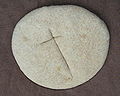
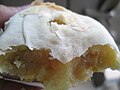
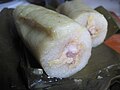
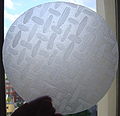
- Various traditional bánh foods
-
-
-
-

-

-

-
-
-

-

-

-

-

-
-

-

-

-

-
-
-

-

-
-

-

-
-
-

-


Descendants[edit]
- Khmer: បាញ់ (bañ)
Etymology 2[edit]
Noun[edit]
(classifier chiếc) bánh • (𨋣, 軿, 屏)
- a wheel
- xe bốn bánh ― four-wheeled vehicle
- For quotations using this term, see Citations:bánh.
Derived terms[edit]
Derived terms
Etymology 3[edit]
Romanization[edit]
bánh
- Sino-Vietnamese reading of 鍠 (“weapon/trident/sound of drums/bells”)
- Sino-Vietnamese reading of 碰/掽 (“collide/meet/offend”)
- Sino-Vietnamese reading of 庳 (“low/short”)
- Sino-Vietnamese reading of 䗒 (“clam”)
- Sino-Vietnamese reading of 蟔 (“caterpillar”)
- Sino-Vietnamese reading of 蓻
- Sino-Vietnamese reading of 榵
References[edit]
- "bánh" in Hồ Ngọc Đức, Free Vietnamese Dictionary Project (details)
- Hà Quang Phùng (2012 September 6) “Tìm hiểu về ngữ pháp tiếng Mường (Thim hiếu wuê ngử pháp thiểng Mường) [Understanding Muong grammar]”, in (Please provide the book title or journal name)[3] (FlashPaper; overall work in Vietnamese and Muong), Thanh Sơn–Phú Thọ Province Continuing Education Center, archived from the original on 17 December 2013
Categories:
- Vietnamese terms with IPA pronunciation
- Vietnamese terms with audio links
- Vietnamese terms derived from Chinese
- Vietnamese nouns classified by chiếc
- Vietnamese nouns classified by tấm
- Vietnamese nouns classified by ổ
- Vietnamese lemmas
- Vietnamese nouns
- Vietnamese terms with usage examples
- vi:Cooking
- Vietnamese non-lemma forms
- Vietnamese romanizations
- Sino-Vietnamese readings
- vi:Foods