将
| ||||||||
 | ||||||||
Translingual[edit]
| Stroke order (Mainland China) | |||
|---|---|---|---|

| |||
| Traditional | 將 |
|---|---|
| Shinjitai | 将 |
| Simplified | 将 |
Alternative forms[edit]
- Due to Han unification, two different forms exist for this character (
U+5C06). - A compatibility ideograph exists at
U+2F873for another variant form in Taiwan which consists of 𱼀 as the upper right component.
Han character[edit]
将 (Kangxi radical 41, 寸+6 in Chinese, 寸+7 in Japanese, 9 strokes in Chinese, 10 strokes in Japanese, cangjie input 中一弓戈戈 (LMNII) or 卜中月木戈 (YLBDI), composition ⿰丬𪧷(G) or ⿰丬寽(TJK) or ⿰丬⿱𱼀寸(U+2F873))
Derived characters[edit]
- 𭵲, 𮔬, 𨪙, 奨, 醤 (Contains 爫 as top right component)
- 𫽣, 锵, 𬧀, 鳉, 𡺃, 𫦋, 𬌒, 螀 (Contains 夕 as top right component)
- 蒋 (Contains 夕 as top right component in mainland China and 爫 as top right component in Japan)
Related characters[edit]
- 將 (Traditional Chinese and kyūjitai form)
References[edit]
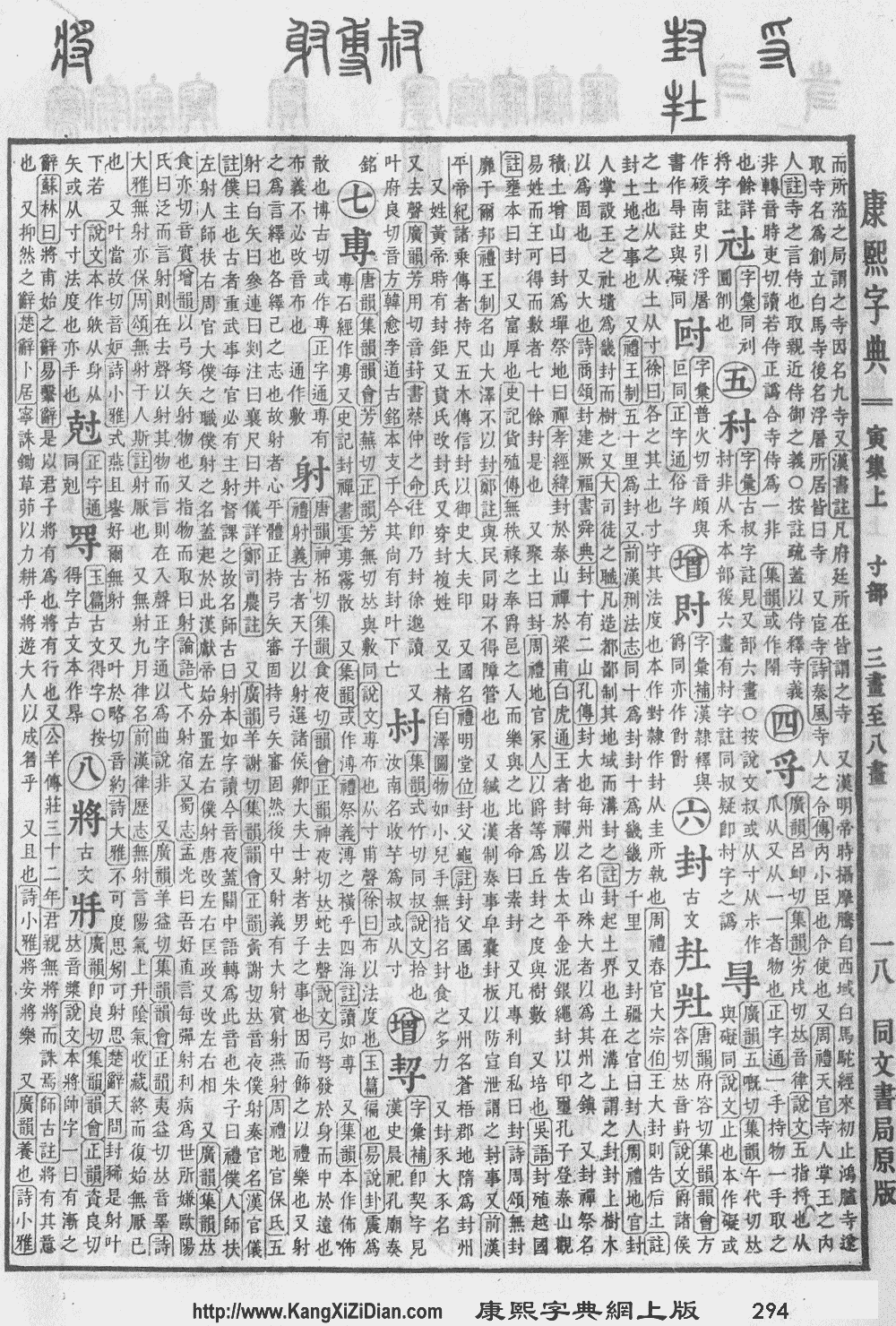
- Kangxi Dictionary: not present, would follow page 294, character 11
- Dai Kanwa Jiten: character 7437
- Hanyu Da Zidian (first edition): volume 4, page 2375, character 1
- Unihan data for U+5C06
Chinese[edit]
Glyph 1[edit]
- This section refers to ⿰丬𪧷 glyph.
Simplified from 將 (爿 → 丬) and removal of dot in top right component to become 夕.
Definitions[edit]
| For pronunciation and definitions of 将 – see 將 (“will; going to; soon; in the near future; etc.”). (This character is the simplified and variant form of 將). |
Notes:
|
Glyph 2[edit]
- This section refers to ⿰丬寽 glyph.
Simplified from 將 (爿 → 丬) and alteration of top right component to become 爫.
Definitions[edit]
| For pronunciation and definitions of 将 – see 將 (“will; going to; soon; in the near future; etc.”). (This character is a variant form of 將). |
Glyph 3[edit]
- This section refers to ⿰丬⿱𱼀寸 glyph.
Definitions[edit]
| For pronunciation and definitions of 将 – see 將 (“will; going to; soon; in the near future; etc.”). (This character is a variant form of 將). |
References[edit]
- Dictionary of Chinese Character Variants (教育部異體字字典), A01063-005
- Dictionary of Chinese Character Variants (教育部異體字字典), A01063-001
- Dictionary of Chinese Character Variants (教育部異體字字典), A01063-002
Japanese[edit]
| 将 | |
| 將 |
Kanji[edit]
(grade 6 “Kyōiku” kanji, shinjitai kanji, kyūjitai form 將)
Readings[edit]
From 將 (MC tsjang, “just now; also, half... half..., or; take, hold; etc.”):
- Go-on: そう (sō)←さう (sau, historical)
- Kan-on: しょう (shō, Jōyō)←しやう (syau, historical)
- Kun: はた (hata, 将); まさに (masani, 将に); もって (mo'te, 将て)
From 將 (MC tsjangH, “command, lead; commander, general; high-ranking military officer”):
- Go-on: そう (sō)←さう (sau, historical)
- Kan-on: しょう (shō, Jōyō)←しやう (syau, historical)
- Kun: ひきいる (hikiiru, 将いる)←ひきゐる (fikiwiru, 将ゐる, historical)
Nanori readings:
- Nanori: すけ (suke); すすむ (susumu); たすく (tasuku); ただし (tadashi); たもつ (tamotsu); のぶ (nobu); ひとし (hitoshi); まさ (masa); もち (mochi); ゆき (yuki)
Compounds[edit]
Etymology 1[edit]
| Kanji in this term |
|---|
| 将 |
| しょう Grade: 6 |
| kan’on |
| Alternative spelling |
|---|
| 將 (kyūjitai) |
/sɨau/ → /sʲɔː/ → /sʲoː/
The “commander”, and “general, other high-ranking officer” senses are from Middle Chinese 將 (MC tsjangH).
The “take, hold” and “from now on” affixes are from Middle Chinese 將 (MC tsjang).
Pronunciation[edit]
Noun[edit]
- a commander
- Synonym: 将帥 (shōsui)
- a general, admiral, or other high-ranking officer, especially of the Japan Self-Defense Forces
- (historical) a rank in the 近衛府 (Konoe-fu, “office of the imperial guard during the Nara period”)
Derived terms[edit]
Proverbs[edit]
Affix[edit]
Usage notes[edit]
The “take, hold” and “from now on” senses are both used in the term 将来 (shōrai, “future; from now on”).
Derived terms[edit]
- 将家 (shōka)
- 将官 (shōkan)
- 将棋 (shōgi, “shogi”)
- 将軍 (shōgun, “shogun”)
- 将校 (shōkō)
- 将帥 (shōsui, “commander”)
- 将星 (shōsei)
- 将卒 (shōsotsu, “officers and soldiers”)
- 将兵 (shōhei)
- 将門 (shōmon)
- 将来 (shōrai)
- 一将 (isshō)
- 王将 (ōshō)
- 海将 (kaishō)
- 強将 (kyōshō)
- 玉将 (gyokushō)
- 空将 (kūshō)
- 宿将 (shukushō)
- 主将 (shushō)
- 准将 (junshō)
- 女将 (joshō)
- 城将 (jōshō)
- 神将 (shinshō)
- 神将 (jinshō)
- 代将 (daishō)
- 知将, 智将 (chishō)
- 敵将 (tekishō)
- 女将 (nyoshō)
- 敗将 (haishō)
- 叛将 (hanshō)
- 部将 (bushō)
- 武将 (bushō)
- 副将 (fukushō)
- 謀将 (bōshō)
- 名将 (meishō)
- 猛将 (mōshō)
- 勇将 (yūshō)
- 良将 (ryōshō)
Proper noun[edit]
- a female given name
Etymology 2[edit]
| Kanji in this term |
|---|
| 将 |
| はた Grade: 6 |
| kun’yomi |
| Alternative spelling |
|---|
| 將 (kyūjitai) |
| For pronunciation and definitions of 将 – see the following entry: はた |
(The following entry is uncreated: はた.)
Etymology 3[edit]
| Kanji in this term |
|---|
| 将 |
| すすむ Grade: 6 |
| nanori |
| Alternative spelling |
|---|
| 將 (kyūjitai) |
Nominalization of verb 進む (susumu, “to advance, go”).
Pronunciation[edit]
Proper noun[edit]
- a male given name
Etymology 4[edit]
| Kanji in this term |
|---|
| 将 |
| まさる Grade: 6 |
| nanori |
| Alternative spelling |
|---|
| 將 (kyūjitai) |
Nominalization of verb 勝る (masaru, “to excel, rival, surpass”).
Pronunciation[edit]
Proper noun[edit]
- a male given name
Etymology 5[edit]
| Kanji in this term |
|---|
| 将 |
| ひとし Grade: 6 |
| nanori |
| Alternative spelling |
|---|
| 將 (kyūjitai) |
Nominalization of classical adjective 等し (hitoshi), modern 等しい (hitoshii, “equal”).
Pronunciation[edit]
Proper noun[edit]
- a male given name
References[edit]
- ^ Matsumura, Akira, editor (2006), 大辞林 (in Japanese), Third edition, Tōkyō: Sanseidō, →ISBN
- ^ NHK Broadcasting Culture Research Institute, editor (1998), NHK日本語発音アクセント辞典 [NHK Japanese Pronunciation Accent Dictionary] (in Japanese), Tōkyō: NHK Publishing, →ISBN
Korean[edit]
Hanja[edit]
References[edit]
- Supreme Court of the Republic of Korea (대한민국 대법원, Daehanmin'guk Daebeobwon) (2018). Table of hanja for personal names (인명용 한자표 / 人名用漢字表, Inmyeong-yong hanja-pyo), page 35. [1]
- Zonmal.com Hanja Dictionary (존말닷컴 한자사전/漢字辭典) (2002-2005). [2]
Vietnamese[edit]
Han character[edit]
将: Hán Việt readings: tướng[1][2][3], tương[3]
将: Nôm readings: tướng[1][2]
References[edit]
- CJK Unified Ideographs block
- Han script characters
- Character boxes with images
- CJK Compatibility Ideographs Supplement block
- CJKV characters simplified differently in Japan and China
- Translingual lemmas
- Translingual symbols
- Chinese Han characters with glyph variations due to Han unification
- CJKV simplified characters
- Elementary Mandarin
- Chinese lemmas
- Mandarin lemmas
- Sichuanese lemmas
- Dungan lemmas
- Cantonese lemmas
- Hakka lemmas
- Northern Min lemmas
- Eastern Min lemmas
- Hokkien lemmas
- Teochew lemmas
- Wu lemmas
- Chinese verbs
- Mandarin verbs
- Sichuanese verbs
- Dungan verbs
- Cantonese verbs
- Hakka verbs
- Northern Min verbs
- Eastern Min verbs
- Hokkien verbs
- Teochew verbs
- Wu verbs
- Chinese particles
- Mandarin particles
- Sichuanese particles
- Dungan particles
- Cantonese particles
- Hakka particles
- Northern Min particles
- Eastern Min particles
- Hokkien particles
- Teochew particles
- Wu particles
- Chinese adverbs
- Mandarin adverbs
- Sichuanese adverbs
- Dungan adverbs
- Cantonese adverbs
- Hakka adverbs
- Northern Min adverbs
- Eastern Min adverbs
- Hokkien adverbs
- Teochew adverbs
- Wu adverbs
- Chinese conjunctions
- Mandarin conjunctions
- Sichuanese conjunctions
- Dungan conjunctions
- Cantonese conjunctions
- Hakka conjunctions
- Northern Min conjunctions
- Eastern Min conjunctions
- Hokkien conjunctions
- Teochew conjunctions
- Wu conjunctions
- Chinese terms with IPA pronunciation
- Chinese Han characters
- Chinese simplified forms
- Chinese variant forms
- Japanese Han characters
- Grade 6 kanji
- Japanese kanji with goon reading そう
- Japanese kanji with historical goon reading さう
- Japanese kanji with kan'on reading しょう
- Japanese kanji with historical kan'on reading しやう
- Japanese kanji with kun reading はた
- Japanese kanji with kun reading まさ-に
- Japanese kanji with kun reading もっ-て
- Japanese kanji with kun reading ひき-いる
- Japanese kanji with historical kun reading ひき-ゐる
- Japanese kanji with nanori reading すけ
- Japanese kanji with nanori reading すすむ
- Japanese kanji with nanori reading たすく
- Japanese kanji with nanori reading ただし
- Japanese kanji with nanori reading たもつ
- Japanese kanji with nanori reading のぶ
- Japanese kanji with nanori reading ひとし
- Japanese kanji with nanori reading まさ
- Japanese kanji with nanori reading もち
- Japanese kanji with nanori reading ゆき
- Japanese terms spelled with 将 read as しょう
- Japanese terms read with on'yomi
- Japanese terms derived from Middle Chinese
- Japanese terms with IPA pronunciation
- Japanese lemmas
- Japanese nouns
- Japanese terms with multiple readings
- Japanese terms spelled with sixth grade kanji
- Japanese terms written with one Han script character
- Japanese terms spelled with 将
- Japanese single-kanji terms
- Japanese terms with historical senses
- Japanese affixes
- Japanese proper nouns
- Japanese given names
- Japanese female given names
- Japanese terms spelled with 将 read as はた
- Japanese terms read with kun'yomi
- Japanese terms spelled with 将 read as すすむ
- Japanese terms read with nanori
- Japanese male given names
- Japanese terms spelled with 将 read as まさる
- Japanese terms spelled with 将 read as ひとし
- Korean lemmas
- Korean Han characters
- Hanja variant forms
- Vietnamese Chữ Hán
- Vietnamese lemmas
- Vietnamese Han characters
- Vietnamese Nom