床
| ||||||||
Translingual[edit]
| Stroke order | |||
|---|---|---|---|

| |||
Han character[edit]
床 (Kangxi radical 53, 广+4, 7 strokes, cangjie input 戈木 (ID) or 難戈木 (XID), four-corner 00294, composition ⿸广木)
Derived characters[edit]
See also[edit]
References[edit]
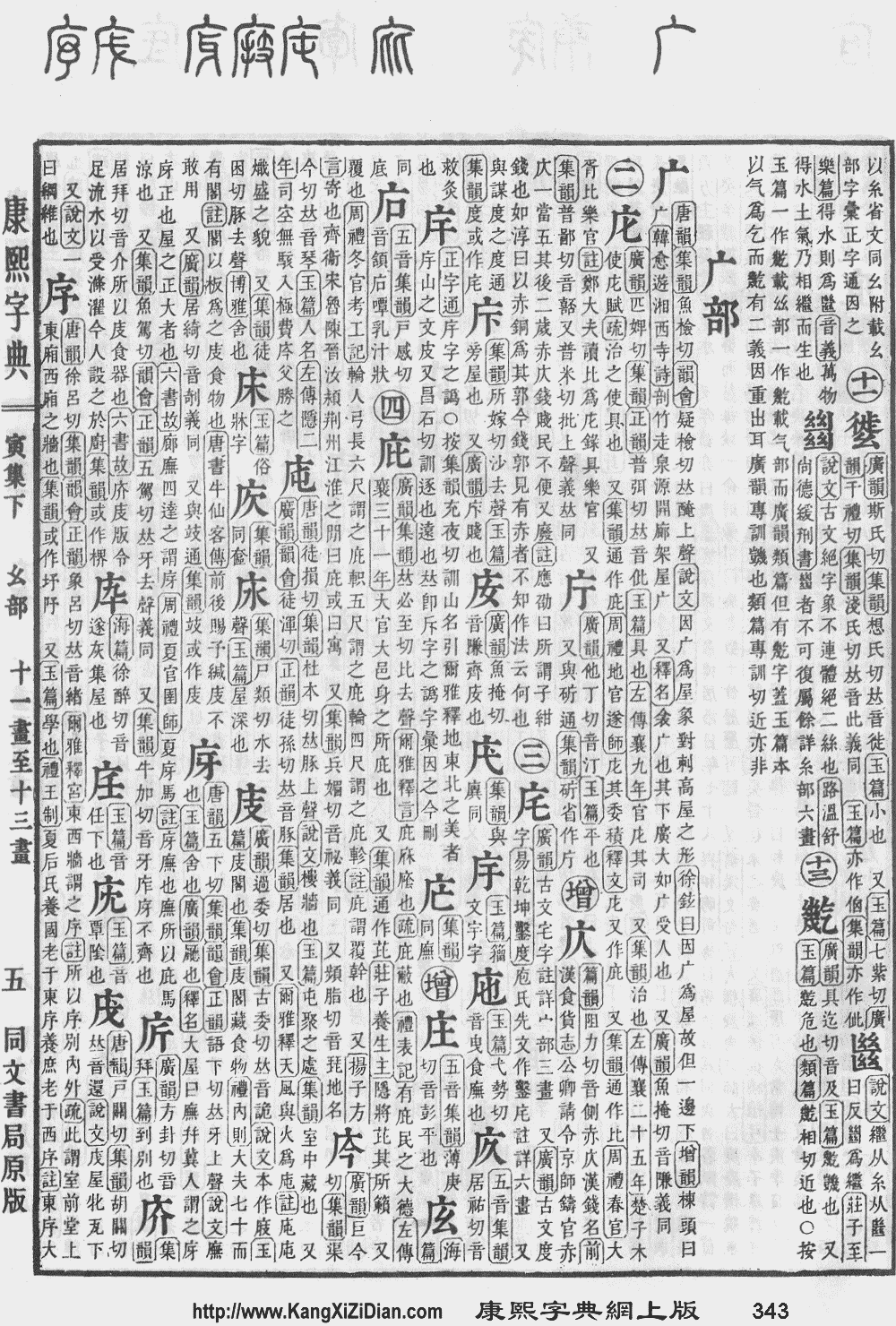
- Kangxi Dictionary: page 343, character 24
- Dai Kanwa Jiten: character 9242
- Dae Jaweon: page 653, character 12
- Hanyu Da Zidian (first edition): volume 2, page 873, character 20
- Unihan data for U+5E8A
Chinese[edit]
| trad. | 床/牀 | |
|---|---|---|
| simp. | 床 | |
Glyph origin[edit]
| Old Chinese | |
|---|---|
| 臧 | *ʔsaːŋ |
| 牂 | *ʔsaːŋ |
| 戕 | *kaːl, *ʔsaːŋ, *zaŋ |
| 贓 | *ʔsaːŋ |
| 藏 | *zaːŋ, *zaːŋs |
| 奘 | *zaːŋʔ, *zaːŋs |
| 臟 | *zaːŋs |
| 將 | *ʔsaŋ, *ʔsaŋs |
| 漿 | *ʔsaŋ |
| 鱂 | *ʔsaŋ |
| 蔣 | *ʔsaŋ, *ʔsaŋʔ |
| 螿 | *ʔsaŋ |
| 槳 | *ʔsaŋʔ |
| 獎 | *ʔsaŋʔ |
| 醬 | *ʔsaŋs |
| 鏘 | *sʰaŋ |
| 蹡 | *sʰaŋ, *ʔshaŋs |
| 嶈 | *sʰaŋ |
| 斨 | *sʰaŋ |
| 爿 | *braːn, *zaŋ |
| 牆 | *zaŋ |
| 妝 | *ʔsraŋ |
| 莊 | *ʔsraŋ |
| 裝 | *ʔsraŋ, *ʔsraŋs |
| 壯 | *ʔsraŋs |
| 疒 | *rnɯːɡ, *zraŋ |
| 床 | *zraŋ |
| 牀 | *zraŋ |
| 狀 | *zraŋs |
Originally an unorthodox variant of 牀. Now made up of 广 (“house”) + 木 (“tree”), an ideogrammic compound (會意/会意) representing a wooden furniture item (a bed) in a house.
Etymology[edit]
Schuessler (2007) suggests that it may be related to Khmer រង (rɔɔng, “to support from below”), Old Mon [script needed] (joṅ, “couch; bedstead”).
Pronunciation[edit]
Definitions[edit]
床
- bed; couch (Classifier: 張/张 m c)
- framework; chassis
- (Teochew, Leizhou Min, Hainanese, Puxian Min, Zhongshan Min) table
- (obsolete) rails of the well
- bottom; bed
- Classifier for beddings.
Synonyms[edit]
Compounds[edit]
- 一床一臥/一床一卧
- 一床三放
- 一床兩好/一床两好
- 上下床 (shàngxiàchuáng)
- 下床
- 上床 (shàngchuáng)
- 下床氣/下床气
- 交床
- 供床
- 倒枕捶床
- 倒枕搥床/倒枕捶床
- 停床
- 冰床 (bīngchuáng)
- 冷床
- 剪床
- 匡床
- 匟床
- 匣床
- 印床 (yìnchuáng)
- 吊床 (diàochuáng)
- 同床各夢/同床各梦
- 同床異夢/同床异梦 (tóngchuángyìmèng)
- 吃床腿
- 單人床/单人床 (dānrénchuáng)
- 坐床
- 坐床富貴/坐床富贵
- 坐床撒帳/坐床撒帐
- 坦腹東床/坦腹东床
- 夜雨對床/夜雨对床
- 女床
- 安床
- 家庭病床 (jiātíng bìngchuáng)
- 對床夜語/对床夜语
- 對床風雨/对床风雨
- 小床 (xiǎochuáng)
- 尿床 (niàochuáng)
- 岩床
- 帆布床
- 床上 (chuángshàng)
- 床上功夫
- 床下安床 (chuángxià'ānchuáng)
- 床上安床 (chuángshàng'ānchuáng)
- 床上施床 (chuángshàngshīchuáng)
- 床位 (chuángwèi)
- 床公床婆
- 床包 (chuángbāo)
- 床單/床单 (chuángdān, “bed sheet”)
- 床子
- 床尾 (chuángwěi)
- 床屋
- 床帳/床帐 (chuángzhàng)
- 床幃/床帏
- 床板 (chuángbǎn)
- 床架 (chuángjià, “bed frame”)
- 床楞
- 床榻 (chuángtà)
- 床母
- 床沿
- 床笫 (chuángzǐ)
- 床笠 (chuánglì)
- 床笫之私 (chuángzǐzhīsī)
- 床罩 (chuángzhào)
- 床腳/床脚
- 床蓐
- 床蝨/床虱 (chuángshī)
- 床褥 (chuángrù)
- 床鋪/床铺 (chuángpù, “bed”)
- 床頭/床头 (chuángtóu)
- 床頭人/床头人
- 床頭櫃/床头柜 (chuángtóuguì)
- 床頭金盡/床头金尽
- 彈簧床/弹簧床 (tánhuángchuáng)
- 循衣摸床
- 怯床
- 懶床/懒床
- 打枕捶床
- 扶床
- 拉床
- 押床
- 拖床
- 拔步床
- 抱角床
- 捉奸見床
- 捶床拍枕
- 捵床捵席
- 捶床搗枕/捶床捣枕
- 搗枕搥床/捣枕捶床
- 據床指麾/据床指麾
- 東床/东床 (dōngchuáng)
- 東床坦腹/东床坦腹
- 東床嬌婿/东床娇婿
- 東床嬌客/东床娇客
- 東床快婿/东床快婿
- 植床
- 椎床倒枕
- 榻床
- 榨床
- 樂床/乐床
- 機床/机床 (jīchuáng)
- 櫺床/棂床
- 水床
- 水晶床
- 沖床/冲床 (chōngchuáng)
- 沙發床/沙发床 (shāfāchuáng)
- 河床 (héchuáng)
- 海床 (hǎichuáng)
- 溫床/温床 (wēnchuáng)
- 灶床
- 牙床 (yáchuáng)
- 瓦灶繩床/瓦灶绳床
- 疊床架屋/叠床架屋 (diéchuángjiàwū)
- 病床 (bìngchuáng)
- 眠床 (miánchuáng)
- 石床
- 砂礫礦床/砂砾矿床
- 碌架床
- 磨床
- 礦床/矿床 (kuàngchuáng)
- 礤床兒/礤床儿 (cǎchuángr)
- 禪床/禅床
- 笭床
- 筆床/笔床 (bǐchuáng)
- 繡床/绣床
- 繩床/绳床
- 繩床瓦灶/绳床瓦灶
- 羊肉床子
- 胡床 (húchuáng)
- 臥床/卧床 (wòchuáng)
- 臥病在床/卧病在床 (wòbìngzàichuáng)
- 臨床/临床 (línchuáng)
- 臨床實驗/临床实验
- 臨床經驗/临床经验
- 臨床醫學/临床医学 (línchuáng yīxué)
- 苗床 (miáochuáng)
- 著床/着床 (zhuóchuáng)
- 藜床
- 虎床
- 行軍床/行军床
- 認床/认床 (rènchuáng)
- 象床 (xiàngchuáng)
- 賴床/赖床 (làichuáng)
- 起床 (qǐchuáng, “to get up”)
- 跋步床
- 踏床
- 踏步床
- 車床/车床 (chēchuáng)
- 軟床/软床
- 轄床/辖床
- 鉋床/刨床
- 銑床/铣床 (xǐchuáng)
- 鋪床/铺床 (pūchuáng)
- 鋸床/锯床
- 鏜床/镗床
- 鏇床子/旋床子
- 鑽床/钻床
- 陪床的
- 雞骨支床/鸡骨支床 (jīgǔzhīchuáng)
- 靈床/灵床
- 頂子床/顶子床
- 風雨對床/风雨对床
- 魚床子/鱼床子
- 墨床
- 鼓床
- 龍床/龙床 (lóngchuáng)
- 龍門刨床/龙门刨床
Descendants[edit]
Others:
Japanese[edit]
Kanji[edit]
Readings[edit]
- Go-on: じょう (jō)←じやう (zyau, historical)
- Kan-on: そう (sō)←さう (sau, historical)
- Kan’yō-on: しょう (shō, Jōyō)←しやう (syau, historical)
- Kun: ゆか (yuka, 床, Jōyō); とこ (toko, 床, Jōyō); ゆかしい (yukashii, 床しい)
Compounds[edit]
Etymology 1[edit]
| Kanji in this term |
|---|
| 床 |
| ゆか Grade: S |
| kun’yomi |
From Old Japanese. Attested in the 日本書紀 (Nihon Shoki), completed in 720 and one of the earliest works written in Japanese (see Wikipedia:Nihon Shoki), with a meaning of bed.
According to the 和句解 (Wakuge), published in 1668 by early Edo-period scholar Matsunaga Teitoku (松永貞徳; see Wikipedia:ja:松永貞徳), derives from ゆか (yuka) as the 未然形 (mizenkei, “irrealis form”) stem of the verb 行く (yuku, “to go”) of an original meaning similar to "not going", in reference to a place where one sits down to rest.
Pronunciation[edit]
Noun[edit]
- the floor (the bottom surface of a room)
- 床を掃く
- yuka o haku
- to sweep the floor
- 床を掃く
- a bed
- (theater) a raised area of a stage where a presenter or musician sits
- a raised platform erected along the Kamo River in Kyōto in summer, used as an outdoor tea shop or restaurant
Antonyms[edit]
Coordinate terms[edit]
Etymology 2[edit]
| Kanji in this term |
|---|
| 床 |
| とこ Grade: S |
| kun’yomi |
⟨to2ko2⟩ → /toko/
From Old Japanese. Cognate with 所 (tokoro, “place”). Attested since at least the Nara period, appearing in the Man'yōshū, completed in 759.[3][4]
Pronunciation[edit]
Noun[edit]
- a raised platform roughly 30cm tall used in dirt-floored rooms as a seat
- a raised area on which to sleep: a bed
- a sickbed
- the floor
- tatami mats
- the seat of an oxcart
- short for 床間 / 床の間 (toko no ma): an alcove with a raised floor along one wall of a traditional Japanese living room
- an alcove with a raised floor used as a study: see 付書院 (tsuke shoin)
- a box seat, such as at a parade, theater, or stadium
- short for 床店 (tokomise): a stall with a raised floor used as a store
- short for 床屋 (tokoya): a barbershop, from how such shops were historically often tokomise
- short for 床船梁 (toko funabari), 舵床 (kajidoko): the large wooden beam at the very aft of a traditional wood-hulled Japanese ship, upon which the rudder is seated
- the heel of a plough; the part of the bottom of a plough that touches the ground and guides the ploughshare
- short for 苗床 (naedoko): a seedbed
- short for 鉄床, 金床 (kanatoko): an anvil
Synonyms[edit]
Etymology 3[edit]
| Kanji in this term |
|---|
| 床 |
| しょう Grade: S |
| kan’yōon |
| Alternative spelling |
|---|
| 牀 |
/ʑau/ → /ɕau/ → /ɕɔː/ → /ɕoː/
From Middle Chinese 床 (MC dzrjang). Devoicing apparently occurred after borrowing.
Pronunciation[edit]
Noun[edit]
Counter[edit]
References[edit]
- ↑ 1.0 1.1 1.2 Matsumura, Akira, editor (2006), 大辞林 (in Japanese), Third edition, Tōkyō: Sanseidō, →ISBN
- ↑ 2.0 2.1 NHK Broadcasting Culture Research Institute, editor (1998), NHK日本語発音アクセント辞典 [NHK Japanese Pronunciation Accent Dictionary] (in Japanese), Tōkyō: NHK Publishing, →ISBN
- ^ Shōgaku Tosho (1988) 国語大辞典(新装版) [Unabridged Dictionary of Japanese (Revised Edition)] (in Japanese), Tōkyō: Shogakukan, →ISBN
- ^ , text here
Korean[edit]
Hanja[edit]
床 (eumhun 평상 상 (pyeongsang sang))
Vietnamese[edit]
Han character[edit]
床: Hán Nôm readings: sàng, giàn, giường, sường, giàng, rương
- This term needs a translation to English. Please help out and add a translation, then remove the text
{{rfdef}}.
- CJK Unified Ideographs block
- Han script characters
- Translingual lemmas
- Translingual symbols
- Han ideogrammic compounds
- Mandarin terms with audio links
- Middle Chinese lemmas
- Old Chinese lemmas
- Chinese lemmas
- Mandarin lemmas
- Sichuanese lemmas
- Dungan lemmas
- Cantonese lemmas
- Taishanese lemmas
- Gan lemmas
- Hakka lemmas
- Jin lemmas
- Northern Min lemmas
- Eastern Min lemmas
- Hokkien lemmas
- Teochew lemmas
- Wu lemmas
- Xiang lemmas
- Chinese nouns
- Mandarin nouns
- Sichuanese nouns
- Dungan nouns
- Cantonese nouns
- Taishanese nouns
- Gan nouns
- Hakka nouns
- Jin nouns
- Northern Min nouns
- Eastern Min nouns
- Hokkien nouns
- Teochew nouns
- Wu nouns
- Xiang nouns
- Chinese classifiers
- Mandarin classifiers
- Sichuanese classifiers
- Dungan classifiers
- Cantonese classifiers
- Taishanese classifiers
- Gan classifiers
- Hakka classifiers
- Jin classifiers
- Northern Min classifiers
- Eastern Min classifiers
- Hokkien classifiers
- Teochew classifiers
- Wu classifiers
- Xiang classifiers
- Chinese terms with IPA pronunciation
- Chinese Han characters
- Chinese nouns classified by 張/张
- Mandarin terms with usage examples
- Teochew Chinese
- Leizhou Min Chinese
- Hainanese Chinese
- Puxian Min Chinese
- Zhongshan Min Chinese
- Chinese terms with obsolete senses
- Beginning Mandarin
- Japanese Han characters
- Common kanji
- Japanese kanji with goon reading じょう
- Japanese kanji with historical goon reading じやう
- Japanese kanji with kan'on reading そう
- Japanese kanji with historical kan'on reading さう
- Japanese kanji with kan'yōon reading しょう
- Japanese kanji with historical kan'yōon reading しやう
- Japanese kanji with kun reading ゆか
- Japanese kanji with kun reading とこ
- Japanese kanji with kun reading ゆか-しい
- Japanese terms spelled with 床 read as ゆか
- Japanese terms read with kun'yomi
- Japanese terms inherited from Old Japanese
- Japanese terms derived from Old Japanese
- Japanese terms with IPA pronunciation
- Japanese lemmas
- Japanese nouns
- Japanese terms with multiple readings
- Japanese terms spelled with secondary school kanji
- Japanese terms written with one Han script character
- Japanese terms spelled with 床
- Japanese single-kanji terms
- Japanese terms with usage examples
- ja:Theater
- Japanese terms spelled with 床 read as とこ
- Japanese terms spelled with 床 read as しょう
- Japanese terms read with on'yomi
- Japanese terms derived from Middle Chinese
- Japanese counters
- Korean lemmas
- Korean Han characters
- Vietnamese lemmas
- Vietnamese Han characters