萃
Jump to navigation
Jump to search
| ||||||||
Translingual[edit]
Han character[edit]
萃 (Kangxi radical 140, 艸+8, 14 strokes, cangjie input 廿卜人十 (TYOJ), four-corner 44408, composition ⿱艹卒)
Derived characters[edit]
References[edit]
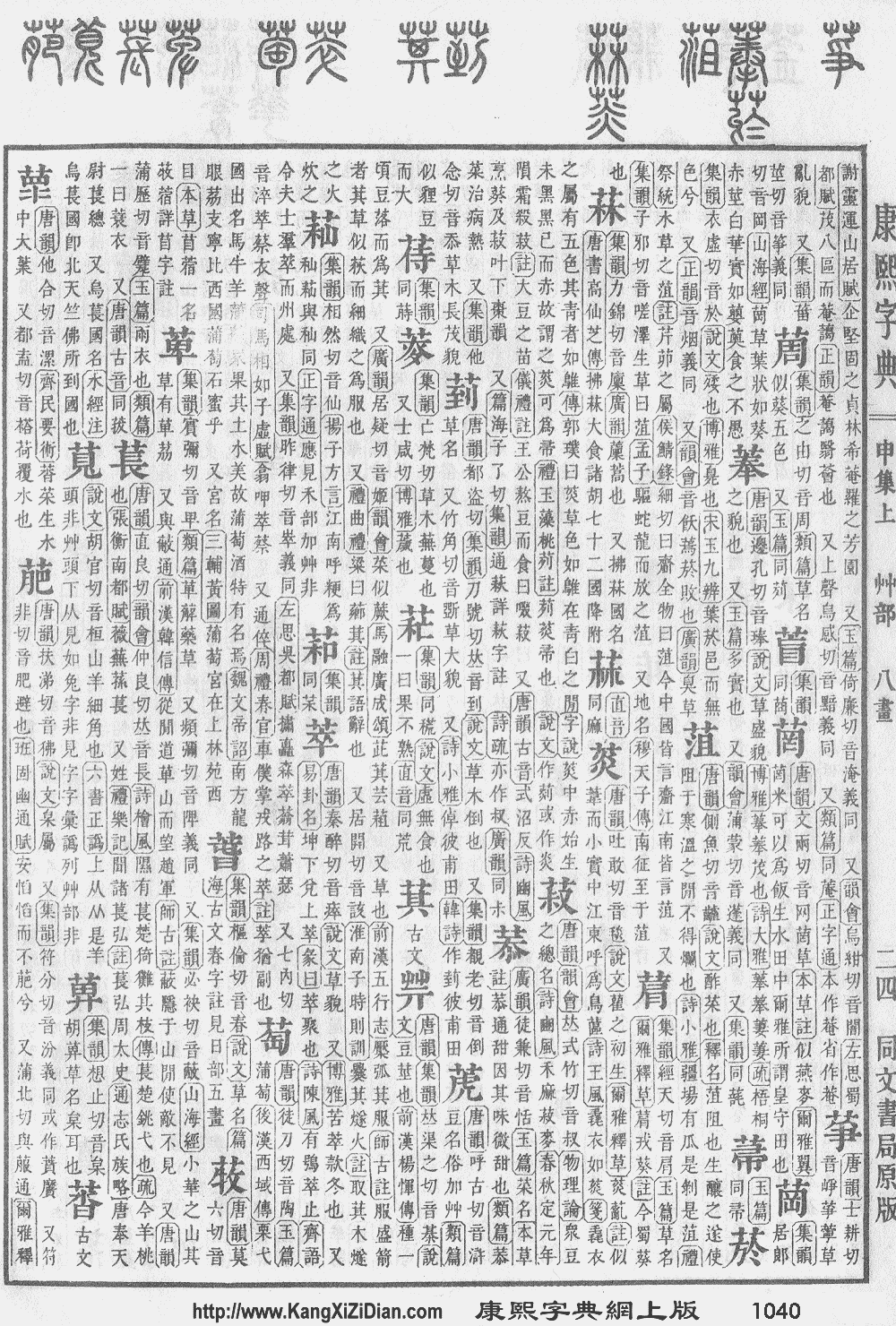
- Kangxi Dictionary: page 1040, character 25
- Dai Kanwa Jiten: character 31251
- Dae Jaweon: page 1499, character 14
- Hanyu Da Zidian (first edition): volume 5, page 3238, character 5
- Unihan data for U+8403
Chinese[edit]
| trad. | 萃 | |
|---|---|---|
| simp. # | 萃 | |
Glyph origin[edit]
| Historical forms of the character 萃 | |
|---|---|
| Western Zhou | Shuowen Jiezi (compiled in Han) |
| Bronze inscriptions | Small seal script |

|

|
| Old Chinese | |
|---|---|
| 晬 | *ʔsuːds |
| 祽 | *ʔsuːds |
| 綷 | *ʔsuːds |
| 淬 | *sʰuːds |
| 啐 | *sʰuːds, *suːds, *sʰroːds, *ʔsud |
| 倅 | *sʰuːds, *ʔsuːd |
| 焠 | *sʰuːds |
| 碎 | *suːds |
| 誶 | *suːds, *suds, *zud |
| 濢 | *ʔslulʔ, *sʰluds |
| 噿 | *ʔslulʔ |
| 臎 | *ʔslulʔ, *sʰluds |
| 醉 | *ʔsuds |
| 翠 | *sʰuds |
| 悴 | *zuds |
| 萃 | *zuds |
| 瘁 | *zuds |
| 顇 | *zuds |
| 粹 | *suds |
| 睟 | *suds |
| 賥 | *suds |
| 卒 | *ʔsuːd, *sʰuːd, *ʔsud |
| 稡 | *ʔsuːd |
| 猝 | *sʰuːd |
| 椊 | *zuːd |
| 捽 | *zuːd, *zud |
| 崪 | *zuːd |
| 窣 | *suːd |
| 崒 | *zud |
| 踤 | *zud |
| 錊 | *ʔsuːɡ |
Pronunciation[edit]
Definitions[edit]
萃
Compounds[edit]
Japanese[edit]
Kanji[edit]
萃
- collect
- gather
- assemble
Readings[edit]
- Go-on: ずい (zui)
- Kan-on: すい (sui)
- On: さい (sai)
- Kun: あつまる (atsumaru, 萃まる); くさむら (kusamura)
- Nanori: あつむ (atsumu)
Korean[edit]
Hanja[edit]
萃 • (chwe, chwi, chae) (hangeul 췌, 취, 채, revised chwe, chwi, chae, McCune–Reischauer ch'we, ch'wi, ch'ae, Yale chwey, chwi, chay)
- This term needs a translation to English. Please help out and add a translation, then remove the text
{{rfdef}}.
Vietnamese[edit]
Han character[edit]
- This term needs a translation to English. Please help out and add a translation, then remove the text
{{rfdef}}.
References[edit]
Categories:
- CJK Unified Ideographs block
- Han script characters
- Translingual lemmas
- Translingual symbols
- Middle Chinese lemmas
- Old Chinese lemmas
- Chinese lemmas
- Mandarin lemmas
- Cantonese lemmas
- Chinese verbs
- Mandarin verbs
- Cantonese verbs
- Chinese nouns
- Mandarin nouns
- Cantonese nouns
- Chinese terms with IPA pronunciation
- Chinese Han characters
- Japanese Han characters
- Uncommon kanji
- Japanese kanji with goon reading ずい
- Japanese kanji with kan'on reading すい
- Japanese kanji with on reading さい
- Japanese kanji with kun reading あつ-まる
- Japanese kanji with kun reading くさむら
- Japanese kanji with nanori reading あつむ
- Korean lemmas
- Korean Han characters
- Vietnamese lemmas
- Vietnamese Han characters