蚤
Jump to navigation
Jump to search
| ||||||||
Translingual[edit]
Han character[edit]
蚤 (Kangxi radical 142, 虫+4, 10 strokes, cangjie input 水戈中一戈 (EILMI), four-corner 17136, composition ⿱㕚虫(TJKV) or ⿱叉虫(G))
Derived characters[edit]
References[edit]
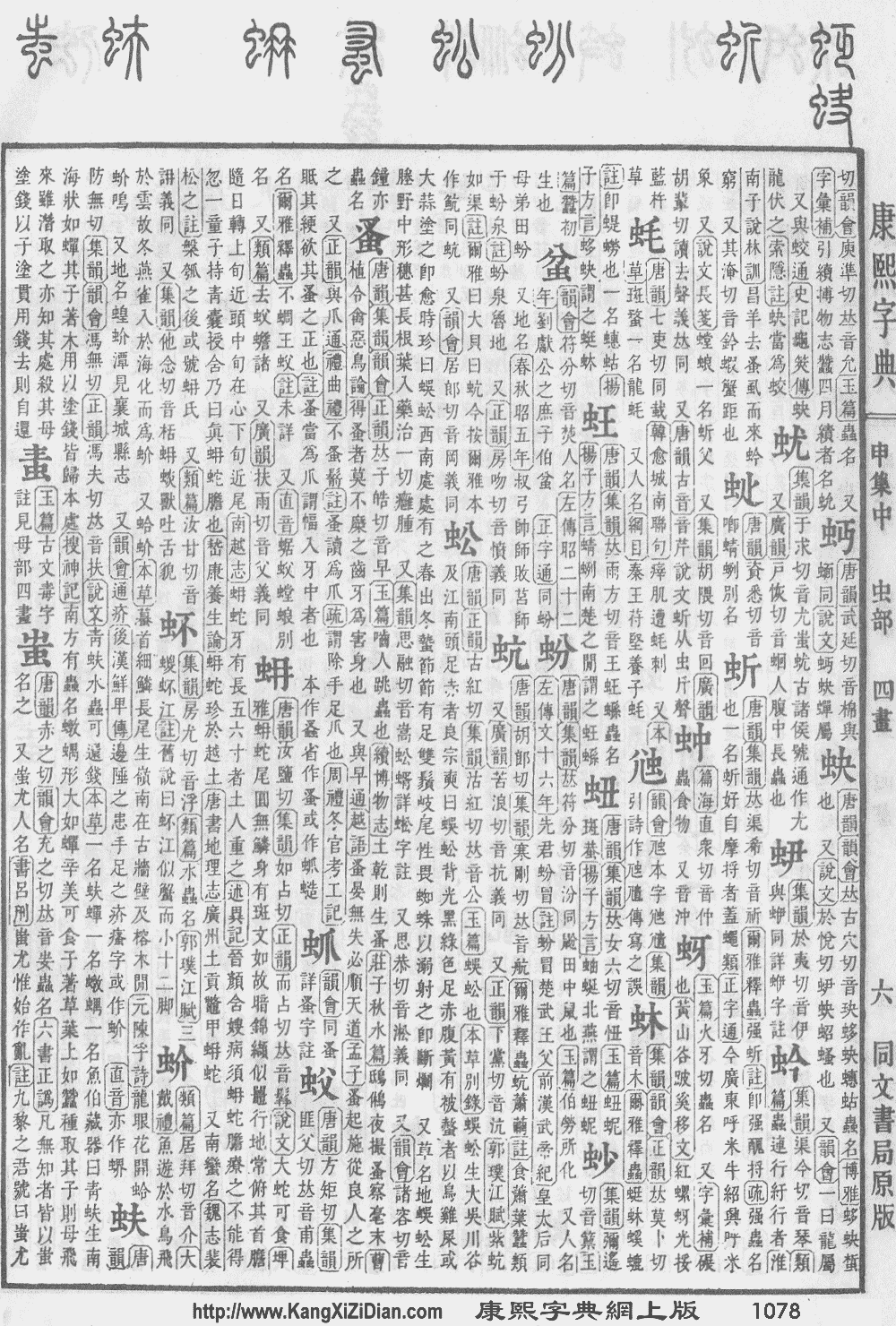
- Kangxi Dictionary: page 1078, character 20
- Dai Kanwa Jiten: character 32893
- Dae Jaweon: page 1547, character 19
- Hanyu Da Zidian (first edition): volume 4, page 2836, character 3
- Unihan data for U+86A4
Chinese[edit]
| trad. | 蚤 | |
|---|---|---|
| simp. # | 蚤 | |
Glyph origin[edit]
| Historical forms of the character 蚤 | ||
|---|---|---|
| Warring States | Shuowen Jiezi (compiled in Han) | Liushutong (compiled in Ming) |
| Chu slip and silk script | Small seal script | Transcribed ancient scripts |

|

|

|
Ideogrammic compound (會意/会意) : 虫 (“insect”) + 㕚 (“claw”) – a scratching insect/pest.
Pronunciation[edit]
Definitions[edit]
蚤
Synonyms[edit]
Compounds[edit]
Japanese[edit]
Kanji[edit]
蚤
Readings[edit]
Etymology[edit]
| Kanji in this term |
|---|
| 蚤 |
| のみ Hyōgaiji |
| kun’yomi |
| For pronunciation and definitions of 蚤 – see the following entry. | ||
| ||
| (This term, 蚤, is an alternative spelling of the above term.) |
Korean[edit]
Hanja[edit]
蚤 (eum 조 (jo))
- This term needs a translation to English. Please help out and add a translation, then remove the text
{{rfdef}}.
Okinawan[edit]
Kanji[edit]
蚤
Readings[edit]
Etymology[edit]
| Kanji in this term |
|---|
| 蚤 |
| ぬみ Hyōgaiji |
| kun’yomi |
Cognate with Japanese 蚤 (nomi).
Pronunciation[edit]
Noun[edit]
蚤 (numi)
Vietnamese[edit]
Han character[edit]
- This term needs a translation to English. Please help out and add a translation, then remove the text
{{rfdef}}.
Categories:
- CJK Unified Ideographs block
- Han script characters
- Translingual lemmas
- Translingual symbols
- Han ideogrammic compounds
- Middle Chinese lemmas
- Old Chinese lemmas
- Chinese lemmas
- Mandarin lemmas
- Cantonese lemmas
- Hokkien lemmas
- Teochew lemmas
- Chinese nouns
- Mandarin nouns
- Cantonese nouns
- Hokkien nouns
- Teochew nouns
- Chinese terms with IPA pronunciation
- Chinese Han characters
- Chinese terms with obsolete senses
- Literary Chinese terms with quotations
- zh:Fleas
- Japanese Han characters
- Uncommon kanji
- Japanese kanji with goon reading そう
- Japanese kanji with kan'on reading そう
- Japanese kanji with kun reading のみ
- Japanese kanji with kun reading はやい
- Japanese terms spelled with 蚤
- Japanese terms read with kun'yomi
- Japanese nouns
- Japanese lemmas
- Japanese terms spelled with hyōgaiji kanji
- Japanese terms written with one Han script character
- Japanese single-kanji terms
- Korean lemmas
- Korean Han characters
- Okinawan Han characters
- Okinawan kanji with kun reading ぬみ
- Okinawan terms spelled with 蚤
- Okinawan terms read with kun'yomi
- Okinawan terms with IPA pronunciation
- Okinawan lemmas
- Okinawan nouns
- Okinawan terms spelled with hyōgaiji kanji
- Okinawan terms written with one Han script character
- Okinawan single-kanji terms
- ryu:Fleas
- ryu:Parasites
- Vietnamese lemmas
- Vietnamese Han characters