賦
Jump to navigation
Jump to search
See also: 赋
| ||||||||
Translingual[edit]
Han character[edit]
賦 (Kangxi radical 154, 貝+8, 15 strokes, cangjie input 月金一心一 (BCMPM), four-corner 63840, composition ⿰貝武)
Derived characters[edit]
Related characters[edit]
References[edit]
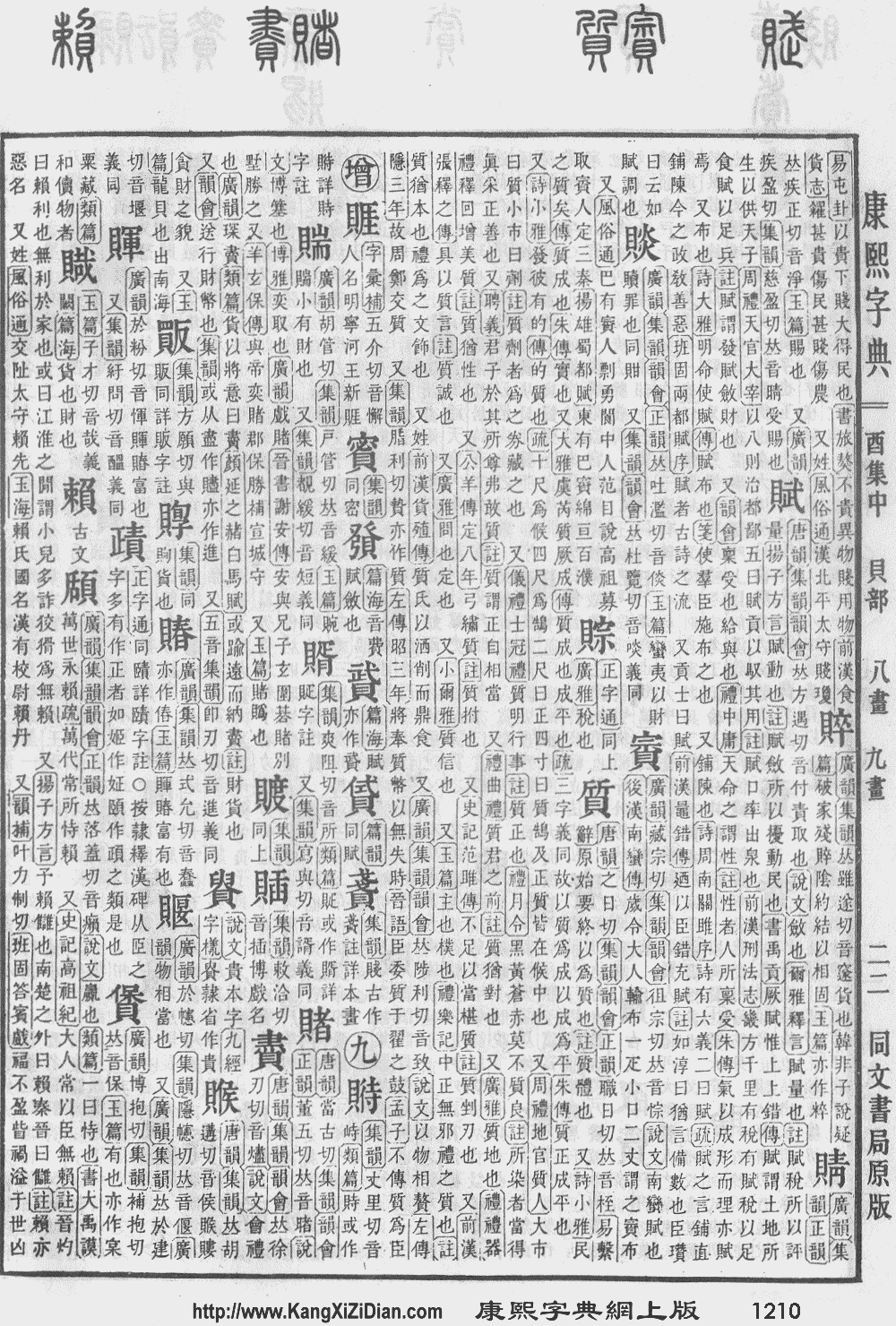
- Kangxi Dictionary: page 1210, character 3
- Dai Kanwa Jiten: character 36800
- Hanyu Da Zidian (first edition): volume 6, page 3644, character 4
- Unihan data for U+8CE6
Chinese[edit]
| trad. | 賦 | |
|---|---|---|
| simp. | 赋 | |
| alternative forms | 䝾 | |

Glyph origin[edit]
| Historical forms of the character 賦 | |||
|---|---|---|---|
| Western Zhou | Warring States | Shuowen Jiezi (compiled in Han) | Liushutong (compiled in Ming) |
| Bronze inscriptions | Chu slip and silk script | Small seal script | Transcribed ancient scripts |

|

|

|

|
Pronunciation[edit]
Definitions[edit]
賦
- to bestow upon; to give
- to compose or sing
- to spread; to disseminate
- to collect; to impose; to levy
- taxation; revenue
- natural endowment
- fu, a literature form developed during the Han dynasty that combines prose and poetry, sometimes translated as ode or rhapsody
Compounds[edit]
- 丁賦/丁赋
- 上林賦/上林赋
- 三都賦/三都赋
- 俳賦/俳赋
- 傜賦/傜赋
- 兩都賦/两都赋
- 冗賦/冗赋 (rǒngfù)
- 別賦/别赋
- 刻燭賦詩/刻烛赋诗
- 口賦/口赋
- 古賦/古赋
- 哀江南賦/哀江南赋
- 均賦/均赋
- 天賦/天赋 (tiānfù)
- 天賦人權/天赋人权
- 子虛賦/子虚赋
- 律賦/律赋
- 後赤壁賦/后赤壁赋
- 徭賦/徭赋
- 恨賦/恨赋
- 悉索敝賦/悉索敝赋
- 悉索薄賦/悉索薄赋
- 排賦/排赋
- 文賦/文赋
- 更賦/更赋
- 橫槊賦詩/横槊赋诗
- 橫賦暴斂/横赋暴敛
- 洛神賦/洛神赋
- 漢賦/汉赋
- 田賦/田赋 (tiánfù)
- 登高能賦/登高能赋
- 登高賦裁/登高赋裁
- 白詞念賦/白词念赋
- 秉賦/秉赋 (bǐngfù)
- 秋聲賦/秋声赋
- 租賦/租赋
- 稅賦/税赋
- 稟賦/禀赋 (bǐngfù)
- 繁刑重賦/繁刑重赋
- 蠲賦/蠲赋
- 西京賦/西京赋
- 西都賦/西都赋
- 詞賦/词赋
- 詩詞歌賦/诗词歌赋 (shīcígēfù)
- 詩賦/诗赋 (shīfù)
- 貢賦/贡赋 (gòngfù)
- 財賦/财赋
- 買賦/买赋
- 資賦/资赋
- 賦予/赋予 (fùyǔ)
- 賦別/赋别
- 賦形劑/赋形剂 (fùxíngjì)
- 賦役/赋役 (fùyì)
- 賦得/赋得
- 賦性/赋性 (fùxìng)
- 賦斂/赋敛 (fùliǎn)
- 賦有/赋有 (fùyǒu)
- 賦歸/赋归
- 賦比興/赋比兴 (fùbǐxìng)
- 賦畀/赋畀
- 賦稅/赋税 (fùshuì)
- 賦稟/赋禀
- 賦話/赋话
- 賦詩/赋诗 (fùshī)
- 賦詩言志/赋诗言志
- 賦閒/赋闲 (fùxián)
- 賦食行水/赋食行水
- 赤壁賦/赤壁赋
- 輕徭薄賦/轻徭薄赋
- 辭賦/辞赋
- 長門賦/长门赋
- 阿房宮賦/阿房宫赋
- 隨物賦形/随物赋形
- 韓朋賦/韩朋赋
- 頭會箕賦/头会箕赋
- 駢賦/骈赋
Japanese[edit]
Kanji[edit]
賦
- levy
- ode
- prose
Readings[edit]
Etymology[edit]

| Kanji in this term |
|---|
| 賦 |
| ふ Grade: S |
| on’yomi |
Pronunciation[edit]
Noun[edit]
- fu (Chinese literary form developed during the times of the Han dynasty that combines prose and poetry)
References[edit]
Korean[edit]
Etymology[edit]
From Middle Chinese 賦 (MC pjuH).
Hanja[edit]
Vietnamese[edit]
Han character[edit]
- This term needs a translation to English. Please help out and add a translation, then remove the text
{{rfdef}}.
Categories:
- CJK Unified Ideographs block
- Han script characters
- Translingual lemmas
- Translingual symbols
- Mandarin terms with audio links
- Middle Chinese lemmas
- Old Chinese lemmas
- Chinese lemmas
- Mandarin lemmas
- Cantonese lemmas
- Hakka lemmas
- Hokkien lemmas
- Teochew lemmas
- Chinese verbs
- Mandarin verbs
- Cantonese verbs
- Hakka verbs
- Hokkien verbs
- Teochew verbs
- Chinese nouns
- Mandarin nouns
- Cantonese nouns
- Hakka nouns
- Hokkien nouns
- Teochew nouns
- Chinese terms with IPA pronunciation
- Chinese Han characters
- zh:Poetry
- Japanese Han characters
- Common kanji
- Japanese kanji with goon reading ふ
- Japanese kanji with kan'on reading ふ
- Japanese kanji with kun reading みつぎ
- Japanese terms spelled with 賦 read as ふ
- Japanese terms read with on'yomi
- Japanese terms with IPA pronunciation
- Japanese lemmas
- Japanese nouns
- Japanese terms spelled with secondary school kanji
- Japanese terms written with one Han script character
- Japanese terms spelled with 賦
- Japanese single-kanji terms
- Korean terms derived from Middle Chinese
- Korean lemmas
- Korean Han characters
- Vietnamese lemmas
- Vietnamese Han characters