啟
Jump to navigation
Jump to search
| ||||||||
Translingual[edit]
| Traditional | 啟 |
|---|---|
| Simplified | 启 |
| Japanese | 啓 |
| Korean | 啓 |
Han character[edit]
啟 (Kangxi radical 66, 攴+7, 11 strokes, cangjie input 竹口人大 (HROK), four-corner 38604, composition ⿰户攵(G) or ⿰启攵(HT))
Usage notes[edit]
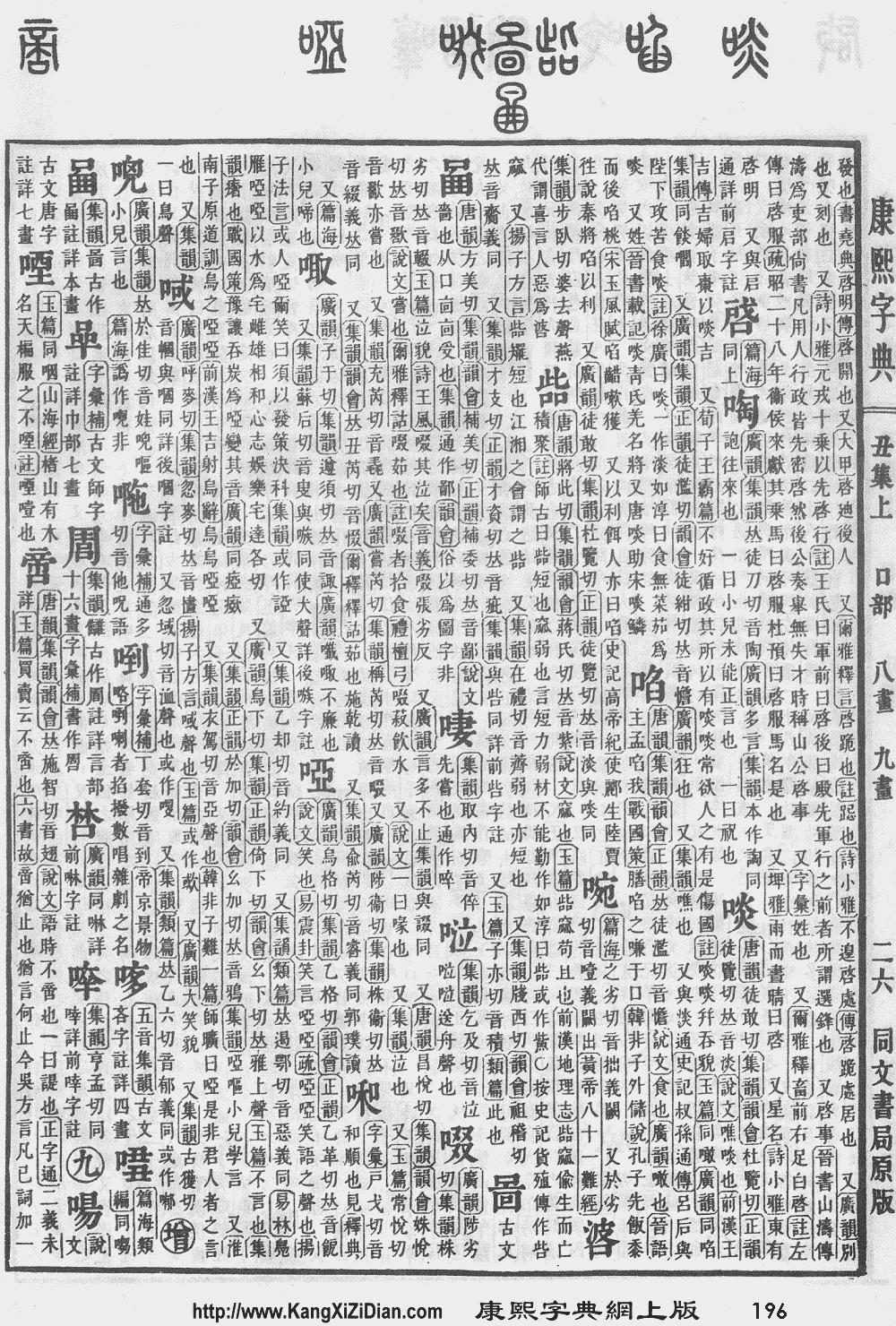
This character form is not found in the Kangxi dictionary and is not used in Japan or Korea (啓 is used instead). It is the preferred form used in Hong Kong and Taiwan; historically the preferred form is 啓 in Hong Kong, but this has shifted in recent years.
Derived characters[edit]
Related characters[edit]
- 啓 (Form used in Japan and Korea) (Also found in the Kangxi Dictionary)
Descendants[edit]
References[edit]
- Kangxi Dictionary: not present, would follow page 196, character 26
- Dai Kanwa Jiten: character 3821
- Hanyu Da Zidian (first edition): volume 2, page 1463, character 8
- Unihan data for U+555F
Chinese[edit]
| trad. | 啟/啓 | |
|---|---|---|
| simp. | 启 | |
| alternative forms | 唘 啔 | |

Glyph origin[edit]
| Historical forms of the character 啟 | |||
|---|---|---|---|
| Shang | Western Zhou | Shuowen Jiezi (compiled in Han) | Liushutong (compiled in Ming) |
| Oracle bone script | Bronze inscriptions | Small seal script | Transcribed ancient scripts |

|

|

|

|
Pronunciation[edit]
Definitions[edit]
啟
- to open
- to enlighten; to educate; to inspire
- to start; to begin; to commence
- to inform; to state; to explain
- note; short letter
- (Chinese mythology) Qi of Xia (second king of the semi-legendary Xia dynasty)
- Short for 啟示錄/启示录 (Qǐshìlù, “Revelation”).
- a surname
Synonyms[edit]
Terms for the book of Revelation in different branches of Christianity
| Branch | Names | Abbreviations |
|---|---|---|
| Protestant | 啟示錄 | 啟 |
| Roman Catholic | 若望默示錄, 默示錄 | 默 |
| Eastern Orthodox | 約安之啟示錄 |
Compounds[edit]
- 不好啟齒/不好启齿
- 丹脣啟秀/丹唇启秀
- 光啟/光启
- 公啟/公启
- 再啟者/再启者
- 副啟/副启
- 哀啟/哀启 (āiqǐ)
- 夏啟/夏启
- 天啟/天启 (Tiānqǐ)
- 山公啟事/山公启事
- 徵啟/征启
- 徵求啟事/征求启事
- 承上啟下/承上启下
- 承先啟後/承先启后 (chéngxiānqǐhòu)
- 承前啟後/承前启后 (chéngqiánqǐhòu)
- 拜啟/拜启
- 啟乞/启乞
- 啟事/启事 (qǐshì)
- 啟動/启动 (qǐdòng)
- 啟動程式/启动程式
- 啟口/启口
- 啟告/启告
- 啟問/启问
- 啟土/启土
- 啟報/启报
- 啟奏/启奏
- 啟封/启封 (qǐfēng)
- 啟建/启建
- 啟手足/启手足
- 啟明/启明 (qǐmíng)
- 啟智/启智
- 啟沃/启沃
- 啟浪/启浪 (Qǐlàng)
- 啟用/启用 (qǐyòng)
- 啟發/启发 (qǐfā)
- 啟白/启白
- 啟碇/启碇
- 啟示/启示 (qǐshì)
- 啟示錄/启示录 (qǐshìlù)
- 啟程/启程 (qǐchéng)
- 啟節/启节
- 啟聰/启聪
- 啟航/启航 (qǐháng)
- 啟蒙/启蒙 (qǐméng)
- 啟蒙哲學/启蒙哲学
- 啟蒙時代/启蒙时代 (Qǐméng Shídài)
- 啟蒙運動/启蒙运动 (qǐméng yùndòng)
- 啟處/启处
- 啟蟄/启蛰
- 啟行/启行
- 啟請/启请
- 啟迪/启迪 (qǐdí)
- 啟運/启运
- 啟釁/启衅 (qǐxìn)
- 啟閉/启闭
- 啟顏/启颜
- 啟齒/启齿 (qǐchǐ)
- 敬啟/敬启
- 敬啟者/敬启者 (jìngqǐzhě)
- 更正啟事/更正启事
- 書啟/书启
- 款啟寡聞/款启寡闻
- 殷憂啟聖/殷忧启圣
- 臺啟/台启
- 茲啟者/兹启者
- 親啟/亲启
- 謝啟/谢启
- 警告啟事/警告启事
- 逕啟者/迳启者 (jìngqǐzhě)
- 通知啟事/通知启事
- 道歉啟事/道歉启事
- 鄂君啟節/鄂君启节
- 鈞啟/钧启
- 開啟/开启 (kāiqǐ)
- 鳴謝啟事/鸣谢启事
Japanese[edit]
Kanji[edit]
啟
- This term needs a translation to English. Please help out and add a translation, then remove the text
{{rfdef}}.
Readings[edit]
Korean[edit]
Hanja[edit]
啟 • (gye) (hangeul 계, revised gye, McCune–Reischauer kye)
- This term needs a translation to English. Please help out and add a translation, then remove the text
{{rfdef}}.
Vietnamese[edit]
Han character[edit]
啟: Hán Nôm readings: khải, khơi, khui
- This term needs a translation to English. Please help out and add a translation, then remove the text
{{rfdef}}.
Categories:
- CJK Unified Ideographs block
- Han script characters
- Translingual lemmas
- Translingual symbols
- Middle Chinese lemmas
- Old Chinese lemmas
- Chinese lemmas
- Mandarin lemmas
- Cantonese lemmas
- Hakka lemmas
- Eastern Min lemmas
- Hokkien lemmas
- Teochew lemmas
- Chinese verbs
- Mandarin verbs
- Cantonese verbs
- Hakka verbs
- Eastern Min verbs
- Hokkien verbs
- Teochew verbs
- Chinese nouns
- Mandarin nouns
- Cantonese nouns
- Hakka nouns
- Eastern Min nouns
- Hokkien nouns
- Teochew nouns
- Chinese proper nouns
- Mandarin proper nouns
- Cantonese proper nouns
- Hakka proper nouns
- Eastern Min proper nouns
- Hokkien proper nouns
- Teochew proper nouns
- Chinese terms with IPA pronunciation
- Chinese Han characters
- zh:Chinese mythology
- Chinese short forms
- Chinese surnames
- Japanese Han characters
- Uncommon kanji
- Japanese kanji with on reading けい
- Japanese kanji with kun reading ひらく
- Japanese kanji with kun reading もうす
- Korean lemmas
- Korean Han characters
- Vietnamese lemmas
- Vietnamese Han characters