髭
Appearance
| ||||||||
Translingual
[edit]Han character
[edit]髭 (Kangxi radical 190, 髟+5, 15 strokes, Cangjie input 尸竹卜一心 (SHYMP), four-corner 72111, composition ⿱髟此)
Related characters
[edit]References
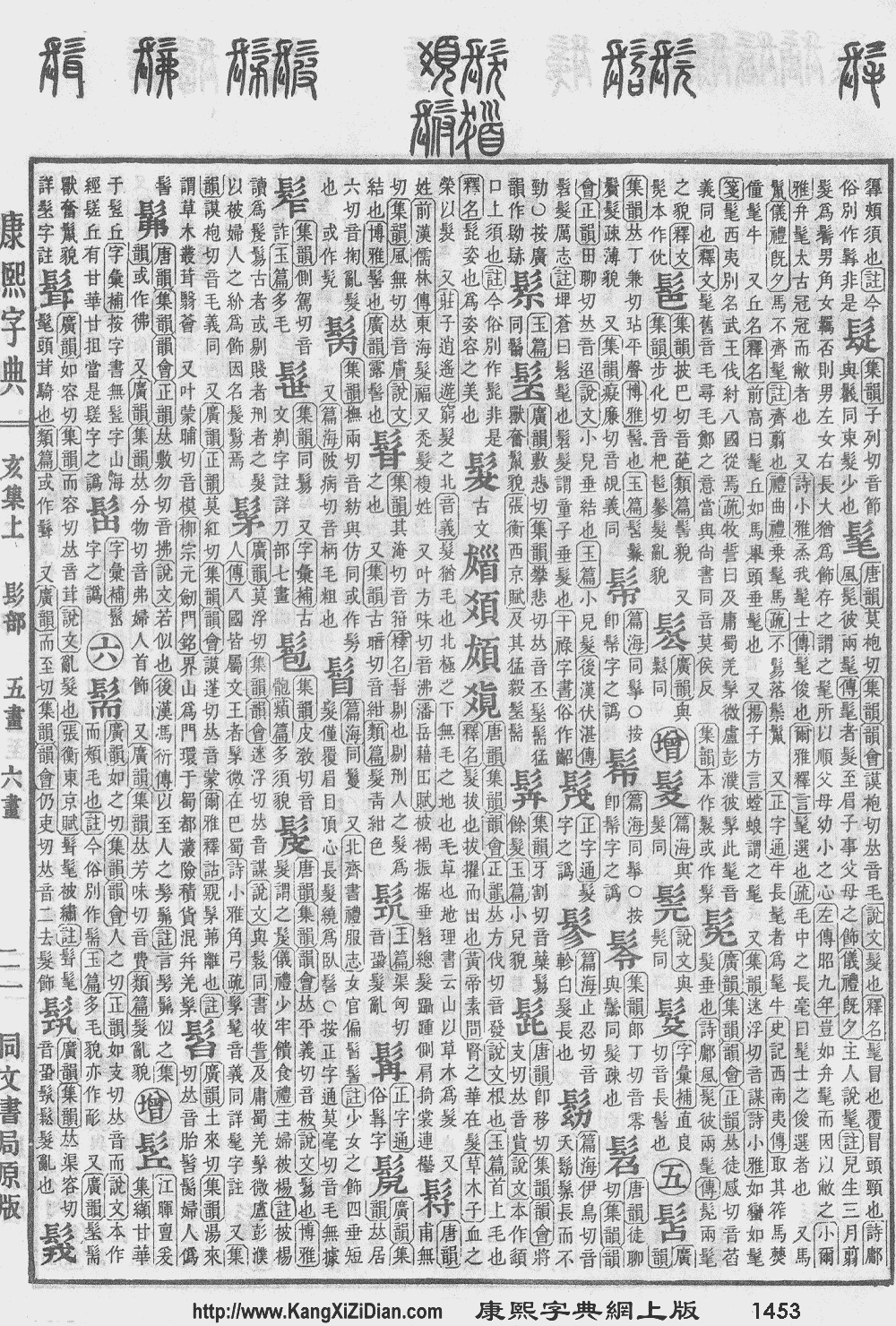
[edit]- Kangxi Dictionary: page 1453, character 20
- Dai Kanwa Jiten: character 45399
- Dae Jaweon: page 1984, character 3
- Hanyu Da Zidian (first edition): volume 7, page 4524, character 4
- Unihan data for U+9AED
Chinese
[edit]| trad. | 髭 | |
|---|---|---|
| simp. # | 髭 | |
| alternative forms | ||
Glyph origin
[edit]| Historical forms of the character 髭 | |||
|---|---|---|---|
| Shang | Western Zhou | Shuowen Jiezi (compiled in Han) | Liushutong (compiled in Ming) |
| Oracle bone script | Bronze inscriptions | Small seal script | Transcribed ancient scripts |
| Old Chinese | |
|---|---|
| 些 | *saːls, *sjaːl, *seːs |
| 跐 | *ʔsreːʔ, *ʔseʔ, *sʰeʔ, *ʔsreʔ |
| 柴 | *zreː |
| 祡 | *zreː |
| 茈 | *zreː, *ʔseʔ, *ze |
| 眦 | *zreːs |
| 砦 | *zraːds |
| 寨 | *zraːds, *slɯːɡ |
| 啙 | *ʔseː, *zeːʔ, *ʔseʔ |
| 泚 | *sʰeːʔ, *sʰeʔ |
| 玼 | *sʰeːʔ, *sʰeʔ, *ze |
| 皉 | *sʰeːʔ |
| 鮆 | *zeːʔ, *ʔse |
| 眥 | *zeːs, *zes |
| 貲 | *ʔse |
| 髭 | *ʔse |
| 頾 | *ʔse |
| 訾 | *ʔse, *ʔseʔ |
| 鴜 | *ʔse, *ze |
| 鈭 | *ʔse, *sʰe |
| 姕 | *ʔse, *sʰe, *ze |
| 觜 | *ʔse, *ʔse, *ʔseʔ |
| 紫 | *ʔseʔ |
| 訿 | *ʔseʔ |
| 呰 | *ʔseʔ |
| 嘴 | *ʔseʔ |
| 雌 | *sʰe |
| 此 | *sʰeʔ |
| 佌 | *sʰeʔ, *seʔ |
| 庛 | *sʰes |
| 疵 | *ze |
| 骴 | *ze, *zes |
| 胔 | *ze, *zes |
| 飺 | *ze |
| 齜 | *ʔsre |
Originally a pictogram (象形) depicting a man with a prominent mustache.
Later written 頿 or 頾, a phono-semantic compound (形聲 / 形声, OC *ʔse): semantic 須 (“beard”) + phonetic 此 (OC *sʰeʔ), where 須 is the original form of 鬚.
In the modern form, a phono-semantic compound (形聲 / 形声, OC *ʔse): semantic 髟 (“hair”) + phonetic 此 (OC *sʰeʔ).
Pronunciation
[edit]- Mandarin
- (Standard Chinese)+
- Hanyu Pinyin: zī
- Zhuyin: ㄗ
- Tongyong Pinyin: zih
- Wade–Giles: tzŭ1
- Yale: dz̄
- Gwoyeu Romatzyh: tzy
- Palladius: цзы (czy)
- Sinological IPA (key): /t͡sɹ̩⁵⁵/
- (Standard Chinese)+
- Cantonese
- (Standard Cantonese, Guangzhou–Hong Kong)
- Jyutping: zi1
- Yale: jī
- Cantonese Pinyin: dzi1
- Guangdong Romanization: ji1
- Sinological IPA (key): /t͡siː⁵⁵/
- (Standard Cantonese, Guangzhou–Hong Kong)
- Middle Chinese: tsje
- Old Chinese
- (Zhengzhang): /*ʔse/
Definitions
[edit]髭
Compounds
[edit]References
[edit]- “髭”, in 漢語多功能字庫 (Multi-function Chinese Character Database)[1], 香港中文大學 (the Chinese University of Hong Kong), 2014–
Japanese
[edit]Kanji
[edit]髭
Readings
[edit]Etymology
[edit]| Kanji in this term |
|---|
| 髭 |
| ひげ Hyōgai |
| kun'yomi |
| For pronunciation and definitions of 髭 – see the following entry. | ||
| ||
| (This term, 髭, is an alternative spelling of the above term.) |
Derived terms
[edit]References
[edit]- “▲髭”, in 漢字ぺディア [Kanjipedia][2] (in Japanese), The Japan Kanji Aptitude Testing Foundation, 2015–2026
Korean
[edit]Hanja
[edit]- This term needs a translation to English. Please help out and add a translation, then remove the text
{{rfdef}}.
Categories:
- CJK Unified Ideographs block
- Han script characters
- Translingual lemmas
- Translingual symbols
- Han pictograms
- Han phono-semantic compounds
- Chinese lemmas
- Mandarin lemmas
- Cantonese lemmas
- Middle Chinese lemmas
- Old Chinese lemmas
- Chinese hanzi
- Mandarin hanzi
- Cantonese hanzi
- Middle Chinese hanzi
- Old Chinese hanzi
- Chinese nouns
- Mandarin nouns
- Cantonese nouns
- Middle Chinese nouns
- Old Chinese nouns
- Chinese terms with IPA pronunciation
- Chinese terms spelled with 髭
- zh:Hair
- Japanese kanji
- Japanese hyōgai kanji
- Japanese kanji with goon reading し
- Japanese kanji with kan'on reading し
- Japanese kanji with kun reading ひげ
- Japanese terms spelled with 髭 read as ひげ
- Japanese terms read with kun'yomi
- Japanese nouns
- Japanese lemmas
- Japanese terms spelled with hyōgai kanji
- Japanese terms with 1 kanji
- Japanese terms spelled with 髭
- Japanese single-kanji terms
- ja:Moustaches
- Korean lemmas
- Korean hanja