灼
Jump to navigation
Jump to search
| ||||||||
Translingual[edit]
Han character[edit]
灼 (Kangxi radical 86, 火+3, 7 strokes, cangjie input 火心戈 (FPI) or 火心一 (FPM), four-corner 97820, composition ⿰火勺)
Derived characters[edit]
References[edit]
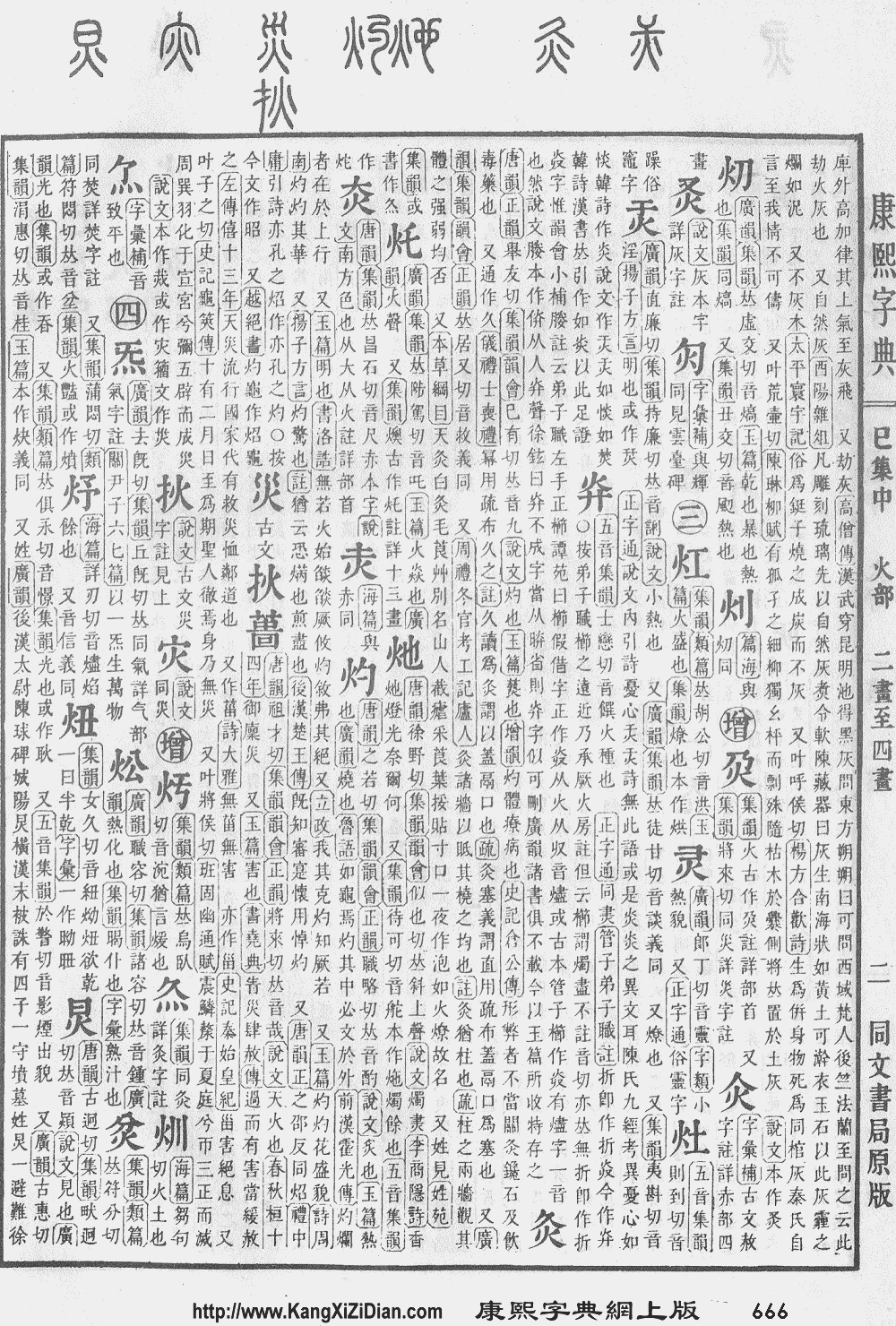
- Kangxi Dictionary: page 666, character 17
- Dai Kanwa Jiten: character 18878
- Dae Jaweon: page 1075, character 22
- Hanyu Da Zidian (first edition): volume 3, page 2189, character 16
- Unihan data for U+707C
Chinese[edit]
| trad. | 灼 | |
|---|---|---|
| simp. # | 灼 | |
| alternative forms | ⿰大匀 𤆥 烵 燋 𭴰 | |
Glyph origin[edit]
| Historical forms of the character 灼 | ||
|---|---|---|
| Warring States | Shuowen Jiezi (compiled in Han) | Liushutong (compiled in Ming) |
| Chu slip and silk script | Small seal script | Transcribed ancient scripts |

|

|

|
| Old Chinese | |
|---|---|
| 豹 | *preːwɢs |
| 趵 | *preːwɢs, *preːwɢ |
| 尥 | *breːw, *b·reːwɢs |
| 箹 | *ʔreːwɢs, *ʔreːwɢ |
| 杓 | *plew, *pʰlew, *bljewɢ, *pleːwɢ |
| 約 | *ʔlewɢs, *ʔlewɢ |
| 扚 | *pleːwʔ, *pleːwɢ |
| 釣 | *pleːwɢs |
| 瘹 | *teːwɢs |
| 芍 | *ɡleːwʔ, *spʰlewɢ, *pl'ewɢ, *bljewɢ, *pleːwɢ |
| 酌 | *pljewɢ |
| 灼 | *pljewɢ |
| 勺 | *pljewɢ, *bljewɢ |
| 彴 | *pljewɢ |
| 犳 | *pljewɢ |
| 妁 | *pljewɢ, *bljewɢ |
| 汋 | *bljewɢ, *sbreːwɢ |
| 仢 | *bljewɢ |
| 葯 | *qlewɢ, *qreːwɢ |
| 礿 | *lewɢ |
| 肑 | *preːwɢ, *pleːwɢ |
| 瓝 | *breːwɢ |
| 的 | *pleːwɢ |
| 靮 | *pleːwɢ |
| 馰 | *pleːwɢ |
| 玓 | *pleːwɢ |
| 魡 | *pleːwɢ |
Phono-semantic compound (形聲/形声, OC *pljewɢ) : semantic 火 (“fire”) + phonetic 勺 (OC *pljewɢ, *bljewɢ).
Pronunciation[edit]
Definitions[edit]
灼
- to burn; to scorch
- to broil; to roast
- to cauterize
- bright; shining; luminous
- Used in 灼然 (zhuórán, “obvious; clear”).
Compounds[edit]
References[edit]
- Dictionary of Chinese Character Variants (教育部異體字字典), A02386
- “灼”, in 漢語多功能字庫 (Multi-function Chinese Character Database)[1], 香港中文大學 (the Chinese University of Hong Kong), 2014–
Japanese[edit]
| Shinjitai (extended) |
Shinjitai (extended) |
灼󠄀 灼+ 󠄀?(Adobe-Japan1) |

|
|
| 灼󠄂 灼+ 󠄂?(Hanyo-Denshi) (Moji_Joho) | ||||
| Kyūjitai | 灼 | 
| ||
| The displayed kanji may be different from the image due to your environment. See here for details. | ||||
Kanji[edit]
灼
(“Jinmeiyō” kanji used for names)
- This term needs a translation to English. Please help out and add a translation, then remove the text
{{rfdef}}.
Readings[edit]
Compounds[edit]
- 灼熱 (shakunetsu)
- 灼眼 (shakugan)
Etymology[edit]
| Kanji in this term |
|---|
| 灼 |
| あらた Jinmeiyō |
| kun’yomi |
| For pronunciation and definitions of 灼 – see the following entry. | ||
| ||
| (This term, 灼, is an alternative spelling of the above term.) |
Korean[edit]
Hanja[edit]
灼 • (jak, sa) (hangeul 작, 사, revised jak, sa, McCune–Reischauer chak, sa, Yale cak, sa)
- This term needs a translation to English. Please help out and add a translation, then remove the text
{{rfdef}}.
Vietnamese[edit]
Han character[edit]
- This term needs a translation to English. Please help out and add a translation, then remove the text
{{rfdef}}.
References[edit]
Categories:
- CJK Unified Ideographs block
- Han script characters
- Translingual lemmas
- Translingual symbols
- Han phono-semantic compounds
- Middle Chinese lemmas
- Old Chinese lemmas
- Chinese lemmas
- Mandarin lemmas
- Cantonese lemmas
- Hokkien lemmas
- Chinese verbs
- Mandarin verbs
- Cantonese verbs
- Hokkien verbs
- Chinese adjectives
- Mandarin adjectives
- Cantonese adjectives
- Hokkien adjectives
- Chinese terms with IPA pronunciation
- Chinese Han characters
- Japanese Han characters
- Kanji used for names
- Japanese kanji with goon reading しゃく
- Japanese kanji with kan'on reading しゃく
- Japanese kanji with kun reading や-く
- Japanese kanji with kun reading あらた
- Japanese kanji with kun reading あらたか
- Japanese terms spelled with 灼
- Japanese terms read with kun'yomi
- Japanese adjectives
- Japanese lemmas
- Japanese terms spelled with jinmeiyō kanji
- Japanese terms written with one Han script character
- Japanese single-kanji terms
- Korean lemmas
- Korean Han characters
- Vietnamese lemmas
- Vietnamese Han characters