仙
| ||||||||
Translingual[edit]
| Stroke order | |||
|---|---|---|---|

| |||
Han character[edit]
仙 (Kangxi radical 9, 人+3, 5 strokes, cangjie input 人山 (OU), four-corner 22270, composition ⿰亻山)
Derived characters[edit]
Related characters[edit]
References[edit]
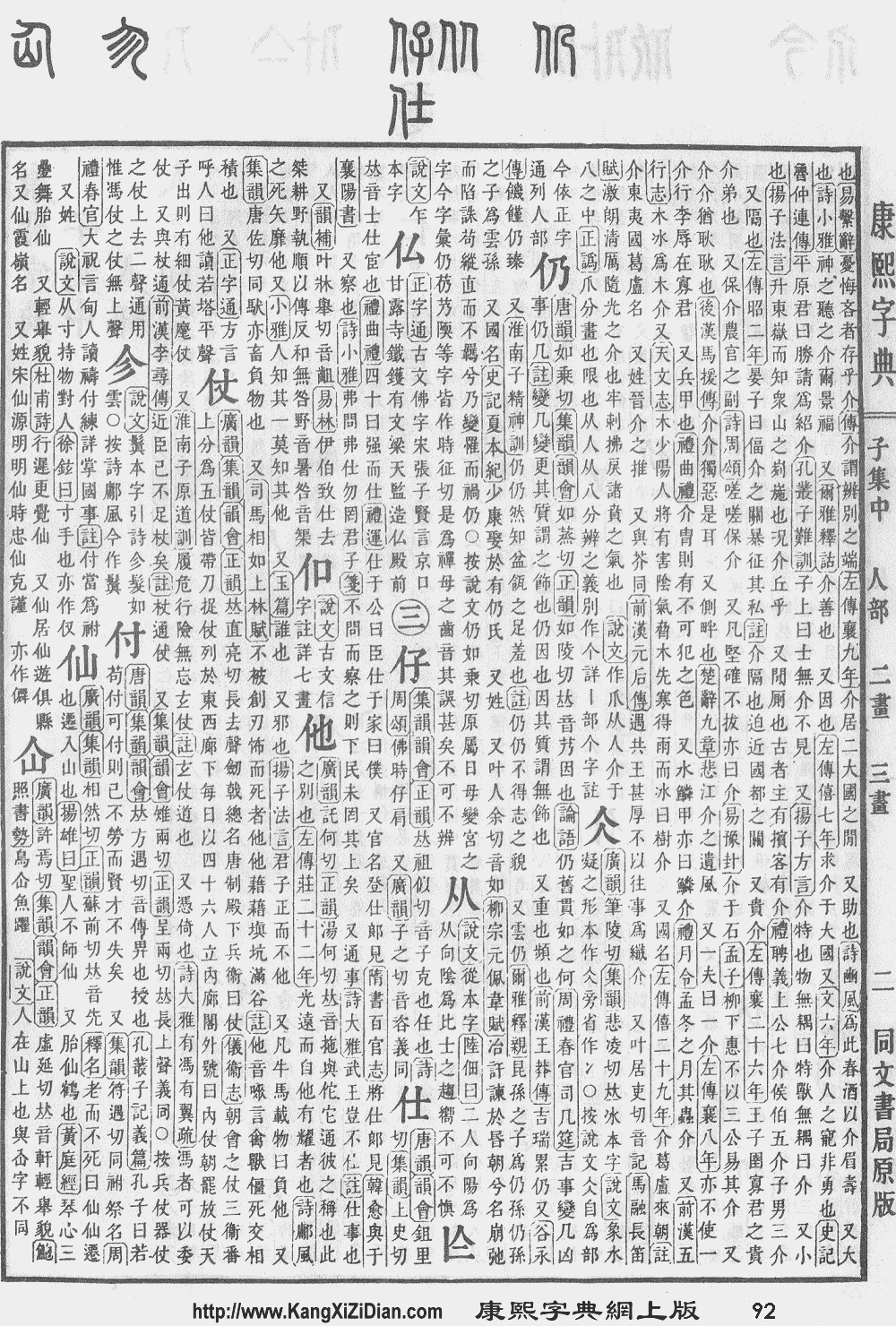
- Kangxi Dictionary: page 92, character 13
- Dai Kanwa Jiten: character 374
- Dae Jaweon: page 196, character 3
- Hanyu Da Zidian (first edition): volume 1, page 114, character 3
- Unihan data for U+4ED9
Chinese[edit]

Glyph origin[edit]
| Historical forms of the character 仙 | |||||||||
|---|---|---|---|---|---|---|---|---|---|
| |||||||||
|
References:
Mostly from Richard Sears' Chinese Etymology site (authorisation),
|


Ideogrammic compound (會意/会意) and phono-semantic compound (形聲/形声, OC *sen) : semantic 亻 (“person”) + phonetic 山 (OC *sreːn, “mountain”) — a person moving into a mountain to practise becoming immortal.
Originally 僊. The current form is first attested in the clerical script of the Han dynasty.
Etymology 1[edit]
| simp. and trad. |
仙 | |
|---|---|---|
| alternative forms | ||
A relatively late word, perhaps Sino-Tibetan (Schuessler, 2007). Compare Tibetan གཤེན (gshen, “shaman”), as in Tibetan གཤེན་རབ (gshen rab, “Shenrab”), the founder of the Tibetan religion Bon, although this might be a loan from Chinese (ibid.). Starostin sets up Proto-Sino-Tibetan *s[ă]n (“a kind of demon”), comparing it to Tibetan བསེན་མོ (bsen mo, “female devil”) and Jingpho sawn (“malignant female nat”).
Pronunciation[edit]
Definitions[edit]
仙
- (Taoism) xian (an immortal; celestial being)
- (figurative) extraordinary person
- (agent affix, chiefly Southern Min, honorific) expert; a title for a person with a specific expertise
- 相命仙 [Taiwanese Hokkien] ― siòng-miā-sian [Pe̍h-ōe-jī] ― fortuneteller
- (agent affix, chiefly Southern Min, ironic) person with some specific hobby or addiction
- 筊仙 [Taiwanese Hokkien] ― kiáu-sian [Pe̍h-ōe-jī] ― gambler
- a euphemism for the deceased
- 仙逝 ― xiānshì ― to pass away
- (Southern Min) Classifier for deity, idol, statue, doll. Alternative form of 身 (sian)
- (Southern Min) (with negative) whatsoever, any way
- 仙講都毋聽/仙讲都毋听 [Taiwanese Hokkien] ― sian kóng to m̄ thiaⁿ [Pe̍h-ōe-jī] ― won't listen (to you) no matter what you say
- a surname
Descendants[edit]
Others:
- → Thai: เซียน (siian) (via Hokkien)
Compounds[edit]
- 七仙女
- 上仙
- 世仙
- 九天仙女
- 乩仙
- 人間仙境/人间仙境
- 仙丹 (xiāndān)
- 仙人 (xiānrén, “sage”)
- 仙人拳
- 仙人掌 (xiānrénzhǎng)
- 仙人擔/仙人担 (xiānréndàn)
- 仙人放屁
- 仙人渡 (Xiānréndù)
- 仙人跳 (xiānréntiào)
- 仙仗
- 仙公
- 仙公廟/仙公庙 (xiāngōngmiào)
- 仙劍/仙剑 (“paladin”)
- 仙后座 (Xiānhòuzuò)
- 仙域
- 仙境 (xiānjìng, “wonderland”)
- 仙壇/仙坛
- 仙女 (xiānnǚ, “female sage”)
- 仙女山 (Xiānnǚshān)
- 仙女座 (Xiānnǚzuò)
- 仙女廟/仙女庙
- 仙姑 (xiāngū)
- 仙姿
- 仙姿玉色
- 仙子 (xiānzǐ)
- 仙官
- 仙客
- 仙居 (xiānjū)
- 仙履奇缘
- 仙山瓊閣/仙山琼阁 (xiānshānqiónggé)
- 仙巴掌 (Min Nan)
- 仙府
- 仙度瑞拉
- 仙才
- 仙拚仙 (Min Nan)
- 仙方 (xiānfāng)
- 仙曹
- 仙木
- 仙果
- 仙桃 (xiāntáo, “Peaches of Immortality”)
- 仙樂/仙乐 (xiānyuè)
- 仙機/仙机
- 仙樹/仙树
- 仙氣/仙气
- 仙法
- 仙洞
- 仙海
- 仙源
- 仙王座 (Xiānwángzuò)
- 仙班
- 仙界 (xiānjiè)
- 仙真
- 仙童
- 仙童仙女
- 仙筆/仙笔
- 仙籍
- 仙經/仙经
- 仙茅 (xiānmáo)
- 仙草 (xiāncǎo)
- 仙草蜜
- 仙蒂瑞拉
- 仙藥/仙药
- 仙術/仙术 (xiānshù)
- 仙貝/仙贝 (xiānbèi)
- 仙逝 (xiānshì)
- 仙遊/仙游 (xiānyóu)
- 仙郎
- 仙鄉/仙乡 (xiānxiāng)
- 仙都唔仙
- 仙霞嶺/仙霞岭
- 仙露明珠
- 仙顏/仙颜
- 仙風道骨/仙风道骨
- 仙館/仙馆
- 仙骨 (xiāngǔ)
- 仙鶴/仙鹤 (xiānhè)
- 仙鶴草/仙鹤草 (xiānhècǎo)
- 仙鼠
- 修仙 (xiūxiān)
- 做仙 (Min Nan)
- 假仙 (Min Nan)
- 八仙 (bāxiān)
- 八仙山
- 八仙桌 (bāxiānzhuō)
- 八仙花 (bāxiānhuā)
- 八仙過海/八仙过海 (bāxiānguòhǎi)
- 六仙桌
- 凌波仙子
- 列仙
- 劍仙/剑仙
- 半仙
- 半仙戲/半仙戏
- 南極仙翁/南极仙翁
- 和合二仙
- 四仙桌
- 地理仙 (Min Nan)
- 坡仙
- 大仙 (dàxiān)
- 大仙爺/大仙爷
- 大細仙/大细仙 (Min Nan)
- 大羅神仙/大罗神仙
- 天仙 (tiānxiān)
- 天仙聖母/天仙圣母
- 妃祿仙女/妃禄仙女
- 學仔仙/学仔仙 (Min Nan)
- 廣寒仙子/广寒仙子
- 張仙/张仙
- 得道成仙
- 懵仙 (Min Nan)
- 成仙 (“becoming immortal”)
- 扮仙 (Min Nan)
- 攀仙桂
- 散仙 (Min Nan)
- 昇仙/升仙 (shēngxiān)
- 梅仙
- 歌仔仙 (Min Nan)
- 水仙 (shuǐxiān)
- 洞仙 (dòngxiān)
- 活神仙
- 游仙窟
- 焦三仙
- 狐仙 (húxiān)
- 王祿仔仙/王禄仔仙 (Min Nan)
- 玉天仙
- 甲仙 (Jiǎxiān)
- 癮仙/瘾仙 (Min Nan)
- 登仙 (dēngxiān)
- 盜仙草/盗仙草
- 看命仙 (Min Nan)
- 睡仙
- 碟仙
- 神仙 (shénxiān)
- 神仙中人 (shénxiānzhōngrén)
- 神仙思想
- 神仙眷屬/神仙眷属
- 神仙魚/神仙鱼
- 秋水仙素 (qiūshuǐxiānsù)
- 筊仙 (Min Nan)
- 箕仙
- 綠野仙蹤/绿野仙踪
- 練仙/练仙 (Min Nan)
- 美國仙丹/美国仙丹 (Min Nan)
- 羽化登仙
- 肉飛仙/肉飞仙
- 臭屁仙 (Min Nan)
- 英仙座 (Yīngxiānzuò)
- 莆仙 (Pú-Xiān)
- 莆仙戲/莆仙戏
- 葛仙米
- 葛仙翁
- 蓋仙/盖仙
- 蓬瀛仙境
- 蓬萊仙境/蓬莱仙境
- 蓬萊仙島/蓬莱仙岛 (Pénglái Xiāndǎo)
- 虎膦仙 (Min Nan)
- 詩仙/诗仙 (shīxiān)
- 話仙/话仙 (Min Nan)
- 請仙/请仙
- 諞仙/谝仙 (Min Nan)
- 謫仙/谪仙
- 赤腳大仙/赤脚大仙
- 赤跤仙仔 (Min Nan)
- 走街仔仙 (Min Nan)
- 遊仙/游仙
- 遊仙枕/游仙枕
- 遊仙詩/游仙诗
- 道骨仙風/道骨仙风
- 酒中仙
- 酒仙 (jiǔxiān)
- 酒八仙人
- 閒仙仙/闲仙仙 (Min Nan)
- 阿仙藥/阿仙药 (āxiānyào)
- 陸地神仙/陆地神仙
- 雞犬皆仙/鸡犬皆仙
- 雲仙雜記/云仙杂记
- 風水仙/风水仙 (Min Nan)
- 飄若神仙/飘若神仙
- 飄飄欲仙/飘飘欲仙 (piāopiāoyùxiān)
- 飛仙/飞仙
- 鳳仙子/凤仙子
- 鳳仙花/凤仙花 (fèngxiānhuā)
- 鴉片仙/鸦片仙 (Min Nan)
- 麻衣仙翁
See also[edit]
- 真人 (zhēnrén)
Etymology 2[edit]
| simp. and trad. |
仙 | |
|---|---|---|
| alternative forms | 銑/铣 Min Nan | |
Pronunciation[edit]
Definitions[edit]
仙
- (Cantonese, Southern Min, Malaysian and Singapore Mandarin) cent (Classifier: 個/个 c)
Synonyms[edit]
| Variety | Location | Words |
|---|---|---|
| Formal (Written Standard Chinese) | 分 | |
| Mandarin | Beijing | 分 |
| Taiwan | 分 | |
| Jinan | 分 | |
| Xi'an | 分 | |
| Wuhan | 分 | |
| Chengdu | 分 | |
| Yangzhou | 分 | |
| Hefei | 分 | |
| Malaysia | 仙 | |
| Singapore | 分 | |
| Cantonese | Guangzhou | 分 |
| Hong Kong | 仙, 仙士 dated | |
| Taishan | 分, 仙 | |
| Gan | Nanchang | 分 |
| Hakka | Meixian | 分 |
| Jin | Taiyuan | 分 |
| Northern Min | Jian'ou | 分 |
| Eastern Min | Fuzhou | 分 |
| Southern Min | Xiamen | 占, 分 |
| Quanzhou | 占 | |
| Zhangzhou | 占 | |
| Tainan | 仙 | |
| Penang (Hokkien) | 鐳, sen | |
| Singapore (Hokkien) | 占 | |
| Manila (Hokkien) | 仙 | |
| Chaozhou | 分 | |
| Singapore (Teochew) | 占 | |
| Wu | Suzhou | 分 |
| Wenzhou | 分 | |
| Xiang | Changsha | 分 |
| Shuangfeng | 分 | |
Compounds[edit]
See also[edit]
Etymology 3[edit]
From clipping of English senior.
Pronunciation[edit]
Definitions[edit]
仙
Derived terms[edit]
Japanese[edit]
Kanji[edit]
Readings[edit]
Compounds[edit]
- 仙界 (senkai): dwelling place of hermits
- 仙客 (senkaku): immortal mountain wizard, crane
- 仙宮 (senkyū): hermit's residence, retired emperor's palace
- 仙境 (senkyō), 仙郷 (senkyō): fairyland, enchanted land
- 仙窟 (senkutsu): enchanted cave
- 仙骨 (senkotsu): sacrum, sacral bone; hermitry
- 仙術 (sanjutsu): wizardry, secret of immortality
- 仙女 (senjo), 仙女 (sennyo): fairy, nymph, elf
- 仙台 (Sendai): Sendai city
- 仙丹 (sentan): elixir, elixir of life
- 仙椎 (sentsui): sacral vertebra
- 仙人 (sennin): immortal mountain wizard, mountain man
- 仙翁 (sennō): Lychnis species
- 仙薬 (sen'yaku): panacea, elixir of life
- 仙蓼 (senryō): Sarcandra glabra (formerly Chloranthus glaber)
- 仙人掌 (saboten): cactus
- 仙花紙 (senkashi): reclaimed paper
- 仙台侯 (Sendai-kō): Lord of Sendai
- 仙洞御所 (sentō gosho): palace of a retired emperor
- 仙台虫喰 (Sendai mushikui): eastern crowned warbler
- 求仙 (kyūsen), 九仙 (kyūsen), 気宇仙 (kyūsen): multicolorfin rainbowfish
- 詩仙 (shisen): great poet
- 神仙 (shinsen): immortal mountain wizard, Taoist immortal, supernatural being
- 酒仙 (shusen): heavy drinker
- 水仙 (suisen): daffodil, narcissus
- 登仙 (tōsen): becoming a saint, death of a high-ranking person
- 銘仙 (meisen): meisen silk
- 腰仙 (yōsen): lumbosacral
- 天仙果 (inubiwa): Ficus erecta, species of fig
- 鳳仙花 (hōsenka): balsam
- 雲仙岳 (Unzendake): mountain in Nagasaki Prefecture
- 三仙叉 (sansensa): trident dagger
- 画仙紙 (gasenshi): drawing paper
- 中仙道 (Nakasendō): Nakasendo, Edo-period Edo-Kyoto highway
- 阿仙薬 (asen'yaku): gambir, gambier, catechu, cutch
- 神仙思想 (shinsen shisō): Shenxian thought
- 黄水仙 (kizuisen), 黄水仙 (kisuisen): jonquil
- 夏水仙 (natsuzuisen): belladonna lily
- 羽化登仙 (uka tōsen): sense of release
- 鍾馗水仙 (shōkizuisen): Lycoris aurea (formerly Lycoris traubii), species of spider lily
- 喇叭水仙 (rappazuisen): trumpet daffodil
Etymology 1[edit]
| Kanji in this term |
|---|
| 仙 |
| せん Grade: S |
| on’yomi |
From Middle Chinese 仙 (MC sjen, literally “immortal”). Compare modern Mandarin reading xiān and Cantonese reading sin1.
Pronunciation[edit]
Noun[edit]
- a sage or hermit, an enlightened person, usually immortal and ageless
- (mythology) short for 仙人 (sennin): a wizard or mage; an immortal living as a hermit in the mountains
- by extension, the region or area where a sennin lives
- the supernatural techniques for becoming immortal and ageless
- a person of exceptional talent
Etymology 2[edit]
| Kanji in this term |
|---|
| 仙 |
| せんと Grade: S |
| irregular |
Borrowed from English cent.[1][2] The kanji spelling is an example of jukujikun.
| For pronunciation and definitions of 仙 – see the following entry. | ||
| ||
| (This term, 仙, is an alternative spelling (obsolete) of the above term.) |
Usage notes[edit]
This word is almost always spelled in katakana as セント.
See also[edit]
References[edit]
- ^ Shōgaku Tosho (1988) 国語大辞典(新装版) [Unabridged Dictionary of Japanese (Revised Edition)] (in Japanese), Tōkyō: Shogakukan, →ISBN
- ^ Matsumura, Akira, editor (2006), 大辞林 (in Japanese), Third edition, Tōkyō: Sanseidō, →ISBN
Korean[edit]
Etymology[edit]
From Middle Chinese 仙 (MC sjen). Recorded as Middle Korean 션 (syen) (Yale: syen) in Hunmong Jahoe (訓蒙字會 / 훈몽자회), 1527.
Pronunciation[edit]
- (SK Standard/Seoul) IPA(key): [sʰʌ̹n]
- Phonetic hangul: [선]
Hanja[edit]

仙 (eumhun 신선 선 (sinseon seon))
Compounds[edit]
References[edit]
- 국제퇴계학회 대구경북지부 (國際退溪學會 大邱慶北支部) (2007). Digital Hanja Dictionary, 전자사전/電子字典. [1]
Vietnamese[edit]
Han character[edit]
Noun[edit]
仙
- CJK Unified Ideographs block
- Han script characters
- Translingual lemmas
- Translingual symbols
- Han ideogrammic compounds
- Han phono-semantic compounds
- Chinese terms derived from Sino-Tibetan languages
- Chinese terms inherited from Proto-Sino-Tibetan
- Chinese terms derived from Proto-Sino-Tibetan
- Mandarin terms with audio links
- Middle Chinese lemmas
- Old Chinese lemmas
- Chinese lemmas
- Mandarin lemmas
- Sichuanese lemmas
- Cantonese lemmas
- Taishanese lemmas
- Gan lemmas
- Hakka lemmas
- Jin lemmas
- Northern Min lemmas
- Eastern Min lemmas
- Hokkien lemmas
- Teochew lemmas
- Wu lemmas
- Xiang lemmas
- Chinese nouns
- Mandarin nouns
- Sichuanese nouns
- Cantonese nouns
- Taishanese nouns
- Gan nouns
- Hakka nouns
- Jin nouns
- Northern Min nouns
- Eastern Min nouns
- Hokkien nouns
- Teochew nouns
- Wu nouns
- Xiang nouns
- Chinese adjectives
- Mandarin adjectives
- Sichuanese adjectives
- Cantonese adjectives
- Taishanese adjectives
- Gan adjectives
- Hakka adjectives
- Jin adjectives
- Northern Min adjectives
- Eastern Min adjectives
- Hokkien adjectives
- Teochew adjectives
- Wu adjectives
- Xiang adjectives
- Chinese proper nouns
- Mandarin proper nouns
- Sichuanese proper nouns
- Cantonese proper nouns
- Taishanese proper nouns
- Gan proper nouns
- Hakka proper nouns
- Jin proper nouns
- Northern Min proper nouns
- Eastern Min proper nouns
- Hokkien proper nouns
- Teochew proper nouns
- Wu proper nouns
- Xiang proper nouns
- Chinese terms with IPA pronunciation
- Chinese Han characters
- zh:Taoism
- Mandarin terms with usage examples
- Southern Min Chinese
- Chinese honorific terms
- Hokkien terms with usage examples
- Chinese idioms
- Chinese surnames
- Chinese terms borrowed from English
- Chinese terms derived from English
- Chinese classifiers
- Mandarin classifiers
- Cantonese classifiers
- Taishanese classifiers
- Hokkien classifiers
- Cantonese Chinese
- Malaysian Mandarin
- Singapore Mandarin
- Chinese nouns classified by 個/个
- Cantonese terms with usage examples
- Cantonese terms derived from English
- Hong Kong Cantonese
- zh:Universities
- Chinese student slang
- zh:Currency
- Japanese Han characters
- Common kanji
- Japanese kanji with goon reading せん
- Japanese kanji with kan'on reading せん
- Japanese kanji with nanori reading そま
- Japanese kanji with nanori reading のり
- Japanese kanji with nanori reading ひさ
- Japanese terms spelled with 仙 read as せん
- Japanese terms read with on'yomi
- Japanese terms borrowed from Middle Chinese
- Japanese terms derived from Middle Chinese
- Japanese terms with IPA pronunciation
- Japanese lemmas
- Japanese nouns
- Japanese terms with multiple readings
- Japanese terms spelled with secondary school kanji
- Japanese terms written with one Han script character
- Japanese terms spelled with 仙
- Japanese single-kanji terms
- ja:Mythology
- Japanese terms with irregular kanji readings
- Japanese terms borrowed from English
- Japanese terms derived from English
- Japanese terms with obsolete senses
- Korean terms derived from Middle Chinese
- Middle Korean Han characters
- Korean lemmas
- Korean Han characters
- Vietnamese lemmas
- Vietnamese Han characters
- Vietnamese nouns
- Vietnamese nouns in Han script
- vi:Taoism