囧
Jump to navigation
Jump to search
See also: 冏
| ||||||||
Translingual[edit]
Han character[edit]
囧 (Kangxi radical 31, 囗+4, 7 strokes, cangjie input 田金月 (WCB), four-corner 60227, composition ⿴囗⿱八冂(G) or ⿴四冂(HTJK))
Derived characters[edit]
- 𦀝, 朙, 𡮀, 莔, 𥭮, 𡜸, 𢚊, 𥁰, 𧖸, 𣖇
- 㴄 (Exception: Only for mainland China character form. Taiwan character form contains ⿴囗⿱儿口 as right component instead)
References[edit]
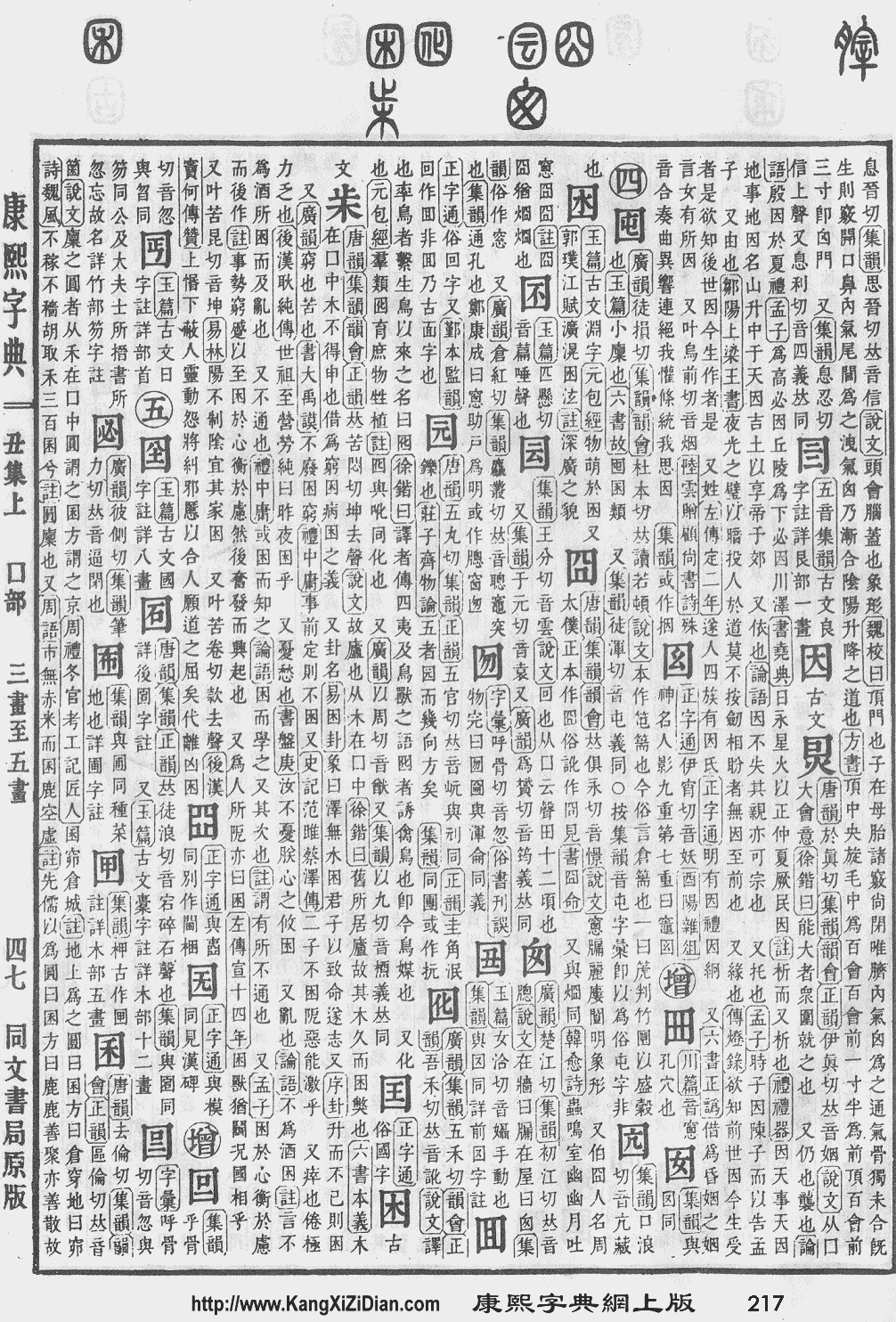
- Kangxi Dictionary: page 217, character 10
- Dai Kanwa Jiten: character 4707
- Dae Jaweon: page 444, character 13
- Hanyu Da Zidian (first edition): volume 1, page 715, character 12
- Unihan data for U+56E7
Chinese[edit]
| trad. | 囧 | |
|---|---|---|
| simp. # | 囧 | |
| alternative forms | 冏 臦 臩 | |
Glyph origin[edit]
| Historical forms of the character 囧 | |||
|---|---|---|---|
| Shang | Western Zhou | Shuowen Jiezi (compiled in Han) | Liushutong (compiled in Ming) |
| Oracle bone script | Bronze inscriptions | Small seal script | Transcribed ancient scripts |

|

|

|

|
Pictogram (象形) , resembling a window.
Pronunciation[edit]
Definitions[edit]
囧
- † patterned window; a clear and bright window; shining, brightness
- 囧,窗牖麗廔闓明,象形。 [Classical Chinese, trad.]
- From: Shuowen Jiezi, circa 2nd century CE
- Jiǒng, chuāngyǒu lìlóu kǎimíng, xiàngxíng. [Pinyin]
- Jiong — An open and light window. Pictographic.
囧,窗牖丽𫷹闿明,象形。 [Classical Chinese, simp.]- 囧囧秋月明,憑軒詠堯老。 [MSC, trad.]
- From: Jiang Yan, "Miscellaneous Poems — Imitation of Zhang Chuo's 'Miscellaneous Writing'", from the anthology of Wen Xuan
- Jiǒng jiǒng qiū yuè míng, píng xuān yǒng Yáo Lǎo. [Pinyin]
- The moonlight at an autumn night was brightly clean; I leaned on the railing, chanting poems and savouring the logics of the ancient sages (lit. of Yao and Laozi).
囧囧秋月明,凭轩咏尧老。 [MSC, simp.]
- (neologism, slang, humorous) an emoticon expressing surprise, shock, embarrassment, helplessness or awkwardness
- 而那些生活在光環中的明星和名人們,曾經也有過類似的經歷,他們難忘的往事中也不乏趣聞和囧事……李想在高三時選擇放棄高考,卻成功創業,身價上億。 [MSC, trad.]
- From: Xinhua, 《眾名人爆料高考囧事》 ("Celebrities reveal their embarrassing moments before/at the University Entrance Examination")
- Ér nàxiē shēnghuó zài guānghuán zhōng de míngxīng hé míngrén men, céngjīng yě yǒu guò lèisì de jīnglì, tāmen nánwàng de wǎngshì zhōng yě bùfá qùwén hé jiǒng shì...... Lǐ Xiǎng zài gāosān shí xuǎnzé fàngqì gāokǎo, què chénggōng chuàngyè, shēnjià shàng yì. [Pinyin]
- The celebrities and notabilities now living under spotlights used to have similar experiences; there was no lack of amusing anecdotes and embarrassing moments in their unforgettable pasts ... Li Xiang dropped out of school during the third year of high school, choosing not to take the University Entrance Examination. Instead, he successfully started an enterprise, now worth hundreds of millions.
而那些生活在光环中的明星和名人们,曾经也有过类似的经历,他们难忘的往事中也不乏趣闻和囧事……李想在高三时选择放弃高考,却成功创业,身价上亿。 [MSC, simp.]
Synonyms[edit]
Compounds[edit]
Descendants[edit]
Japanese[edit]
Kanji[edit]
囧
- This term needs a translation to English. Please help out and add a translation, then remove the text
{{rfdef}}.
Readings[edit]
Korean[edit]
Hanja[edit]
囧 (eumhun 빛날 경 (binnal gyeong))
References[edit]
- 국제퇴계학회 대구경북지부 (國際退溪學會 大邱慶北支部) (2007). Digital Hanja Dictionary, 전자사전/電子字典. [1]
Categories:
- CJK Unified Ideographs block
- Han script characters
- Translingual lemmas
- Translingual symbols
- Han pictograms
- Mandarin terms with audio links
- Cantonese terms with audio links
- Middle Chinese lemmas
- Old Chinese lemmas
- Chinese lemmas
- Mandarin lemmas
- Cantonese lemmas
- Hokkien lemmas
- Wu lemmas
- Chinese nouns
- Mandarin nouns
- Cantonese nouns
- Hokkien nouns
- Wu nouns
- Chinese adjectives
- Mandarin adjectives
- Cantonese adjectives
- Hokkien adjectives
- Wu adjectives
- Chinese terms with IPA pronunciation
- Chinese Han characters
- Chinese terms with obsolete senses
- Literary Chinese terms with quotations
- Mandarin terms with quotations
- Chinese neologisms
- Chinese slang
- Chinese humorous terms
- Chinese emoticons
- Japanese Han characters
- Uncommon kanji
- Japanese kanji with on reading けい
- Japanese kanji with on reading きょう
- Japanese kanji with kun reading あきらか
- Korean lemmas
- Korean Han characters
- Hanja variant forms