城
| ||||||||
 | ||||||||
Translingual[edit]
| Stroke order | |||
|---|---|---|---|

| |||
Han character[edit]
城 (Kangxi radical 32, 土+6, 9 strokes, cangjie input 土戈竹尸 (GIHS), four-corner 43150, composition ⿰土成)
Derived characters[edit]
References[edit]
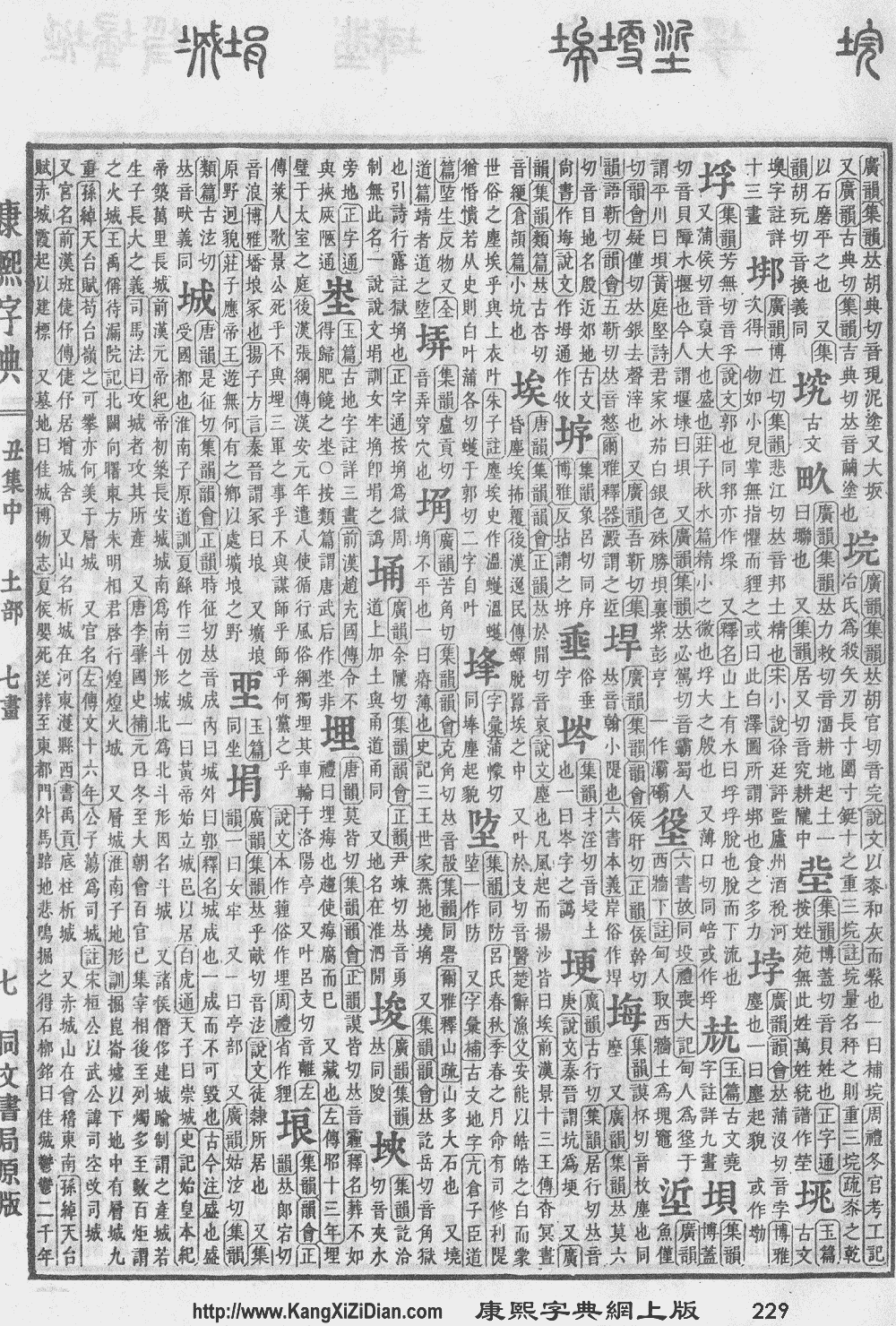
- Kangxi Dictionary: page 229, character 32
- Dai Kanwa Jiten: character 5086
- Dae Jaweon: page 465, character 22
- Hanyu Da Zidian (first edition): volume 1, page 438, character 7
- Unihan data for U+57CE
Chinese[edit]
| simp. and trad. |
城 | |
|---|---|---|

Glyph origin[edit]
| Historical forms of the character 城 | |||
|---|---|---|---|
| Western Zhou | Warring States | Shuowen Jiezi (compiled in Han) | Liushutong (compiled in Ming) |
| Bronze inscriptions | Chu slip and silk script | Small seal script | Transcribed ancient scripts |

|

|

|

|
Phono-semantic compound (形聲/形声, OC *djeŋ) : semantic 土 (“soil”) + phonetic 成 (OC *djeŋ).
Etymology[edit]
Cognate with 成 (OC *djeŋ, “to complete”), 盛 (OC *djeŋ, “to hold with a receptacle”), 盛 (OC *djeŋs, “abundant; flourishing”), as 城 (OC *djeŋ, “city wall”) was made of filled-in or stamped earth (Schuessler, 2007). See 成 for more.
Pronunciation[edit]
Definitions[edit]
城
- city wall
- 三里之城,七里之郭,環而攻之而不勝。 [Classical Chinese, trad.]
- From: Mencius, c. 4th century BCE
- Sān lǐ zhī chéng, qī lǐ zhī guō, huán ér gōng zhī ér bù shèng. [Pinyin]
- There is a city, with an inner wall of three li in circumference, and an outer wall of seven. The enemy surround and attack it, but they are not able to take it.
三里之城,七里之郭,环而攻之而不胜。 [Classical Chinese, simp.]
- area within the city walls
- 紫禁城 ― Zǐjìnchéng ― Forbidden City
- city; town
- 於是王召見,問藺相如曰:「秦王以十五城請易寡人之璧,可予不?」 [Classical Chinese, trad.]
- From: The Records of the Grand Historian, by Sima Qian, c. 91 BCE
- Yúshì wáng zhàojiàn, wèn Lìn Xiàngrú yuē: “Qín wáng yǐ shíwǔ chéng qǐng yì guǎrén zhī bì, kě yǔ bù?” [Pinyin]
- So the King summoned Lin Xiangru and asked, "The King of Qin has proposed bartering fifteen towns for my jade (Heshibi). Can I give him (my jade)?"
于是王召见,问蔺相如曰:「秦王以十五城请易寡人之璧,可予不?」 [Classical Chinese, simp.]
- large commercial venue
- (literary) to construct city walls
- a surname
See also[edit]
- 村 (cūn)
Compounds[edit]
- 一顧傾城/一顾倾城
- 下城里
- 不夜城 (bùyèchéng)
- 丹鳳城/丹凤城
- 九重城
- 五城
- 五言長城/五言长城
- 京城 (jīngchéng)
- 佳城
- 傾國傾城/倾国倾城 (qīngguóqīngchéng)
- 傾城/倾城 (qīngchéng)
- 傾城傾國/倾城倾国 (qīngchéngqīngguó)
- 價值連城/价值连城 (jiàzhíliánchéng)
- 億載金城/亿载金城
- 內城/内城 (nèichéng)
- 內長城/内长城
- 全城
- 兵臨城下/兵临城下 (bīnglínchéngxià)
- 再下一城 (zàixiàyīchéng)
- 北城 (Běichéng)
- 千秋佳城
- 南城 (Nánchéng)
- 南面百城
- 危城 (wēichéng)
- 受降城
- 古城 (gǔchéng)
- 司城
- 古城口 (Gǔchéngkǒu)
- 古城會/古城会
- 名城 (míngchéng)
- 唱空城計/唱空城计 (chàng kōngchéngjì)
- 國城/国城
- 圍城/围城 (wéichéng)
- 圍城打援/围城打援
- 團城山/团城山 (Tuánchéngshān)
- 土城 (tǔchéng)
- 土城垸 (Tǔchéngyuàn)
- 在城
- 坐困愁城
- 坎城影展
- 坐擁書城/坐拥书城
- 坐擁百城/坐拥百城
- 城下之盟 (chéngxiàzhīméng)
- 城中 (chéngzhōng)
- 城前 (Chéngqián)
- 城北 (Chéngběi)
- 城北徐公
- 城區/城区 (chéngqū)
- 城南 (Chéngnán)
- 城口 (Chéngkǒu)
- 城圈兒/城圈儿
- 城垣 (chéngyuán)
- 城垛口
- 城堞
- 城堡 (chéngbǎo)
- 城壕 (chéngháo)
- 城外 (Chéngwài)
- 城守
- 城工
- 城市 (chéngshì)
- 城市山林
- 城市病 (chéngshìbìng)
- 城市網絡/城市网络
- 城府 (chéngfǔ)
- 城府深密
- 城廂/城厢 (chéngxiāng)
- 城旦
- 城東/城东 (Chéngdōng)
- 城根
- 城樓/城楼 (chénglóu)
- 城池 (chéngchí)
- 城濮
- 城牆/城墙 (chéngqiáng)
- 城狐社鼠
- 城西 (Chéngxī)
- 城邑 (chéngyì)
- 城邦國家/城邦国家
- 城郊 (chéngjiāo)
- 城郭 (chéngguō)
- 城鄉/城乡 (chéngxiāng)
- 城鋪/城铺
- 城鎮/城镇 (chéngzhèn)
- 城門/城门 (chéngmén)
- 城門捐/城门捐
- 城開不夜/城开不夜
- 城闉/城𬮱
- 城闕/城阙 (chéngquè)
- 城關/城关 (chéngguān)
- 城防
- 城隍 (chénghuáng)
- 城隅
- 城隍廟/城隍庙 (chénghuángmiào)
- 城隍爺/城隍爷 (Chénghuángyé)
- 城雕
- 堅城深池/坚城深池
- 堵城 (Dǔchéng)
- 塔城 (Tǎchéng)
- 墉城
- 外城 (wàichéng)
- 外長城/外长城
- 大城
- 大學城/大学城 (dàxuéchéng)
- 夫人城
- 太子城 (Tàizǐchéng)
- 太空城
- 子囊城郢
- 子城 (zǐchéng)
- 孤城 (gūchéng)
- 定城 (Dìngchéng)
- 宜城 (Yíchéng)
- 容城 (Róngchéng)
- 寇城 (kòuchéng)
- 富城坪 (Fùchéngpíng)
- 專城/专城
- 屠城 (túchéng)
- 山城 (shānchéng)
- 崩城之哭
- 嵐城/岚城 (Lánchéng)
- 工業城/工业城
- 干城
- 府城 (fǔchéng)
- 彭城 (Péngchéng)
- 影城
- 愁城
- 應城/应城 (Yìngchéng)
- 扒城
- 打城隍
- 扳回一城
- 拜城石窟
- 掠地攻城
- 攻城 (gōngchéng)
- 攻城掠地 (gōngchénglüèdì)
- 攻城略地
- 攻城野戰/攻城野战
- 攻炮城
- 攻無堅城/攻无坚城
- 故城 (gùchéng)
- 斗城
- 新城 (xīnchéng)
- 新城子 (Xīnchéngzi)
- 新城鄉/新城乡
- 方城
- 方城之戰/方城之战
- 日坐愁城
- 智慧城 (Zhìhuìchéng)
- 書城/书城 (shūchéng)
- 書城路/书城路 (Shūchénglù)
- 月城 (yuèchéng)
- 枝城 (Zhīchéng)
- 東城/东城 (Dōngchéng, “Dongcheng”)
- 枉死城
- 枉死羅城/枉死罗城
- 柘城 (Zhèchéng, “Zhecheng”)
- 桐城派
- 楓林上城/枫林上城 (Fēnglínshàngchéng)
- 榕城 (Róngchéng)
- 槃橐城
- 樊城 (Fánchéng)
- 檳城/槟城 (Bīnchéng)
- 欒城集/栾城集
- 武城弦歌
- 沔城 (Miǎnchéng)
- 洗城
- 渭城 (Wèichéng)
- 湯池鐵城/汤池铁城
- 漢城/汉城 (Hànchéng)
- 滿城風雨/满城风雨 (mǎnchéngfēngyǔ)
- 潭城 (Tánchéng)
- 父城
- 牙城
- 牢城
- 特洛伊城
- 獅城/狮城 (Shīchéng)
- 王城 (wángchéng)
- 環城/环城 (Huánchéng)
- 甕城/瓮城 (wèngchéng)
- 略地侵城
- 略地攻城
- 白帝城 (Báidìchéng)
- 百城
- 百城之富
- 皇城 (huángchéng)
- 省城 (shěngchéng)
- 眾心如城/众心如城
- 眾心成城/众心成城
- 眾志成城/众志成城 (zhòngzhìchéngchéng)
- 石包城 (Shíbāochéng)
- 石城湯池/石城汤池
- 石頭城/石头城
- 碧城
- 社鼠城狐
- 禁城
- 萬里長城/万里长城 (Wànlǐ Chángchéng)
- 秦城 (Qínchéng)
- 穀城/谷城 (Gǔchéng)
- 稻城 (Dàochéng)
- 空城 (kōngchéng)
- 空城計/空城计 (kōngchéngjì)
- 筆刀硯城/笔刀砚城
- 管城子
- 管城毛穎/管城毛颖
- 管城生花
- 紅城/红城 (Hóngchéng)
- 紅毛城/红毛城 (Hóngmáochéng)
- 紫禁城 (Zǐjìnchéng)
- 縣城/县城 (xiànchéng)
- 羊城 (Yángchéng)
- 羊馬城/羊马城
- 老城 (lǎochéng)
- 聊城 (Liáochéng)
- 聊城射書/聊城射书
- 背城一戰/背城一战 (bèichéng-yīzhàn)
- 背城借一 (bèichéng-jièyī)
- 胸無城府/胸无城府 (xiōngwúchéngfǔ)
- 臥牛城/卧牛城
- 自毀長城/自毁长城 (zìhuǐchángchéng)
- 自由城
- 臺城/台城 (Táichéng)
- 舊城/旧城 (jiùchéng)
- 葛城 (Gěchéng)
- 葉城/叶城 (Yèchéng)
- 蒲城
- 蓉城 (Róngchéng)
- 蘭城/兰城 (Lánchéng)
- 襄城 (Xiāngchéng)
- 西城 (Xīchéng)
- 護城河/护城河 (hùchénghé)
- 豐城劍氣/丰城剑气
- 豐城貫斗/丰城贯斗
- 費城/费城 (Fèichéng)
- 賭城/赌城 (dǔchéng)
- 赤城 (Chìchéng)
- 赤舌燒城/赤舌烧城
- 越城嶺/越城岭
- 車城/车城 (Chēchéng)
- 車城路/车城路 (Chēchénglù)
- 軍臨城下/军临城下
- 軒城/轩城
- 軹城/轵城 (Zhǐchéng, “Zhicheng”)
- 通城 (Tōngchéng)
- 連城/连城 (liánchéng)
- 連城之價/连城之价
- 連城之珍/连城之珍
- 連城璧/连城璧
- 進城/进城 (jìnchéng)
- 邁錫尼城/迈锡尼城
- 邾城 (Zhūchéng)
- 郢城 (Yǐngchéng)
- 都城 (dūchéng)
- 郾城 (Yǎnchéng)
- 鄄城 (Juànchéng)
- 鄂城 (Èchéng)
- 郾城之戰/郾城之战
- 鄒城/邹城 (Zōuchéng, “Zoucheng”)
- 鄢城 (Yānchéng)
- 金城 (jīnchéng)
- 金城湯池/金城汤池 (jīnchéngtāngchí)
- 金缸城 (Jīngāngchéng)
- 鋼城/钢城 (Gāngchéng)
- 錦官城/锦官城 (Jǐnguānchéng)
- 長城/长城 (Chángchéng)
- 防意如城
- 陶城 (Táochéng)
- 陸城/陆城 (Lùchéng)
- 雷城
- 青城山 (Qīngchéng Shān)
- 頂城門/顶城门
- 順城街/顺城街
- 頭城/头城 (Tóuchéng)
- 香城 (Xiāngchéng)
- 高城 (Gāochéng)
- 高城深塹/高城深堑
- 高城深池
- 高城深溝/高城深沟
- 鬼城 (guǐchéng)
- 鳳城/凤城 (Fèngchéng)
- 鹽城/盐城 (Yánchéng)
- 鹽湖城/盐湖城 (Yánhúchéng)
- 麻城 (Máchéng)
- 黃花城/黄花城 (Huánghuāchéng)
- 墨西哥城 (Mòxīgēchéng)
- 黨城灣/党城湾 (Dǎngchéngwān)
- 龍城/龙城 (Lóngchéng)
- 龍城飛將/龙城飞将
Descendants[edit]
Others:
References[edit]
- “城”, in 漢語多功能字庫 (Multi-function Chinese Character Database)[2], 香港中文大學 (the Chinese University of Hong Kong), 2014–
- “Entry #4834”, in 臺灣閩南語常用詞辭典 (overall work in Mandarin and Hokkien), Ministry of Education, R.O.C., 2023.
Japanese[edit]
| Shinjitai | 城 | 
|
| Kyūjitai | 城 城or 城+ ︀?
|
|
| 城󠄀 城+ 󠄀?(Adobe-Japan1) | ||
| 城󠄃 城+ 󠄃?(Hanyo-Denshi) (Moji_Joho) | ||
| The displayed kanji may be different from the image due to your environment. See here for details. | ||
Kanji[edit]
(grade 6 “Kyōiku” kanji, shinjitai kanji, kyūjitai form 城)
Readings[edit]
- Go-on: じょう (jō, Jōyō)←じやう (zyau, historical)
- Kan-on: せい (sei)
- Kun: しろ (shiro, 城, Jōyō); き (ki, 城); きずく (kizuku, 城く)←きづく (kiduku, 城く, historical); ぐすく (gusuku, 城); しき (shiki, 城)
- Nanori: いく (iku); がき (gaki); き (ki); くに (kuni); ぐしく (gushiku); ぐすく (gusuku); しき (shiki); さね (sane); しげ・しろ (shige shiro); すく (suku); ぜい (zei); たち (tachi); なり (nari); むら (mura)
Compounds[edit]
- 破城槌 (hajōtsui): a battering ram
Etymology 1[edit]


| Kanji in this term |
|---|
| 城 |
| しろ Grade: 4 |
| kun’yomi |
Derivation unknown. The shiro reading for this character appears in 794 CE when the 山背 (Yamashiro) region was renamed 山城,[1] by Emperor Kanmu, thus applying the shiro reading to the 城 kanji for the first time.
Pronunciation[edit]
Noun[edit]
Usage notes[edit]
The shiro reading may be used most often when this term appears as a standalone noun.
Synonyms[edit]
Etymology 2[edit]

| Kanji in this term |
|---|
| 城 |
| ぐすく Grade: 4 |
| kun’yomi |
Borrowed from older Okinawan (Modern Okinawan 城 (gushiku)). The final ku may be cognate with mainland Japanese ki (see below).
The initial gu may be cognate with 御 (go, “honorific”), but it is problematic in that the only honorary prefixes found in Omoro Sōshi are 御 (mi) and 御 (o). Suku may be related to しけ (shike, “a holy place”) or cognate with 塞 (soko, “fortress”). While written with the kanji for "castle", textual and cultural evidence suggests that the initial primary meaning was a holy place.
Pronunciation[edit]
Noun[edit]
Usage notes[edit]
Not used in isolation in modern Japanese. This term remains as an element in various place names.
Etymology 3[edit]
| Kanji in this term |
|---|
| 城 |
| き Grade: 4 |
| kun’yomi |
| Alternative spelling |
|---|
| 柵 |
ki2: [kɨ] > [ki]
From Old Japanese, from Baekje 己 (*kɨ, “walled settlement”).[3]
Pronunciation[edit]
Noun[edit]
- (archaic) a structure surrounded by a moat or walls: a fortress, castle
- c. 759, Man’yōshū, book 20, poem 4331:
- 天皇乃 等保能朝[廷]等 之良奴日 筑紫國波 安多麻毛流 於佐倍乃城曽等 聞食 四方國尓波 比等佐波尓 美知弖波安礼杼 登利我奈久 安豆麻乎能故波 伊田牟可比 加敝里見世受弖 伊佐美多流 多家吉軍卒等 祢疑多麻比 麻氣乃麻尓々々 多良知祢乃 波々我目可礼弖 若草能 都麻乎母麻可受 安良多麻能 月日餘美都々 安之我知流 難波能美津尓 大船尓 末加伊之自奴伎 安佐奈藝尓 可故等登能倍 由布思保尓 可知比伎乎里 安騰母比弖 許藝由久伎美波 奈美乃間乎 伊由伎佐具久美 麻佐吉久母 波夜久伊多里弖 大王乃 美許等能麻尓末 麻須良男乃 許己呂乎母知弖 安里米具[理] 事之乎波良[婆] 都々麻波受 可敝理伎麻勢登 伊波比倍乎 等許敝尓須恵弖 之路多倍能 蘇田遠利加敝之 奴婆多麻乃 久路加美之伎弖 奈我伎氣遠 麻知可母戀牟 波之伎都麻良波
- (please add an English translation of this quotation)
- 787-824: Nihon Ryōiki (preface, page 201)
- 原夫内経外書 伝於日本 而興始代 凡有二時 皆自百済国将禮來之 軽嶋豊明宮御宇誉田天皇代 外書來之 礒城訓紀嶋金刺宮御宇鉄明天皇代 内典來也 [...]
- (please add an English translation of this usage example)
Etymology 4[edit]
| Kanji in this term |
|---|
| 城 |
| しき Grade: 4 |
| kun’yomi |
| Alternative spelling |
|---|
| 磯城 |
Originally a compound of 石 (shi, “stone”) + 城 (ki, “castle, fortress”).
Pronunciation[edit]
Noun[edit]
Etymology 5[edit]
| Kanji in this term |
|---|
| 城 |
| じょう Grade: 4 |
| goon |
/zjau/ → */ʑɔː/ → /d͡ʑoː/
From Middle Chinese 城 (MC dzyeng). Compare modern Min Nan reading siâⁿ.
Pronunciation[edit]
Noun[edit]
See also[edit]
- 宮 (miya): palace
- 殿 (tono): palace, hall
- 宮殿 (kyūden): palace
- 城郭 (jōkaku): castle
- 砦 (toride): fortress
References[edit]
- ^ Shōgaku Tosho (1988) 国語大辞典(新装版) [Unabridged Dictionary of Japanese (Revised Edition)] (in Japanese), Tōkyō: Shogakukan, →ISBN
- ↑ 2.0 2.1 Matsumura, Akira, editor (2006), 大辞林 (in Japanese), Third edition, Tōkyō: Sanseidō, →ISBN
- ^ John Bentley (2000) “New Look at Paekche and Korean: Data from Nihon shoki”, in Language Research[1], volume 36, number 2, Seoul National University, pages 417—443
- Hokama, Shuzen with Nobutsuna Saigō (1972) [c. 1531-1623] Nihon Shisō Taikai 18: Omoro Sōshi (in Japanese), Tōkyō: Iwanami Shoten
- Izumoji, Osamu (1996) Shin Nihon Koten Bungaku Taikei 30: Nihon Ryōiki (in Japanese), Tōkyō: Iwanami Shoten, →ISBN
- Satake, Akihiro with Hideo Yamada, Rikio Kudō, Masao Ōtani, and Yoshiyuki Yamazaki (c. 759) Shin Nihon Koten Bungaku Taikei 4: Man’yōshū 4 (in Japanese), Tōkyō: Iwanami Shoten, published 2003, →ISBN.
Korean[edit]
Etymology[edit]
From Middle Chinese 城 (MC dzyeng).
| Historical Readings | ||
|---|---|---|
| Dongguk Jeongun Reading | ||
| Dongguk Jeongun, 1448 | 쎠ᇰ (Yale: ssyèng) | |
| Middle Korean | ||
| Text | Eumhun | |
| Gloss (hun) | Reading | |
| Hunmong Jahoe, 1527[3] | 잣〮 (Yale: cás) | 셔ᇰ (Yale: syèng) |
Pronunciation[edit]
- (SK Standard/Seoul) IPA(key): [sʰʌ̹ŋ]
- Phonetic hangul: [성]
Hanja[edit]

Compounds[edit]
References[edit]
- 국제퇴계학회 대구경북지부 (國際退溪學會 大邱慶北支部) (2007). Digital Hanja Dictionary, 전자사전/電子字典. [4]
Okinawan[edit]
Noun[edit]
城 (gushiku)
- a gusuku (Ryukyuan castle)
- 1531-1623: Omoro Sōshi
- 一 聞得大君ぎや 降れて 遊びよわれば 天が下 平らげて ちよわれ 又 鳴響む精高子が 又 首里杜ぐすく 真玉杜ぐすく
- (please add an English translation of this usage example)
- 1531-1623: Omoro Sōshi
- a word used in placenames
- 中城からやいびーん。
- Nakagushiku kara yaibīn.
- I am from Nakagusuku.
- 中城からやいびーん。
Vietnamese[edit]
Han character[edit]
城: Hán Nôm readings: thành, nhật
- This term needs a translation to English. Please help out and add a translation, then remove the text
{{rfdef}}.
- CJK Unified Ideographs block
- Han script characters
- Character boxes with images
- CJK Compatibility Ideographs Supplement block
- Translingual lemmas
- Translingual symbols
- Han phono-semantic compounds
- Mandarin terms with audio links
- Middle Chinese lemmas
- Old Chinese lemmas
- Chinese lemmas
- Mandarin lemmas
- Sichuanese lemmas
- Dungan lemmas
- Cantonese lemmas
- Taishanese lemmas
- Gan lemmas
- Hakka lemmas
- Jin lemmas
- Northern Min lemmas
- Eastern Min lemmas
- Hokkien lemmas
- Teochew lemmas
- Wu lemmas
- Xiang lemmas
- Chinese nouns
- Mandarin nouns
- Sichuanese nouns
- Dungan nouns
- Cantonese nouns
- Taishanese nouns
- Gan nouns
- Hakka nouns
- Jin nouns
- Northern Min nouns
- Eastern Min nouns
- Hokkien nouns
- Teochew nouns
- Wu nouns
- Xiang nouns
- Chinese proper nouns
- Mandarin proper nouns
- Sichuanese proper nouns
- Dungan proper nouns
- Cantonese proper nouns
- Taishanese proper nouns
- Gan proper nouns
- Hakka proper nouns
- Jin proper nouns
- Northern Min proper nouns
- Eastern Min proper nouns
- Hokkien proper nouns
- Teochew proper nouns
- Wu proper nouns
- Xiang proper nouns
- Chinese terms with IPA pronunciation
- Chinese Han characters
- Mandarin terms with usage examples
- Literary Chinese terms with quotations
- Chinese literary terms
- Chinese surnames
- Beginning Mandarin
- zh:Administrative divisions
- Japanese Han characters
- Grade 6 kanji
- Japanese kanji with goon reading じょう
- Japanese kanji with historical goon reading じやう
- Japanese kanji with kan'on reading せい
- Japanese kanji with kun reading しろ
- Japanese kanji with kun reading き
- Japanese kanji with kun reading きず-く
- Japanese kanji with historical kun reading きづ-く
- Japanese kanji with kun reading ぐすく
- Japanese kanji with kun reading しき
- Japanese kanji with nanori reading いく
- Japanese kanji with nanori reading がき
- Japanese kanji with nanori reading き
- Japanese kanji with nanori reading くに
- Japanese kanji with nanori reading ぐしく
- Japanese kanji with nanori reading ぐすく
- Japanese kanji with nanori reading しき
- Japanese kanji with nanori reading さね
- Japanese kanji with nanori reading しげ・しろ
- Japanese kanji with nanori reading すく
- Japanese kanji with nanori reading ぜい
- Japanese kanji with nanori reading たち
- Japanese kanji with nanori reading なり
- Japanese kanji with nanori reading むら
- Japanese terms spelled with 城 read as しろ
- Japanese terms read with kun'yomi
- Japanese terms with IPA pronunciation
- Japanese lemmas
- Japanese nouns
- Japanese terms with multiple readings
- Japanese terms spelled with fourth grade kanji
- Japanese terms written with one Han script character
- Japanese terms spelled with 城
- Japanese single-kanji terms
- Japanese terms spelled with 城 read as ぐすく
- Japanese terms borrowed from Okinawan
- Japanese terms derived from Okinawan
- Japanese terms with obsolete senses
- Okinawa Japanese
- Japanese terms spelled with 城 read as き
- Japanese terms inherited from Old Japanese
- Japanese terms derived from Old Japanese
- Japanese terms derived from Baekje
- Japanese terms with archaic senses
- Old Japanese terms with quotations
- Japanese terms with usage examples
- Japanese terms spelled with 城 read as しき
- Japanese compound terms
- Japanese terms spelled with 城 read as じょう
- Japanese terms read with on'yomi
- Japanese terms derived from Middle Chinese
- Korean terms derived from Middle Chinese
- Korean lemmas
- Korean Han characters
- Okinawan lemmas
- Okinawan nouns
- Okinawan terms spelled with fourth grade kanji
- Okinawan terms written with one Han script character
- Okinawan terms spelled with 城
- Okinawan single-kanji terms
- Okinawan terms with usage examples
- Vietnamese lemmas
- Vietnamese Han characters