枌
Jump to navigation
Jump to search
| ||||||||
Translingual[edit]
Han character[edit]
枌 (Kangxi radical 75, 木+4, 8 strokes, cangjie input 木金尸竹 (DCSH), four-corner 48927, composition ⿰木分)
References[edit]
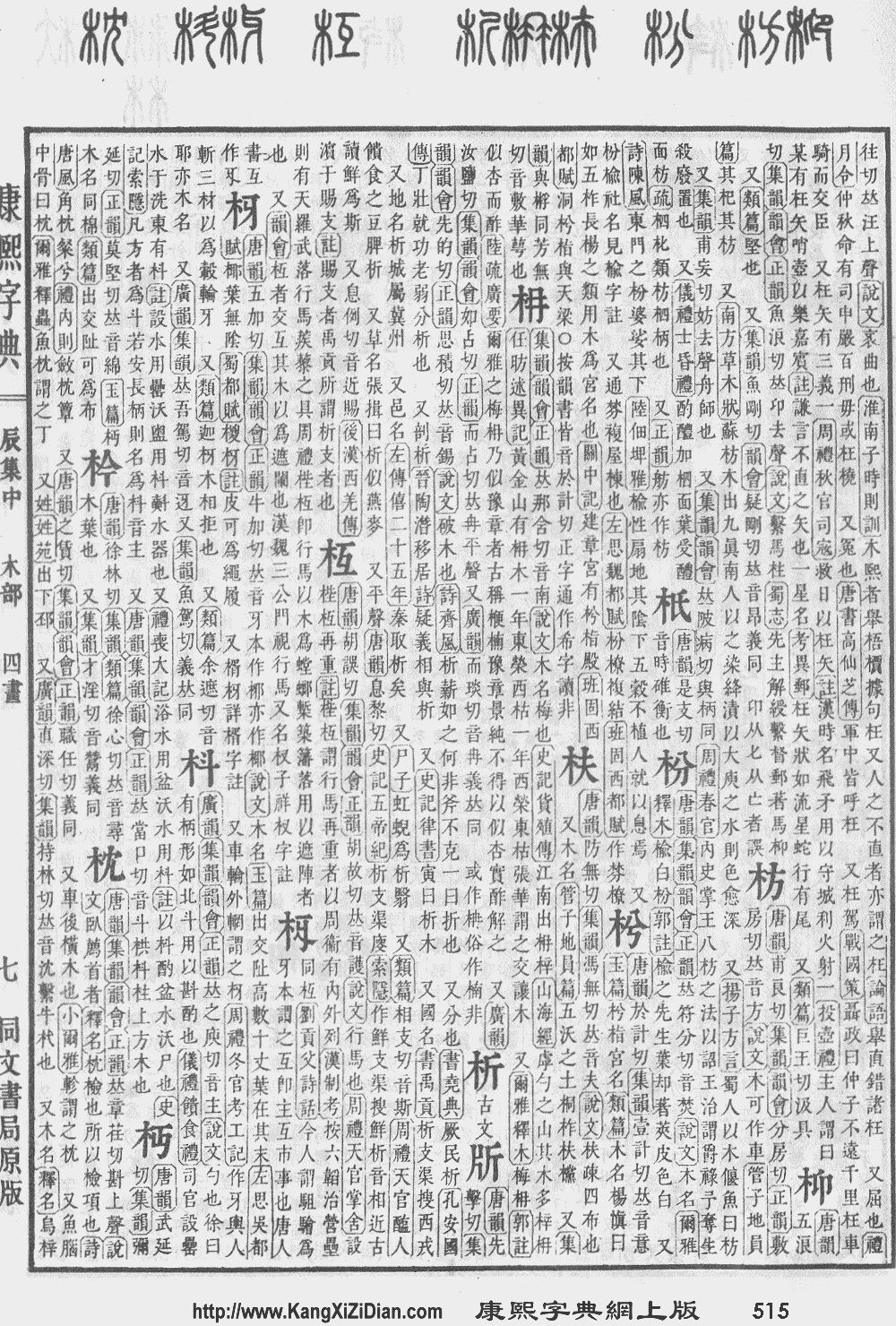
- Kangxi Dictionary: page 515, character 4
- Dai Kanwa Jiten: character 14534
- Dae Jaweon: page 903, character 4
- Hanyu Da Zidian (first edition): volume 2, page 1173, character 4
- Unihan data for U+678C
Chinese[edit]
| trad. | 枌 | |
|---|---|---|
| simp. # | 枌 | |
Glyph origin[edit]
| Historical forms of the character 枌 |
|---|
| Shuowen Jiezi (compiled in Han) |
| Small seal script |

|
| Old Chinese | |
|---|---|
| 扮 | *prɯːns, *hmroːlʔ, *pɯn, *pɯnʔ |
| 盼 | *pʰrɯːns |
| 頒 | *praːn, *bɯn |
| 朌 | *praːn, *bɯn |
| 鳻 | *praːn, *bɯn |
| 份 | *prɯn, *bɯns |
| 汃 | *pʰreːd, *prɯn |
| 玢 | *prɯn |
| 邠 | *prɯn |
| 攽 | *prɯn |
| 砏 | *prɯn, *pʰrɯn, *pʰɯn |
| 貧 | *brɯn |
| 湓 | *pʰɯːns, *bɯːn, *pʰɯns |
| 盆 | *bɯːn |
| 葐 | *bɯːn, *bɯn, *bɯn |
| 坌 | *bɯːns, *bɯnʔ, *bɯns |
| 坋 | *bɯːns, *bɯnʔ, *bɯns |
| 分 | *pɯn, *bɯns |
| 吩 | *pɯn |
| 粉 | *pɯnʔ |
| 黺 | *pɯnʔ |
| 芬 | *pʰɯn |
| 紛 | *pʰɯn |
| 衯 | *pʰɯn |
| 棻 | *pʰɯn, *bɯn |
| 氛 | *pʰɯn, *bɯn |
| 雰 | *pʰɯn |
| 忿 | *pʰɯnʔ, *pʰɯns, *bɯnʔ |
| 魵 | *pʰɯnʔ, *pʰɯns, *bɯn, *bɯnʔ |
| 汾 | *bɯn |
| 羒 | *bɯn |
| 枌 | *bɯn |
| 棼 | *bɯn |
| 妢 | *bɯn |
| 梤 | *bɯn |
| 馚 | *bɯn |
| 鼢 | *bɯn, *bɯnʔ |
| 蚡 | *bɯn, *bɯnʔ |
| 弅 | *bɯnʔ |
| 秎 | *bɯns |
Pronunciation[edit]
Definitions[edit]
枌
Japanese[edit]
Kanji[edit]
枌
Readings[edit]


Etymology 1[edit]
| Kanji in this term |
|---|
| 枌 |
| そぎ Hyōgaiji |
| kun’yomi |
Abbreviation of 枌板, 削板 (sogiita), itself a compound of 削ぎ (sogi, “shaving, chipping”, stem noun form of verb 削ぐ (sogu), “to chip or shave off”) + 板 (ita, “board, plank”).
Alternative forms[edit]
Pronunciation[edit]
Noun[edit]
- a wooden shake or large shingle (a thin board or plank of wood chipped or shaved off a larger piece and used as roofing or siding)
Synonyms[edit]
Related terms[edit]
- 杮 (こけら, kokera): wood chips; a shingle (smaller than a sogi)
- 杮葺 (こけらぶき, kokerabuki): shingling; a shingled roof
Etymology 2[edit]
| Kanji in this term |
|---|
| 枌 |
| まつ Hyōgaiji |
| kun’yomi |
Pronunciation[edit]
Noun[edit]
- Rare spelling of 松.
References[edit]
- ↑ 1.0 1.1 Matsumura, Akira, editor (2006), 大辞林 [Daijirin] (in Japanese), Third edition, Tōkyō: Sanseidō, →ISBN
- ^ NHK Broadcasting Culture Research Institute, editor (1998), NHK日本語発音アクセント辞典 [NHK Japanese Pronunciation Accent Dictionary] (in Japanese), Tōkyō: NHK Publishing, →ISBN
Korean[edit]
Hanja[edit]
枌 • (bun) (hangeul 분, revised bun, McCune–Reischauer pun, Yale pun)
- This term needs a translation to English. Please help out and add a translation, then remove the text
{{rfdef}}.
Vietnamese[edit]
Han character[edit]
- This term needs a translation to English. Please help out and add a translation, then remove the text
{{rfdef}}.
References[edit]
Categories:
- CJK Unified Ideographs block
- Han script characters
- Translingual lemmas
- Translingual symbols
- Middle Chinese lemmas
- Old Chinese lemmas
- Chinese lemmas
- Mandarin lemmas
- Cantonese lemmas
- Chinese nouns
- Mandarin nouns
- Cantonese nouns
- Chinese terms with IPA pronunciation
- Chinese Han characters
- Japanese Han characters
- Uncommon kanji
- Japanese kanji with goon reading ぶん
- Japanese kanji with kan'on reading ふん
- Japanese kanji with kun reading そぎ
- Japanese kanji with kun reading まつ
- Japanese kanji with nanori reading すぎ
- Japanese kanji with nanori reading へぎ
- Japanese terms spelled with 枌
- Japanese terms read with kun'yomi
- Japanese terms with IPA pronunciation
- Japanese lemmas
- Japanese nouns
- Japanese terms with multiple readings
- Japanese terms spelled with hyōgaiji kanji
- Japanese terms written with one Han script character
- Japanese single-kanji terms
- Japanese rare forms
- Korean lemmas
- Korean Han characters
- Vietnamese lemmas
- Vietnamese Han characters