鍔
Jump to navigation
Jump to search
See also: 锷
| ||||||||
Translingual[edit]
Han character[edit]
鍔 (Kangxi radical 167, 金+9, 17 strokes, cangjie input 金口口尸 (CRRS), four-corner 86127, composition ⿰釒咢)
References[edit]
- Kangxi Dictionary: page 1314, character 1
- Dai Kanwa Jiten: character 40617
- Dae Jaweon: page 1814, character 19
- Hanyu Da Zidian (first edition): volume 6, page 4231, character 9
- Unihan data for U+9354
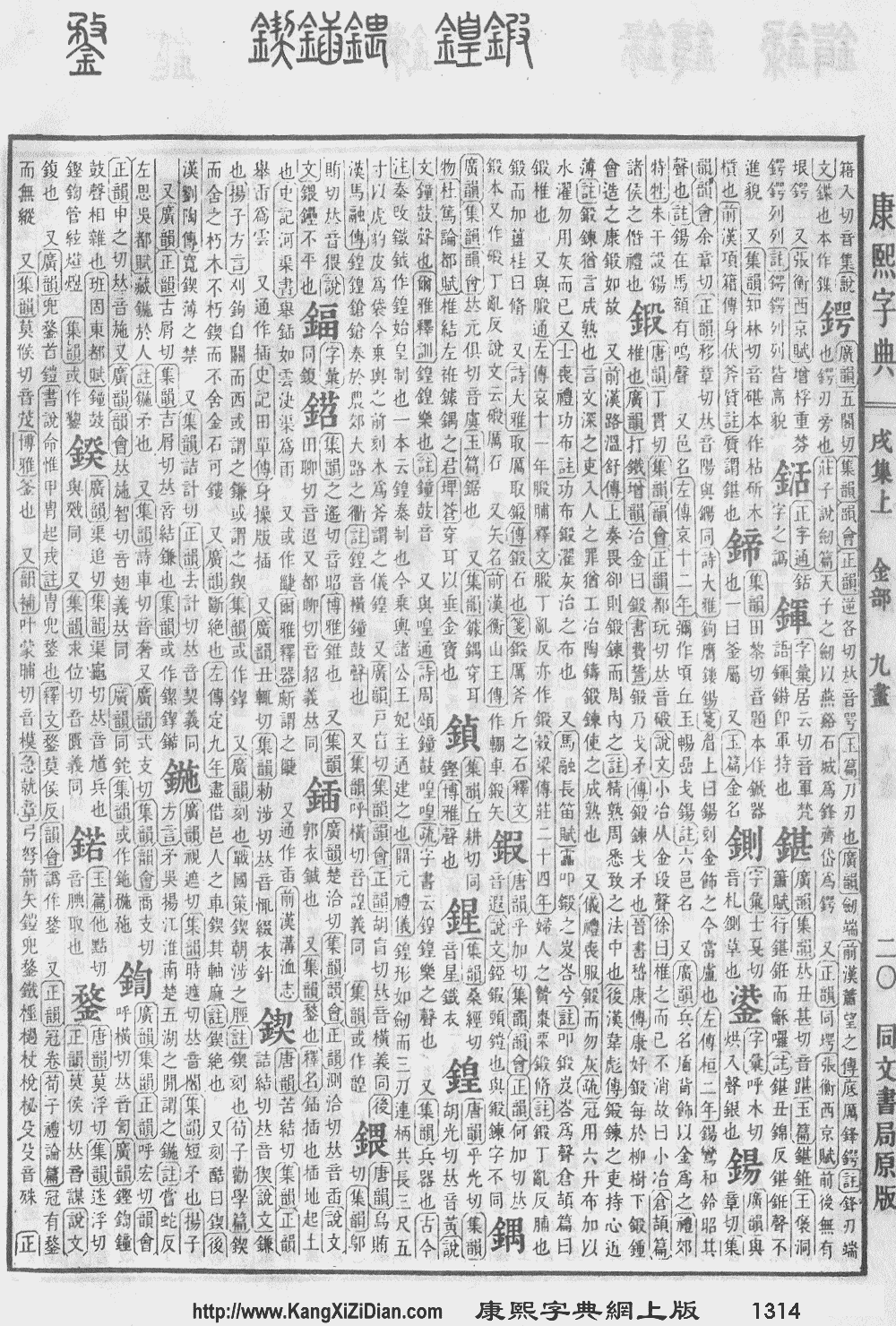
Chinese[edit]
| trad. | 鍔 | |
|---|---|---|
| simp. | 锷 | |
| alternative forms | 㓵 𨫘 鑩 | |
Glyph origin[edit]
| Old Chinese | |
|---|---|
| 斥 | *ŋ̊ʰjaːɡs, *ŋ̊ʰjaːɡ |
| 訴 | *sŋaːɡs |
| 泝 | *sŋaːɡs |
| 愬 | *sŋaːɡs, *sŋreːɡ |
| 遡 | *sŋaːɡs |
| 塑 | *sŋaːɡs |
| 溯 | *sŋaːɡs |
| 遻 | *ŋaːɡs |
| 柝 | *tŋ̊ʰaːɡ |
| 鶚 | *ŋaːɡ |
| 諤 | *ŋaːɡ |
| 齶 | *ŋaːɡ |
| 鍔 | *ŋaːɡ |
| 遌 | *ŋaːɡ |
| 崿 | *ŋaːɡ |
| 偔 | *ŋaːɡ |
| 堮 | *ŋaːɡ |
| 湂 | *ŋaːɡ |
| 鱷 | *ŋaːɡ |
| 噩 | *ŋaːɡ |
| 咢 | *ŋaːɡ |
| 鑩 | *ŋaːɡ |
| 鄂 | *ŋaːɡ |
| 鰐 | *ŋaːɡ |
| 萼 | *ŋaːɡ |
| 愕 | *ŋaːɡ |
| 顎 | *ŋaːɡ |
| 朔 | *sŋraːɡ |
| 槊 | *sraːwɢ |
| 蒴 | *sraːwɢ |
| 坼 | *tŋ̊ʰraːɡ |
| 拆 | *tŋ̊ʰraːɡ |
| 逆 | *ŋraɡ |
| 屰 | *ŋraɡ |
| 縌 | *ŋraɡ |
| 蝷 | *reːɡ |
Pronunciation[edit]
Definitions[edit]
鍔
Compounds[edit]
Japanese[edit]
Kanji[edit]
鍔
Readings[edit]
Etymology 1[edit]
| Kanji in this term |
|---|
| 鍔 |
| つば Hyōgaiji |
| kun’yomi |
| Alternative spelling |
|---|
| 鐔 |
/tumiha/ → /tumuba/ → /tunba/ → /t͡suba/
First attested in the late 12th century.
Shift from tsumiha or tsumiba below.
Pronunciation[edit]
Noun[edit]
- the guard at the end of the grip of a sword or polearm
- 1603–1604, Nippo Jisho, page 620:[2]
- Tçuba. ツバ (鍔・鐔) 刀 (Catana)の鍔, すなわち, 刀の柄(つか)に密着している, 銅やその他の金属製の円いある種の輪.
- Tsuba - the guard of a katana; that is, a circular ring made of copper or other metal with a design stuck to the katana.
- the brim or visor (of a hat, for example)
- 帽子の鍔
- bōshi no tsuba
- hat's brim
- 帽子の鍔
- the brim of a kettle
Derived terms[edit]
Derived terms
- 鍔音 (tsubaoto)
- 鍔際 (tsubagiwa), 鍔元 (tsubamoto)
- 鍔師 (tsuba-shi)
- 鍔競り合い, 鍔迫り合い (tsuba-zeriai)
- 鍔無し (tsuba-nashi)
- 鍔鳴り (tsuba-nari)
- 鍔広 (tsubabiro)
- 葵鍔 (aoi tsuba)
- 金鍔 (kintsuba)
- 銀鍔 (gintsuba)
- 車鍔 (kuruma tsuba)
- 萩鍔 (hagitsuba)
- 粢鍔 (shitogi tsuba)
- 食み出し鍔 (hamidashi tsuba)
- 肥後鍔 (Higo-tsuba)
- 丸鍔 (marutsuba)
- 鍔継手, 鍔継ぎ手 (tsuba tsugite)
- 汲み鍔 (kumitsuba)
Etymology 2[edit]
| Kanji in this term |
|---|
| 鍔 |
| つみば Hyōgaiji |
| kun’yomi |
| Kanji in this term |
|---|
| 鍔 |
| つみは Hyōgaiji |
| kun’yomi |
| Alternative spelling |
|---|
| 鐔 |
⟨tumi1pa⟩ → */tumʲipa/ → /t͡sumiɸa/ → /t͡sumiha/
From Old Japanese. First attested in the Nihon Shoki of 720 CE.[3]
The final ha element is most likely cognate with 刃 (ha, “edge”).
Usually pronounced with
The template Template:ja-rendaku does not use the parameter(s):sort=つみばPlease see Module:checkparams for help with this warning.
Noun[edit]
References[edit]
- ^ Matsumura, Akira, editor (2006), 大辞林 (in Japanese), Third edition, Tōkyō: Sanseidō, →ISBN
- ^ Doi, Tadao (1603–1604) Hōyaku Nippo Jisho (in Japanese), Tōkyō: Iwanami Shoten, published 1980, →ISBN.
- ^ “鍔・鐔”, in 日本国語大辞典 (Nihon Kokugo Daijiten, “Nihon Kokugo Daijiten”)[1] (in Japanese), concise edition, Tōkyō: Shogakukan, 2000
Korean[edit]
Hanja[edit]
鍔 (eum 악 (ak))
- This term needs a translation to English. Please help out and add a translation, then remove the text
{{rfdef}}.
Vietnamese[edit]
Han character[edit]
- This term needs a translation to English. Please help out and add a translation, then remove the text
{{rfdef}}.
References[edit]
Categories:
- CJK Unified Ideographs block
- Han script characters
- Translingual lemmas
- Translingual symbols
- Middle Chinese lemmas
- Old Chinese lemmas
- Chinese lemmas
- Mandarin lemmas
- Cantonese lemmas
- Chinese nouns
- Mandarin nouns
- Cantonese nouns
- Chinese terms with IPA pronunciation
- Chinese Han characters
- Chinese literary terms
- Japanese Han characters
- Uncommon kanji
- Japanese kanji with goon reading がく
- Japanese kanji with kan'on reading がく
- Japanese kanji with kun reading つば
- Japanese terms spelled with 鍔
- Japanese terms read with kun'yomi
- Japanese terms with IPA pronunciation
- Japanese lemmas
- Japanese nouns
- Japanese terms with multiple readings
- Japanese terms spelled with hyōgaiji kanji
- Japanese terms written with one Han script character
- Japanese single-kanji terms
- Japanese terms with usage examples
- Japanese terms inherited from Old Japanese
- Japanese terms derived from Old Japanese
- Japanese terms with rendaku
- Japanese terms with obsolete senses
- Korean lemmas
- Korean Han characters
- Vietnamese lemmas
- Vietnamese Han characters