砂
| ||||||||
Translingual
[edit]Han character
[edit]| Stroke order | |||
|---|---|---|---|
砂 (Kangxi radical 112, 石+4, 9 strokes, Cangjie input 一口火竹 (MRFH), four-corner 19620, composition ⿰石少)
References
[edit]- Kangxi Dictionary: page 827, character 20
- Dai Kanwa Jiten: character 24046
- Dae Jaweon: page 1242, character 3
- Hanyu Da Zidian (first edition): volume 4, page 2420, character 4
- Unihan data for U+7802
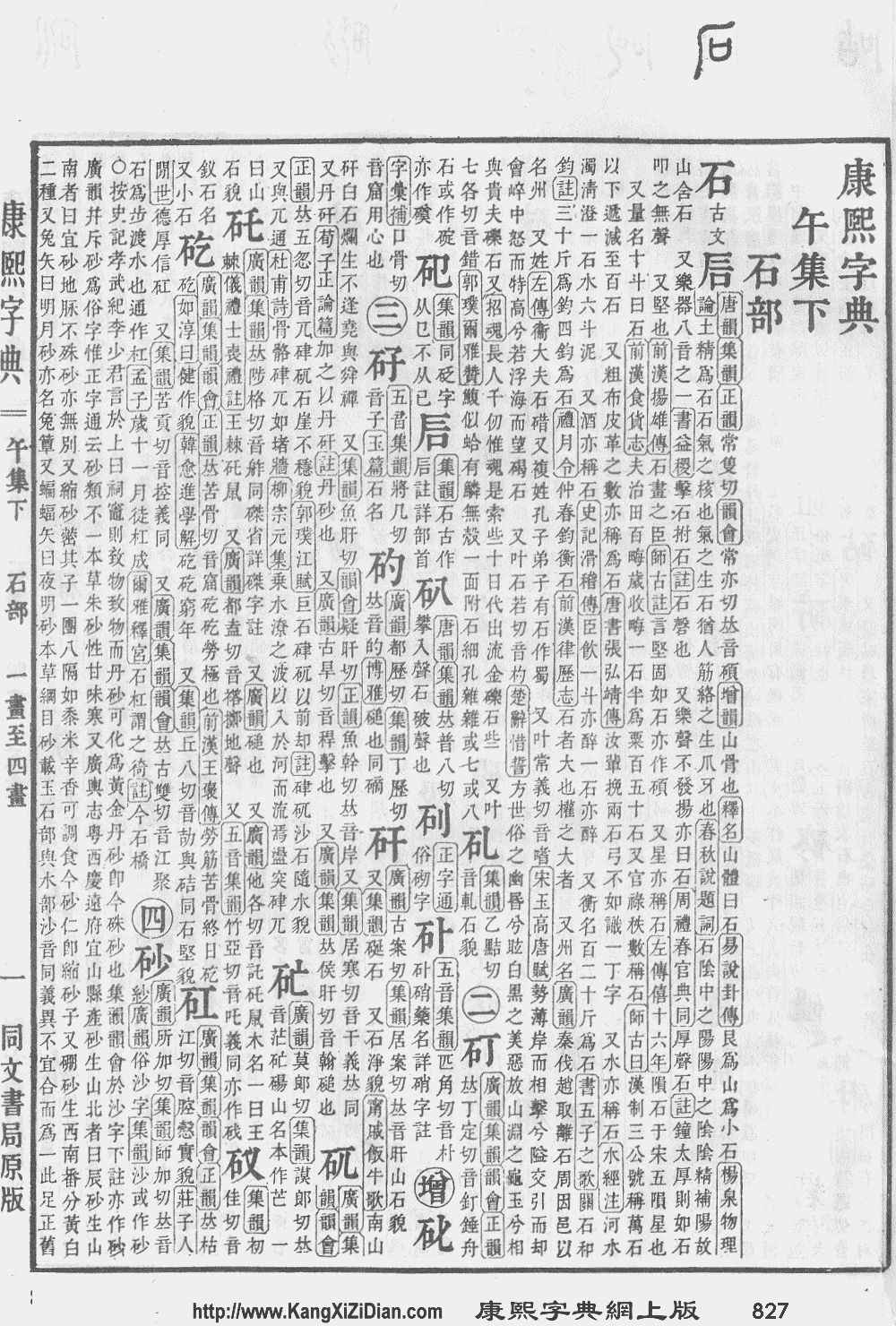
Chinese
[edit]| simp. and trad. |
砂 | |
|---|---|---|
| 2nd round simp. | 沙 | |
Glyph origin
[edit]Phono-semantic compound (形聲 / 形声, OC *sraːl): semantic 石 (“stone”) + phonetic 少 (OC *sraːl, *sraːls). Originally, this character was a variant form of 沙, a Pictogram (象形) that represents the appearance of sand along a riverbank.[1]
References
[edit]- ^ Digital Shinjigen 2017
Pronunciation
[edit]- Mandarin
- Cantonese (Jyutping): saa1
- Hakka (Sixian, PFS): sâ
- Southern Min
- Wu (Shanghai, Wugniu): 1so
- Xiang (Changsha, Wiktionary): sa1
- Mandarin
- (Standard Chinese)+
- Hanyu Pinyin: shā
- Zhuyin: ㄕㄚ
- Tongyong Pinyin: sha
- Wade–Giles: sha1
- Yale: shā
- Gwoyeu Romatzyh: sha
- Palladius: ша (ša)
- Sinological IPA (key): /ʂä⁵⁵/
- (Standard Chinese)+
- Cantonese
- (Standard Cantonese, Guangzhou–Hong Kong)
- Jyutping: saa1
- Yale: sā
- Cantonese Pinyin: saa1
- Guangdong Romanization: sa1
- Sinological IPA (key): /saː⁵⁵/
- (Standard Cantonese, Guangzhou–Hong Kong)
- Hakka
- (Sixian, incl. Miaoli and Neipu)
- Pha̍k-fa-sṳ: sâ
- Hakka Romanization System: saˊ
- Hagfa Pinyim: sa1
- Sinological IPA: /sa²⁴/
- (Sixian, incl. Miaoli and Neipu)
- Southern Min
- (Hokkien: Xiamen, Quanzhou, Zhangzhou, General Taiwanese)
- (Hokkien: Zhangzhou)
- Pe̍h-ōe-jī: see
- Tâi-lô: see
- Sinological IPA (Zhangzhou): /sɛ⁴⁴/
- (Hokkien: variant in Taiwan)
- Pe̍h-ōe-jī: se
- Tâi-lô: se
- Phofsit Daibuun: sef
- Sinological IPA (Taipei, Kaohsiung): /se⁴⁴/
- (Hokkien: Quanzhou, Xiamen)
- Pe̍h-ōe-jī: sa
- Tâi-lô: sa
- Phofsit Daibuun: saf
- Sinological IPA (Quanzhou): /sa³³/
- Sinological IPA (Xiamen): /sa⁴⁴/
- soa/see/se - vernacular;
- sa - literary.
- (Teochew)
- Peng'im: sua1 / sa1
- Pe̍h-ōe-jī-like: sua / sa
- Sinological IPA (key): /sua³³/, /sa³³/
- sua1 - vernacular;
- sa1 - literary.
- Middle Chinese: srae
- Old Chinese
- (Zhengzhang): /*sraːl/
Definitions
[edit]砂
- alternative form of 沙 (“sand”)
- alternative form of 沙 (“extremely mushy and/or rough (as sand), texture of a watermelon of good quality”)
- (Malaysia, Singapore) short for 砂拉越 (Shālāyuè, “Sarawak”)
Compounds
[edit]- 丹砂 (dānshā)
- 丹砂井
- 守宮砂 / 守宫砂
- 抱砂鍋 / 抱砂锅
- 揚砂走石 / 扬砂走石
- 搏砂煉汞 / 搏砂炼汞
- 摶砂弄汞 / 抟砂弄汞
- 摶砂煉汞 / 抟砂炼汞
- 朱砂 (zhūshā)
- 朱砂符
- 毒砂
- 海砂屋
- 漆砂硯 / 漆砂砚
- 炊砂作飯 / 炊砂作饭
- 環砂 / 环砂 (Huánshā)
- 白砂
- 白砂糖 (báishātáng)
- 矽砂
- 砂丘
- 砂仁 (shārén)
- 砂囊
- 砂土 (shātǔ)
- 砂岩 (shāyán)
- 砂島 / 砂岛
- 砂布
- 砂模
- 砂漿 / 砂浆 (shājiāng)
- 砂煲
- 砂眼 (shāyǎn)
- 砂石 (shāshí)
- 砂石場 / 砂石场
- 砂石車 / 砂石车
- 砂磨
- 砂礫 / 砂砾 (shālì)
- 砂礫礦床 / 砂砾矿床
- 砂糖 (shātáng)
- 砂紙 / 砂纸 (shāzhǐ)
- 砂質 / 砂质
- 砂輪 / 砂轮 (shālún)
- 砂輪機 / 砂轮机
- 砂金 (shājīn)
- 砂鍋 / 砂锅 (shāguō)
- 硃砂 / 朱砂 (zhūshā)
- 硃砂痣 / 朱砂痣
- 硼砂 (péngshā)
- 磠砂 / 硵砂 (lǔshā)
- 磨砂玻璃 (móshā bōli)
- 礦砂 / 矿砂
- 紫砂器
- 紫砂陶
- 縮砂蔤 / 缩砂蔤
- 翻砂
- 解玉砂
- 走石飛砂 / 走石飞砂
- 辰砂 (chénshā)
- 重砂
- 金剛砂 / 金刚砂 (jīngāngshā)
- 鋼砂 / 钢砂
- 鐵砂 / 铁砂
- 風吹砂 / 风吹砂
- 風成砂岩 / 风成砂岩
- 飛砂 / 飞砂 (fēishā)
- 飛砂揚礫 / 飞砂扬砾
- 飛砂走石 / 飞砂走石 (fēi shā zǒu shí)
- 飛砂轉石 / 飞砂转石
Japanese
[edit]Kanji
[edit]Readings
[edit]- Go-on: しゃ (sha, Jōyō)←しや (sya, historical)
- Kan-on: さ (sa, Jōyō)
- Kun: すな (suna, 砂, Jōyō)、いさご (isago, 砂)、す (su, 砂)
Compounds
[edit]- 砂金 (sakin, “gold dust”)
- 砂漣 (saren, “sand ripple”)
- 砂漏 (sarō, “hourglass”)
- 砂利 (jari, “gravel; child”), 砂利 (zari, “gravel”)
Etymology 1
[edit]| Kanji in this term |
|---|
| 砂 |
| すな Grade: 6 |
| kun'yomi |
| Alternative spelling |
|---|
| 沙 |
Attested in the Myōgoki (1275). According to one theory,[1] the word is shortened from earlier attested 砂子 (sunago, “sand”); see there for more.
Pronunciation
[edit]Some dialects in the Shikoku and Kyūshū regions have the initial consonant irregularly voiced in the standalone noun, as zuna. This includes the dialects of Shūsō, Iyo, Tosa, Nagasaki, Tsushima, Shimabara, Saga, Kagoshima, and Ōsumi.[1][5]
Noun
[edit]- [from 1275] sand; grit
Derived terms
[edit]Etymology 2
[edit]| Kanji in this term |
|---|
| 砂 |
| いさご Grade: 6 |
| kun'yomi |
| Alternative spellings |
|---|
| 沙 沙子 |
Attested in the Nihon Shoki (720). Some sources connect the initial isa- element to 石 (ishi, “stone”).[1]
Pronunciation
[edit]- Historical evolution of the Kyoto pitch accent
- (the Heian period) HHH
- (the Muromachi period) HHH
- ※ H for high and flat syllables (◌́), L for low and flat syllables (◌̀), F for high-to-low syllables (◌̂), R for low-to-high syllables (◌̌).
※ References: [1]
Noun
[edit]Derived terms
[edit]- 砂川 (isagogawa, “river with a sandy riverbed”)
- 砂路 (isagoji, “a road with lots of sand”)
- 砂子煎餅 (isagosenbei, “a kind of rice cracker”)
- 砂土 (isagozuchi, “soil mixed with sand”)
- 砂の中の金 (isago no naka no kogane, “something good found in a bad thing”, literally “gold found in the sand”)
- 砂の波 (isago no nami, “the current world; the world we live in”, literally “sand waves”)
- 砂原 (isagohara, “sandy field”)
- 砂道 (isagomichi, “a road with lots of sand”)
- 砂虫 (isagomushi, “caddis worm”)
Etymology 3
[edit]From Old Japanese. Found in the Kojiki (712) in the name of the deity 須比智邇神 (supi₁di ni NO₂ KAMI₂, literally “god of the mud soil”).[6] In most cases, the word has been conflated with 洲 (su, “sandbar”), which could be a cognate.
Noun
[edit]- (only in compounds) sand
Derived terms
[edit]- 白洲 (shirasu, “white sand”)
References
[edit]- ↑ 1.0 1.1 1.2 1.3 1.4 1.5 1.6 1.7 Nihon Kokugo Daijiten Dai-ni-han Henshū I'inkai (日本国語大辞典第二版編集委員会) (2001-2002), 日本国語大辞典 第二版 [Unabridged Japanese Dictionary: Second Edition], Tokyo (東京都): Shōgakukan (小学館), →ISBN
- ↑ 2.0 2.1 Matsumura, Akira, editor (2006), 大辞林 [Daijirin] (in Japanese), Third edition, Tokyo: Sanseidō, →ISBN
- ↑ 3.0 3.1 NHK Broadcasting Culture Research Institute, editor (1998), NHK日本語発音アクセント辞典 [NHK Japanese Pronunciation Accent Dictionary] (in Japanese), Tokyo: NHK Publishing, Inc., →ISBN
- ↑ 4.0 4.1 4.2 4.3 Hirayama, Teruo, editor (1960), 全国アクセント辞典 [Nationwide Accent Dictionary] (in Japanese), Tokyo: Tōkyōdō, →ISBN
- ↑ 5.0 5.1 Hirayama, Teruo (平山 照男); Ōshima Ichirō (大島 一郎); Ōno Masao (大野 眞男); Kuno Makoto (久野 眞); Kuno Mariko (久野 マリ子); Sugimura Takao (杉村 孝夫) (1992-1994), 現代日本語方言大辞典 [Dictionary of Japanese Dialects], volume 3, Tokyo: Meiji Shoin (明治書院), pages 2623-2625
- ^ Omodaka, Hisataka (1967), 時代別国語大辞典 上代編 [The dictionary of historical Japanese: Old Japanese] (in Japanese), Tōkyō: Sanseidō, →ISBN, page 378
- “砂”, in 漢字ぺディア [Kanjipedia][1] (in Japanese), The Japan Kanji Aptitude Testing Foundation, 2015–2026
Korean
[edit]Hanja
[edit]砂 • (sa) (hangeul 사, revised sa, McCune–Reischauer sa, Yale sa)
- This term needs a translation to English. Please help out and add a translation, then remove the text
{{rfdef}}.
Vietnamese
[edit]Han character
[edit]- This term needs a translation to English. Please help out and add a translation, then remove the text
{{rfdef}}.
Yonaguni
[edit]Kanji
[edit]Etymology
[edit]Cognate with Japanese 砂 (suna).
Noun
[edit]砂 (china)
Yoron
[edit]Kanji
[edit]Etymology
[edit]Cognate with Japanese 砂 (suna).
Noun
[edit]砂 (shina)
- CJK Unified Ideographs block
- Han script characters
- Translingual lemmas
- Translingual symbols
- Han phono-semantic compounds
- Han pictograms
- Chinese lemmas
- Mandarin lemmas
- Cantonese lemmas
- Hakka lemmas
- Hokkien lemmas
- Teochew lemmas
- Wu lemmas
- Xiang lemmas
- Middle Chinese lemmas
- Old Chinese lemmas
- Chinese hanzi
- Mandarin hanzi
- Cantonese hanzi
- Hakka hanzi
- Hokkien hanzi
- Teochew hanzi
- Wu hanzi
- Xiang hanzi
- Middle Chinese hanzi
- Old Chinese hanzi
- Chinese nouns
- Mandarin nouns
- Cantonese nouns
- Hakka nouns
- Hokkien nouns
- Teochew nouns
- Wu nouns
- Xiang nouns
- Middle Chinese nouns
- Old Chinese nouns
- Chinese proper nouns
- Mandarin proper nouns
- Cantonese proper nouns
- Hakka proper nouns
- Hokkien proper nouns
- Teochew proper nouns
- Wu proper nouns
- Xiang proper nouns
- Middle Chinese proper nouns
- Old Chinese proper nouns
- Chinese terms with IPA pronunciation
- Chinese terms spelled with 砂
- Mandarin terms with usage examples
- Malaysian Chinese
- Singapore Chinese
- Chinese short forms
- Advanced Mandarin
- Japanese kanji
- Japanese sixth grade kanji
- Japanese kyōiku kanji
- Japanese jōyō kanji
- Japanese kanji with goon reading しゃ
- Japanese kanji with historical goon reading しや
- Japanese kanji with kan'on reading さ
- Japanese kanji with kun reading すな
- Japanese kanji with kun reading いさご
- Japanese kanji with kun reading す
- Japanese terms spelled with 砂 read as すな
- Japanese terms read with kun'yomi
- Japanese terms with IPA pronunciation
- Japanese terms with Heiban pitch accent (Tōkyō)
- Japanese terms with IPA pronunciation with pitch accent
- Japanese lemmas
- Japanese nouns
- Japanese terms with multiple readings
- Japanese terms spelled with sixth grade kanji
- Japanese terms with 1 kanji
- Japanese terms spelled with 砂
- Japanese single-kanji terms
- Japanese terms with usage examples
- Japanese terms spelled with 砂 read as いさご
- Japanese dated terms
- Japanese terms inherited from Old Japanese
- Japanese terms derived from Old Japanese
- Korean lemmas
- Korean hanja
- Vietnamese lemmas
- Vietnamese Han characters
- Yonaguni kanji
- Yonaguni sixth grade kanji
- Yonaguni kyōiku kanji
- Yonaguni jōyō kanji
- Yonaguni lemmas
- Yonaguni nouns
- Yonaguni terms spelled with sixth grade kanji
- Yonaguni terms with 1 kanji
- Yonaguni terms spelled with 砂
- Yonaguni single-kanji terms
- Yoron kanji
- Yoron sixth grade kanji
- Yoron kyōiku kanji
- Yoron jōyō kanji
- Yoron lemmas
- Yoron nouns
- Yoron terms spelled with sixth grade kanji
- Yoron terms with 1 kanji
- Yoron terms spelled with 砂
- Yoron single-kanji terms