耦
Jump to navigation
Jump to search
| ||||||||
Translingual[edit]
Han character[edit]
耦 (Kangxi radical 127, 耒+9, 15 strokes, cangjie input 手木田中月 (QDWLB), four-corner 56927, composition ⿰耒禺)
- plow side by side
- team of two
Derived characters[edit]
References[edit]
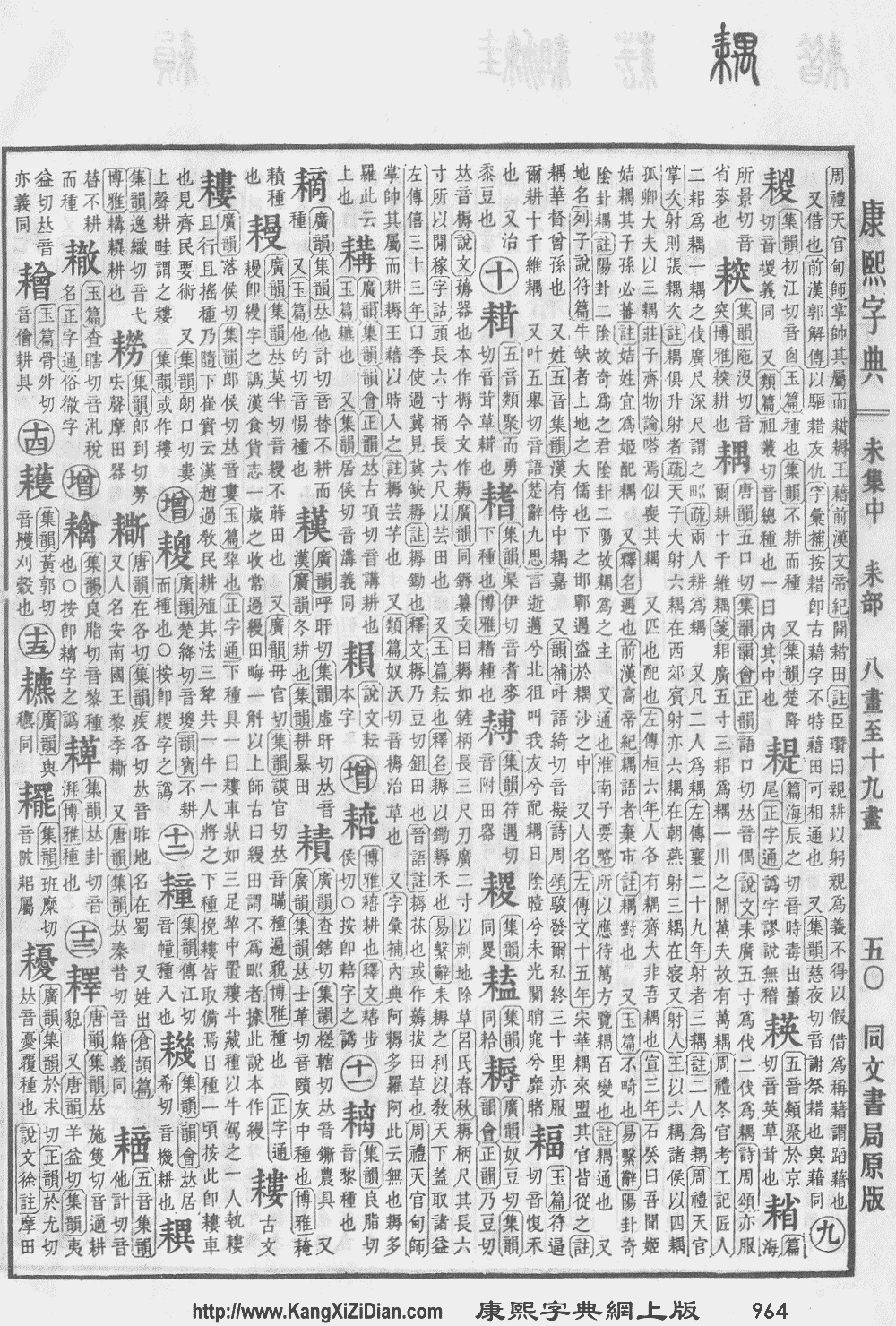
- Kangxi Dictionary: page 964, character 6
- Dai Kanwa Jiten: character 28952
- Dae Jaweon: page 1412, character 13
- Hanyu Da Zidian (first edition): volume 4, page 2774, character 8
- Unihan data for U+8026
Chinese[edit]
| trad. | 耦 | |
|---|---|---|
| simp. # | 耦 | |
Glyph origin[edit]
Phono-semantic compound (形聲/形声, OC *ŋoːʔ) : semantic 耒 (“tilling tool”) + phonetic 禺 (OC *ŋo, *ŋos), paired working in the fields.
Pronunciation[edit]
Definitions[edit]
耦
- (archaic) to plow side-by-side
- pair; couple (two humans as a unit)
- 長沮、桀溺耦而耕,孔子過之,使子路問津焉。 [Classical Chinese, trad.]
- From: The Analects of Confucius, c. 475 – 221 BCE, translated based on James Legge's version
- Chángjǔ, Jiénì ǒu ér gēng, Kǒngzǐ guò zhī, shǐ Zǐlù wènjīn yān. [Pinyin]
- Changju and Jieni were at work in the field as a pair, when Confucius passed by them, and sent Zilu to inquire for the ford from them.
长沮、桀溺耦而耕,孔子过之,使子路问津焉。 [Classical Chinese, simp.]
- Alternative form of 偶 (ǒu, “match; pair; couple; even; etc.”)
Compounds[edit]
Japanese[edit]
Kanji[edit]
耦
- plow side by side
- team of two
Readings[edit]
Korean[edit]
Hanja[edit]
耦 • (u) (hangeul 우, revised u, McCune–Reischauer u, Yale wu)
- This term needs a translation to English. Please help out and add a translation, then remove the text
{{rfdef}}.
Categories:
- CJK Unified Ideographs block
- Han script characters
- Translingual lemmas
- Translingual symbols
- Han phono-semantic compounds
- Middle Chinese lemmas
- Old Chinese lemmas
- Chinese lemmas
- Mandarin lemmas
- Cantonese lemmas
- Chinese nouns
- Mandarin nouns
- Cantonese nouns
- Chinese adjectives
- Mandarin adjectives
- Cantonese adjectives
- Chinese verbs
- Mandarin verbs
- Cantonese verbs
- Chinese terms with IPA pronunciation
- Chinese Han characters
- Chinese terms with archaic senses
- Literary Chinese terms with quotations
- Japanese Han characters
- Uncommon kanji
- Japanese kanji with on reading ごう
- Japanese kanji with on reading ぐ
- Japanese kanji with on reading ぐう
- Korean lemmas
- Korean Han characters