存
Jump to navigation
Jump to search
See also: 仔
| ||||||||
Translingual[edit]
| Stroke order | |||
|---|---|---|---|

| |||
Han character[edit]
存 (Kangxi radical 39, 子+3, 6 strokes, cangjie input 大中弓木 (KLND), four-corner 40247, composition ⿸𠂇⿰丨子)
Derived characters[edit]
References[edit]
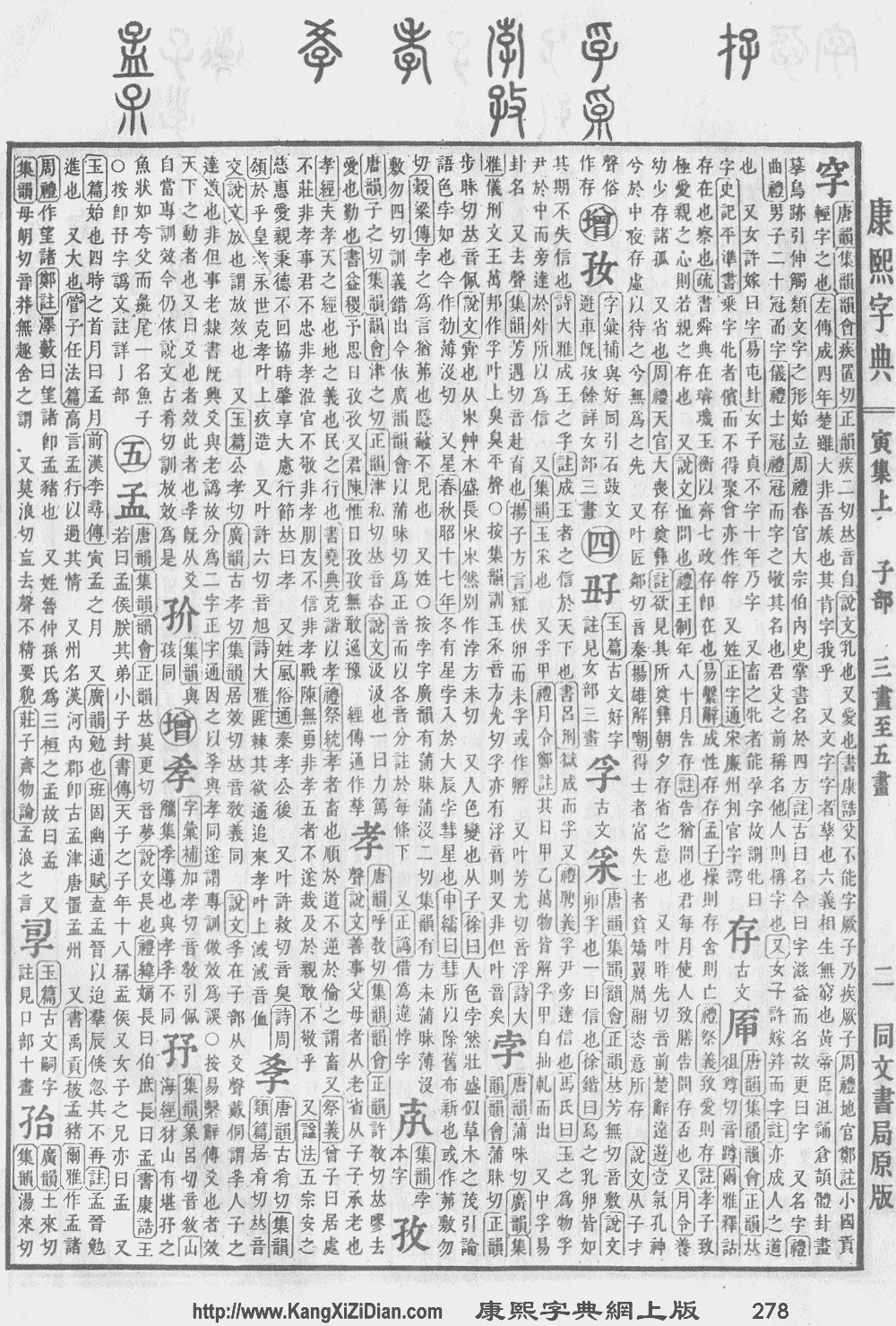
- Kangxi Dictionary: page 278, character 2
- Dai Kanwa Jiten: character 6943
- Dae Jaweon: page 545, character 8
- Hanyu Da Zidian (first edition): volume 2, page 1009, character 7
- Unihan data for U+5B58
Chinese[edit]
| simp. and trad. |
存 | |
|---|---|---|
Glyph origin[edit]
Phono-semantic compound (形聲/形声, OC *zluːn) : phonetic 才 (OC *zlɯː, *zlɯːs) + semantic 子.
Etymology[edit]
Possibly the demonstrative *-n derivation from 在 (OC *zlɯːʔ) (Schuessler, 2007).
Pronunciation[edit]
Definitions[edit]
存
Synonyms[edit]
- (to exist):
Compounds[edit]
- 一息尚存 (yīxīshàngcún)
- 一滴無存/一滴无存
- 下存
- 不存
- 不存不濟/不存不济
- 不存大體/不存大体
- 不存濟/不存济
- 並存/并存 (bìngcún)
- 並存不悖/并存不悖
- 主敬存誠/主敬存诚
- 久有存心
- 亡人自存
- 人存政舉/人存政举
- 依存 (yīcún)
- 保存 (bǎocún)
- 倖存/幸存 (xìngcún)
- 傳真存轉/传真存转
- 儲存/储存 (chǔcún)
- 儲存單位/储存单位
- 儲蓄存款/储蓄存款
- 共存 (gòngcún)
- 典範長存/典范长存
- 分隸偶存/分隶偶存
- 勢不兩存/势不两存
- 去偽存真/去伪存真 (qùwěicúnzhēn)
- 去蕪存菁/去芜存菁 (qùwúcúnjīng)
- 名存實亡/名存实亡 (míngcúnshíwáng)
- 和平共存 (hépíng gòngcún)
- 圖存/图存 (túcún)
- 在此存照
- 外匯存底/外汇存底
- 外幣存款/外币存款
- 存亡 (cúnwáng)
- 存亡未卜
- 存亡絕續/存亡绝续
- 存亡繼絕/存亡继绝
- 存候
- 存勞/存劳
- 存包處/存包处
- 存古 (cúngǔ)
- 存問/存问
- 存單/存单 (cúndān)
- 存在 (cúnzài)
- 存在主義/存在主义 (cúnzài zhǔyì)
- 存坐
- 存執/存执
- 存存
- 存孤
- 存宿
- 存底
- 存廢/存废 (cúnfèi)
- 存心 (cúnxīn)
- 存恤
- 存慰
- 存戶/存户 (cúnhù)
- 存摺/存折 (cúnzhé)
- 存撫/存抚
- 存放 (cúnfàng)
- 存查 (cúnchá)
- 存案
- 存根 (cúngēn)
- 存檔/存档 (cúndàng)
- 存欄/存栏
- 存款 (cúnkuǎn)
- 存沒/存没
- 存活 (cúnhuó)
- 存活率 (cúnhuólǜ)
- 存濟/存济
- 存照
- 存留 (cúnliú)
- 存疑 (cúnyí)
- 存省
- 存眷
- 存神
- 存視/存视
- 存稿
- 存續/存续 (cúnxù)
- 存而不論/存而不论
- 存記/存记
- 存證信函/存证信函
- 存貨/存货 (cúnhuò)
- 存身 (cúnshēn)
- 存量 (cúnliàng)
- 存錢/存钱 (cúnqián)
- 存錄/存录
- 存食
- 存養/存养
- 安存
- 定存 (dìngcún)
- 定期存款 (dìngqī cúnkuǎn)
- 寄存 (jìcún)
- 封存 (fēngcún)
- 屍骨無存/尸骨无存
- 巋然獨存/岿然独存
- 庫存/库存 (kùcún)
- 心存不軌/心存不轨 (xīncúnbùguǐ)
- 心存魏闕/心存魏阙
- 思存
- 惠存 (huìcún)
- 意存筆先/意存笔先
- 推亡固存
- 提存
- 撫存/抚存 (fǔcún)
- 救亡圖存/救亡图存 (jiùwángtúcún)
- 李存勗/李存勖
- 死生存亡
- 殘存/残存 (cáncún)
- 殷文存
- 永存 (yǒngcún)
- 永存不朽
- 求同存異/求同存异 (qiútóngcúnyì)
- 治亂存亡/治乱存亡
- 活存 (huócún)
- 活期存款 (huóqī cúnkuǎn)
- 浩氣長存/浩气长存 (hàoqì chángcún)
- 溫存/温存 (wēncún)
- 滾存/滚存 (gǔncún)
- 無存濟/无存济
- 片瓦無存/片瓦无存
- 片甲不存
- 片甲無存/片甲无存
- 猶存/犹存
- 現存/现存 (xiàncún)
- 生存 (shēngcún)
- 生存空間/生存空间 (shēngcún kōngjiān)
- 生存競爭/生存竞争
- 生死存亡 (shēngsǐcúnwáng)
- 留存 (liúcún)
- 百不存一
- 百無一存/百无一存
- 盤存/盘存 (páncún)
- 目擊道存/目击道存
- 碩果僅存/硕果仅存 (shuòguǒjǐncún)
- 票據存款/票据存款
- 禮存寧儉/礼存宁俭
- 積存/积存 (jīcún)
- 立此存照
- 結存/结存 (jiécún)
- 綜合存款/综合存款
- 繼絕存亡/继绝存亡
- 聚落保存
- 興廢存亡/兴废存亡
- 舍生存義/舍生存义
- 苟存
- 若存若亡
- 蕩然無存/荡然无存 (dàngránwúcún)
- 貯存/贮存 (zhùcún)
- 軟語溫存/软语温存
- 進退存亡/进退存亡
- 過化存神/过化存神
- 適者生存/适者生存 (shìzhě shēngcún)
- 長存/长存 (chángcún)
- 閑邪存誠/闲邪存诚
- 難存濟/难存济
- 零存整付
- 零庫存/零库存
- 霽範永存/霁范永存
- 養性存身/养性存身
- 餘存/余存
- 餘悸猶存/余悸犹存
- 黃金存摺/黄金存折
- 默存
- 齒亡舌存/齿亡舌存
- 齒弊舌存/齿弊舌存
Japanese[edit]
Kanji[edit]
存
Readings[edit]
- Go-on: ぞん (zon, Jōyō)
- Kan-on: そん (son, Jōyō)
- Kun: ある (aru, 存る); たもつ (tamotsu, 存つ); とう (tou, 存う); ながらえる (nagaraeru, 存える)
Compounds[edit]
- 保存 (hozon, “preservation”)
- 存続 (sonzoku, “duration”)
- 依存 (izon, “depend”)
- 依存症 (izonshō, “addiction”)
- 現存 (genzon, “existence”)
- 共存 (kyōzon, “coexistence”)
- 生存 (seizon, “living, life”)
- 生存権 (seizonken, “right to life”)
- 残存 (zanzon, “survival”)
- 存立 (sonritsu, “existence”)
- 存否 (sonpi, “existence or nonexistence”)
- 存心 (zonshin, “inner thoughts”)
Korean[edit]
Hanja[edit]
存 (eum 존 (jon))
Compounds[edit]
- 존재 (存在, jonjae, “existence”)
- 기존 (旣存, gijon, “existing”)
- 의존 (依存, uijon, “dependence”)
- 보존 (保存, bojon, “preservation”)
- 생존 (生存, saengjon, “survival”)
Vietnamese[edit]
Han character[edit]
存: Hán Nôm readings: tồn, dòn, sòn, ròn, tòn
- This term needs a translation to English. Please help out and add a translation, then remove the text
{{rfdef}}.
Categories:
- CJK Unified Ideographs block
- Han script characters
- Translingual lemmas
- Translingual symbols
- Han phono-semantic compounds
- Mandarin terms with audio links
- Cantonese terms with audio links
- Middle Chinese lemmas
- Old Chinese lemmas
- Chinese lemmas
- Mandarin lemmas
- Sichuanese lemmas
- Cantonese lemmas
- Gan lemmas
- Hakka lemmas
- Jin lemmas
- Northern Min lemmas
- Eastern Min lemmas
- Hokkien lemmas
- Teochew lemmas
- Wu lemmas
- Xiang lemmas
- Chinese terms with IPA pronunciation
- Chinese Han characters
- Chinese literary terms
- Elementary Mandarin
- Japanese Han characters
- Grade 6 kanji
- Japanese kanji with goon reading ぞん
- Japanese kanji with kan'on reading そん
- Japanese kanji with kun reading あ-る
- Japanese kanji with kun reading たも-つ
- Japanese kanji with kun reading と-う
- Japanese kanji with kun reading ながら-える
- Korean lemmas
- Korean Han characters
- Vietnamese lemmas
- Vietnamese Han characters