掫
Jump to navigation
Jump to search
| ||||||||
Translingual[edit]
Han character[edit]
掫 (Kangxi radical 64, 手+8, 11 strokes, cangjie input 手尸十水 (QSJE), four-corner 51047, composition ⿰扌取)
References[edit]
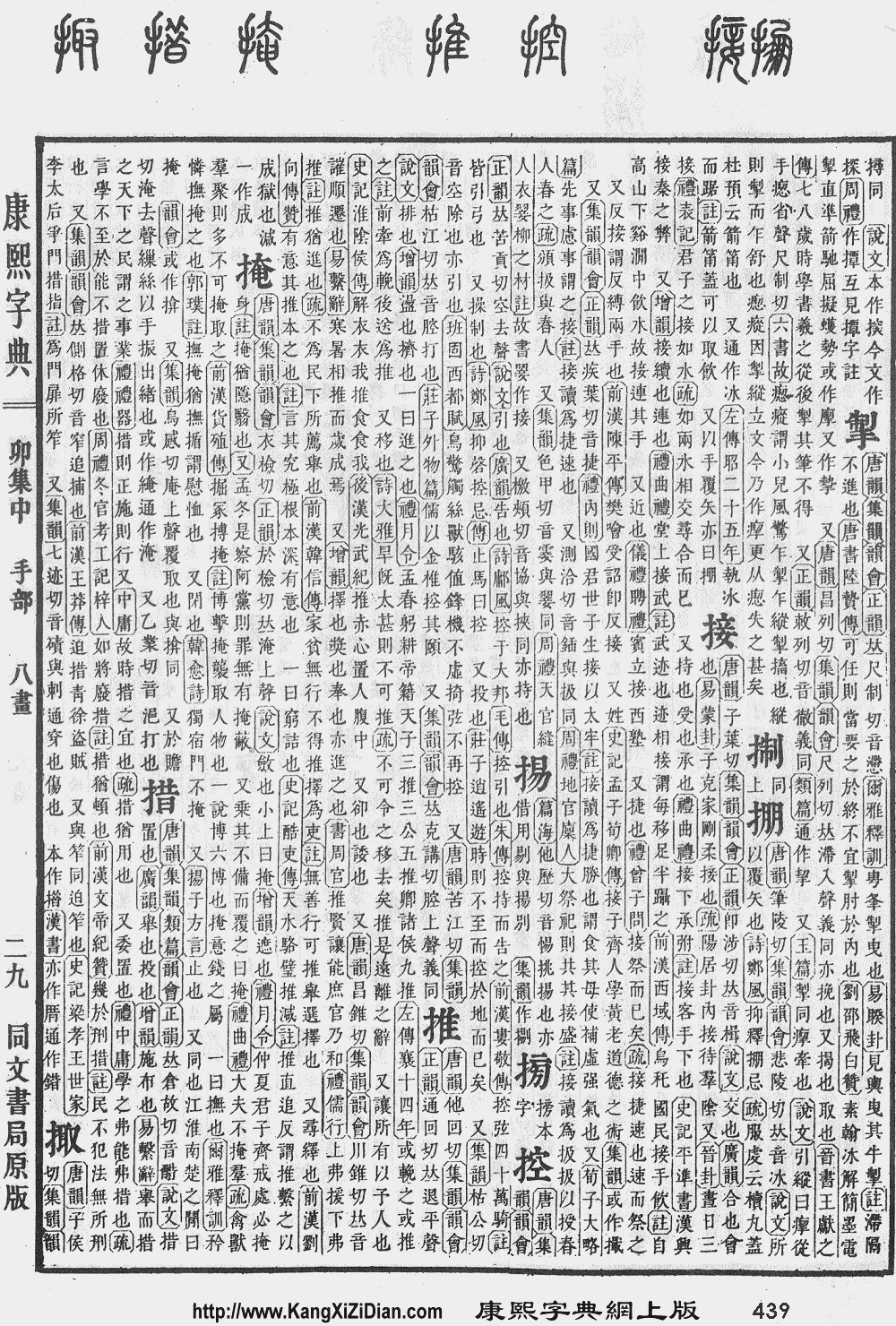
- Kangxi Dictionary: page 439, character 11
- Dai Kanwa Jiten: character 12287
- Dae Jaweon: page 791, character 1
- Hanyu Da Zidian (first edition): volume 3, page 1891, character 5
- Unihan data for U+63AB
Chinese[edit]
| trad. | 掫 | |
|---|---|---|
| simp. # | 掫 | |
Glyph origin[edit]
| Historical forms of the character 掫 |
|---|
| Shuowen Jiezi (compiled in Han) |
| Small seal script |

|
| Old Chinese | |
|---|---|
| 陬 | *ʔsloː, *ʔsru, *ʔslo |
| 棷 | *ʔsloː, *sʰloːʔ, *sloːʔ, *ʔsru |
| 掫 | *ʔsloː, *ʔsruʔ, *ʔslo |
| 緅 | *ʔsloː, *ʔsru, *slos |
| 趣 | *sʰloːʔ, *sʰlos |
| 取 | *sʰloːʔ, *sʰloʔ |
| 鯫 | *zloː, *zloːʔ, *sʰlo |
| 棸 | *rlu, *rluʔ, *ʔsru |
| 鄹 | *ʔsru, *zloʔ, *ljoːnʔ |
| 郰 | *ʔsru |
| 齱 | *ʔsru, *sʰroːɡ |
| 菆 | *ʔsru, *sʰros, *zloːn |
| 箃 | *ʔsru |
| 黀 | *ʔsru |
| 驟 | *zrus |
| 最 | *zloːds |
| 襊 | *sʰoːds, *sʰoːd |
| 蕞 | *zoːds |
| 嘬 | *sʰroːds |
| 諏 | *ʔslo |
| 娵 | *ʔslo |
| 娶 | *sʰloʔ, *sʰlos, *slo |
| 聚 | *zloʔ, *zlos |
| 埾 | *zlos |
| 藂 | *zloːŋ |
| 叢 | *zloːŋ |
| 繓 | *ʔsoːd |
| 撮 | *ʔsoːd, *sʰoːd |
Etymology 1[edit]
Pronunciation[edit]
Definitions[edit]
掫
- † to be on night watch; to beat night watches
- † to gather
- † hemp reed; hemp stalk
- (historical) A place in present-day Lintong District, Xi'an, Shaanxi Province.
Etymology 2[edit]
Pronunciation[edit]
Definitions[edit]
掫
Etymology 3[edit]
| For pronunciation and definitions of 掫 – see 㨄 (“(dialectal) to lift something heavy on one side”). (This character is a variant form of 㨄). |
Japanese[edit]
Kanji[edit]
掫
Readings[edit]
Categories:
- CJK Unified Ideographs block
- Han script characters
- Translingual lemmas
- Translingual symbols
- Middle Chinese lemmas
- Old Chinese lemmas
- Chinese lemmas
- Mandarin lemmas
- Cantonese lemmas
- Chinese verbs
- Mandarin verbs
- Cantonese verbs
- Chinese nouns
- Mandarin nouns
- Cantonese nouns
- Chinese proper nouns
- Mandarin proper nouns
- Cantonese proper nouns
- Chinese terms with IPA pronunciation
- Chinese Han characters
- Chinese terms with obsolete senses
- Chinese terms with historical senses
- Chinese dialectal terms
- Chinese variant forms
- Japanese Han characters
- Uncommon kanji
- Japanese kanji with goon reading しゅ
- Japanese kanji with goon reading す
- Japanese kanji with kan'on reading しゅ
- Japanese kanji with kan'on reading しゅう
- Japanese kanji with historical kan'on reading しう
- Japanese kanji with kan'on reading そう
- Japanese kanji with kun reading う-つ
- Japanese kanji with kun reading たきぎ
- Japanese kanji with kun reading まも-る