离
Jump to navigation
Jump to search
See also: 離
| ||||||||
Translingual[edit]
| Stroke order | |||
|---|---|---|---|

| |||
Han character[edit]
离 (Kangxi radical 114, 禸+6, 11 strokes, cangjie input 卜山大月 (YUKB), four-corner 00227, composition ⿱㐫禸)
Derived characters[edit]
- 𠌯, 𠻗, 𪤋, 𢟢, 摛, 漓, 𤡢, 𣉽, 𪱩, 樆, 㷰, 𤗫, 璃, 䄜, 瞝, 𥕮, 䅻, 褵, 𥻿, 縭(缡), 𦔓, 𫬎, 螭, 謧, 𧴁, 𮜐, 醨, 𮧩, 𩥬, 𮃵, 麶, 黐, 𪒔, 𪖂
- 𣯤, 䬜, 魑, 𨝏, 𬓞, 離, 𫀥, 𮫧, 𬓟, 𪅆, 禽, 𡼁, 𡴥, 蓠, 䍠, 篱, 𤜏
References[edit]
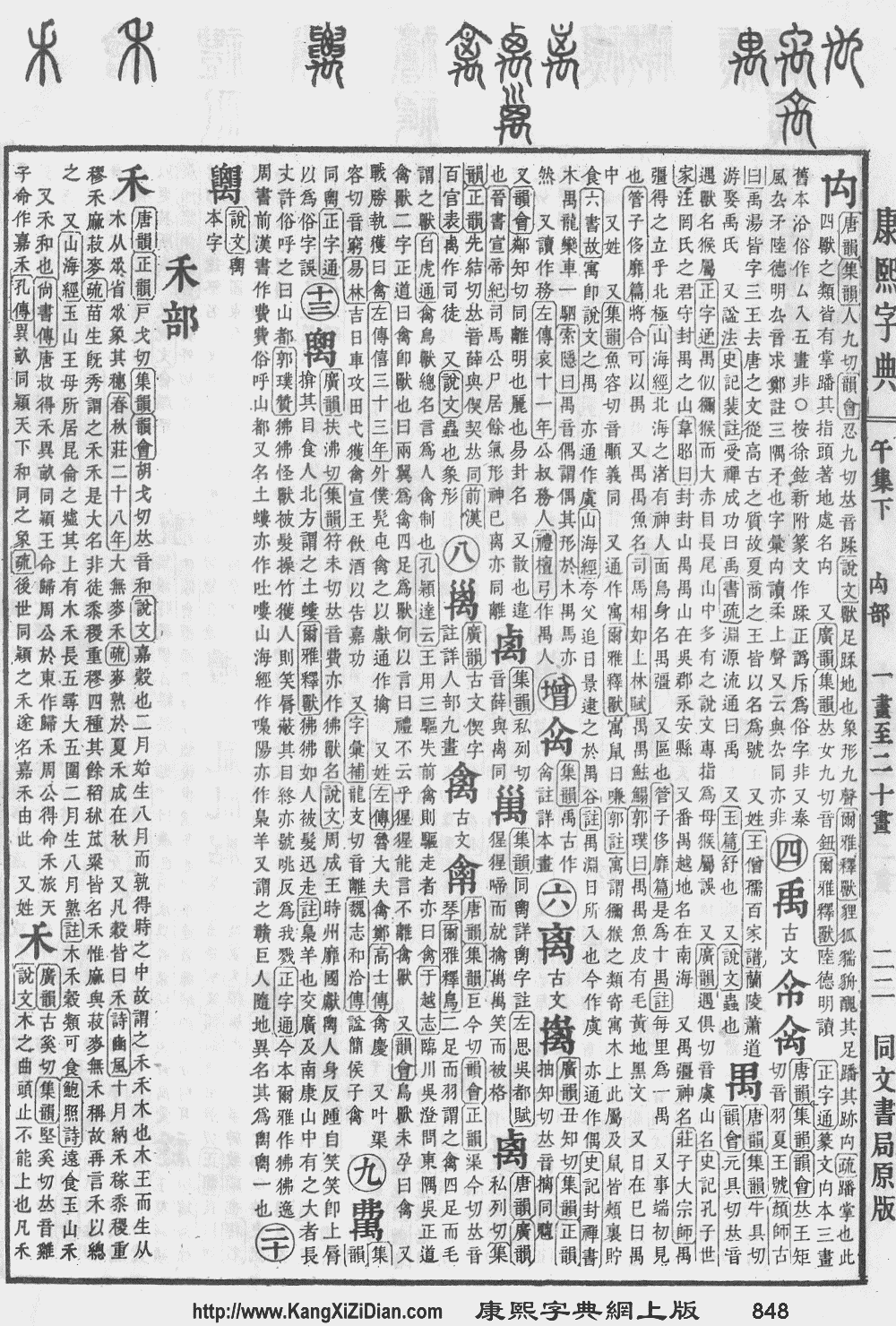
- Kangxi Dictionary: page 848, character 7
- Dai Kanwa Jiten: character 24888
- Dae Jaweon: page 1270, character 2
- Hanyu Da Zidian (first edition): volume 1, page 287, character 11
- Unihan data for U+79BB
Chinese[edit]
Glyph origin[edit]
| Historical forms of the character 离 | |
|---|---|
| Shuowen Jiezi (compiled in Han) | Liushutong (compiled in Ming) |
| Small seal script | Transcribed ancient scripts |

|

|
In bronze inscriptions, Ideogrammic compound (會意/会意) : 林 (“forest”) + 𠦒 (“net”) – to set up a net in the forest for hunting.
The modern form descends from a variant that replaced 林 with 艸, later simplified as 屮 in small seal script, which corrupted further into 亠 in clerical script. The bottom component 𠦒 has corrupted into ⿱凶禸. Compare with 畢 and 禽.
Exists as traditional character, but also simplified from 離.
Etymology 1[edit]
| For pronunciation and definitions of 离 – see 離 (“to depart”). (This character is the simplified form of 離). |
Notes:
|
Etymology 2[edit]
| trad. | 离 | |
|---|---|---|
| simp. # | 离 | |
| alternative forms | 𡴥 | |
Pronunciation[edit]
Definitions[edit]
离
Etymology 3[edit]
Pronunciation[edit]
Definitions[edit]
离
Japanese[edit]
Kanji[edit]
离
Readings[edit]
Korean[edit]
Hanja[edit]
离 • (ri>i) (hangeul 리>이, revised ri>i, McCune–Reischauer ri>i, Yale li>i)
Categories:
- CJK Unified Ideographs block
- Han script characters
- Translingual lemmas
- Translingual symbols
- Han ideogrammic compounds
- CJKV simplified characters
- Beginning Mandarin
- Chinese lemmas
- Mandarin lemmas
- Sichuanese lemmas
- Cantonese lemmas
- Taishanese lemmas
- Gan lemmas
- Hakka lemmas
- Jin lemmas
- Northern Min lemmas
- Eastern Min lemmas
- Hokkien lemmas
- Teochew lemmas
- Wu lemmas
- Xiang lemmas
- Chinese verbs
- Mandarin verbs
- Sichuanese verbs
- Cantonese verbs
- Taishanese verbs
- Gan verbs
- Hakka verbs
- Jin verbs
- Northern Min verbs
- Eastern Min verbs
- Hokkien verbs
- Teochew verbs
- Wu verbs
- Xiang verbs
- Chinese nouns
- Mandarin nouns
- Sichuanese nouns
- Cantonese nouns
- Taishanese nouns
- Gan nouns
- Hakka nouns
- Jin nouns
- Northern Min nouns
- Eastern Min nouns
- Hokkien nouns
- Teochew nouns
- Wu nouns
- Xiang nouns
- Chinese terms with IPA pronunciation
- Chinese Han characters
- Chinese simplified forms
- Mandarin terms with audio links
- Middle Chinese lemmas
- Old Chinese lemmas
- Chinese adjectives
- Mandarin adjectives
- Cantonese adjectives
- Japanese Han characters
- Uncommon kanji
- Japanese kanji with goon reading ち
- Japanese kanji with goon reading り
- Japanese kanji with kan'on reading ち
- Japanese kanji with kan'on reading り
- Korean lemmas
- Korean Han characters