鮓
Appearance
See also: 鲊
| ||||||||
Translingual
[edit]Han character
[edit]鮓 (Kangxi radical 195, 魚+5, 16 strokes, Cangjie input 弓火人尸 (NFOS), four-corner 28311, composition ⿰魚乍)
References
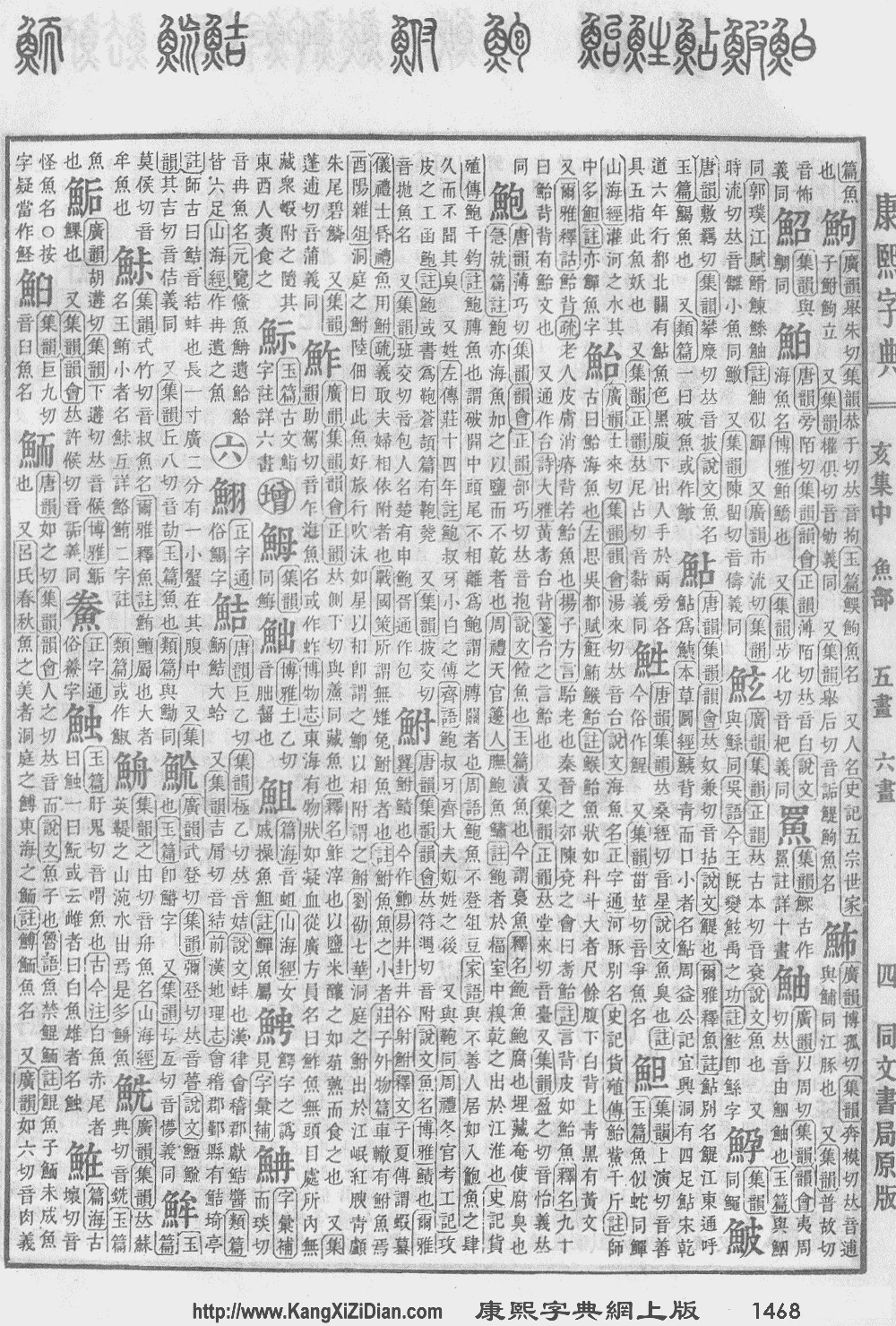
[edit]- Kangxi Dictionary: page 1468, character 16
- Dai Kanwa Jiten: character 46076
- Dae Jaweon: page 2001, character 22
- Hanyu Da Zidian (first edition): volume 7, page 4681, character 15
- Unihan data for U+9B93
Chinese
[edit]Glyph origin
[edit]| Old Chinese | |
|---|---|
| 作 | *ʔsaːɡs, *ʔsaːɡs, *ʔsaːɡ |
| 鮓 | *ʔsraːʔ |
| 痄 | *ʔsraːʔ |
| 厏 | *ʔsraːʔ, *zraːʔ |
| 詐 | *ʔsraːɡs |
| 咋 | *ʔsraːɡs, *zraːɡ, *ʔsreːɡ |
| 笮 | *ʔsraːɡs, *zaːɡ, *ʔsraːɡ |
| 榨 | *ʔsraːɡs |
| 炸 | *ʔr'aːɡs, *zreːb |
| 乍 | *zraːɡs |
| 拃 | *ʔsraːnʔ |
| 酢 | *sʰaːɡs, *zaːɡ |
| 祚 | *zaːɡs |
| 胙 | *zaːɡs |
| 阼 | *zaːɡs |
| 飵 | *zaːɡs, *zaːɡ |
| 秨 | *zaːɡs, *zaːɡ |
| 迮 | *ʔsaːɡ, *ʔsraːɡ |
| 柞 | *ʔsaːɡ, *zaːɡ |
| 昨 | *zaːɡ |
| 怍 | *zaːɡ |
| 砟 | *zaːɡ |
| 莋 | *zaːɡ |
| 岝 | *zaːɡ, *zraːɡ |
| 鈼 | *zaːɡ |
| 筰 | *zaːɡ |
| 葃 | *zaːɡ, *zreːɡ, *zaɡ |
| 舴 | *ʔr'aːɡ, *ʔsraːɡ |
| 窄 | *ʔsraːɡ |
| 蚱 | *ʔsraːɡ |
| 齚 | *zraːɡ |
| 泎 | *zraːɡ |
Etymology 1
[edit]| trad. | 鮓 | |
|---|---|---|
| simp. | 鲊 | |
| alternative forms | 䱹/𬶣 鮺/鲝 𩻢 | |
A cognate of 菹 (jū, “pickled vegetables”); both reconstruct to an Old Chinese root *tsra relating to preservation through lactic acid fermentation. Due to the southern geographical origins of rice-based fish fermentation in East Asia, this root is widely considered to be an ancient loan from an Austroasiatic substrate language.
Pronunciation
[edit]- Mandarin
- (Standard Chinese)+
- Hanyu Pinyin: zhǎ
- Zhuyin: ㄓㄚˇ
- Tongyong Pinyin: jhǎ
- Wade–Giles: cha3
- Yale: jǎ
- Gwoyeu Romatzyh: jaa
- Palladius: чжа (čža)
- Sinological IPA (key): /ʈ͡ʂä²¹⁴/
- (Standard Chinese)+
- Cantonese
- (Standard Cantonese, Guangzhou–Hong Kong)
- Jyutping: zaa2 / zaa3
- Yale: já / ja
- Cantonese Pinyin: dzaa2 / dzaa3
- Guangdong Romanization: za2 / za3
- Sinological IPA (key): /t͡saː³⁵/, /t͡saː³³/
- (Standard Cantonese, Guangzhou–Hong Kong)
- Southern Min
- Middle Chinese: tsraeX
- Old Chinese
- (Zhengzhang): /*ʔsraːʔ/
Definitions
[edit]鮓
- (historical) salted and fermented fish (traditionally preserved using rice or grain; the precursor to Japanese narezushi)
- (by extension, regional) various pickled or fermented foods (such as vegetables or meat prepared with ground rice and salt)
Compounds
[edit]Etymology 2
[edit]| trad. | 鮓 | |
|---|---|---|
| simp. | 鲊 | |
| alternative forms | 渣 | |
Phonetic loan (借字 (jièzì)) for colloquial Cantonese zaa2, which is derived via a tone shift from 渣 (zaa1, “dregs, refuse”). This orthographic choice was likely reinforced by the negative connotations of the colloquial compound 揦鮓/揦鲊 (laa5 zaa2, “dirty, sloppy”).
Pronunciation
[edit]- Cantonese
- (Standard Cantonese, Guangzhou–Hong Kong)
- Jyutping: zaa2
- Yale: já
- Cantonese Pinyin: dzaa2
- Guangdong Romanization: za2
- Sinological IPA (key): /t͡saː³⁵/
- (Standard Cantonese, Guangzhou–Hong Kong)
Definitions
[edit]鮓
Compounds
[edit]References
[edit]- “鮓”, in 漢語多功能字庫 (Multi-function Chinese Character Database)[1], 香港中文大學 (the Chinese University of Hong Kong), 2014–
Japanese
[edit]Kanji
[edit]鮓
Readings
[edit]Definitions
[edit]| Kanji in this term |
|---|
| 鮓 |
| すし Hyōgai |
| kun'yomi |
| For pronunciation and definitions of 鮓 – see the following entry. | ||
| ||
| (This term, 鮓, is an alternative spelling of the above term.) |
References
[edit]- “▲鮓”, in 漢字ぺディア [Kanjipedia][2] (in Japanese), The Japan Kanji Aptitude Testing Foundation, 2015–2026
- Doi, Tadao (1603–1604), Hōyaku Nippo Jisho (in Japanese), Tōkyō: Iwanami Shoten, published 1980, →ISBN.
- Minamoto, Shitagō with Kyōto Daigaku Bungakubu Kokugogaku Kokubungaku Kenkyūshitu (931–938), Shohon Shūsei Wamyō Ruijushō: Honbunhen (in Japanese), Kyōto: Rinsen, published 1968, →ISBN.
Korean
[edit]Hanja
[edit]- This term needs a translation to English. Please help out and add a translation, then remove the text
{{rfdef}}.
Vietnamese
[edit]Han character
[edit]- This term needs a translation to English. Please help out and add a translation, then remove the text
{{rfdef}}.
Categories:
- CJK Unified Ideographs block
- Han script characters
- Translingual lemmas
- Translingual symbols
- Chinese lemmas
- Mandarin lemmas
- Cantonese lemmas
- Hokkien lemmas
- Middle Chinese lemmas
- Old Chinese lemmas
- Chinese hanzi
- Mandarin hanzi
- Cantonese hanzi
- Hokkien hanzi
- Middle Chinese hanzi
- Old Chinese hanzi
- Chinese nouns
- Mandarin nouns
- Cantonese nouns
- Hokkien nouns
- Middle Chinese nouns
- Old Chinese nouns
- Chinese terms with IPA pronunciation
- Chinese terms spelled with 鮓
- Chinese terms with historical senses
- Regional Chinese
- Chinese adjectives
- Cantonese adjectives
- Cantonese Chinese
- Cantonese terms with usage examples
- Japanese kanji
- Japanese hyōgai kanji
- Japanese kanji with goon reading しゃ
- Japanese kanji with kan'on reading さ
- Japanese kanji with kun reading すし
- Japanese terms spelled with 鮓 read as すし
- Japanese terms read with kun'yomi
- Japanese nouns
- Japanese lemmas
- Japanese terms spelled with hyōgai kanji
- Japanese terms with 1 kanji
- Japanese terms spelled with 鮓
- Japanese single-kanji terms
- Korean lemmas
- Korean hanja
- Vietnamese lemmas
- Vietnamese Han characters