虛
Jump to navigation
Jump to search
| ||||||||
Translingual[edit]
| Japanese | 虚 |
|---|---|
| Simplified | 虚 |
| Traditional | 虛 |
Han character[edit]
虛 (Kangxi radical 141, 虍+6, 12 strokes, cangjie input 卜心廿一 (YPTM), four-corner 21212, composition ⿸虍⿱丱一)
Derived characters[edit]
References[edit]
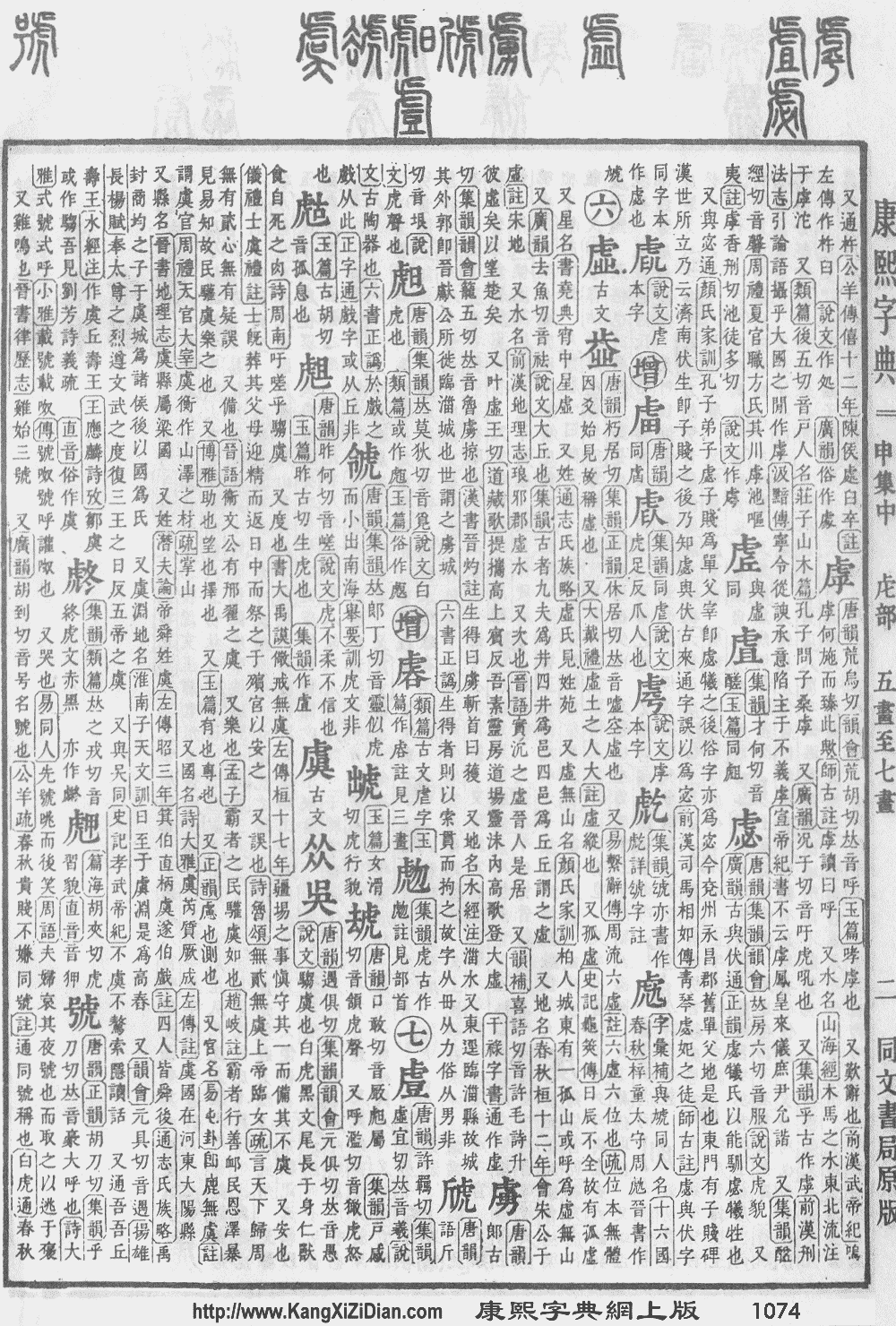
- Kangxi Dictionary: page 1074, character 11
- Dai Kanwa Jiten: character 32709
- Dae Jaweon: page 1541, character 14
- Hanyu Da Zidian (first edition): volume 4, page 2825, character 6
- Unihan data for U+865B
Chinese[edit]
| trad. | 虛 | |
|---|---|---|
| simp. | 虚 | |
| alternative forms | 虗 | |
Glyph origin[edit]
| Historical forms of the character 虛 | ||
|---|---|---|
| Warring States | Shuowen Jiezi (compiled in Han) | Liushutong (compiled in Ming) |
| Chu slip and silk script | Small seal script | Transcribed ancient scripts |

|

|

|
| Old Chinese | |
|---|---|
| 唬 | *qʰraːs, *kʷraːɡ |
| 戲 | *qʰral, *qʰrals, *qʰaː |
| 巇 | *qʰra |
| 隵 | *qʰra |
| 嚱 | *qʰras |
| 盧 | *b·raː |
| 鑪 | *raː |
| 壚 | *raː |
| 籚 | *raː |
| 蘆 | *raː, *ra |
| 顱 | *b·raː |
| 髗 | *b·raː |
| 鱸 | *raː |
| 攎 | *raː |
| 櫨 | *raː |
| 轤 | *raː |
| 黸 | *raː |
| 獹 | *raː |
| 鸕 | *raː |
| 艫 | *raː |
| 纑 | *raː |
| 瀘 | *raː |
| 瓐 | *raː |
| 爐 | *raː |
| 嚧 | *raː |
| 矑 | *b·raː |
| 罏 | *raː |
| 蠦 | *raː |
| 虜 | *raːʔ |
| 擄 | *raːʔ |
| 艣 | *raːʔ |
| 鐪 | *raːʔ |
| 虖 | *qʰaː, *qʰʷa, *qʰaː, *qʰʷa |
| 虍 | *qʰaː |
| 雐 | *qʰʷlaː |
| 虎 | *qʰlaːʔ |
| 琥 | *qʰlaːʔ |
| 萀 | *qʰlaːʔ |
| 臚 | *b·ra |
| 廬 | *ra |
| 驢 | *b·ra |
| 藘 | *ra |
| 爈 | *ra, *ras |
| 櫖 | *ra, *ras |
| 儢 | *raʔ |
| 慮 | *ras |
| 勴 | *ras |
| 鑢 | *ras |
| 濾 | *ras |
| 攄 | *r̥ʰa |
| 處 | *kʰljaʔ, *kʰljas |
| 豦 | *kas, *ɡa |
| 據 | *kas |
| 鐻 | *kas, *ɡa, *ɡaʔ |
| 澽 | *kas, *ɡas |
| 虛 | *kʰa, *qʰa |
| 墟 | *kʰa |
| 懅 | *ɡa |
| 蘧 | *ɡa, *ɡʷa |
| 籧 | *ɡa |
| 醵 | *ɡa, *ɡas, *ɡaɡ |
| 璩 | *ɡa |
| 虡 | *ɡaʔ |
| 遽 | *ɡas |
| 勮 | *ɡas |
| 噓 | *qʰa, *qʰas |
| 驉 | *qʰa |
| 歔 | *qʰa |
| 魖 | *qʰa |
| 膚 | *pla |
| 虧 | *kʰʷral |
| 噱 | *ɡaɡ |
| 臄 | *ɡaɡ |
| 劇 | *ɡaɡ |
| 諕 | *qʰʷraːɡ |
Phono-semantic compound (形聲/形声, OC *kʰa, *qʰa) : phonetic 虍 (OC *qʰaː) + semantic 丘 (“hill”). The lower component retains the shape of 丠, the ancient form of 丘.
Etymology 1[edit]
Pronunciation[edit]
Definitions[edit]
虛
- empty; hollow
- false; worthless; vain
- (astronomy) Emptiness, a Chinese constellation near Aquarius and Equuleus
Compounds[edit]
- 不虛/不虚
- 不虛此生/不虚此生
- 不虛此行/不虚此行 (bùxūcīxíng)
- 不虛發/不虚发
- 不說虛頭/不说虚头
- 中饋猶虛/中馈犹虚
- 乘虛/乘虚 (chéngxū)
- 乘虛而入/乘虚而入 (chéngxū'érrù)
- 作賊心虛/作贼心虚 (zuòzéixīnxū)
- 光陰虛度/光阴虚度
- 內虛外實/内虚外实
- 六虛/六虚
- 凌虛
- 出虛恭/出虚恭
- 名下無虛/名下无虚
- 名不虛傳/名不虚传 (míngbùxūchuán)
- 名不虛立/名不虚立
- 名不虛行/名不虚行
- 名不虛謂/名不虚谓
- 向壁虛構/向壁虚构 (xiàngbìxūgòu)
- 向壁虛造/向壁虚造 (xiàngbìxūzào)
- 四虛/四虚
- 太虛/太虚 (tàixū)
- 太虛幻境/太虚幻境
- 好弄玄虛/好弄玄虚
- 子虛/子虚 (zǐxū)
- 子虛烏有/子虚乌有 (zǐxū-wūyǒu)
- 子虛賦/子虚赋
- 孤虛/孤虚
- 定弓虛稅/定弓虚税
- 就虛避實/就虚避实
- 座無虛席/座无虚席 (zuòwúxūxí)
- 弄虛作假/弄虚作假 (nòngxūzuòjiǎ)
- 弄虛頭/弄虚头
- 弓不虛發/弓不虚发
- 弦不虛發/弦不虚发
- 張若虛/张若虚
- 彈無虛發/弹无虚发
- 形同虛設/形同虚设 (xíngtóngxūshè)
- 徒有虛名/徒有虚名 (túyǒuxūmíng)
- 徒負虛名/徒负虚名
- 心虛/心虚 (xīnxū)
- 恫疑虛喝/恫疑虚喝
- 恫疑虛猲/恫疑虚猲
- 憑虛/凭虚
- 憑虛公子/凭虚公子
- 憑虛構象/凭虚构象
- 懸虛/悬虚
- 批亢擣虛/批亢捣虚
- 指實掌虛/指实掌虚
- 持盈守虛/持盈守虚
- 捨實求虛/舍实求虚
- 搗虛批吭/捣虚批吭
- 撒詐搗虛/撒诈捣虚
- 擣虛/捣虚
- 擣虛撇抗/捣虚撇抗
- 故弄玄虛/故弄玄虚 (gùnòngxuánxū)
- 時光虛擲/时光虚掷
- 暗虛/暗虚
- 枉擔虛名/枉担虚名
- 步虛聲/步虚声
- 殆無虛日/殆无虚日
- 氣虛/气虚
- 沖虛/冲虚
- 沖虛真人/冲虚真人
- 沖虛真經/冲虚真经
- 浮名虛利/浮名虚利
- 浮名虛譽/浮名虚誉
- 浪得虛名/浪得虚名 (làngdéxūmíng)
- 浮語虛辭/浮语虚辞
- 深藏若虛/深藏若虚
- 涵虛/涵虚
- 淘虛/淘虚
- 潛虛/潜虚
- 玄虛/玄虚 (xuánxū)
- 玉虛/玉虚
- 發虛/发虚 (fāxū)
- 盈虛/盈虚
- 矢不虛發/矢不虚发
- 矢無虛發/矢无虚发
- 碧虛/碧虚
- 神遊太虛/神游太虚
- 空虛/空虚 (kōngxū)
- 空言虛語/空言虚语
- 空言虛辭/空言虚辞
- 箭不虛發/箭不虚发
- 箭無虛發/箭无虚发
- 紫虛/紫虚
- 肝虛/肝虚
- 脾虛/脾虚
- 膝下猶虛/膝下犹虚
- 膽虛/胆虚
- 至虛/至虚
- 虛下/虚下
- 虛位/虚位
- 虛位以待/虚位以待
- 虛假/虚假 (xūjiǎ)
- 虛偽/虚伪 (xūwěi)
- 虛像/虚像 (xūxiàng)
- 虛功/虚功
- 虛勞/虚劳
- 虛名/虚名 (xūmíng)
- 虛喝/虚喝 (xūhè)
- 虛嘴掠舌/虚嘴掠舌
- 虛器/虚器
- 虛囂/虚嚣
- 虛堂懸鏡/虚堂悬镜
- 虛報/虚报 (xūbào)
- 虛士/虚士
- 虛多實少/虚多实少
- 虛套子/虚套子
- 虛妄/虚妄 (xūwàng)
- 虛字/虚字
- 虛字對/虚字对
- 虛室/虚室 (xūshì)
- 虛室生白/虚室生白
- 虛宿/虚宿 (Xūxiù)
- 虛實/虚实 (xūshí)
- 虛左/虚左
- 虛左以待/虚左以待
- 虛己/虚己
- 虛己受人/虚己受人
- 虛帳/虚帐
- 虛幻/虚幻 (xūhuàn)
- 虛度/虚度 (xūdù)
- 虛引猿泣/虚引猿泣
- 虛弱/虚弱 (xūruò)
- 虛張/虚张 (xūzhāng)
- 虛張聲勢/虚张声势 (xūzhāngshēngshì)
- 虛往實歸/虚往实归
- 虛徐/虚徐
- 虛心/虚心 (xūxīn)
- 虛心下氣/虚心下气
- 虛心冷氣/虚心冷气
- 虛怯/虚怯
- 虛恭實怨/虚恭实怨
- 虛情/虚情
- 虛情假意/虚情假意
- 虛憍恃氣/虚㤭恃气
- 虛應故事/虚应故事
- 虛懷/虚怀
- 虛懷若谷/虚怀若谷 (xūhuáiruògǔ)
- 虛掩/虚掩 (xūyǎn)
- 虛擬/虚拟 (xūnǐ)
- 虛擲/虚掷 (xūzhì)
- 虛數/虚数 (xūshù)
- 虛文/虚文
- 虛明/虚明
- 虛晃一招/虚晃一招
- 虛有其表/虚有其表 (xūyǒuqíbiǎo)
- 虛構/虚构 (xūgòu)
- 虛榮/虚荣 (xūróng)
- 虛榮心/虚荣心 (xūróngxīn)
- 虛歲/虚岁 (xūsuì)
- 虛汗/虚汗 (xūhàn)
- 虛沖/虚冲
- 虛泛/虚泛
- 虛浮/虚浮 (xūfú)
- 虛火/虚火 (xūhuǒ)
- 虛無/虚无 (xūwú)
- 虛無主義/虚无主义 (xūwú zhǔyì)
- 虛無縹緲/虚无缥缈 (xūwúpiāomiǎo)
- 虛牝/虚牝
- 虛生浪死/虚生浪死
- 虛症/虚症
- 虛發/虚发 (xūfā)
- 虛白/虚白
- 虛禮/虚礼 (xūlǐ)
- 虛科/虚科
- 虛空/虚空 (xūkōng)
- 虛竭/虚竭
- 虛糜/虚糜
- 虛給/虚给
- 虛線/虚线 (xūxiàn)
- 虛耗/虚耗 (xūhào)
- 虛聲/虚声
- 虛聲恫嚇/虚声恫吓
- 虛胖/虚胖 (xūpàng)
- 虛脫/虚脱 (xūtuō)
- 虛與委蛇/虚与委蛇 (xūyǔwēiyí)
- 虛舟/虚舟
- 虛舟飄瓦/虚舟飘瓦
- 虛船/虚船
- 虛華/虚华 (xūhuá)
- 虛蕩/虚荡
- 虛薄/虚薄
- 虛虛實實/虚虚实实
- 虛言/虚言 (xūyán)
- 虛設/虚设 (xūshè)
- 虛詞/虚词 (xūcí)
- 虛詐/虚诈
- 虛話/虚话
- 虛誕/虚诞 (xūdàn)
- 虛誣/虚诬
- 虛誑/虚诳
- 虛談/虚谈
- 虛談廢務/虚谈废务
- 虛談高論/虚谈高论
- 虛論高議/虚论高议
- 虛謗/虚谤
- 虛譽/虚誉
- 虛賺/虚赚
- 虛辭/虚辞
- 虛邪/虚邪
- 虛銜/虚衔
- 虛錢實契/虚钱实契
- 虛靜/虚静
- 虛頭/虚头
- 虛飄飄/虚飘飘
- 虛驕/虚骄 (xūjiāo)
- 虛驚/虚惊 (xūjīng)
- 虛驚一場/虚惊一场 (xūjīngyīchǎng)
- 蝸角虛名/蜗角虚名
- 血虛/血虚 (xuèxū)
- 裡虛/里虚
- 話不虛傳/话不虚传
- 調虛囂/调虚嚣
- 謀虛逐妄/谋虚逐妄
- 謊徹梢虛/谎彻梢虚
- 謙虛/谦虚 (qiānxū)
- 謙虛自牧/谦虚自牧
- 謬採虛聲/谬采虚声
- 買虛/买虚
- 賊人心虛/贼人心虚
- 賊人膽虛/贼人胆虚
- 賣弄玄虛/卖弄玄虚
- 趁虛而入/趁虚而入 (chènxū'érrù)
- 避實就虛/避实就虚
- 避實擊虛/避实击虚
- 鄉壁虛造/乡壁虚造 (xiàngbìxūzào)
- 陰虛火旺/阴虚火旺
- 陰虛發熱/阴虚发热
- 陰虛陽浮/阴虚阳浮
- 陽虛發熱/阳虚发热
- 馮虛/冯虚
- 馮虛御風/冯虚御风
- 高談虛論/高谈虚论
- 高談虛辭/高谈虚辞
- 鬧虛/闹虚
Etymology 2[edit]
| For pronunciation and definitions of 虛 – see 譃 (“to lie”). (This character is a variant form of 譃). |
References[edit]
- “虛”, in 漢語多功能字庫 (Multi-function Chinese Character Database)[1], 香港中文大學 (the Chinese University of Hong Kong), 2014–
Japanese[edit]
| 虚 | |
| 虛 |
Kanji[edit]
虛
(“Jinmeiyō” kanji used for names, kyūjitai kanji, shinjitai form 虚)
Readings[edit]
Korean[edit]
Hanja[edit]
虛 • (heo) (hangeul 허, revised heo, McCune–Reischauer hŏ, Yale he)
- This term needs a translation to English. Please help out and add a translation, then remove the text
{{rfdef}}.
Vietnamese[edit]
Han character[edit]
- This term needs a translation to English. Please help out and add a translation, then remove the text
{{rfdef}}.
Categories:
- CJK Unified Ideographs block
- Han script characters
- Translingual lemmas
- Translingual symbols
- Han phono-semantic compounds
- Mandarin terms with audio links
- Middle Chinese lemmas
- Old Chinese lemmas
- Chinese lemmas
- Mandarin lemmas
- Sichuanese lemmas
- Cantonese lemmas
- Hakka lemmas
- Eastern Min lemmas
- Hokkien lemmas
- Teochew lemmas
- Wu lemmas
- Chinese adjectives
- Mandarin adjectives
- Sichuanese adjectives
- Cantonese adjectives
- Hakka adjectives
- Eastern Min adjectives
- Hokkien adjectives
- Teochew adjectives
- Wu adjectives
- Chinese proper nouns
- Mandarin proper nouns
- Sichuanese proper nouns
- Cantonese proper nouns
- Hakka proper nouns
- Eastern Min proper nouns
- Hokkien proper nouns
- Teochew proper nouns
- Wu proper nouns
- Chinese terms with IPA pronunciation
- Chinese Han characters
- zh:Astronomy
- Chinese variant forms
- Japanese Han characters
- Kanji used for names
- Japanese kanji with goon reading こ
- Japanese kanji with kan'on reading きょ
- Japanese kanji with kun reading むな-しい
- Japanese kanji with kun reading うつ-ろ
- Korean lemmas
- Korean Han characters
- Vietnamese lemmas
- Vietnamese Han characters