拼
Jump to navigation
Jump to search
See also: 拚
| ||||||||
 | ||||||||
Translingual[edit]
Han character[edit]
拼 (Kangxi radical 64, 手+6, 9 strokes, cangjie input 手廿廿 (QTT) or 手卜十十 (QYJJ), four-corner 58041, composition ⿰扌并)
Derived characters[edit]
References[edit]
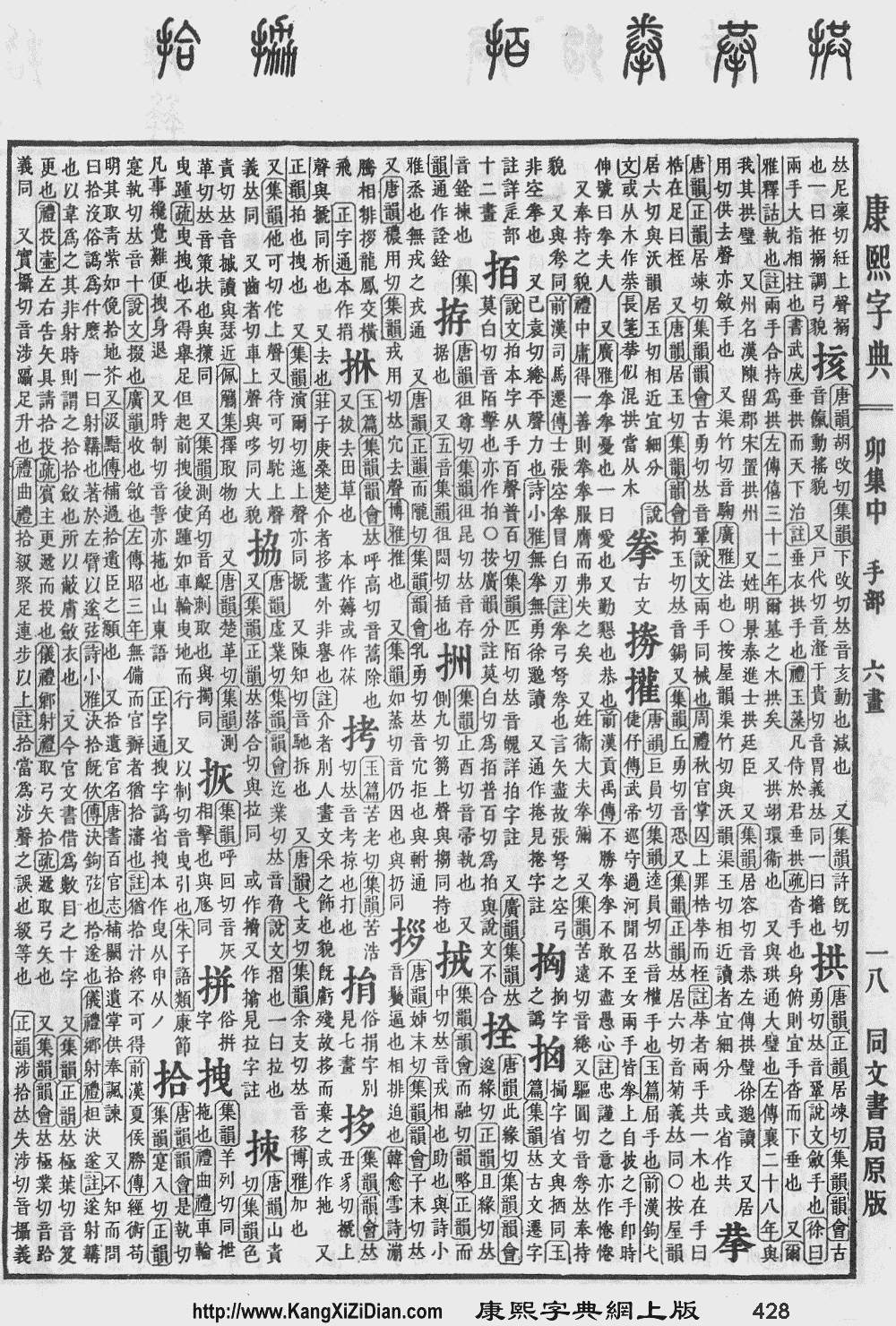
- Kangxi Dictionary: page 428, character 22
- Dai Kanwa Jiten: character 12012
- Dae Jaweon: page 777, character 16
- Hanyu Da Zidian (first edition): volume 3, page 1875, character 8
- Unihan data for U+62FC
Chinese[edit]
Glyph origin[edit]
| Old Chinese | |
|---|---|
| 鵧 | *bi |
| 駢 | *beːn |
| 胼 | *beːn |
| 骿 | *beːn |
| 軿 | *beːn, *beːŋ |
| 賆 | *beːn |
| 跰 | *preŋs, *beːn |
| 恲 | *pʰreŋ |
| 鮩 | *breŋʔ, *beːŋʔ, *biɡ |
| 絣 | *preːŋ |
| 拼 | *preːŋ |
| 迸 | *preːŋs |
| 姘 | *pʰreːŋ, *pʰeːŋ |
| 皏 | *pʰreːŋʔ |
| 併 | *breːŋʔ, *breːŋs, *peŋʔ, *peŋs, *beːŋʔ |
| 并 | *peŋ, *peŋs |
| 栟 | *peŋ |
| 屏 | *peŋ, *peŋʔ, *beːŋ |
| 箳 | *peŋ, *beːŋ |
| 餅 | *peŋʔ |
| 鉼 | *peŋʔ |
| 摒 | *peŋs |
| 庰 | *beŋs |
| 偋 | *beŋs |
| 艵 | *pʰeːŋ |
| 頩 | *pʰeːŋ, *pʰeːŋʔ |
| 竮 | *pʰeːŋ, *beːŋ |
| 瓶 | *beːŋ |
| 缾 | *beːŋ |
| 蛢 | *beːŋ |
| 荓 | *beːŋ |
| 郱 | *beːŋ |
| 洴 | *beːŋ |
| 蓱 | *beːŋ |
Phono-semantic compound (形聲/形声, OC *preːŋ) : semantic 扌 (“hand”) + phonetic 并 (OC *peŋ, *peŋs).
Etymology 1[edit]
| simp. and trad. |
拼 | |
|---|---|---|
| alternative forms | 拚 “to risk one's life” | |
Pronunciation[edit]
Definitions[edit]
拼
- to order; to command
- to accompany; to follow
- to join together; to put together
- to spell (in writing)
- to be ready to risk one's life; to go all out; to disregard
- to enjoy together; to share
- (Hokkien) to fight; to quarrel; to compete
Synonyms[edit]
- (to join together):
- (to enjoy together):
Antonyms[edit]
- (antonym(s) of "to enjoy together"):
Compounds[edit]
- 七拼八湊/七拼八凑
- 三拼音
- 單拼法/单拼法
- 大車拼/大车拼
- 打拼 (dǎpīn)
- 拼刺
- 拼卻/拼却
- 拼合 (pīnhé)
- 拼合版畫/拼合版画
- 拼命 (pīnmìng)
- 拼命三郎 (pīnmìng sānláng)
- 拼圖/拼图 (pīntú)
- 拼字 (pīnzì)
- 拼寫/拼写 (pīnxiě)
- 拼扒
- 拼死 (pīnsǐ)
- 拼法
- 拼湊/拼凑 (pīncòu)
- 拼版 (pīnbǎn)
- 拼生死
- 拼組/拼组
- 拼綴/拼缀
- 拼花地板
- 拼裝/拼装
- 拼裝車/拼装车
- 拼貼/拼贴
- 拼貼藝術/拼贴艺术
- 拼集
- 拼音 (pīnyīn)
- 拼音字母 (pīnyīn zìmǔ)
- 拼音文字 (pīnyīn wénzì)
- 東拼西湊/东拼西凑 (dōngpīnxīcòu)
- 火拼 (huǒpīn)
- 盤/盘 (pán)
- 瞎拼 (xiāpīn)
- 耶魯拼音/耶鲁拼音 (Yēlǔ pīnyīn)
- 血拼 (xuèpīn)
Etymology 2[edit]
| For pronunciation and definitions of 拼 – see 抨 (“to shoot with a catapult; to pat; to beat; etc.”). (This character is a variant form of 抨). |
Etymology 3[edit]
| For pronunciation and definitions of 拼 – see 摒 (“to expel; to cast off; to clean up; to tidy up; etc.”). (This character is a variant form of 摒). |
Etymology 4[edit]
| For pronunciation and definitions of 拼 – see 拚 (“to clap”). (This character is the second-round simplified form of 拚). |
Notes:
|
Japanese[edit]
| Shinjitai | 拼 | |
| Kyūjitai | 拼󠄃 拼+ 󠄃?(Hanyo-Denshi) (Moji_Joho) |
|
| The displayed kanji may be different from the image due to your environment. See here for details. | ||
Kanji[edit]
拼
- to order; to command
- to accompany; to follow
- to join together; to put together
- to spell
- to be ready to risk one's life; to go all out; to disregard
Readings[edit]
Korean[edit]
Hanja[edit]
- This term needs a translation to English. Please help out and add a translation, then remove the text
{{rfdef}}.
Vietnamese[edit]
Han character[edit]
拼: Hán Nôm readings: phanh; bính
- This term needs a translation to English. Please help out and add a translation, then remove the text
{{rfdef}}.
Categories:
- CJK Unified Ideographs block
- Han script characters
- Character boxes with images
- CJK Compatibility Ideographs Supplement block
- Translingual lemmas
- Translingual symbols
- Han phono-semantic compounds
- Middle Chinese lemmas
- Old Chinese lemmas
- Chinese lemmas
- Mandarin lemmas
- Cantonese lemmas
- Hakka lemmas
- Eastern Min lemmas
- Hokkien lemmas
- Teochew lemmas
- Wu lemmas
- Chinese verbs
- Mandarin verbs
- Cantonese verbs
- Hakka verbs
- Eastern Min verbs
- Hokkien verbs
- Teochew verbs
- Wu verbs
- Chinese terms with IPA pronunciation
- Chinese Han characters
- Mandarin terms with usage examples
- Hokkien Chinese
- Chinese variant forms
- Chinese simplified forms
- Intermediate Mandarin
- Chinese characters with nasal coda innovation in standard Mandarin
- Japanese Han characters
- Uncommon kanji
- Japanese kanji with on reading ほう
- Japanese kanji with on reading へい
- Japanese kanji with on reading ひょう
- Japanese kanji with on reading ぴん
- Japanese kanji with kun reading したがう
- Korean lemmas
- Korean Han characters
- Vietnamese lemmas
- Vietnamese Han characters