錞
Jump to navigation
Jump to search
| ||||||||
Translingual[edit]
Han character[edit]
錞 (Kangxi radical 167, 金+8, 16 strokes, cangjie input 金卜口木 (CYRD), four-corner 80147, composition ⿰釒享)
References[edit]
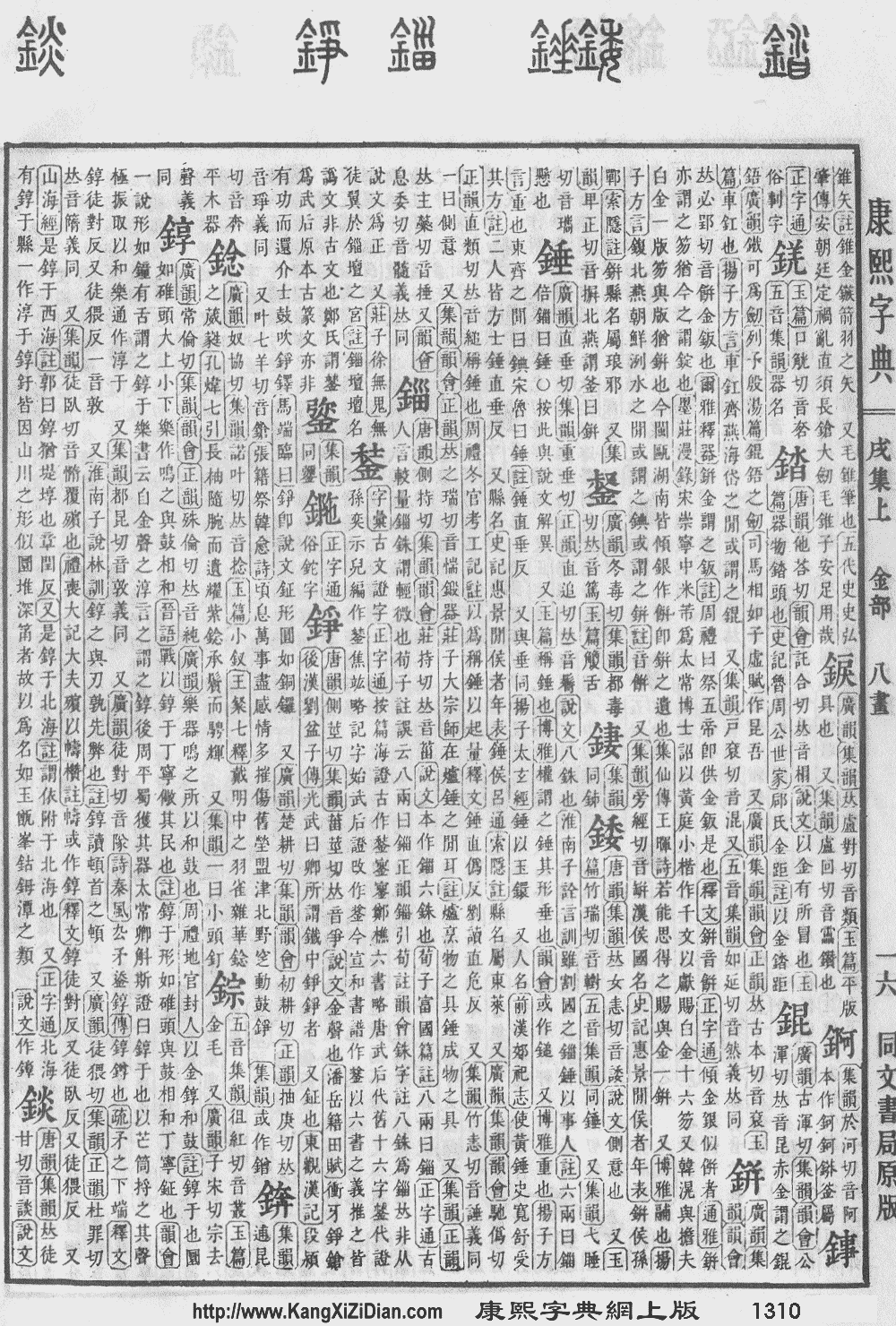
- Kangxi Dictionary: page 1310, character 20
- Dai Kanwa Jiten: character 40557
- Dae Jaweon: page 1812, character 9
- Hanyu Da Zidian (first edition): volume 6, page 4223, character 7
- Unihan data for U+931E
Chinese[edit]
| trad. | 錞 | |
|---|---|---|
| simp. | 𬭚 | |

Glyph origin[edit]
| Old Chinese | |
|---|---|
| 弴 | *tjuː, *tuːn |
| 敦 | *tuːl, *doːn, *tuːn, *tuːns |
| 錞 | *duːlʔ, *duːls, *djun |
| 憝 | *duːls |
| 憞 | *duːls |
| 譈 | *duːls |
| 鐓 | *duːls |
| 鷻 | *doːn |
| 鶉 | *doːn, *djun |
| 惇 | *tuːn, *tjun |
| 墩 | *tuːn |
| 驐 | *tuːn |
| 燉 | *tuːns, *tʰuːn, *duːn |
| 焞 | *tʰuːn, *djun |
| 啍 | *tʰuːn, *duːn |
| 暾 | *tʰuːn |
| 噋 | *tʰuːn, *kʰʷaːɡ |
| 諄 | *tjun, *tjuns |
| 埻 | *tjunʔ, *kʷaːɡ, *kʷreːɡ |
| 稕 | *tjuns |
| 醇 | *djun |
| 淳 | *djun |
| 犉 | *njun |
Pronunciation 1[edit]
Definitions[edit]
錞
- (historical) bronze bell-like cylindrical percussion instrument with a tiger or other animal-shaped handle, often used in conjunction with drums to command troops in war
Compounds[edit]
Pronunciation 2[edit]
Definitions[edit]
錞
Compounds[edit]
References[edit]
- “錞”, in 漢語多功能字庫 (Multi-function Chinese Character Database)[1], 香港中文大學 (the Chinese University of Hong Kong), 2014–
Japanese[edit]
Kanji[edit]
錞
- This term needs a translation to English. Please help out and add a translation, then remove the text
{{rfdef}}.
Readings[edit]
Korean[edit]
Hanja[edit]
錞 • (sun, dae) (hangeul 순, 대, revised sun, dae, McCune–Reischauer sun, tae, Yale swun, tay)
- This term needs a translation to English. Please help out and add a translation, then remove the text
{{rfdef}}.
Vietnamese[edit]
Han character[edit]
- This term needs a translation to English. Please help out and add a translation, then remove the text
{{rfdef}}.
Categories:
- CJK Unified Ideographs block
- Han script characters
- Translingual lemmas
- Translingual symbols
- Middle Chinese lemmas
- Old Chinese lemmas
- Chinese lemmas
- Mandarin lemmas
- Cantonese lemmas
- Hokkien lemmas
- Chinese nouns
- Mandarin nouns
- Cantonese nouns
- Hokkien nouns
- Chinese terms with IPA pronunciation
- Chinese Han characters
- Chinese terms with historical senses
- Chinese terms with obsolete senses
- zh:Musical instruments
- Japanese Han characters
- Uncommon kanji
- Japanese kanji with on reading しゅん
- Japanese kanji with on reading じゅん
- Japanese kanji with on reading とん
- Japanese kanji with on reading たい
- Japanese kanji with on reading ずい
- Korean lemmas
- Korean Han characters
- Vietnamese lemmas
- Vietnamese Han characters