戊
Jump to navigation
Jump to search
| ||||||||
Translingual[edit]
| Stroke order | |||
|---|---|---|---|

| |||
Han character[edit]
戊 (Kangxi radical 62, 戈+1, 5 strokes, cangjie input 戈竹 (IH), four-corner 53200, composition ⿰丿戈)
Derived characters[edit]
- 𡶙, 𢏌, 㧔, 𣳡, 𭸀, 𣆈, 𭩤, 𣬽, 𤇦, 𭷂, 𭸿, 𮁥, 𪾤, 𥍥, 𬗇, 𮊥, 𧉦, 䛋, 龯(𨱆), 𡏜, 𮨹, 𬵇, 𪌙, 𪉠, 𪗥, 𬏡
- 戌, 戍, 成, 𢦓, 𢦡, 𢘱, 𢦲, 咸, 𢦩, 𤬹, 戚, 𢦽, 𭑿, 戚, 𮍏, 𢧒, 𤋆, 𢧦, 𩒃, 𫨵, 𢧓, 𡶔, 茂, 𫁸, 𩂟, 𫈼, 𩬕
References[edit]
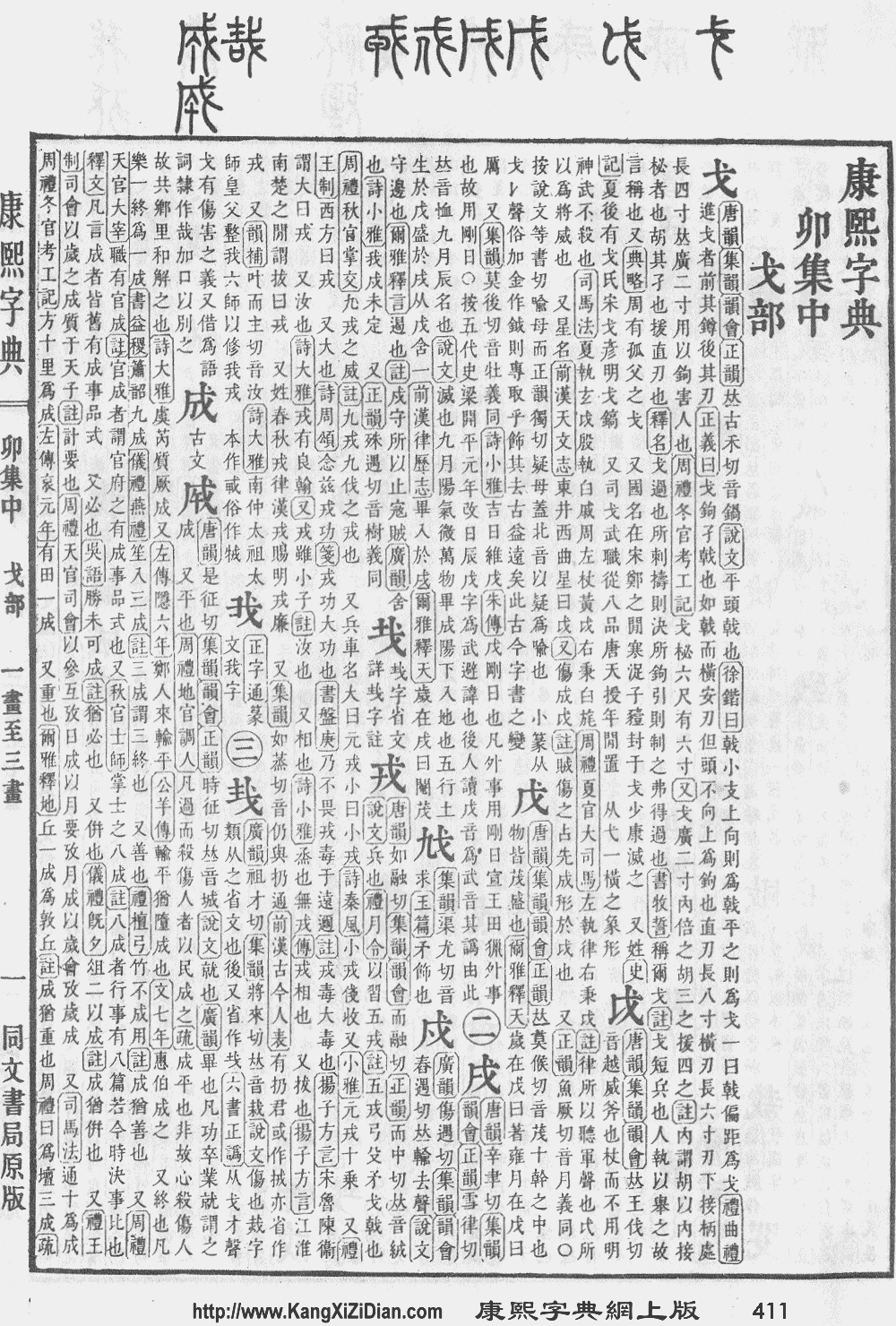
- Kangxi Dictionary: page 411, character 3
- Dai Kanwa Jiten: character 11532
- Dae Jaweon: page 752, character 7
- Hanyu Da Zidian (first edition): volume 2, page 1397, character 4
- Unihan data for U+620A
Chinese[edit]
| simp. and trad. |
戊 | |
|---|---|---|
Glyph origin[edit]
| Historical forms of the character 戊 | |||
|---|---|---|---|
| Shang | Western Zhou | Shuowen Jiezi (compiled in Han) | Liushutong (compiled in Ming) |
| Oracle bone script | Bronze inscriptions | Small seal script | Transcribed ancient scripts |

|

|

|

|
Pronunciation[edit]
Definitions[edit]
戊
- the fifth of the ten heavenly stems
Coordinate terms[edit]
- (Chinese heavenly stems) 天干 (tiāngān); 甲 (jiǎ), 乙 (yǐ), 丙 (bǐng), 丁, 戊 (wù), 己 (jǐ), 庚 (gēng), 辛 (xīn), 壬 (rén), 癸 (guǐ) (Category: zh:Chinese heavenly stems)
Compounds[edit]
Descendants[edit]
- → Zhuang: fouh
References[edit]
- (Min Nan) “Entry #1657”, in 臺灣閩南語常用詞辭典 (overall work in Mandarin and Hokkien), Ministry of Education, R.O.C., 2023.
Japanese[edit]
Kanji[edit]
戊
(“Jinmeiyō” kanji used for names)
- This term needs a translation to English. Please help out and add a translation, then remove the text
{{rfdef}}.
Readings[edit]
Etymology 1[edit]
| Kanji in this term |
|---|
| 戊 |
| ぼ Jinmeiyō |
| kan’yōon |

From Middle Chinese 戊 (muwH).
Pronunciation[edit]
Proper noun[edit]
- the fifth of the ten heavenly stems
Etymology 2[edit]
| Kanji in this term |
|---|
| 戊 |
| つちのえ Jinmeiyō |
| kun’yomi |
土 (Tsuchi, “Earth”, one of the Five Elements) + の (no, attributive marker) + 兄 (e, “elder brother”)
Pronunciation[edit]
Proper noun[edit]
- the fifth of the ten heavenly stems
Korean[edit]
Hanja[edit]
戊 (eumhun 다섯째 천간 무 (daseotjjae cheon'gan mu))
- Hanja form? of 무 (“fifth heavenly stem”).
Vietnamese[edit]
Han character[edit]
- chữ Hán form of Mậu (“fifth of the ten heavenly stems”).
Compounds[edit]
Categories:
- CJK Unified Ideographs block
- Han script characters
- Translingual lemmas
- Translingual symbols
- Han pictograms
- Middle Chinese lemmas
- Old Chinese lemmas
- Chinese lemmas
- Mandarin lemmas
- Sichuanese lemmas
- Cantonese lemmas
- Hakka lemmas
- Eastern Min lemmas
- Hokkien lemmas
- Teochew lemmas
- Wu lemmas
- Chinese nouns
- Mandarin nouns
- Sichuanese nouns
- Cantonese nouns
- Hakka nouns
- Eastern Min nouns
- Hokkien nouns
- Teochew nouns
- Wu nouns
- Chinese terms with IPA pronunciation
- Chinese Han characters
- zh:Chinese heavenly stems
- Japanese Han characters
- Kanji used for names
- Japanese kanji with goon reading む
- Japanese kanji with kan'on reading ぼう
- Japanese kanji with kan'yōon reading ぼ
- Japanese kanji with kun reading つちのえ
- Japanese terms spelled with 戊
- Japanese terms read with on'yomi
- Japanese terms derived from Middle Chinese
- Japanese terms with IPA pronunciation
- Japanese lemmas
- Japanese proper nouns
- Japanese terms with multiple readings
- Japanese terms spelled with jinmeiyō kanji
- Japanese terms written with one Han script character
- Japanese single-kanji terms
- Japanese terms read with kun'yomi
- Japanese compound terms
- Japanese words with multiple readings
- ja:Chinese heavenly stems
- Korean lemmas
- Korean Han characters
- Vietnamese lemmas
- Vietnamese Han characters
- Vietnamese Chữ Hán