朱
Jump to navigation
Jump to search
See also: 硃
| ||||||||
Translingual[edit]
| Stroke order | |||

| |||
Han character[edit]
朱 (Kangxi radical 75, 木+2, 6 strokes, cangjie input 竹十木 (HJD), four-corner 25900, composition ⿰丿未 or ⿻𠂉木)
Derived characters[edit]
- 侏, 诛, 𠙎, 㧣, 咮, 姝, 洙, 邾, 陎, 𠱒, 𡥛, 𡱖, 𤝹, 𨒲, 𪣎, 𪨴, 𫷨, 㦵, 㸡, 䏭, 株, 殊, 珠, 𢼲, 𣂛, 𣆦, 𤈐, 𤔏, 𫾭, 𬆤, 㼡, 硃, 祩, 秼, 铢, 𣥵, 𤶎, 𥅲, 𫁍, 䇬, 䎷, 絑, 茱, 蛛, 袾, 𦐣, 𦐨, 𦧙, 䣷, 誅, 趎, 跦, 𧵺, 銖, 𣗾, 𣘈, 𨾲, 𪳔, 𬹣, 𣙸, 𩊣, 𩳅, 駯, 𩢻, 鮢, 鴸, 𣜱, 𪎡, 𪴄, 𣞊, 𧑤, 𪏿, 鼄, 𣠶
References[edit]
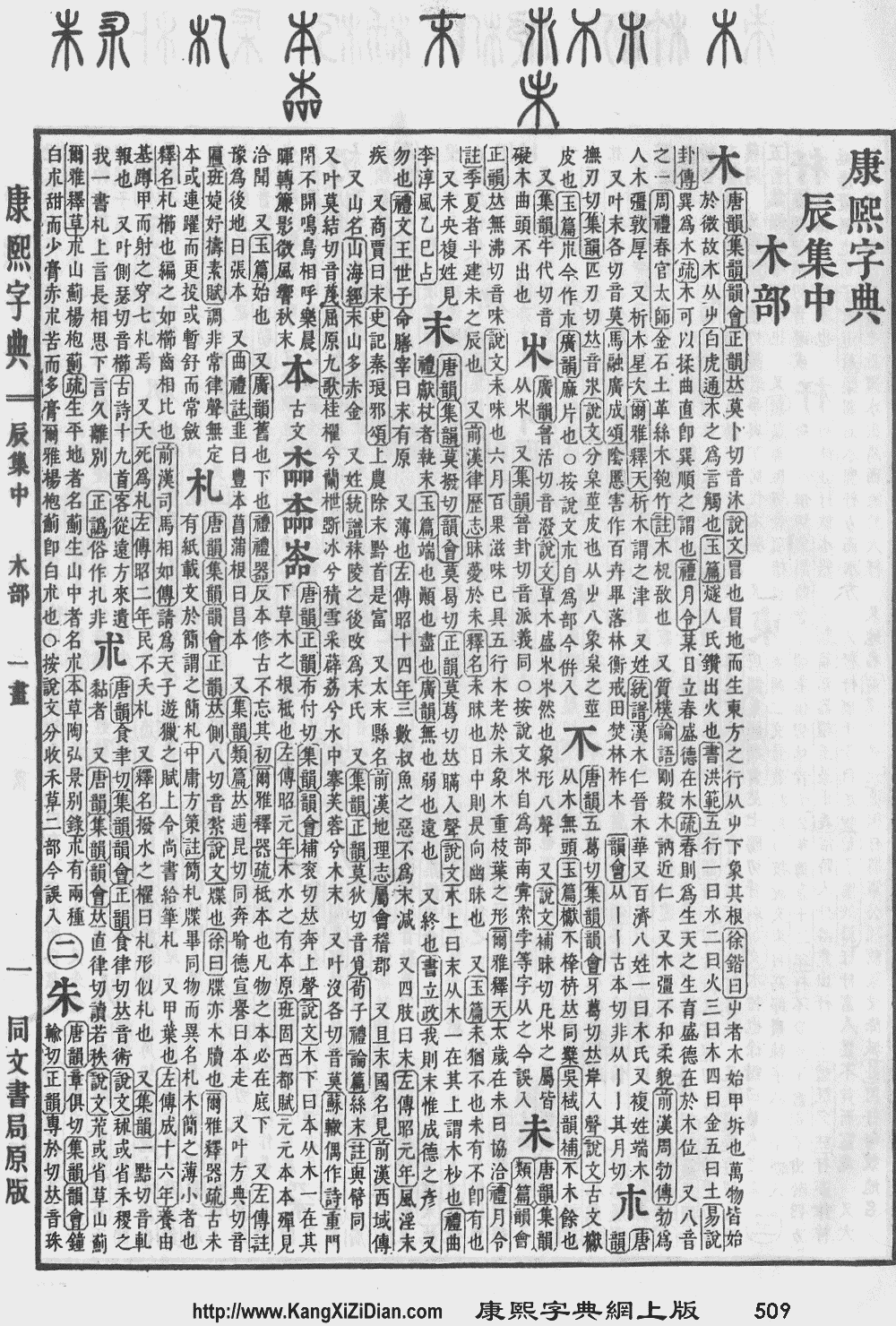
- Kangxi Dictionary: page 509, character 13
- Dai Kanwa Jiten: character 14424
- Dae Jaweon: page 893, character 4
- Hanyu Da Zidian (first edition): volume 2, page 1154, character 3
- Unihan data for U+6731
Chinese[edit]
| trad. | 朱/硃 | |
|---|---|---|
| simp. | 朱 | |
| 硃 - cinnabar | ||
Glyph origin[edit]
| Historical forms of the character 朱 | |||
|---|---|---|---|
| Shang | Western Zhou | Shuowen Jiezi (compiled in Han) | Liushutong (compiled in Ming) |
| Oracle bone script | Bronze inscriptions | Small seal script | Transcribed ancient scripts |

|

|

|

|
Ideogram (指事) : a tree (木) with its center highlighted with an extra dot-like stroke, accentuating the tree's core; contrast 本, 末.
Etymology 1[edit]
Compare Proto-Vietic *tɔh (“red”) (Schuessler, 2007). 赭 (OC *tjaːʔ, “red paint”) may be related.
Pronunciation[edit]
Definitions[edit]
朱
- cinnabar; vermilion
- bright red
- 子曰:「惡紫之奪朱也,惡鄭聲之亂雅樂也,惡利口之覆邦家者。」 [Classical Chinese, trad.]
- From: The Analects of Confucius, c. 475 – 221 BCE, translated based on James Legge's version
- Zǐ yuē: “Wù zǐ zhī duó zhū yě, wù zhèngshēng zhī luàn yǎyuè yě, wù lìkǒu zhī fù bāngjiā zhě.” [Pinyin]
- The Master said, "I hate the manner in which purple takes away the luster of vermilion. I hate the way in which the songs of Zheng confound the music of the Ya. I hate those who with their sharp mouths overthrow kingdoms and families."
子曰:「恶紫之夺朱也,恶郑声之乱雅乐也,恶利口之覆邦家者。」 [Classical Chinese, simp.]
- (Hong Kong Cantonese, triad slang) one
- a surname
- 朱熹 ― Zhū Xī ― Zhu Xi (Song dynasty Neo-Confucian scholar)
- 朱棣文 ― Zhū Dìwén ― Steven Chu (an American physicist and former U.S. Secretary of Energy)
Synonyms[edit]
- (surname): 未撇朱
Descendants[edit]
Compounds[edit]
- 傅粉施朱
- 周程張朱/周程张朱
- 弄粉調朱/弄粉调朱
- 惡紫奪朱/恶紫夺朱
- 搓粉團朱/搓粉团朱
- 搓粉摶朱/搓粉抟朱
- 施朱傅粉
- 朱丹
- 朱光
- 朱印本
- 朱口皓齒/朱口皓齿
- 朱古力 (zhūgǔlì)
- 朱坡埡/朱坡垭
- 朱子學/朱子学 (Zhūzǐxué)
- 朱子家訓/朱子家训
- 朱子語錄/朱子语录
- 朱子語類/朱子语类
- 朱家峪 (Zhūjiāyù)
- 朱實/朱实
- 朱希真
- 朱干玉戚
- 朱弦玉磬
- 朱彭 (Zhūpéng)
- 朱批 (zhūpī)
- 朱提
- 朱文 (zhūwén)
- 朱日和 (Zhūrìhé)
- 朱明
- 朱槿
- 朱標/朱标
- 朱比特 (Zhūbǐtè)
- 朱河 (Zhūhé)
- 朱洪武
- 朱漆 (zhūqī)
- 朱灣/朱湾 (Zhūwān)
- 朱營/朱营 (Zhūyíng)
- 朱王堡
- 朱理安曆/朱理安历
- 朱瓦碧甍
- 朱甍碧瓦
- 朱砂 (zhūshā, “cinnabar”)
- 朱砂符
- 朱筆/朱笔 (zhūbǐ)
- 朱紅/朱红 (zhūhóng)
- 朱紫
- 朱絃/朱弦
- 朱紫難別/朱紫难别
- 朱羲 (zhūxī)
- 朱脣/朱唇
- 朱脣榴齒/朱唇榴齿
- 朱脣皓齒/朱唇皓齿
- 朱脣粉面/朱唇粉面
- 朱華/朱华
- 朱蕉 (zhūjiāo)
- 朱衣 (Zhūyī)
- 朱衣吏
- 朱衣神
- 朱衣點頭/朱衣点头
- 朱記/朱记
- 朱諾/朱诺 (Zhūnuò)
- 朱軒/朱轩
- 朱輪/朱轮
- 朱輪華轂/朱轮华毂
- 朱轓皂蓋/朱𰺜皂盖
- 朱邸
- 朱門/朱门 (zhūmén)
- 朱門繡戶/朱门绣户
- 朱閣/朱阁
- 朱閣青樓/朱阁青楼
- 朱陳/朱陈
- 朱陳之好/朱陈之好
- 朱陸異同/朱陆异同
- 朱雀 (zhūquè)
- 朱雀橋/朱雀桥
- 朱集 (Zhūjí)
- 朱雲折檻/朱云折槛
- 朱頂/朱顶
- 朱顏/朱颜 (zhūyán)
- 朱顏粉面/朱颜粉面
- 朱顏鶴髮/朱颜鹤发
- 朱鳥/朱鸟
- 朱鷺/朱鹭 (zhūlù)
- 朱黃/朱黄
- 朱墨
- 朱墨本
- 朱墨爛然/朱墨烂然
- 滿臉濺朱/满脸溅朱
- 琴斷朱弦/琴断朱弦
- 畫閣朱樓/画阁朱楼
- 白髮朱顏/白发朱颜
- 皓齒朱脣/皓齿朱唇
- 看朱成碧
- 碧瓦朱甍
- 程朱
- 紆朱懷金/纡朱怀金
- 紅紫亂朱/红紫乱朱
- 綠鬢朱顏/绿鬓朱颜
- 繡衣朱履/绣衣朱履
- 脣如塗朱/唇如涂朱
- 西朱範/西朱范 (Xīzhūfàn)
- 近朱近墨
- 銀朱/银朱
Etymology 2[edit]
Pronunciation[edit]
Definitions[edit]
朱
- Only used in 朱提 (Shūshí).
Etymology 3[edit]
Pronunciation[edit]
Definitions[edit]
朱
- (Hong Kong Cantonese) Short for 朱古力.
Japanese[edit]
Kanji[edit]
朱
Readings[edit]
- Go-on: す (su)
- Kan-on: しゅ (shu, Jōyō)←しゆ (syu, historical)
- Kun: あか (aka, 朱); あき (aki, 朱); あけ (ake, 朱)
- Nanori: あかね (akane)
Etymology 1[edit]
| Kanji in this term |
|---|
| 朱 |
| あけ Grade: S |
| kun’yomi |
Noun[edit]
Etymology 2[edit]
| Kanji in this term |
|---|
| 朱 |
| あか Grade: S |
| kun’yomi |
| For pronunciation and definitions of 朱 – see the following entry. | ||
| ||
| (This term, 朱, is an alternative spelling of the above term.) |
Etymology 3[edit]
Noun[edit]
| Kanji in this term |
|---|
| 朱 |
| しゅ Grade: S |
| kan’on |
- Abbreviation of 朱色 (“vermilion”).
Korean[edit]
Hanja[edit]
- Hanja form? of 주 (“vermillion, cinnabar”).
Vietnamese[edit]
Han character[edit]
朱: Hán Nôm readings: cho, chẩu, chõ, Chu, chau, châu, choa
- This term needs a translation to English. Please help out and add a translation, then remove the text
{{rfdef}}.
Categories:
- CJK Unified Ideographs block
- Han script characters
- Translingual lemmas
- Translingual symbols
- Han ideograms
- Cantonese terms with audio links
- Middle Chinese lemmas
- Old Chinese lemmas
- Chinese lemmas
- Mandarin lemmas
- Cantonese lemmas
- Taishanese lemmas
- Gan lemmas
- Hakka lemmas
- Jin lemmas
- Eastern Min lemmas
- Hokkien lemmas
- Teochew lemmas
- Wu lemmas
- Chinese nouns
- Mandarin nouns
- Cantonese nouns
- Taishanese nouns
- Gan nouns
- Hakka nouns
- Jin nouns
- Eastern Min nouns
- Hokkien nouns
- Teochew nouns
- Wu nouns
- Chinese proper nouns
- Mandarin proper nouns
- Cantonese proper nouns
- Taishanese proper nouns
- Gan proper nouns
- Hakka proper nouns
- Jin proper nouns
- Eastern Min proper nouns
- Hokkien proper nouns
- Teochew proper nouns
- Wu proper nouns
- Chinese terms with IPA pronunciation
- Chinese Han characters
- Mandarin terms with usage examples
- Literary Chinese terms with quotations
- Hong Kong Cantonese
- Chinese slang
- Chinese surnames
- Mandarin terms with multiple pronunciations
- Chinese short forms
- Cantonese terms with collocations
- Japanese Han characters
- Common kanji
- Japanese kanji with goon reading す
- Japanese kanji with kan'on reading しゅ
- Japanese kanji with historical kan'on reading しゆ
- Japanese kanji with kun reading あか
- Japanese kanji with kun reading あき
- Japanese kanji with kun reading あけ
- Japanese kanji with nanori reading あかね
- Japanese terms spelled with 朱 read as あけ
- Japanese terms read with kun'yomi
- Japanese lemmas
- Japanese nouns
- Japanese terms with multiple readings
- Japanese terms spelled with secondary school kanji
- Japanese terms written with one Han script character
- Japanese terms spelled with 朱
- Japanese single-kanji terms
- Japanese terms spelled with 朱 read as あか
- Japanese prefixes
- Japanese terms spelled with 朱 read as しゅ
- Japanese terms read with on'yomi
- Japanese abbreviations
- ja:Reds
- Korean lemmas
- Korean Han characters
- Vietnamese lemmas
- Vietnamese Han characters