樹
Jump to navigation
Jump to search
See also: 树
| ||||||||
Translingual[edit]
Han character[edit]

樹 (Kangxi radical 75, 木+12, 16 strokes, cangjie input 木土廿戈 (DGTI), four-corner 44900, composition ⿰木尌)
References[edit]
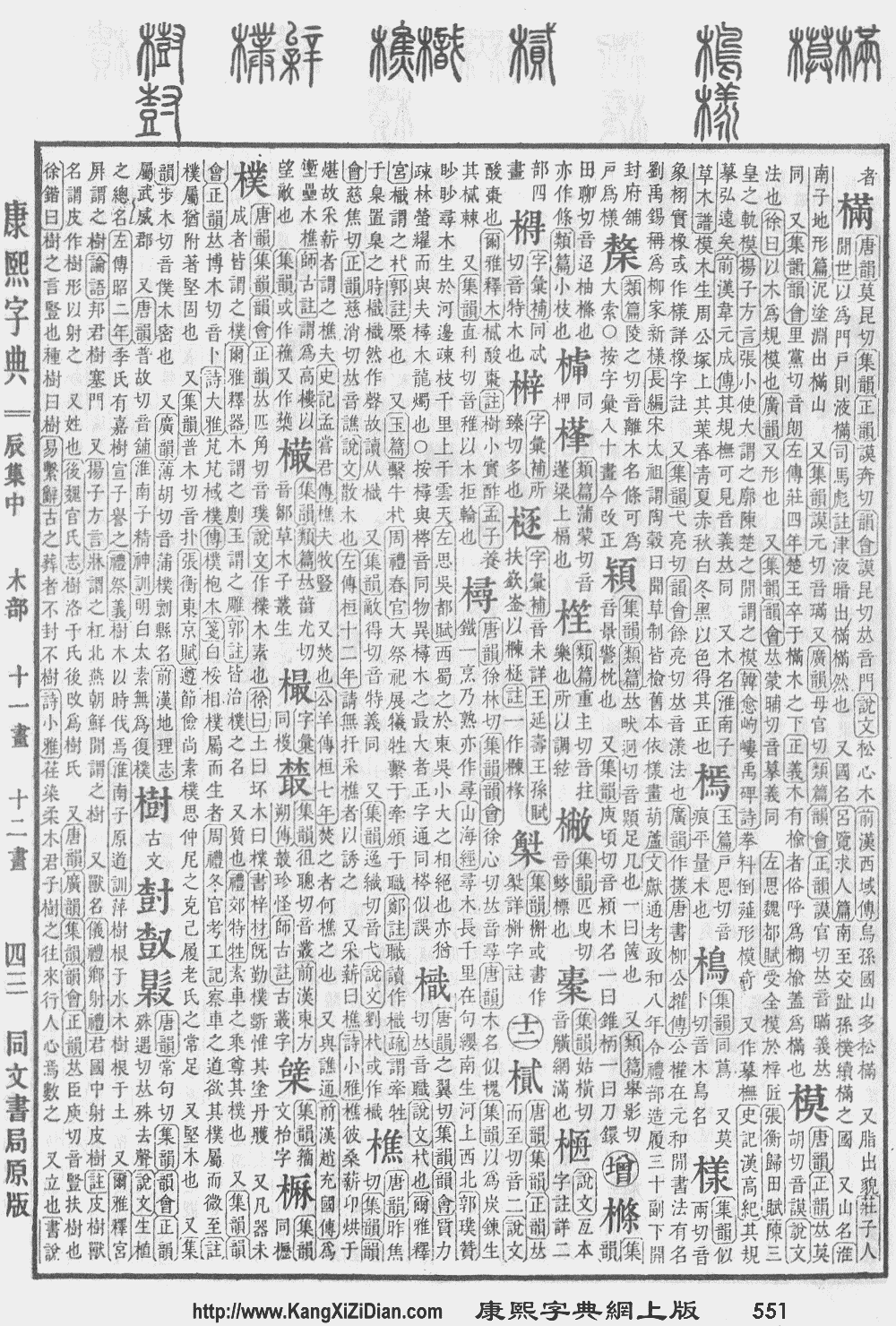
- Kangxi Dictionary: page 551, character 29
- Dai Kanwa Jiten: character 15496
- Dae Jaweon: page 940, character 5
- Hanyu Da Zidian (first edition): volume 2, page 1287, character 4
- Unihan data for U+6A39
Chinese[edit]
| trad. | 樹 | |
|---|---|---|
| simp. | 树 | |
| alternative forms | ||

Glyph origin[edit]
| Historical forms of the character 樹 | |
|---|---|
| Shuowen Jiezi (compiled in Han) | |
| Shizhoupian script | Small seal script |

|

|
Phono-semantic compound (形聲/形声, OC *djoʔ, *djos) and ideogrammic compound (會意/会意) : semantic 木 (“tree”) + phonetic 尌 (OC *djos, “a hand planting a tree”).
Originally written 尌, see there for more.
Etymology[edit]
Area word (Schuessler, 2007): Mizo tuh (“to plant, to sow”), Khmer ដុះ (doh, “to grow, to bud”). Starostin compares it with Tibetan གདོས (gdos), གདོས་པ (gdos pa, “mast”) and Burmese ထူ (htu, “to erect (a post), to raise (a flag)”).
Related to 豎 (OC *djoʔ, “to erect; to make vertical”).
Pronunciation[edit]
.jpg)
Definitions[edit]
樹
- to plant; to place upright; to cultivate
- See also: 豎
- 一年之計,莫如樹穀;十年之計,莫如樹木;終身之計,莫如樹人。
- From: Guanzi, 5th century BCE to 220 CE
- Yīnián zhī jì, mò rú shùgǔ; shínián zhī jì, mò rú shùmù; zhōngshēn zhī jì, mò rú shùrén.
Yīshù yīhuò zhě, gǔ yě; yīshù shíhuò zhě, mù yě; yīshù bǎihuò zhě, rén yě. [Pinyin] - For one-year plans, nothing like planting grains; for ten-year plans, nothing like planting trees; for lifetime plans, nothing like planting people.
Grains, once planted, yield only one harvest; trees, once planted, yield ten times the harvest; people, once planted, yield a hundred times the harvest.
一樹一穫者,穀也;一樹十穫者,木也;一樹百穫者,人也。 [Classical Chinese, trad.]
一年之计,莫如树谷;十年之计,莫如树木;终身之计,莫如树人。
一树一获者,谷也;一树十获者,木也;一树百获者,人也。 [Classical Chinese, simp.]
- to set up; to establish
- tree (Classifier: 棵 m w; 株 m; 樖 c; 叢/丛 mn; 頭/头 h; 蔸 md)
- 在我的後園,可以看見牆外有兩株樹,一株是棗樹,還有一株也是棗樹。 [MSC, trad.]
- From: 1924, Lu Xun, “Autumn Night”, in Wild Grass (English translation based on one by Yang Xianyi and Gladys Yang)
- Zài wǒ de hòuyuán, kěyǐ kànjiàn qiáng wài yǒu liǎng zhū shù, yī zhū shì zǎoshù, háiyǒu yī zhū yě shì zǎoshù. [Pinyin]
- Behind the wall of my backyard you can see two trees: one is a jujube tree, the other is also a jujube tree.
在我的后园,可以看见墙外有两株树,一株是枣树,还有一株也是枣树。 [MSC, simp.]
- (literary) Classifier for trees.
- (graph theory) tree
- a surname
Synonyms[edit]
Dialectal synonyms of 樹 (“tree”) [map]
- (to cultivate):
Compounds[edit]
- 一樹百穫/一树百获
- 三珠樹/三珠树
- 不死樹/不死树
- 乳樹/乳树
- 仙樹/仙树
- 公孫樹/公孙树 (gōngsūnshù)
- 刀山劍樹/刀山剑树
- 別樹一幟/别树一帜 (biéshùyīzhì)
- 劍樹刀山/剑树刀山
- 合成樹脂/合成树脂
- 周樹人/周树人
- 因樹為屋/因树为屋
- 墳樹/坟树
- 大柳樹/大柳树 (Dàliǔshù)
- 大楊樹/大杨树 (Dàyángshù)
- 大樹/大树 (dàshù)
- 大樹將軍/大树将军
- 奇樹/奇树
- 娑羅樹/娑罗树 (suōluóshù)
- 安息香樹/安息香树
- 封樹/封树
- 建樹/建树 (jiànshù)
- 愛樹/爱树
- 拔樹尋根/拔树寻根
- 拔樹撼山/拔树撼山
- 挾朋樹黨/挟朋树党
- 採樹種/采树种
- 搖錢樹/摇钱树 (yáoqiánshù)
- 撼山拔樹/撼山拔树
- 撼樹蚍蜉/撼树蚍蜉
- 春樹暮雲/春树暮云
- 暮雲春樹/暮云春树
- 月桂樹/月桂树 (yuèguìshù)
- 果樹/果树 (guǒshù)
- 松樹/松树 (sōngshù)
- 松樹灣/松树湾 (Sōngshùwān)
- 林無靜樹/林无静树
- 柞樹/柞树
- 柏樹/柏树 (bǎishù)
- 柳樹/柳树 (liǔshù)
- 枯樹生華/枯树生华
- 柳樹𨟠/柳树𨟠 (Liǔshùquān)
- 枯樹開花/枯树开花
- 桉樹/桉树 (ānshù)
- 桑樹/桑树 (sāngshù)
- 桂樹/桂树
- 梨樹/梨树 (líshù)
- 植樹/植树 (zhíshù)
- 植樹節/植树节
- 楓樹/枫树 (fēngshù)
- 榆樹/榆树 (yúshù)
- 楂樹坪/楂树坪 (Zhāshùpíng)
- 楊樹達/杨树达
- 榕樹/榕树 (róngshù)
- 槐樹/槐树 (huáishù)
- 標樹/标树
- 樹上開花/树上开花 (shùshàngkāihuā)
- 樹人/树人 (shùrén)
- 樹倒根摧/树倒根摧
- 樹功揚名/树功扬名
- 樹功立業/树功立业 (shùgōng lìyè)
- 樹叢/树丛 (shùcóng)
- 樹墩/树墩 (shùdūn)
- 樹大招風/树大招风 (shùdàzhāofēng)
- 樹大有枯枝/树大有枯枝 (shù dà yǒu kūzhī)
- 樹子/树子
- 樹尾/树尾 (chéu-muōi)
- 樹幹/树干 (shùgàn)
- 樹德務滋/树德务滋
- 樹怨/树怨
- 樹恩/树恩 (shù'ēn)
- 樹懶/树懒 (shùlǎn)
- 樹掛/树挂
- 樹敵/树敌 (shùdí)
- 樹木/树木 (shùmù)
- 樹本/树本
- 樹杈/树杈 (shùchà)
- 樹杞/树杞
- 樹枝/树枝 (shùzhī)
- 樹林/树林 (shùlín)
- 樹杪/树杪
- 樹根/树根 (shùgēn)
- 樹梢/树梢 (shùshāo)
- 樹梃/树梃
- 樹椏/树桠 (chhiū-oe)
- 樹樁/树桩 (shùzhuāng)
- 橡樹/橡树 (xiàngshù)
- 樹涼兒/树凉儿
- 樹猶如此/树犹如此
- 樹皮/树皮 (shùpí)
- 橡皮樹/橡皮树
- 樹碑立傳/树碑立传
- 樹立/树立 (shùlì)
- 樹置/树置
- 樹脂/树脂 (shùzhī)
- 樹膠/树胶 (shùjiāo)
- 橡膠樹/橡胶树 (xiàngjiāoshù)
- 樹興/树兴
- 樹苗/树苗 (shùmiáo)
- 樹莓子/树莓子
- 樹葉/树叶 (shùyè)
- 樹蔭/树荫
- 樹薯/树薯 (shùshǔ)
- 樹藝/树艺
- 樹蛙/树蛙 (shùwā)
- 樹蟲子/树虫子
- 樹行子/树行子
- 樹陰/树阴 (shùyīn)
- 樹頭/树头 (shùtóu)
- 樹高招風/树高招风
- 樹黨/树党
- 樹鼩/树鼩
- 樹齡/树龄
- 欒樹/栾树
- 欖仁樹/榄仁树
- 氟樹脂/氟树脂
- 水晶樹/水晶树 (shuǐjīngshù)
- 水蠟樹/水蜡树
- 江雲渭樹/江云渭树
- 決策樹/决策树 (juécèshù)
- 漆樹/漆树 (qīshù)
- 火樹琪花/火树琪花
- 火樹銀花/火树银花 (huǒshùyínhuā)
- 煙樹/烟树
- 爬樹/爬树 (páshù)
- 牌錢樹/牌钱树
- 猛樹/猛树
- 獨樹一幟/独树一帜
- 獨樹一格/独树一格
- 玉樹/玉树 (yùshù)
- 玉樹臨風/玉树临风 (yùshùlínfēng)
- 珊瑚樹/珊瑚树
- 琪樹/琪树
- 瑤林瓊樹/瑶林琼树
- 瓊枝玉樹/琼枝玉树
- 瓊林玉樹/琼林玉树
- 瓶刷子樹/瓶刷子树
- 白蠟樹/白蜡树 (báilàshù)
- 白辛樹/白辛树
- 百年樹人/百年树人 (bǎiniánshùrén)
- 相思樹/相思树 (xiāngsīshù)
- 碧樹/碧树
- 祇樹有緣/祇树有缘
- 空桐樹/空桐树
- 筆筒樹/笔筒树
- 精英樹/精英树
- 糙葉樹/糙叶树
- 紅樹/红树 (hóngshù)
- 紅樹林/红树林 (hóngshùlín)
- 美人樹/美人树
- 老樹枯柴/老树枯柴
- 老樹盤根/老树盘根
- 耶誕樹/耶诞树 (yēdànshù)
- 聖誕樹/圣诞树 (shèngdànshù)
- 臘腸樹/腊肠树
- 芳樹/芳树
- 花生樹/花生树
- 芝蘭玉樹/芝兰玉树
- 茂樹/茂树 (màoshù)
- 英雄樹/英雄树
- 茶樹/茶树 (cháshù)
- 菩提樹/菩提树 (pútíshù)
- 菴羅樹園/庵罗树园
- 萱花椿樹/萱花椿树
- 落葉果樹/落叶果树
- 落葉樹/落叶树 (luòyèshù)
- 蕈樹/蕈树
- 蚍蜉撼樹/蚍蜉撼树 (pífúhànshù)
- 螞蟻上樹/蚂蚁上树 (mǎyǐshàngshù)
- 行道樹/行道树
- 谷樹皮/谷树皮
- 貝多樹/贝多树
- 貝葉樹/贝叶树 (bèiyèshù)
- 路樹/路树
- 連枝樹/连枝树
- 通條樹/通条树
- 道樹/道树
- 金雞納樹/金鸡纳树
- 針葉樹/针叶树 (zhēnyèshù)
- 錢樹子/钱树子
- 鐵樹/铁树 (tiěshù)
- 鐵樹開花/铁树开花 (tiě shùkāi huā)
- 長青樹/长青树
- 闊葉樹/阔叶树
- 露兜樹/露兜树
- 韋叡樹麾/韦睿树麾
- 風樹之悲/风树之悲
- 風樹之感/风树之感
- 高樹/高树 (Gāoshù)
- 高自標樹/高自标树
- 麵包樹/面包树 (miànbāoshù)
- 黛樹/黛树
- 龍樹/龙树 (Lóngshù)
- 龍腦樹/龙脑树
- 龍血樹/龙血树
References[edit]
- “樹”, in 漢語多功能字庫 (Multi-function Chinese Character Database)[1], 香港中文大學 (the Chinese University of Hong Kong), 2014–
Japanese[edit]
Kanji[edit]
樹
Readings[edit]
- Go-on: じゅ (ju, Jōyō)←じゆ (zyu, historical); ず (zu)
- Kan-on: しゅ (shu)←しゆ (syu, historical)
- Kun: うえる (ueru, 樹える); き (ki, 樹); たてる (tateru, 樹てる)
Etymology 1[edit]
| Kanji in this term |
|---|
| 樹 |
| き Grade: 6 |
| kun’yomi |
| For pronunciation and definitions of 樹 – see the following entry. | ||
| ||
| (This term, 樹, is an alternative spelling (uncommon) of the above term.) |
Etymology 2[edit]
Proper noun[edit]
- a male given name
Korean[edit]
Etymology[edit]
(This etymology is missing or incomplete. Please add to it, or discuss it at the Etymology scriptorium. Particularly: “Middle Korean readings, if any”)
Pronunciation[edit]
- (SK Standard/Seoul) IPA(key): [sʰu]
- Phonetic hangul: [수]
Hanja[edit]

Vietnamese[edit]
Han character[edit]
- This term needs a translation to English. Please help out and add a translation, then remove the text
{{rfdef}}.
Categories:
- CJK Unified Ideographs block
- Han script characters
- Translingual lemmas
- Translingual symbols
- Han phono-semantic compounds
- Han ideogrammic compounds
- Mandarin terms with audio links
- Cantonese terms with audio links
- Middle Chinese lemmas
- Old Chinese lemmas
- Chinese lemmas
- Mandarin lemmas
- Sichuanese lemmas
- Dungan lemmas
- Cantonese lemmas
- Taishanese lemmas
- Gan lemmas
- Hakka lemmas
- Jin lemmas
- Northern Min lemmas
- Eastern Min lemmas
- Hokkien lemmas
- Teochew lemmas
- Wu lemmas
- Xiang lemmas
- Chinese nouns
- Mandarin nouns
- Sichuanese nouns
- Dungan nouns
- Cantonese nouns
- Taishanese nouns
- Gan nouns
- Hakka nouns
- Jin nouns
- Northern Min nouns
- Eastern Min nouns
- Hokkien nouns
- Teochew nouns
- Wu nouns
- Xiang nouns
- Chinese proper nouns
- Mandarin proper nouns
- Sichuanese proper nouns
- Dungan proper nouns
- Cantonese proper nouns
- Taishanese proper nouns
- Gan proper nouns
- Hakka proper nouns
- Jin proper nouns
- Northern Min proper nouns
- Eastern Min proper nouns
- Hokkien proper nouns
- Teochew proper nouns
- Wu proper nouns
- Xiang proper nouns
- Chinese verbs
- Mandarin verbs
- Sichuanese verbs
- Dungan verbs
- Cantonese verbs
- Taishanese verbs
- Gan verbs
- Hakka verbs
- Jin verbs
- Northern Min verbs
- Eastern Min verbs
- Hokkien verbs
- Teochew verbs
- Wu verbs
- Xiang verbs
- Chinese terms with IPA pronunciation
- Chinese Han characters
- Literary Chinese terms with quotations
- Mandarin terms with usage examples
- Chinese nouns classified by 棵
- Chinese nouns classified by 株
- Chinese nouns classified by 樖
- Chinese nouns classified by 叢/丛
- Chinese nouns classified by 頭/头
- Chinese nouns classified by 蔸
- Mandarin terms with quotations
- Chinese literary terms
- zh:Graph theory
- Chinese surnames
- Beginning Mandarin
- zh:Trees
- Japanese Han characters
- Grade 6 kanji
- Japanese kanji with goon reading じゅ
- Japanese kanji with historical goon reading じゆ
- Japanese kanji with goon reading ず
- Japanese kanji with kan'on reading しゅ
- Japanese kanji with historical kan'on reading しゆ
- Japanese kanji with kun reading う-える
- Japanese kanji with kun reading き
- Japanese kanji with kun reading た-てる
- Japanese terms spelled with 樹 read as き
- Japanese terms read with kun'yomi
- Japanese nouns
- Japanese lemmas
- Japanese terms spelled with sixth grade kanji
- Japanese terms written with one Han script character
- Japanese terms spelled with 樹
- Japanese single-kanji terms
- Japanese terms with uncommon senses
- Japanese proper nouns
- Japanese terms with multiple readings
- Japanese given names
- Japanese male given names
- Korean lemmas
- Korean Han characters
- Vietnamese lemmas
- Vietnamese Han characters