吟
Jump to navigation
Jump to search
See also: 呤
| ||||||||
Translingual[edit]
Han character[edit]
吟 (Kangxi radical 30, 口+4, 7 strokes, cangjie input 口人戈弓 (ROIN), four-corner 68027, composition ⿰口今)
Derived characters[edit]
References[edit]
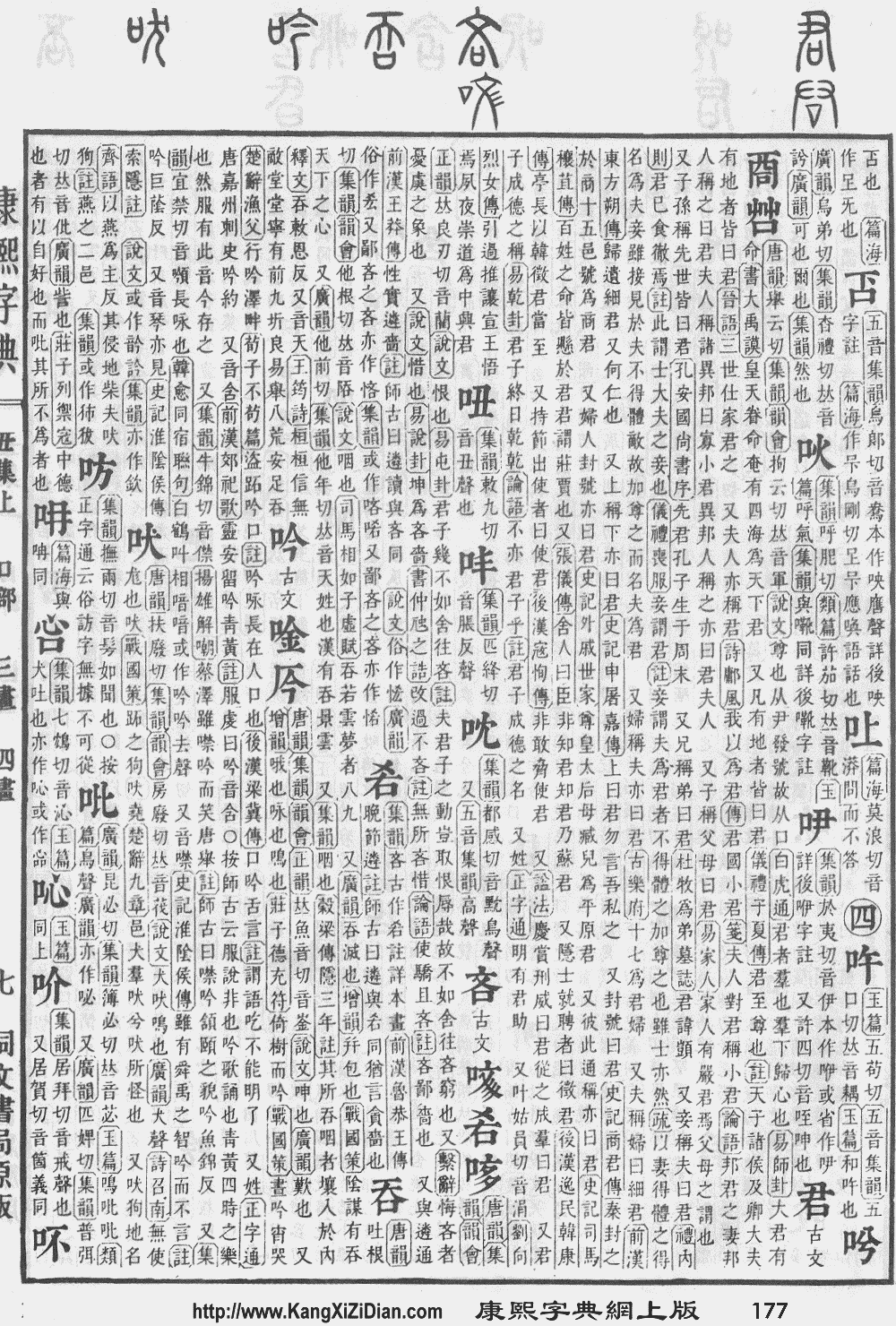
- Kangxi Dictionary: page 177, character 19
- Dai Kanwa Jiten: character 3330
- Dae Jaweon: page 395, character 3
- Hanyu Da Zidian (first edition): volume 1, page 591, character 10
- Unihan data for U+541F
Chinese[edit]
| trad. | 吟 | |
|---|---|---|
| simp. # | 吟 | |
| alternative forms | 唫 訡 噖 䪩 㕂 | |
Glyph origin[edit]
| Historical forms of the character 吟 | |
|---|---|
| Shuowen Jiezi (compiled in Han) | Liushutong (compiled in Ming) |
| Small seal script | Transcribed ancient scripts |

|

|
| Old Chinese | |
|---|---|
| 貪 | *kʰl'uːm |
| 嗿 | *l̥ʰuːmʔ |
| 僋 | *l̥ʰuːms, *luːms |
| 酓 | *qʰɯːm, *qlamʔ, *qlɯːms |
| 馠 | *qʰɯːm |
| 谽 | *qʰɯːm |
| 唅 | *qʰɯːm, *ɡɯːms |
| 含 | *ɡɯːm |
| 肣 | *ɡɯːm, *ɡɯːmʔ |
| 頷 | *ɡɯːm, *ɡɯːmʔ |
| 筨 | *ɡɯːm |
| 梒 | *ɡɯːm |
| 鋡 | *ɡɯːm |
| 莟 | *ɡɯːmʔ, *ɡɯːms |
| 琀 | *ɡɯːms |
| 浛 | *ɡɯːms |
| 盦 | *qɯːm, *qaːb |
| 韽 | *qɯːm, *qrɯːms |
| 玪 | *krɯːm |
| 妗 | *qʰrɯːm, *kʰjam, *qʰlɯːm, *ɡrɯms |
| 欦 | *qʰrɯːmʔ, *qʰram, *kʰlam, *kʰlamʔ, *qʰlɯːm |
| 黔 | *ɡram, *ɡrɯm |
| 鈐 | *ɡram |
| 鳹 | *ɡram |
| 雂 | *ɡram, *ɡrɯm |
| 念 | *nɯːms |
| 梣 | *sɡɯm, *sɡrɯm |
| 枔 | *sɢrɯm |
| 岑 | *sɡrɯm |
| 笒 | *sɡrɯm, *ɡrɯms |
| 涔 | *sɡrɯm |
| 侺 | *ɡjɯms |
| 今 | *krɯm |
| 黅 | *krɯm |
| 衿 | *krɯm |
| 衾 | *kʰrɯm |
| 坅 | *kʰrɯmʔ |
| 搇 | *kʰrɯms |
| 琴 | *ɡrɯm |
| 禽 | *ɡrɯm |
| 芩 | *ɡrɯm |
| 庈 | *ɡrɯm |
| 耹 | *ɡrɯm |
| 靲 | *ɡrɯm |
| 擒 | *ɡrɯm |
| 檎 | *ɡrɯm |
| 紟 | *ɡrɯms |
| 吟 | *ŋɡrɯm, *ŋɡrɯms |
| 訡 | *ŋɡrɯm |
| 廞 | *qʰrɯm, *qʰrɯmʔ |
| 陰 | *qrɯm |
| 霠 | |
| 飲 | *qrɯmʔ, *qrɯms |
| 蔭 | *qrɯms |
| 廕 | *qrɯms |
| 矜 | *ɡrɯn, *ɡɯn, *kɯŋ |
Phono-semantic compound (形聲/形声, OC *ŋɡrɯm, *ŋɡrɯms) : semantic 口 + phonetic 今 (OC *krɯm).
Pronunciation[edit]
Definitions[edit]
吟
Compounds[edit]
- 低吟 (dīyín)
- 匣裡龍吟/匣里龙吟
- 叉手吟
- 吟吟沉沉
- 吟味 (yínwèi)
- 吟哦 (yín'é)
- 吟唱 (yínchàng)
- 吟嘯/吟啸
- 吟壇/吟坛
- 吟沉
- 吟猱
- 吟社
- 吟籟/吟籁
- 吟蛩
- 吟詠/吟咏 (yínyǒng)
- 吟詠性情/吟咏性情
- 吟詠情性/吟咏情性
- 吟詩/吟诗 (yínshī)
- 吟詩作對/吟诗作对 (yínshī zuò duì)
- 吟誦/吟诵 (yínsòng)
- 吟遊詩人/吟游诗人 (yínyóushīrén)
- 吟風弄月/吟风弄月
- 吟風詠月/吟风咏月
- 呻吟 (shēnyín)
- 哀吟
- 噤吟
- 擁鼻吟/拥鼻吟
- 梁父吟
- 歌吟
- 沉吟 (chényín)
- 沉吟章句
- 清吟小班
- 清謳微吟/清讴微吟
- 無病呻吟/无病呻吟 (wúbìngshēnyín)
- 狂吟老監/狂吟老监
- 獨吟/独吟
- 白頭吟/白头吟
- 笑吟吟 (xiàoyínyín)
- 莊舄越吟/庄舄越吟
- 虎嘯龍吟/虎啸龙吟
- 蛙鼓蟲吟/蛙鼓虫吟
- 行吟
- 行吟坐詠/行吟坐咏
- 謳吟/讴吟
- 返吟復吟/返吟复吟
- 遊子吟/游子吟
- 長吟/长吟
- 龍吟/龙吟
- 龍吟虎嘯/龙吟虎啸
References[edit]
- “吟”, in 漢語多功能字庫 (Multi-function Chinese Character Database)[1], 香港中文大學 (the Chinese University of Hong Kong), 2014–
Japanese[edit]
Kanji[edit]
吟
- This term needs a translation to English. Please help out and add a translation, then remove the text
{{rfdef}}.
Readings[edit]
- Go-on: ごん (gon)←ごん (gon, historical)←ごむ (gomu, ancient)
- Kan-on: ぎん (gin, Jōyō)←ぎん (gin, historical)←ぎむ (gimu, ancient)
- On: きん (kin); こん (kon)
- Kun: うたう (utau, 吟う)←うたふ (utafu, 吟ふ, historical); なく (naku, 吟く); ぎんじる (ginjiru, 吟じる)
Korean[edit]
Etymology[edit]
(This etymology is missing or incomplete. Please add to it, or discuss it at the Etymology scriptorium. Particularly: “Middle Korean readings, if any”)
Pronunciation[edit]
- (SK Standard/Seoul) IPA(key): [ɯm]
- Phonetic hangul: [음]
Hanja[edit]

吟 • (eum) (hangeul 음, revised eum, McCune–Reischauer ŭm)
- This term needs a translation to English. Please help out and add a translation, then remove the text
{{rfdef}}.
Tày[edit]
Han character[edit]
吟 (transliteration needed)
References[edit]
- Lục Văn Pảo, Hoàng Tuấn Nam (2003) Hoàng Triều Ân, editor, Từ điển chữ Nôm Tày [A Dictionary of (chữ) Nôm Tày][2] (in Vietnamese), Hanoi: Nhà xuất bản Khoa học Xã hội
Vietnamese[edit]
Han character[edit]
吟: Hán Việt readings: ngâm (
吟: Nôm readings: ngẫm[1][2][3][4], ngậm[1][2][3][4], ngâm[1][2][3], cầm[1][2], ngắm[1][3], gầm[1][3], gặm[3][4], gẫm[3][4], ngăm[3][4], ngăn[3][4], câm[1], căm[1], cằm[1], ngầm[1], ngẩm[3], ngợm[3]
References[edit]
Categories:
- CJK Unified Ideographs block
- Han script characters
- Translingual lemmas
- Translingual symbols
- Han phono-semantic compounds
- Middle Chinese lemmas
- Old Chinese lemmas
- Chinese lemmas
- Mandarin lemmas
- Cantonese lemmas
- Hakka lemmas
- Northern Min lemmas
- Eastern Min lemmas
- Hokkien lemmas
- Teochew lemmas
- Wu lemmas
- Chinese verbs
- Mandarin verbs
- Cantonese verbs
- Hakka verbs
- Northern Min verbs
- Eastern Min verbs
- Hokkien verbs
- Teochew verbs
- Wu verbs
- Chinese nouns
- Mandarin nouns
- Cantonese nouns
- Hakka nouns
- Northern Min nouns
- Eastern Min nouns
- Hokkien nouns
- Teochew nouns
- Wu nouns
- Chinese terms with IPA pronunciation
- Chinese Han characters
- zh:Literature
- Japanese Han characters
- Common kanji
- Japanese kanji with goon reading ごん
- Japanese kanji with historical goon reading ごん
- Japanese kanji with ancient goon reading ごむ
- Japanese kanji with kan'on reading ぎん
- Japanese kanji with historical kan'on reading ぎん
- Japanese kanji with ancient kan'on reading ぎむ
- Japanese kanji with on reading きん
- Japanese kanji with on reading こん
- Japanese kanji with kun reading うた-う
- Japanese kanji with historical kun reading うた-ふ
- Japanese kanji with kun reading な-く
- Japanese kanji with kun reading ぎん-じる
- Korean lemmas
- Korean Han characters
- Tày lemmas
- Tày Han characters
- Tày Nôm forms
- Vietnamese Chữ Hán
- Vietnamese lemmas
- Vietnamese Han characters
- Vietnamese Nom